
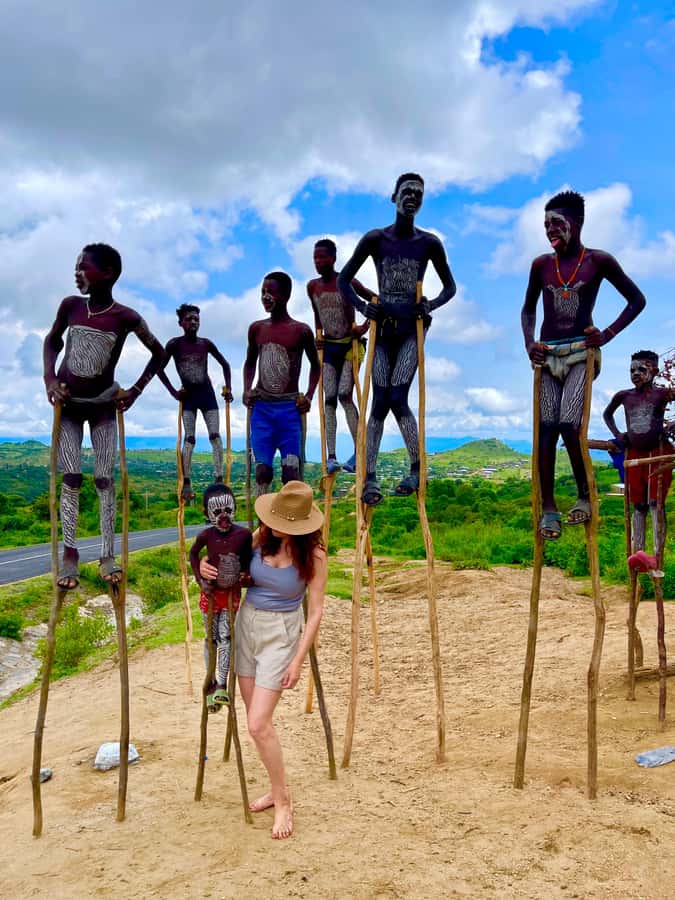
Reviewed · OMO VALLEY TRIBAL TOURS
Omo valley Tour: Discover unique 0 century 🕛 tribes culture
Expect long roads and unforgettable encounters. Kali Omo Valley’s tours take you from Jinka into southern Ethiopia’s Omo Valley, where you can meet Hamar, Karo, Mursi, Bana, Tsemay, Dasenech and Ari communities. I like the chance to visit more than three groups in a single trip, and I like that the company offers private or small-group travel with flexible routes.
The strongest points are the guide support, local park scouts, and the easy inclusion of meals, accommodation, park fees and village entry costs. I also like the personal touch reported by visitors who traveled with Kali and driver Elias. The main drawback is the road time: this is a demanding trip through remote country, and the advertised two to seven day range needs careful confirmation before booking.
In This Review
- Key points to know before you book
- What the $500 tour really includes
- Day one: Jinka to Turmi and the Hamar people
- Day two: Karo villages and the Dimeka market
- Day three: Mago National Park and the Mursi community
- Guide quality and the human side of the trip
- Comfort, meals and practical conditions
- Is this an ethical way to meet Omo Valley communities?
- Who will enjoy this Omo Valley route?
- Should you book Kali Omo Valley Tour?
- FAQ
- How long does the Omo Valley tour last?
- What communities can I visit?
- Is the Dimeka market open every day?
- What is included in the $500 price?
- Where can the tour start and finish?
- Can I book a private tour?
Key points to know before you book
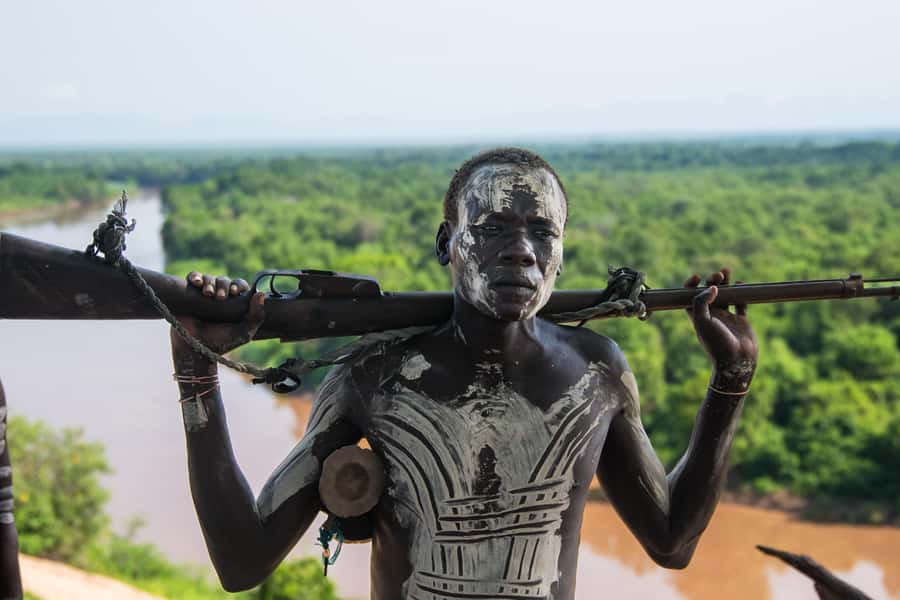
- The three-day route covers Hamar, Karo, Mursi and the Dimeka market, with extra tribal visits possible on longer versions.
- Kali and driver Elias receive especially strong praise for friendly service, safety, cultural knowledge and flexibility.
- The Dimeka market is a major highlight, held on Saturdays and attended by Hamar, Bana, Karo, Dasenech and Tsemay communities.
- The Mursi visit takes you into Mago National Park, about 66 kilometers from Jinka, with a park scout included.
- The $500 price includes a great deal, including transport, meals, water, lodging, park fees, guides and camping equipment.
- Expect basic conditions and substantial driving, especially on the short three-day plan.
What the $500 tour really includes
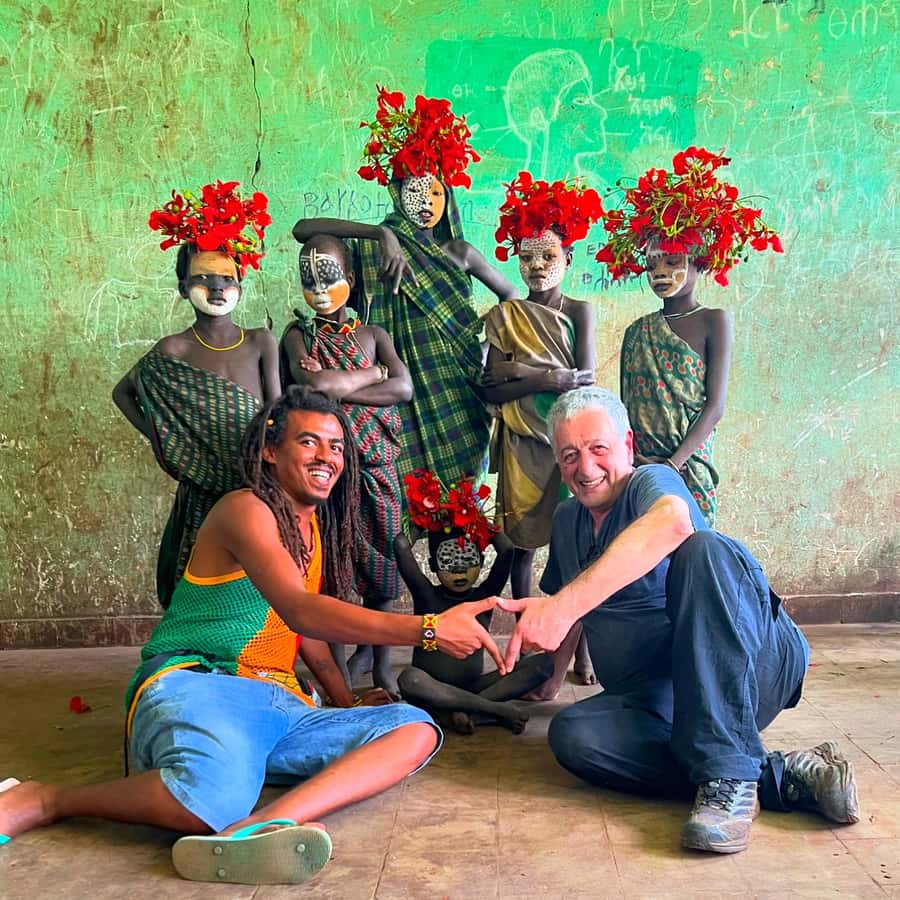
At $500 per person, the price looks reasonable if you use most of the included services. You are not paying only for a guide and a vehicle. The package includes hotel pickup and drop-off, Jinka airport transfers, local guides, park entry fees, village admission, a park scout, three meals per day, unlimited mineral water, lodging, camping gear, camping fees and a boat crossing on the Omo River.
That matters in the Omo Valley. Costs can build quickly when you arrange transport, meals, park access and local support separately. The included water is especially useful in a hot, remote area where buying supplies may not always be simple.
The value depends on your group size and exact route. A private trip gives you more control, but a small group may make the $500 price feel stronger. Ask before paying how many people will share the vehicle, which national parks are included in your chosen itinerary, and if your route uses lodges, hotels, camping, or a mix.
The company advertises tours from two to seven days, and it can arrange longer private trips from one to 20 days according to your time and budget. The detailed plan here is for two nights and three days, so confirm the exact number of days and the final price for any custom plan.
More Omo Valley tours:
- 5 Day Private tour to the Omo Valley Tribes and Adventure Tour
★ 5.0 · 11 reviews - Omo Valley Tribes 6 Days Tours
★ 4.9 · 10 reviews - From Jinka: Omo Valley Tribe 3-Day Tour
★ 5.0 · 9 reviews
Day one: Jinka to Turmi and the Hamar people
Your first day begins with pickup from Jinka Airport, followed by lunch in Jinka and a drive toward Turmi. The Hamar visit is the emotional center of the first day, and it gives you an early sense of how different this region is from the Ethiopian capital and highland routes.
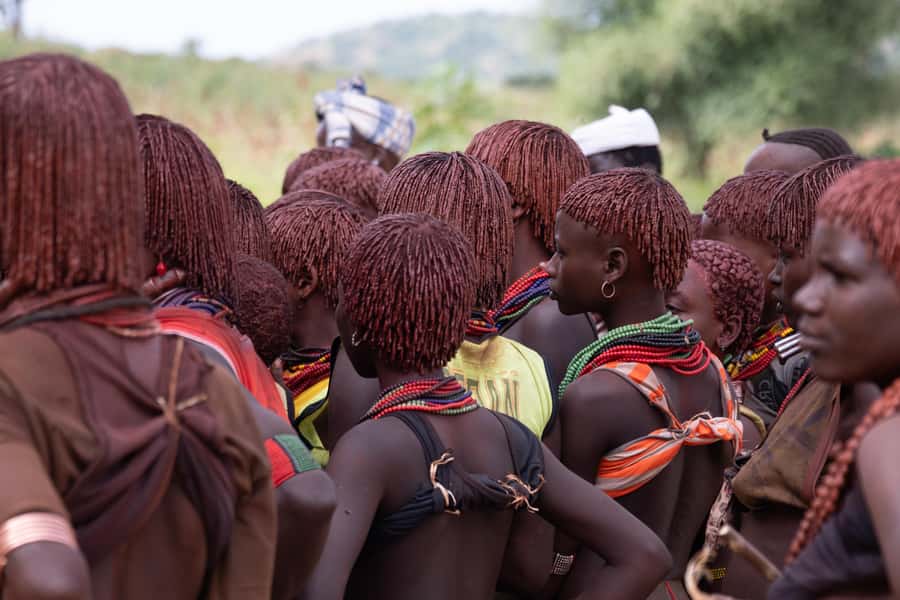
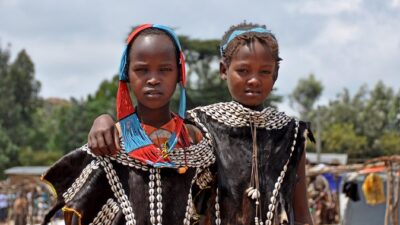
The Hamar are known for body scarring, clay-shaped hairstyles and the bull-jumping ceremony, a rite connected with a young man’s passage toward marriage. If a ceremony is taking place, it can be a powerful experience. Francis, who took the three-day tour, described bull jumping as the most exciting part of his trip.
You should keep your expectations practical. Ceremonies do not happen on a fixed timetable for tourists, and the information provided does not promise that you will see one. Your guide can explain what is happening and help you behave respectfully, but you should not treat a community ceremony as a scheduled performance.
The overnight stay is in Turmi. Depending on the arrangement, you may camp with the Hamar or stay at an eco-lodge inside a Hamar village. That choice changes the feel of the trip. Camping offers a more direct connection with the setting, while a lodge gives you more comfort after a long drive.
The first day is also a test of your travel style. Roads in this part of Ethiopia take time, and the reward is not quick sightseeing. You are going to spend hours moving between communities, then several more hours listening, watching and adjusting to a slower rhythm.
Day two: Karo villages and the Dimeka market
After breakfast, you head toward the Omo River to visit the Karo people. The Karo are agro-pastoralists and are known for body painting. This visit adds a different cultural focus after the Hamar experience, so the trip does not feel like a single repeated village stop.
The Omo River is not just scenery. It shapes movement, farming and settlement in the region. The tour includes a boat crossing on the river, which adds a practical transport detail that also helps you understand the geography of the area.
The biggest event on day two is the Saturday market at Dimeka. Timing matters here. Dimeka market takes place once a week on Saturday, so your route must line up with the calendar if you want to see it. This is one of the best reasons to choose a carefully planned private itinerary rather than simply fitting in a market whenever convenient.
More than five communities come to the market, including Hamar, Bana, Karo, Dasenech and Tsemay. People buy and sell products and cattle, creating a much broader picture of daily trade than you get from a short village visit. Bring some cash, as the tour information specifically advises, though no particular amount is given.
Markets can be busy and visually striking, but you should remember that this is a working place first. Ask your guide about appropriate photography, especially around people, animals and personal transactions. Kali’s stated focus on ethical and sustainable travel is a welcome sign, but good conduct still depends on you.
After the market and Karo visit, you return to Jinka for the night. This is a full day, and the return drive may feel tiring. Still, the combination of Karo country and Dimeka gives day two more variety than a simple village loop.
Day three: Mago National Park and the Mursi community
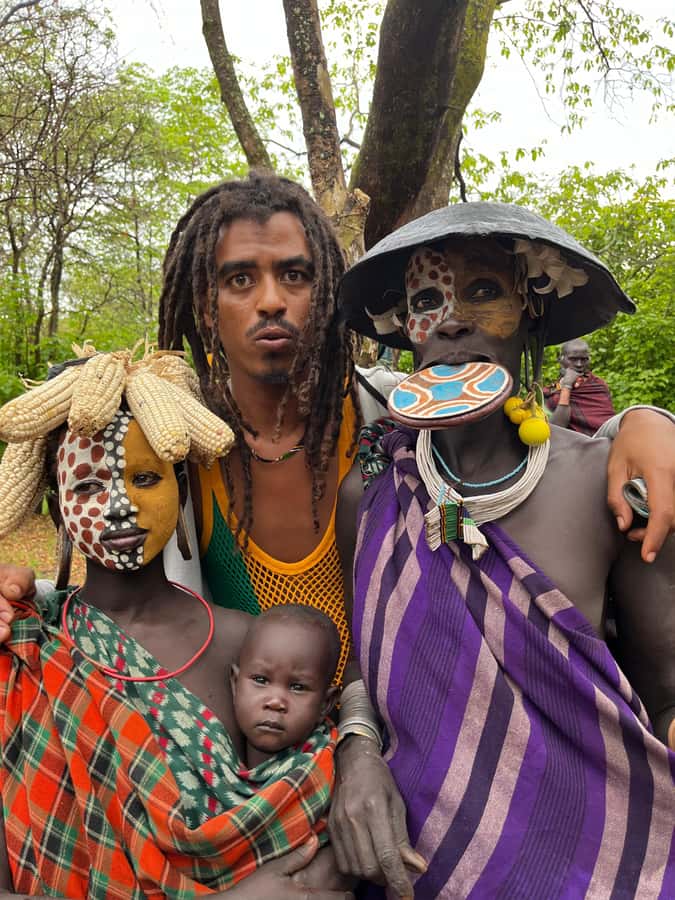
The final morning takes you to a Mursi village in Mago National Park, roughly 66 kilometers from Jinka. The tour includes entry to Mago National Park and a scout inside the park, both important details for this part of the route.
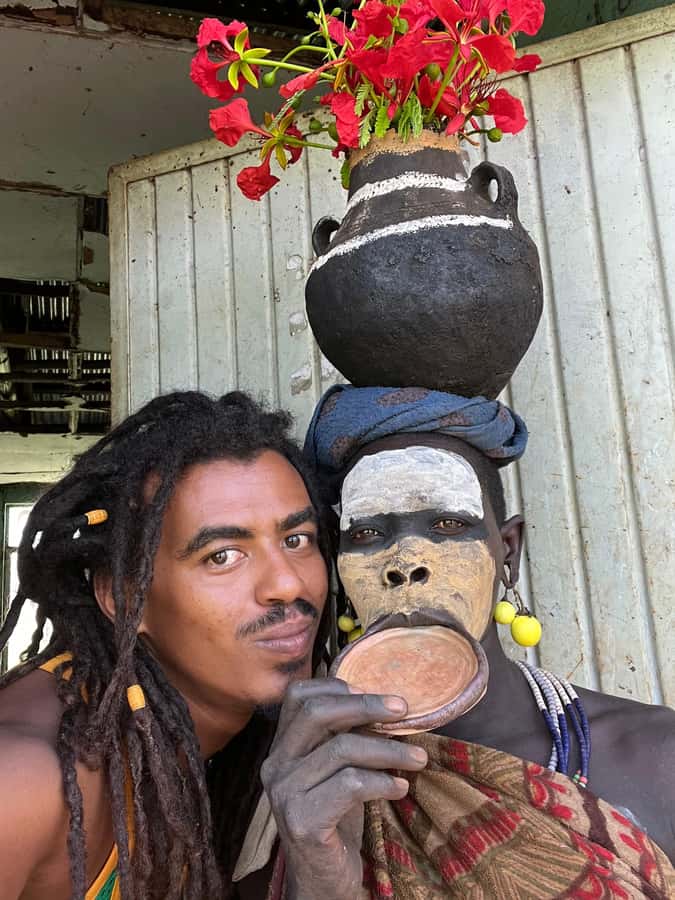
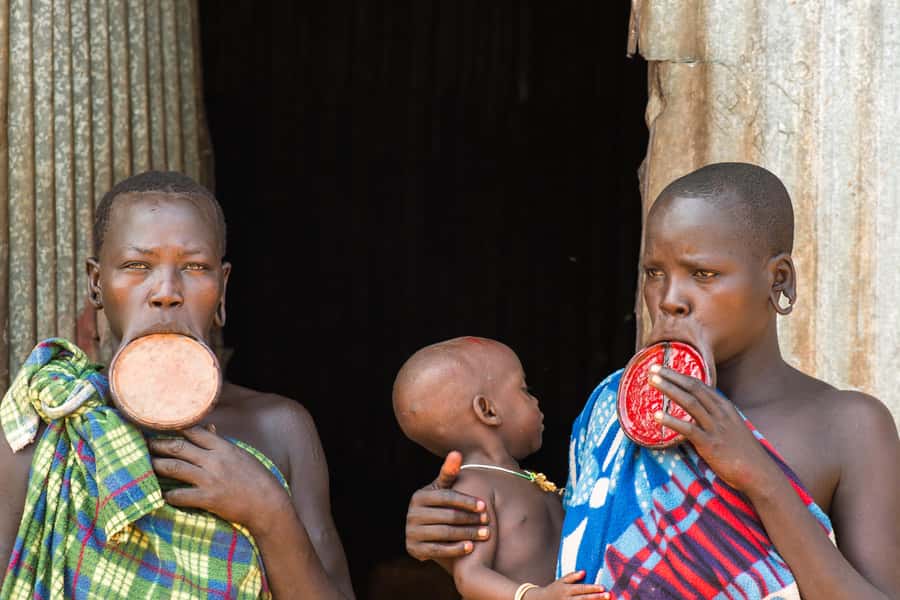
The Mursi are widely known for large lip plates and ear-lobe plates. Their appearance is often the first thing outsiders notice, but it should not be the only thing you take away. Use your guide’s explanations to learn about the people and their way of life rather than reducing the visit to photographs of body adornment.
The itinerary also describes Mursi men taking blood from cattle without killing the animal. A small opening is made in a vein, traditional medicine is used to stop the bleeding, and the wound heals. The description says you may see a man taking this as part of his breakfast.
That can be confronting. You should decide in advance how comfortable you are with seeing animal care and food customs that differ sharply from your own. The point is not to judge quickly, but you also do not need to pretend every part of the visit will feel easy.
The Mursi stop completes a useful three-community progression: Hamar on day one, Karo and the market on day two, and Mursi on day three. If you have more time, the company also advertises routes that can include Bana, Tsemay, Dasenech and Ari. Lisa’s trip included four communities, Dasenech, Ari, Hamar and Mursi, showing that the route can be adjusted beyond the standard three-day outline.
The listed three-day tour finishes in Jinka. You can also discuss final drop-off at Jinka, Semera, Mekelle or Arba Minch Airport. Since the route may end far from your next flight, give the company your full departure plan before confirming.
A few more options to weigh up in Arba Minch and the Omo Valley
- 3 days around Arbaminch and Konso Adventure Tours Life Time
★ 5.0 · 24 reviews - Private 3 Days Adventure Tour Through Arba Minch
★ 5.0 · 16 reviews - 6 Days Omo valley Tribal Tour (Starts Arba Minch End Jinka)
★ 5.0 · 7 reviews - 3 days, Arba Minch and Dorze
★ 5.0 · 7 reviews
Guide quality and the human side of the trip
A strong local guide matters more here than a polished hotel or a fancy vehicle. You need someone who can explain customs, handle changing road conditions, coordinate village visits and help you approach people with respect.
Kali receives particularly warm praise for his personal service and understanding of the Omo Valley. One detailed account describes him as attentive to individual needs, careful about the environment and fond of animals. That combination is useful in a region where cultural visits and nature travel overlap.
Driver Elias is also named positively. The experience was described as fun and safe, which matters when you are spending long stretches in a vehicle. A comfortable car was another plus noted by Lisa, who visited four communities with Kali.
The tour offers English, Amharic, Arabic, Chinese, Dutch, French, Italian, Japanese and Spanish support, with an optional English audio guide. Still, ask which language your actual guide will speak and whether translation between you and each community is direct or handled through another local person.
Group size is another key choice. Private and small-group options are available, with group sizes advertised from one to 20 people for custom travel. A private vehicle can make it easier to stop, adjust the pace and discuss sensitive questions. A larger group may reduce your cost per person, but it can also make village visits feel less personal.
Comfort, meals and practical conditions
The package includes hotels, lodges and camping materials, but the exact standard depends on the route. One person reported comfortable accommodation, but you should not assume every night will offer the same level of comfort, especially on a camping version.
Three meals per day are included, as is unlimited mineral water. That makes the trip simpler and helps you avoid carrying all your food and drinking water from the start. Alcoholic drinks are not included.
The tour is listed as wheelchair accessible, but the remote roads, village surfaces, camping option and national park visits may still create practical limits. Ask for a detailed accessibility plan before booking if you use a wheelchair or have limited mobility.
Pregnant women are advised not to take this activity. The long drives and remote setting are the likely practical concerns, but the supplied information does not give a medical explanation. If that restriction applies to you, speak with your doctor and the operator before making plans.
Bring your passport or ID card and some cash. You should also confirm the best airport for arrival. Pickup can be arranged from Bole International Airport in Addis Ababa, hotels in Addis Ababa, Jinka, Arba Minch, Mekelle or Semera airports.
Is this an ethical way to meet Omo Valley communities?

The operator says it focuses on ethical, ecological and sustainable travel. It states that people involved should receive fair wages, that nature should not be harmed, and that the company aims to leave only footprints.
Those are good principles, but you should turn them into practical questions. Ask how village entry payments are shared, who receives photography fees if they apply, and what rules guide visits to ceremonies and homes. Ask your guide before taking portraits, and accept a no without argument.
The best cultural encounter is not the one with the most dramatic photograph. It is the one where you listen, follow local guidance and understand that people are not scenery. Kali’s emphasis on care for people, animals and the environment gives you a useful starting point, and your own behavior completes the picture.
Who will enjoy this Omo Valley route?
I would recommend the tour to you if you want close contact with several communities and do not mind basic conditions or long road journeys. It suits photographers, culturally curious visitors, private groups and people who want a guide to handle complicated transport and park arrangements.
The three-day option works well if you have limited time and want a concentrated introduction. The longer two to seven day choices, or a custom trip of up to 20 days, make more sense if you want to add communities such as Ari, Dasenech, Bana or Tsemay without rushing every stop.
I would think twice if you dislike rough roads, flexible schedules or culturally confronting experiences. You should also avoid booking the short version without checking the timing of Dimeka market, since Saturday is essential for that stop.
Should you book Kali Omo Valley Tour?
Book it if your priority is local access, several distinct communities and a trip where transport, meals, park fees and guides are handled for you. The strongest reasons are the flexible private and small-group format, the range of included services, and the positive experience associated with Kali and Elias.
Before you pay, confirm four things: the number of days, the group size, the accommodation type and the exact communities on your route. Also ask if your dates include the Saturday Dimeka market and whether a bull-jumping ceremony is actually expected.
At $500 per person, this is a solid value when you use the full package. It is not a casual sightseeing outing, and the road time is part of the deal. If you approach the Omo Valley with patience, respect and realistic expectations, this tour can give you a serious and memorable introduction to one of Ethiopia’s most distinctive regions.
FAQ
How long does the Omo Valley tour last?
The advertised duration is two to seven days. A detailed sample route lasts three days and two nights, while private trips can be arranged for longer periods according to your time and budget.
What communities can I visit?
The tour can include Hamar, Karo, Mursi, Bana and Tsemay communities. Longer or customized routes may also include Dasenech and Ari. The three-day plan focuses on Hamar, Karo and Mursi, with the Dimeka market on the second day.
Is the Dimeka market open every day?
No. The Dimeka market visit is scheduled for Saturday. Hamar, Bana, Karo, Dasenech and Tsemay communities attend this weekly market.
What is included in the $500 price?
The price includes hotel pickup and drop-off, Jinka airport transfers, village and national park entry fees, local guides, a park scout, three meals per day, unlimited mineral water, boat transport across the Omo River, accommodation, camping equipment and camping fees.
Where can the tour start and finish?
Pickup can be arranged from Bole International Airport or a hotel in Addis Ababa, as well as Jinka, Arba Minch, Mekelle or Semera airports. Drop-off on the final day can be arranged at Jinka, Semera, Mekelle or Arba Minch Airport.
Can I book a private tour?
Yes. Private and small-group tours are available. Custom trips can be arranged for one to 20 days, depending on your schedule and budget.
Just added in Arba Minch and the Omo Valley
- 6 days private Sight Seeing Tours.★ 5.0 · 4 reviews
- 5 Days Omo Valley Tour: Experience Ethiopia’s Tribal Traditions★ 5.0 · 2 reviews
- 3 Days, Arba Minch, Dorze village and Konso Village★ 5.0 · 5 reviews
- 4 day amazing tour with the tribes★ 5.0 · 1 review
- 5 Days adventure tour in omo valley with the tribes.★ 4.5 · 2 reviews
- 6 Days Omo valley Tribal Tour (Starts Arba Minch End Jinka)★ 5.0 · 7 reviews
- 5 Day tour from arbaminch to omo valley★ 5.0 · 2 reviews
- 3 days, Arba Minch and Dorze★ 5.0 · 7 reviews
Omo Valley Tribal Tours, compared.
6 Days Omo Valley Tribes Tours From Addis Ababa
Read our review →
Lalibela, Axum, Danakil and Omo Valley 8 DAYS
Read our review →

9 Days Tours To Danakil Depression, Simen MNP, Lalibela With Omo Valley Tribes
Read our review →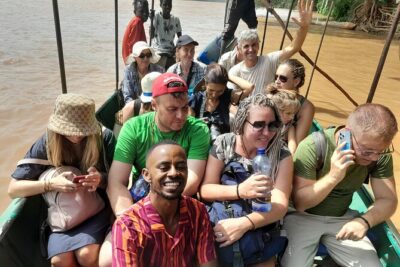
5 Day Private tour to the Omo Valley Tribes and Adventure Tour
Read our review →Browse the lists this tour appears in