
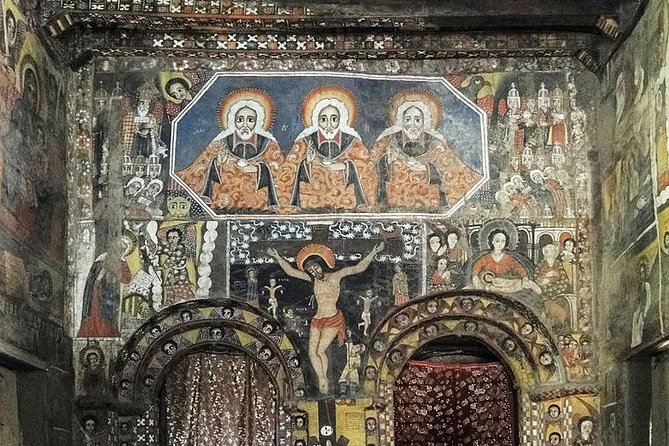
Reviewed · DANAKIL DEPRESSION EXPEDITIONS
Lalibela, Axum, Danakil and Omo Valley 8 DAYS
Ethiopia packs a lot into eight days. This ambitious route links Lalibela’s rock churches, Axum, the Danakil Depression, and the Omo Valley, with domestic flights, vehicles, guides, entrance fees, and lodging arranged for you. It is a smart way to cover far-flung places that are difficult to organize independently.
I especially like the small maximum group of 10, which should make transfers and local visits easier, and the broad mix of history, geology, and culture. I also like that the price includes domestic flights, fuel, guides, village payments, and entrance fees. The catch is the pace: this is a demanding trip with rough roads, early starts, heat, and very little spare time.
You begin in Lalibela at 7:00 a.m. and finish with a hotel drop-off in Addis Ababa. The advertised cost is $2,051.29 per person, a serious sum, but much of it pays for the complicated transport and permits needed to reach places such as Erta Ale and Dallol.
In This Review
- Key points before you book
- Why this route is so appealing
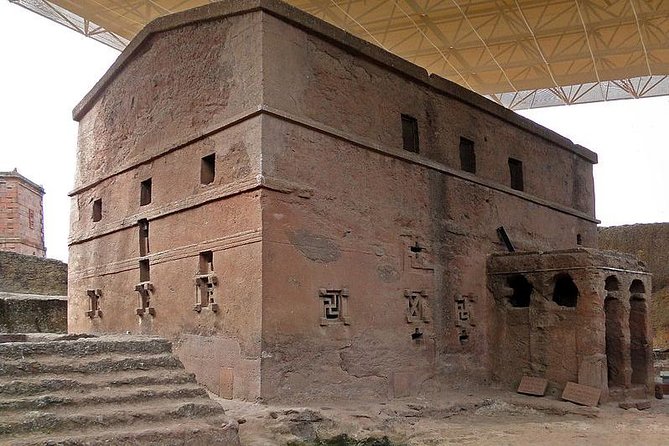
- Day 1: Lalibela’s churches carved from living rock
- Day 2: Axum, the northern stelae, and Gheralta
- Day 3: The rough road to Erta Ale
- Day 4: Sunrise, Afar salt country, and Lake Afrera
- Day 5: Dallol, Lake Assal, and the end of Danakil
- Day 6: Ari villages and Jinka Museum
- Day 7: Mago National Park, Mursi communities, and Turmi
- Day 8: Konso’s terraces and the return toward Addis
- What the $2,051.29 price really covers
- Guides, organization, and the small-group advantage
- Who should book this Ethiopia tour?
- Should you book it?
- FAQ
- Where does the tour start?
- Where does the tour end?
- How long is the tour?
- What is the maximum group size?
- Are domestic flights included?
- Is accommodation included?
- Are entrance fees included?
- Is transport included?
- What is not included in the price?
- Do I need good physical fitness?
Key points before you book
- Lalibela opens the trip with eleven UNESCO-listed rock-hewn churches, carved during the reign of King Lalibela between 1181 and 1221.
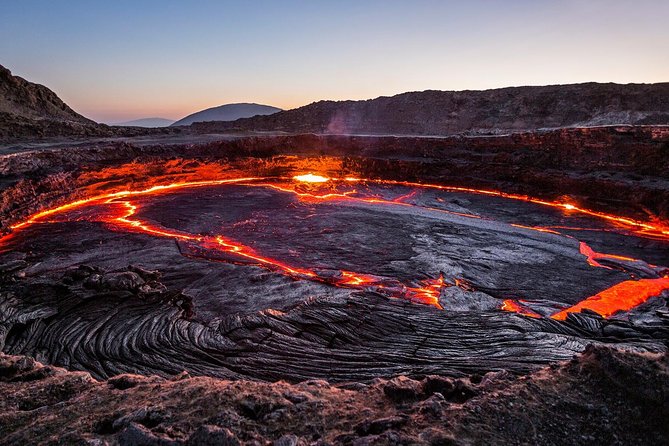
- Erta Ale requires real physical effort, including a rough vehicle ride to Dodom and a climb to a volcano with a permanent lava lake.
- The Danakil section is hot, basic, and remote, with salt mining, camel caravans, volcanic formations, and Lake Assal.
- The Omo Valley brings close contact with Ari, Mursi, and Hamer communities, plus a visit to Jinka Museum.
- Transport and domestic flights are included, along with accommodation, breakfast, fuel, entrance fees, village payments, and local support.
- The schedule is tightly packed, and one reported mix-up sent a party toward a dangerous Tigray cliff church instead of Axum, so confirm every day’s plan before departure.
Why this route is so appealing

Most Ethiopia trips make you choose between the historic north and the remote south. This one tries to give you both, then adds the Danakil Depression, one of the country’s most extreme natural areas. In a little over a week, you move from medieval Christian architecture to ancient stelae, active volcanic terrain, salt caravans, and living cultural traditions.
That variety is the main reason to consider it. You are not spending eight days looking at one type of sight. One day is about carved stone and worship. Another is about wide volcanic plains. Later, you visit villages and learn about farming, craft, dress, initiation customs, and community life.
The small-group setup matters here. A maximum of 10 people is far more manageable than a large coach group when you are boarding domestic flights, squeezing into four-wheel-drive vehicles, or walking through villages with local guides. It can also make it easier to ask questions and adjust small details during the day.
The trip is not luxurious. Accommodation is described as a range of basic but clean hotels, with good beds and locations near town centers in some cases. Bed and breakfast is included, but meals beyond breakfast are not clearly covered. You should expect variety rather than polished resort comfort.
More Omo Valley tours:
- 6 Days Omo Valley Tribes Tours From Addis Ababa
★ 5.0 · 33 reviews - 3 Days Omo Valley Tour
★ 5.0 · 24 reviews - 5 Days Omo Valley Tours
★ 5.0 · 15 reviews
Day 1: Lalibela’s churches carved from living rock
After a morning flight north, you are transferred to your hotel in Lalibela. After lunch, the first church group is visited north of the small Jordan River.
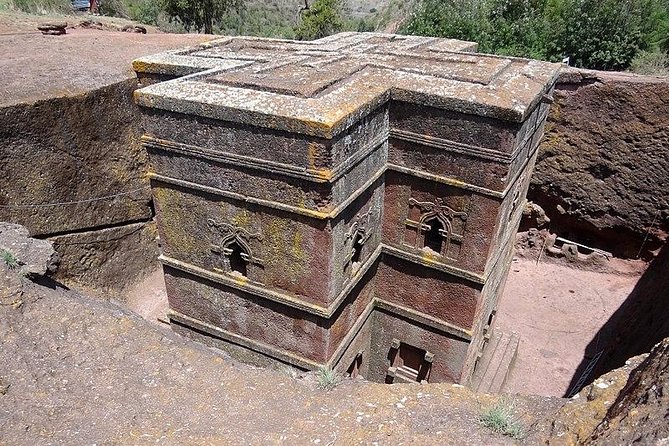
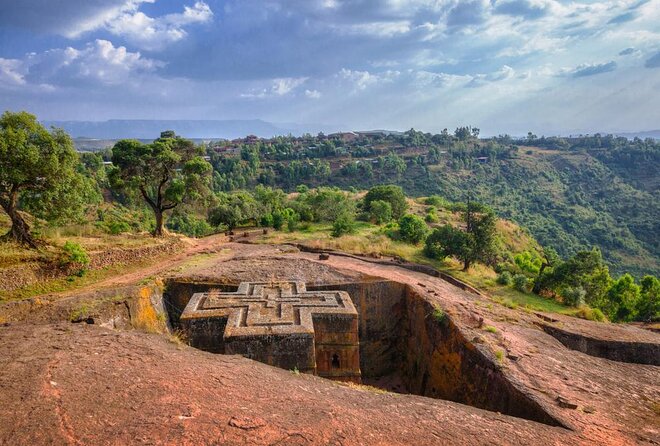
Lalibela is the historic heart of the trip. Around eleven churches were carved directly into volcanic rock during the rule of King Lalibela. Rather than building upward with blocks, workers cut downward and inward, shaping churches, courtyards, passageways, windows, and columns from the ground itself.
The four-hour visit gives you enough time to see the first group without rushing every doorway. Entrance is included, which is useful because major historic sites can add up quickly when you visit several regions.
You should dress respectfully. These are active religious places, not simply archaeological displays. Priests, worshippers, and local visitors may be present, and the setting deserves quiet attention.
The main drawback is that this first day begins with a flight and transfers before the afternoon visit. If your flight is delayed, the church schedule could become compressed. The start details also deserve confirmation, since the tour information refers to pickup from both Addis Ababa and Lalibela while the stated meeting point is Lalibela.
Day 2: Axum, the northern stelae, and Gheralta
Day 2 begins with a flight from Lalibela to Axum. The plan allows about an hour in Axum before the overland drive toward Hawzien, passing through Adwa and the Gheralta plains.
Axum is one of Ethiopia’s most important historic centers, and the Northern Stelae Park gives you a quick introduction. The tall stone stelae are among the most recognizable monuments in northern Ethiopia. One hour is short, so think of this as a focused stop rather than a full Axum tour.
From Axum, the road leads toward Hawzien, which works as a base for the rock-hewn churches of Gheralta. The surrounding Gheralta area is known for churches cut into high rock formations, often reached by steep paths and rough approaches.
Here you need to pay close attention to the exact church being visited. One serious report described a mix-up in which a party was sent toward a Tigray cliff church instead of Axum. The climb was described as a non-trivial free climb on a 200-meter cliff, plainly unsuitable for someone with limited confidence or a fear of heights.
That does not mean every Gheralta visit involves a dangerous climb. It does mean you should ask the operator and guide to name the church, describe the route, and confirm the physical demands before setting out. The distinction between a normal church visit and a steep exposed climb is not a minor detail.
Day 3: The rough road to Erta Ale
Day 3 takes you toward Erta Ale through Mekele. The name Erta Ale means smoky mountain in the Afar language, and the volcano is one of the most physically demanding stops on the route.
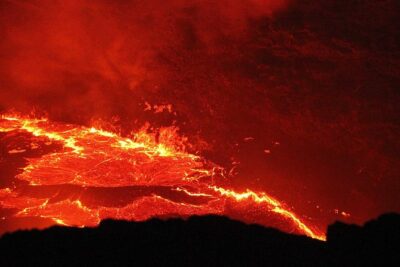
The volcano rises about 613 meters and contains a lava lake at the summit. The caldera is about one square kilometer, with a base diameter of roughly 30 kilometers. The attraction here is not a paved lookout or easy park walk. You drive to Dodom, at the base, then continue on foot toward the summit.
The road is described as one of the roughest in the world. The 80-kilometer drive can take hours, and the vehicle ride may be as tiring as the walk. An air-conditioned vehicle helps on the longer transfers, but comfort has limits when the road itself is harsh.
The plan starts around 9:00 a.m., though the exact timing may shift. You need good physical fitness, sturdy footwear, sun protection, water, and patience. The terrain and heat can make this a tough day even for people who regularly walk.
Erta Ale is the kind of place you visit for the sense of remoteness as much as the volcano itself. You are far from ordinary sightseeing infrastructure, and the experience depends on local guides, drivers, and scouts. Their support is included where needed, which is a major practical advantage in this area.
More Danakil expeditions:
- 3 Days Danakil Depression Tour
★ 4.5 · 135 reviews - 3 Days Danakil Depression Tours Via Semera
★ 5.0 · 47 reviews - 12 Days SIMIEN MOUNTAIN-LALIBELA-DANAKIL-TIGRAY CHURCHES
★ 5.0 · 45 reviews - 3 Day Danakil Depression Ertale and Dallol Tours
★ 5.0 · 44 reviews
Day 4: Sunrise, Afar salt country, and Lake Afrera

The morning begins with sunrise near the northern pit of Erta Ale. The main pit crater is described as about 200 meters deep and 350 meters across, with smaller southern and central pits nearby.
After an early breakfast, you descend around 7:00 a.m. and aim to reach the camp by about 10:30. The schedule then allows time to rest before driving toward Lake Giulietti, also called Lake Afrera. The lake visit is optional and may not be available during certain seasons or conditions.
This day gives you a better sense of the Danakil region as a whole. It is not just a volcano trip. The area includes salt flats, collapsed volcanic structures, harsh open ground, and low-lying basins where heat is part of the experience.
The camp is a practical stop, not a comfort retreat. The information provided does not promise a particular standard of tent, washroom, or meal service, so you should ask for current details before booking. You will be spending time in a remote area with limited facilities.
Day 5: Dallol, Lake Assal, and the end of Danakil
The final Danakil morning visits Ragad, also called Asebo, where local workers mine salt from the ground. You may see salt being broken, cut into rectangular pieces, and loaded onto camels.
This is one of the most distinctive parts of the route because it connects the region’s geology with a working trade. The salt is not just scenery. It is part of daily labor and transport across one of the most difficult environments in Ethiopia.
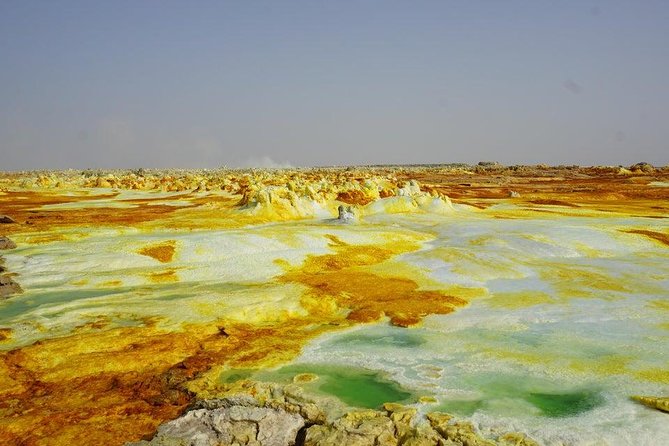
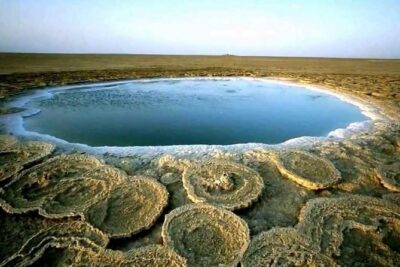
The drive continues to Dallol, around 116 meters below sea level. Volcanic activity has created unusual colors and mineral formations, while Lake Assal adds another stark feature to the route. You may also follow camel caravans and walk with Afar people.
Camel caravans do not operate in July, August, and early September, so the timing of your visit matters. If that sight is important to you, check the season before you pay.
The Danakil section ends with the drive back to Hamedela and then onward to Mekele. A flight to Addis is scheduled for 7:50 p.m., arriving around 9:10 p.m. That is a long day, and the late flight leaves little room for delays. You should avoid making an important international connection immediately afterward.
Day 6: Ari villages and Jinka Museum
After the northern heat and volcanic terrain, Day 6 shifts south to the Omo Valley. You fly to Jinka, meet the local team, and drive to Ari villages.
The Ari are the largest population in the lower Omo Valley. Women are known for wearing skirts made from enset, a banana-like plant, and for their pottery work. The three-hour village visit gives you time to see a rural setting and learn about local skills rather than simply passing through for photographs.
The best approach is to treat this as a cultural visit, not a staged show. Ask before taking photographs, listen to the guide, and remember that daily life is not a performance arranged for an outside audience.
Jinka Museum adds a useful layer of context. Its collection includes musical instruments, weapons, household objects, and related material. The one-hour visit is modest in length but helps place the Omo Valley communities within a wider regional story.
This day is lighter than the Danakil days, but you still have a flight, a transfer, and a village visit. The route is designed to keep moving.
Day 7: Mago National Park, Mursi communities, and Turmi
The morning excursion goes to Mago National Park to visit a Mursi village. The Mursi live in low huts made from straw and leaves, and the community is widely known for distinctive lip and ear ornaments worn by some women.
This is a place where your behavior matters. The tour includes village and elder payments, but payment does not remove the need for courtesy. Follow local guidance on photographs, avoid treating people as curiosities, and let your guide explain customs in their own context.
The drive then continues to Turmi, home of the Hamer people. Hamer culture is associated with bull jumping, a coming-of-age ceremony in which a boy runs across the backs of bulls or castrated steers.
The ceremony includes female relatives dancing and inviting whipping from recently initiated men. The scars are connected to family support and marriage rights. It is an intense custom to witness, and it should not be reduced to a quick photo opportunity.
A bull-jumping ceremony is not guaranteed simply because Turmi is on the route. The supplied schedule explains the custom but does not promise that a ceremony will take place during your visit. Ask the operator what activity is expected on your date.
Day 8: Konso’s terraces and the return toward Addis
The final day begins early with a drive to the Konso Cultural Landscape. The site includes stone-walled terraces and fortified settlements in the Konso highlands.
Konso communities have adapted to a dry, difficult environment through careful stonework, farming, and social organization. The cultural tradition is described as extending across 21 generations, or more than 400 years. You will also see anthropomorphic wooden statues linked to respected community members and heroic events, along with funerary traditions.
This is a fitting final stop because it brings together practical engineering and living culture. The terraces are not abandoned ruins. They reflect how communities continue to work with difficult ground and limited water.
Four hours is enough for a meaningful visit, but the day may still involve a long onward transfer. The supplied program identifies Addis Ababa as the final destination, with drop-off at your hotel, but it does not give a precise arrival time. Keep your evening flexible.
What the $2,051.29 price really covers
At first glance, $2,051.29 per person may look high for eight days in Ethiopia. The value becomes clearer when you count what is included:
- Domestic flight arrangements
- Accommodation as scheduled
- Bed and breakfast
- Air-conditioned vehicle
- Fuel and lubricants
- Professional guide
- Local guides and scouts where required
- Entrance fees
- Village and elder payments
- Transfers in and out
The Danakil segment alone requires specialized transport, local support, and careful coordination. Add several domestic flights, long road transfers, multiple regions, and different local guides, and the price becomes easier to understand.
You still pay for international flights, alcoholic drinks, laundry, internet, telephone, fax, camera or videographer fees, personal purchases, and services not listed. Ask for a current meal plan as well, since only bed and breakfast is clearly included.
Several positive comments highlight the value of having hotels and flights arranged together. The accommodation may be basic, but clean rooms, good beds, and central locations can matter more than luxury on a route this busy.
Guides, organization, and the small-group advantage
The operator is Ethio Travel And Tours. Names praised for guiding or trip support include Muller, Yared, Samrawit, Muna, and Sefora, although your assigned staff may be different.
The strongest pattern in the feedback is practical help. People describe staff assisting with flight problems, rescheduling, work and travel plans, airport meetings, and day-to-day arrangements. That sort of support is valuable in Ethiopia, where a missed flight or road delay can affect several later days.
Still, do not hand over every decision without checking the details yourself. Confirm the exact flights, church names, road sections, sleeping arrangements, and expected walking difficulty. The reported Tigray church mix-up shows why clear communication matters.
A maximum of 10 people keeps the tour personal enough for questions while helping spread the cost of vehicles and guides. It is a good middle ground between an expensive private trip and a large bus tour.
Who should book this Ethiopia tour?
I would recommend it to an energetic first-time visitor who wants a broad introduction and does not want to arrange every flight, permit, vehicle, and local guide independently.
It suits you if you are comfortable with:
- Early mornings and long transfer days
- Rough roads and basic remote accommodation
- Hot, dry conditions in Danakil
- Walking and climbing at some historic or volcanic sites
- Cultural visits that require patience and respect
- A schedule with little free time
I would not choose it for a relaxed holiday, a luxury break, or a trip focused on one region. The physical fitness requirement is real, especially around Erta Ale and any steep Gheralta church route.
The cancellation terms are fairly strict close to departure. Cancel at least six full days before the start for a full refund. Cancellation two to six days beforehand receives a 50 percent refund, while cancellation less than two full days before departure receives no refund. Poor weather may lead to a different date or a full refund.
Should you book it?
Book this tour if you want Ethiopia’s biggest contrasts in one tightly organized package: medieval churches, Axumite monuments, active volcanoes, salt country, and Omo Valley cultures.
The tour’s greatest strengths are its range, small group size, included logistics, and strong staff support. Its weaknesses are the demanding pace, basic conditions in remote areas, possible schedule confusion, and the need to confirm exactly what each day involves.
Before booking, ask three direct questions: Which Gheralta church will I visit? What are the current Danakil sleeping and meal arrangements? Which domestic flights and transfer times are confirmed? If the answers are clear and you are ready for hard travel, this is a valuable way to see parts of Ethiopia that are difficult to reach alone.
FAQ
Where does the tour start?
The stated meeting point is Lalibela, Ethiopia, with a start time of 7:00 a.m. Pickup from Addis Ababa and Lalibela is also offered, so confirm your pickup arrangement before departure.
Where does the tour end?
The tour ends in Addis Ababa, where you are dropped at your hotel.
How long is the tour?
The experience lasts approximately eight days.
What is the maximum group size?
The tour has a maximum of 10 travelers.
Are domestic flights included?
Yes. Domestic flight arrangements are included in the tour price.
Is accommodation included?
Yes. Accommodation is included according to the program, with bed and breakfast provided.
Are entrance fees included?
Yes. Entrance fees are included, along with village and elder payments.
Is transport included?
Yes. Transfers, an air-conditioned vehicle, fuel, and lubricant expenses are included.
What is not included in the price?
International flights, alcoholic drinks, laundry, personal internet and telephone costs, camera or videographer fees, and services not specifically listed are excluded.
Do I need good physical fitness?
Yes. The tour requires a moderate level of physical fitness, and the Erta Ale section includes rough roads and physically demanding walking. Some Gheralta church visits may also involve steep routes, so confirm the exact climb beforehand.
Just added in Lalibela
- Lalibela Backpacker tours★ 5.0 · 6 reviews
- Trekking in Ethiopia’s Lalibela Wollo Highland 4 Days / 3 Nights★ 5.0 · 6 reviews
- The Rock-Hewn Churches of Lalibela: 3 Days / 2 Nights★ 5.0 · 6 reviews
- Lasta Mountains: Highland Eco Trekking Tour in Lalibela★ 5.0 · 4 reviews
- Day Tour of the Rock Hewn Churches of Lalibela★ 5.0 · 2 reviews
- Lalibela churches Guided Tour★ 5.0 · 6 reviews
- Lalibela Churches Day Tour★ 5.0 · 7 reviews
- Full Day Tour To The 11 Rock Hewn Churches Of Lalibela★ 5.0 · 5 reviews
Danakil Depression Expeditions, compared.

12 Days SIMIEN MOUNTAIN-LALIBELA-DANAKIL-TIGRAY CHURCHES
Read our review →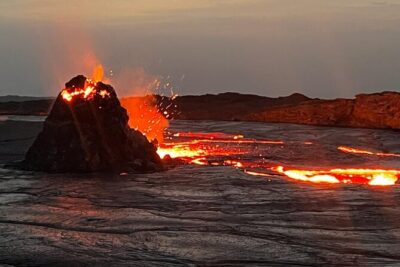
3 Day Danakil Depression Ertale and Dallol Tours
Read our review →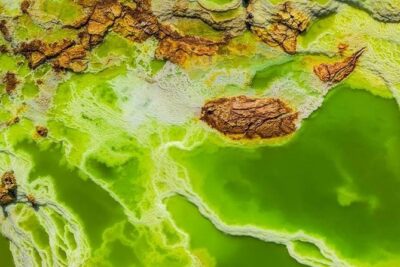
5 DAYS Lalibela, Axum, Tigray churches and Danakil
Read our review →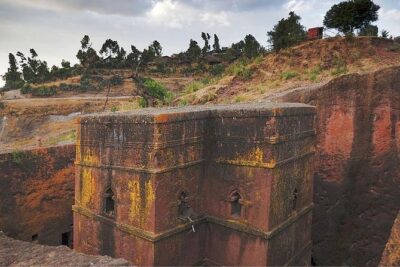
6 Days tour Package (Simien Mountains, Lalibela, and Danakil Depression)
Read our review →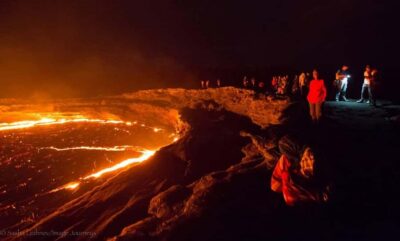
2-Night 3-Day Danakil Depression Tour without Flights
Read our review →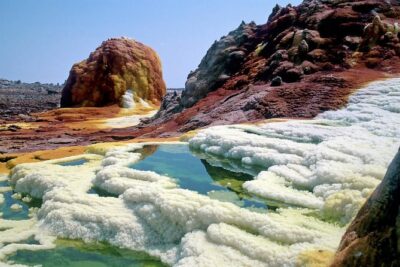
Browse the lists this tour appears in