
Reviewed · OMO VALLEY TRIBAL TOURS
Omo Valley Tribes 6 Days Tours
Ancient stones, crocodiles, and living cultures await. This six-day journey through southern Ethiopia links Addis Ababa with the Omo Valley, where more than 200,000 people speak 47 languages and maintain distinct traditions. I like the wide mix of experiences, from Lucy at the National Museum to Lake Chamo’s hippos and the Dorze mountain villages. I also like that the tour includes a professional driver, local guides, entrance fees, and a boat trip.
The main concern is the pace. You cover long stretches by road, and lunch and dinner are not included. Some accommodations may also feel uneven, as one booking described hotels that did not always make enough effort to satisfy visitors. Still, the kind English-speaking driver and local guides can make a major difference on a route where good local support matters.
In This Review
- Key things to know before booking
- Why the Omo Valley deserves your time
- Day 1: Addis Ababa, Lucy, churches, and the city market
- Day 2: Tiya’s carved stelae and the road to Arba Minch
- Day 3: Lake Chamo, crocodiles, and Dorze mountain homes
- Day 4: Konso terraces, Bana pastoralists, and the Hamer area
- Day 5: Omorate and the Dassanech communities
- Day 6: Mago National Park, Mursi villages, and the Ari people
- What the $1,400 price really covers
- Hotels, roads, and the daily rhythm
- How to prepare for the cultural visits
- Who will enjoy this six-day route?
- Should you book the Omo Valley Tribes tour?
- FAQ
- Where does the Omo Valley Tribes tour take place?
- How long is the tour?
- What is included in the $1,400 price?
- Are lunch and dinner included?
- Which languages are available?
- Can I cancel for a full refund?
Key things to know before booking
- Four major cultural encounters: Meet the Dorze, Bana, Hamer, Dassanech, Mursi, and Ari communities across southern Ethiopia.
- UNESCO sites included: Visit the carved stelae at Tiya and the terraced settlement of Konso.
- Lake Chamo by boat: Look for crocodiles, hippos, and many bird species at the place locally called the crocodile market.
- A long road journey: The route runs from Addis Ababa through Arba Minch, Konso, Turmi, Omorate, and Jinka.
- Strong core inclusions: Accommodation with breakfast, a professional guide and driver, entrance and scout fees, and the Lake Chamo boat trip are covered.
- Budget at $1,400: You still need to pay for lunch, dinner, drinks, flights, and cultural ceremonies or festivals.
Why the Omo Valley deserves your time
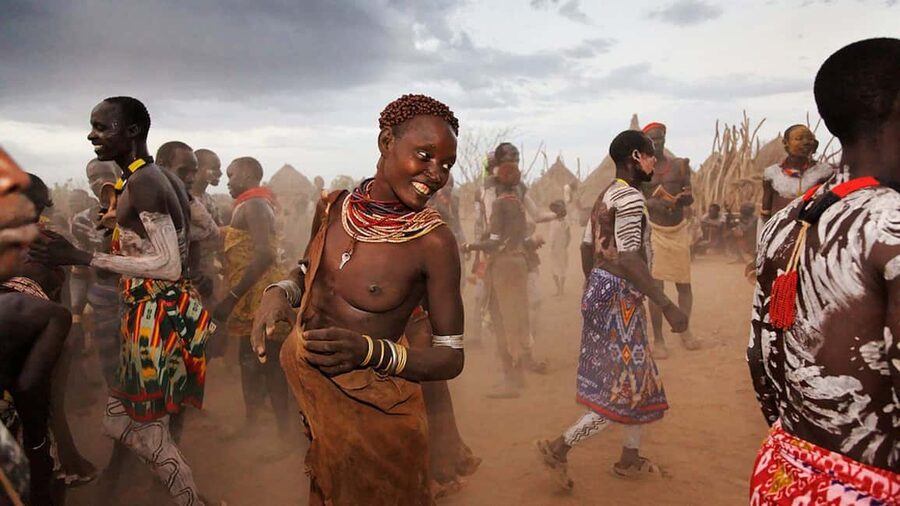
The Omo Valley is not one single culture. It is a large area of southern Ethiopia with many ethnic groups, languages, and customs. This tour gives you a quick but broad introduction rather than a long stay with one community.
That variety is the great strength of the route. In six days, you see highland farming communities, pastoral people, villages built in unusual forms, and groups whose clothing, hair, body decoration, and daily life differ sharply from one another. You are not simply checking off viewpoints. You are moving through a part of Ethiopia where cultural identity remains closely tied to place and work.
The tour is best for you if you want a structured introduction and prefer having transport, guides, and accommodation arranged. It is less suitable if you dislike long drives or want several unplanned days in one village.
More Omo Valley tours:
- 5 Day Private tour to the Omo Valley Tribes and Adventure Tour
★ 5.0 · 11 reviews - From Jinka: Omo Valley Tribe 3-Day Tour
★ 5.0 · 9 reviews - 6 Days Omo valley Tribal Tour (Starts Arba Minch End Jinka)
★ 5.0 · 7 reviews
Day 1: Addis Ababa, Lucy, churches, and the city market
After arriving in Addis Ababa, you are transferred to your hotel and begin sightseeing once you have refreshed. The first stop is the National Museum, where you can see the fossil remains of Lucy, one of the world’s best-known early human ancestors.
Lucy gives the journey useful context. Before you reach the Omo Valley’s present-day communities, you are reminded that Ethiopia has a long place in the story of human development. The museum visit is also a sensible first stop because it offers a clear introduction to the country’s past.
You then visit Holy Trinity Cathedral, built during the Second World War. The final stop is Merkato, described as the largest market in East Africa. Expect a busy, active city market rather than a polished shopping center. You will have a chance to see ordinary commerce and city life before heading south.
Overnight accommodation is at Triple-E Hotel and Spa in Addis Ababa. Since the first day begins with your arrival, the amount of sightseeing you manage may depend on your flight time and energy. This is worth keeping in mind if your international flight lands late.
Day 2: Tiya’s carved stelae and the road to Arba Minch
After an early breakfast, the journey heads south by road toward Arba Minch. The first major stop is Tiya, a UNESCO World Heritage site known for its engraved standing stones.
Tiya is important because it contains the northernmost example of a distinctive group of carved stelae found across parts of southern Ethiopia. The stones give you a quieter, more archaeological experience than the cultural visits later in the trip. You can pause, look closely at the carvings, and consider how little is known about some of the people who created them.
The drive continues to Welayta, where you stop for lunch. Lunch is not included, so carry cash and plan to pay separately. Afterward, you continue to Arba Minch for the night.
Overnight is at Paradise Lodge in Arba Minch. This day is mostly about the road and the transition from central Ethiopia toward the southern part of the country. The early start and long drive may be tiring, but Tiya breaks up the journey with a worthwhile historic stop.
Day 3: Lake Chamo, crocodiles, and Dorze mountain homes
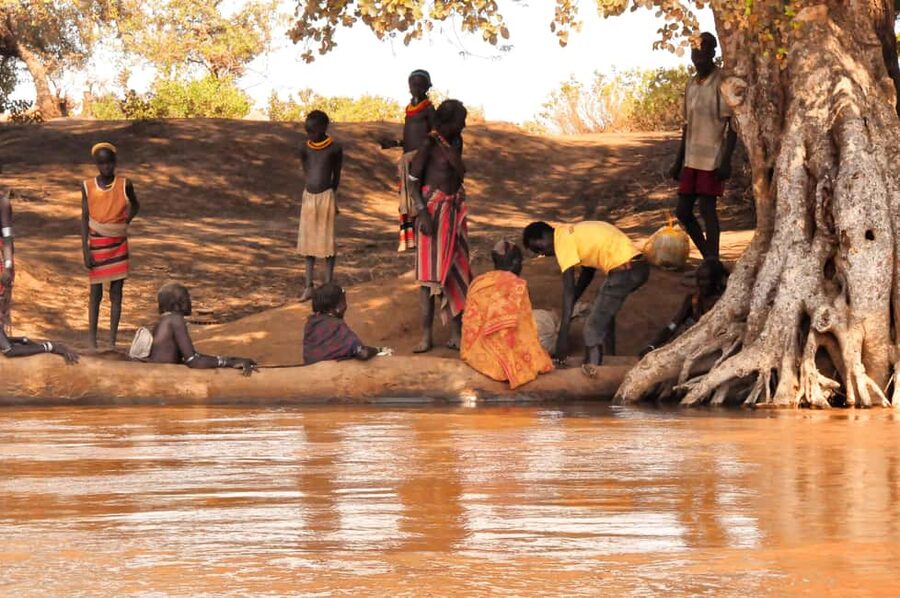
The third day begins with a boat trip on Lake Chamo. The destination is locally known as the crocodile market, although there is no buying or selling there. The name refers to the place where crocodiles leave the water and rest along the shore.
From the boat, you may see crocodiles, hippos, and different kinds of birds. This is one of the tour’s most appealing nature stops because the boat gives you a different view of the lake and its animals. The boat trip is included in the price, which helps the overall value.
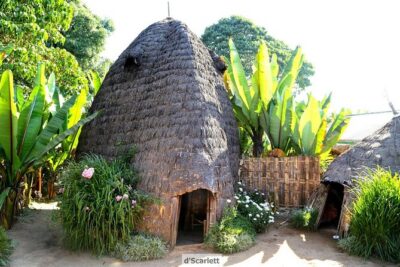
Later, you drive into the Gughe Mountains to visit a Dorze village. The Dorze are known for tall, beehive-shaped huts, which are described as among the most visually attractive traditional structures in the country. The unusual form is more than decoration. It is a practical building style that makes the village immediately memorable.
You return to Arba Minch for lunch, then continue to Konso. Overnight accommodation is at Kanta Lodge in Konso. This is another full day with several changes of setting, so you should expect more observation than extended free time.
A few more options to weigh up in Arba Minch and the Omo Valley
- 3 days around Arbaminch and Konso Adventure Tours Life Time
★ 5.0 · 24 reviews - Private 3 Days Adventure Tour Through Arba Minch
★ 5.0 · 16 reviews - 3 days, Arba Minch and Dorze
★ 5.0 · 7 reviews - 3 Days, Arba Minch, Dorze village and Konso Village
★ 5.0 · 5 reviews
Day 4: Konso terraces, Bana pastoralists, and the Hamer area
Konso is one of the strongest cultural and historic stops on the route. The area is recognized by UNESCO for its terraced fields and village traditions. The terraces show how people have adapted farming to steep, difficult ground, and they give the visit a clear sense of place.
Konso is also associated with some of Ethiopia’s best coffee. If you enjoy coffee, this is a useful point to remember when choosing what to drink or buy during the journey. The tour does not state that coffee purchases are included, so treat this as a possible personal expense.
You then continue to a Bana village. The Bana are indigenous pastoral and semi-nomadic people living in the harsh environment of the lower Omo Valley. Their way of life differs from the settled agricultural communities seen earlier, and the visit helps show that the valley is home to many distinct economic traditions.
Bana men are known for dressing their hair with a colorful clay cap decorated with feathers. This is one of the visual details you may notice during the visit, but it is important to approach such encounters with respect. You are looking at people and their everyday lives, not a staged costume display.
The day ends in Turmi, home of the Hamer people. Overnight accommodation is at Emerald Lodge. Turmi becomes your base for the next cultural visits, but the schedule remains active.
Day 5: Omorate and the Dassanech communities

After breakfast, you travel about 75 kilometers to Omorate, a drive listed as taking roughly two hours. The destination is the Dassanech community, whose name is translated here as people of the delta.
The Dassanech live along the northern shore of Lake Turkana. Their location near the water has shaped their way of life, and this stop adds another distinct community to an already varied route. The visit is especially valuable if you want to understand how different groups have adapted to the dry southern region.
You return to Turmi for lunch, then drive onward to Jinka. Again, lunch is your own expense, and the timing means the day is largely shaped by road travel. Overnight is at Jinka Resort.
This is a practical rather than leisurely schedule. You get a broad look at the southern Omo Valley, but you should not expect long stretches of independent exploration. The value lies in the range of communities and the access provided by local guides.
Day 6: Mago National Park, Mursi villages, and the Ari people
The final day takes you from Jinka toward Mago and back to Jinka. The focus is the Mursi people, one of Ethiopia’s most distinctive ethnic groups. Their homes are described as low huts made from straw and leaves, reflecting the materials and conditions of the area.
Mursi women are known for wearing terra cotta lip and ear ornaments. The appearance can be striking, but you should remember that these are cultural practices belonging to real people. Ask before taking photographs, follow your guide’s instructions, and avoid treating the visit as a human display.
After returning to Jinka for lunch, the itinerary continues to the Ari people, the largest population in the lower Omo Valley. This final visit gives you one more contrast within the region before the trip’s return to Addis Ababa.
The schedule says Jinka, Mago, Jinka, and Addis Ababa, but it does not give a precise transfer time for the final return. Ask the operator how the Addis connection is handled before you book flights or make plans for that evening. The road distance and the day’s activities make timing an important practical question.
What the $1,400 price really covers
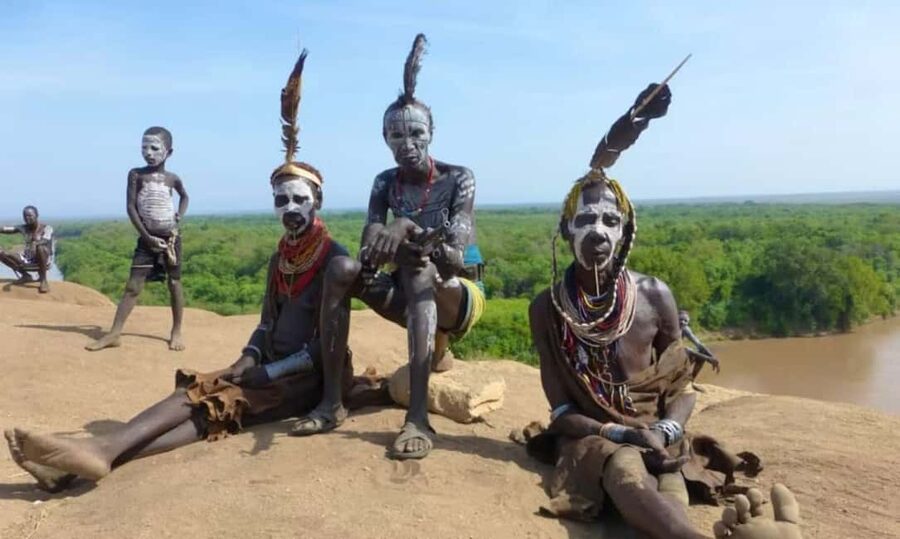
At $1,400 per person, this is not a budget road trip. The price includes accommodation with breakfast, a professional guide, a professional driver, entrance fees, scout fees, and the Lake Chamo boat trip.
Those inclusions matter in the Omo Valley. You are covering long distances and visiting places where local access and guidance are important. Having the vehicle, driver, and entrance arrangements handled reduces the number of details you must manage yourself.
The price does not include lunch, dinner, alcohol, local flights, tips, or entrance fees for cultural ceremonies and festivals. Your actual cost will therefore be higher than $1,400. Bring enough cash for meals, drinks, tips, and personal purchases, as the practical information specifically advises carrying cash.
The best value comes if you want a guided, multi-stop introduction to southern Ethiopia. If you are mainly interested in one community and prefer to stay several nights in one area, the price may feel less attractive because the itinerary covers so much ground.
Hotels, roads, and the daily rhythm

The listed overnight stops are Addis Ababa, Arba Minch, Konso, Turmi, and Jinka. The properties include Triple-E Hotel and Spa, Paradise Lodge, Kanta Lodge, Emerald Lodge, and Jinka Resort.
Hotel standards may not feel identical from night to night. One account praised the tour team but noted that some hotels seemed more focused on their own interests than on satisfying visitors. I would treat accommodation as functional rather than the main reason to book this trip.
The driving schedule is demanding. You move from Addis Ababa to Tiya, Welayta, Arba Minch, Konso, Turmi, Omorate, and Jinka, often with sightseeing along the way. The professional driver is one of the most important parts of the package, and the kind, polite English-speaking driver mentioned in the tour feedback is exactly the sort of support you want on these roads.
The tour is conducted in English. Local guides are also part of the experience, especially during community visits. Their presence can help with introductions, cultural explanations, and respectful behavior around photography.
How to prepare for the cultural visits
Bring your passport and cash. The passport is listed among the items to bring, while cash is important because meals, tips, drinks, and other personal costs are not included.
Pack for a trip that combines city sightseeing, boat travel, mountain villages, and dry southern communities. The supplied information does not specify a packing list beyond passport and cash, so avoid assuming that special equipment is provided.
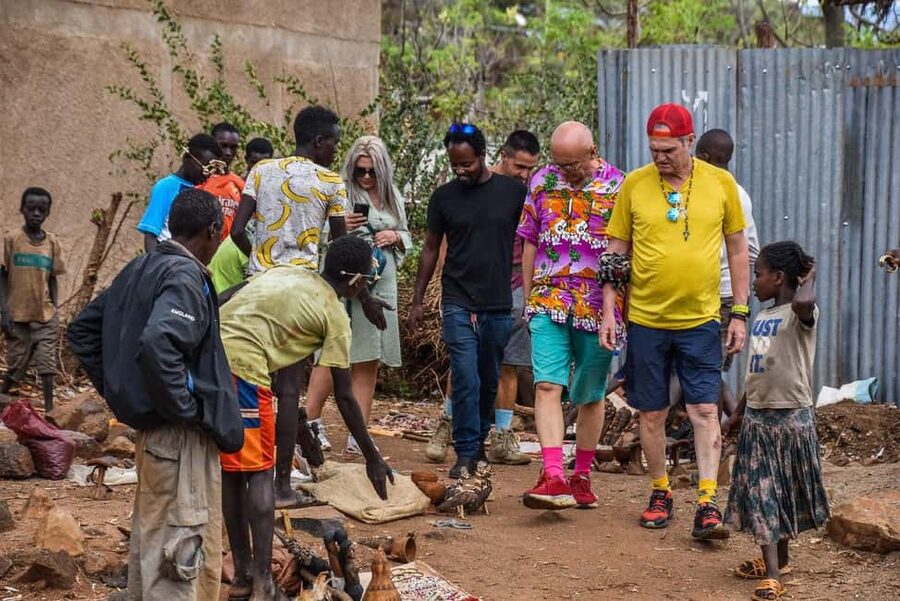
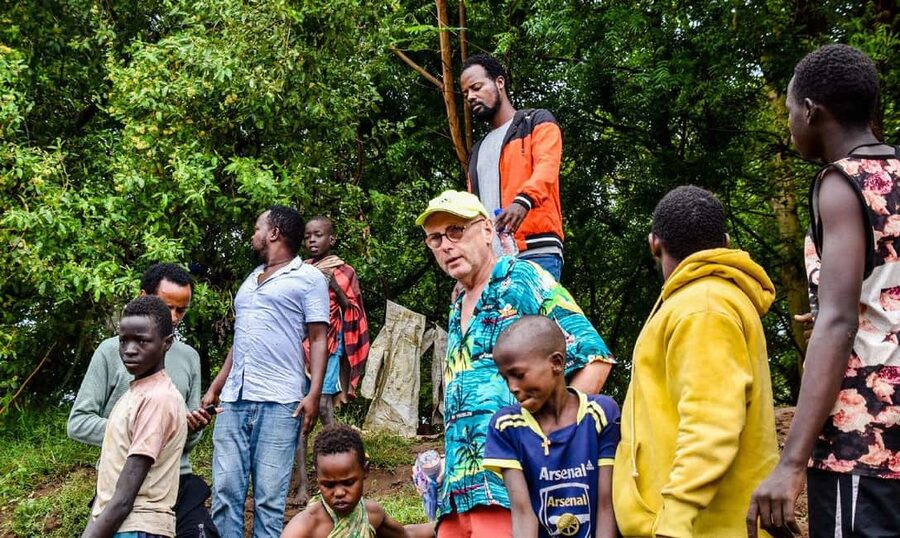
Most importantly, bring patience and good manners. Ask before taking photographs, listen to your guide, and remember that clothing, hairstyles, body ornaments, homes, and ceremonies have meaning beyond their visual appeal. Cultural visits are more rewarding when you treat them as meetings rather than photo stops.
The tour is not suitable for babies under one year or people over 309 pounds, or 140 kilograms. It is also worth asking in advance about any ceremony or festival you hope to see, since entry to those events is not included.
Who will enjoy this six-day route?
I would recommend this tour to you if you want:
- A guided first look at several Omo Valley communities
- A mixture of archaeology, wildlife, city sights, and village visits
- A fixed plan with accommodation and road transport arranged
- Access to local guides and scouts
- A compact trip rather than a long independent stay
I would be more cautious if you want slow travel, private time in each community, or guaranteed comfort at every hotel. The route is ambitious, and the long drives are part of the deal.
A rating of 4.9 from 10 bookings suggests a very strong overall response, but the small number of ratings means you should still read the inclusions carefully. The most praised features are the friendly English-speaking driver, the local guides, and the unusual experiences along the route. Those are the parts that give this trip its character.
Should you book the Omo Valley Tribes tour?
Book it if your priority is seeing many sides of southern Ethiopia in six days, with transport, guides, site fees, and key accommodation arranged. The route offers far more than a single village visit: Lucy and Addis Ababa, Tiya’s stones, Lake Chamo, Dorze huts, Konso terraces, and encounters with Bana, Hamer, Dassanech, Mursi, and Ari communities.
Think twice if you need a relaxed pace or want every meal and hotel detail included. At $1,400, you should add a clear allowance for lunch, dinner, tips, drinks, and possible cultural events. Ask about the final Jinka to Addis transfer before paying.
For a first, tightly planned introduction to the Omo Valley, I find the mix compelling. Go with realistic expectations, respect the people you meet, and accept that the road is as much a part of the experience as the destinations.
FAQ
Where does the Omo Valley Tribes tour take place?
The tour travels through Addis Ababa and southern Ethiopia, including Tiya, Arba Minch, Lake Chamo, Dorze villages, Konso, Turmi, Omorate, Jinka, Mago, and areas connected with the Ari people.
How long is the tour?
The tour lasts six days.
What is included in the $1,400 price?
The price includes accommodation with breakfast, a professional guide, entrance and scout fees, a boat trip on Lake Chamo, and a car with a professional driver.
Are lunch and dinner included?
No. Lunch and dinner are not included, so you should budget separately for both meals.
Which languages are available?
English is listed as the tour language.
Can I cancel for a full refund?
Yes. You can cancel up to 24 hours in advance for a full refund.
Just added in Arba Minch and the Omo Valley
- 6 days private Sight Seeing Tours.★ 5.0 · 4 reviews
- 5 Days Omo Valley Tour: Experience Ethiopia’s Tribal Traditions★ 5.0 · 2 reviews
- 3 Days, Arba Minch, Dorze village and Konso Village★ 5.0 · 5 reviews
- 4 day amazing tour with the tribes★ 5.0 · 1 review
- 5 Days adventure tour in omo valley with the tribes.★ 4.5 · 2 reviews
- 6 Days Omo valley Tribal Tour (Starts Arba Minch End Jinka)★ 5.0 · 7 reviews
- 5 Day tour from arbaminch to omo valley★ 5.0 · 2 reviews
- 3 days, Arba Minch and Dorze★ 5.0 · 7 reviews
Omo Valley Tribal Tours, compared.
6 Days Omo Valley Tribes Tours From Addis Ababa
Read our review →
Lalibela, Axum, Danakil and Omo Valley 8 DAYS
Read our review →



9 Days Tours To Danakil Depression, Simen MNP, Lalibela With Omo Valley Tribes
Read our review →
5 Day Private tour to the Omo Valley Tribes and Adventure Tour
Read our review →Browse the lists this tour appears in