
Reviewed · DANAKIL DEPRESSION EXPEDITIONS
2-Night 3-Day Danakil Depression Tour without Flights
Watch a volcano glow after sunset. This three-day Danakil Depression trip packs Erta Ale, Dallol, Lake Giulietti, and the Afar salt mines into a demanding journey through one of Ethiopia’s strangest regions. I like the rare chance to see an active lava lake and the direct look at salt mining by camel caravan. I also like that the $300 price covers transport, food, water, camping, guides, security, and entrance fees.
The catch is comfort. You spend three days outdoors with no regular bed, shower, or toilet, and the Erta Ale trek requires fitness on uneven ground. Recent information also warns that the volcano has partly collapsed, so you may not see the lava that originally made this trip famous.
In This Review
- Key points to know before booking
- Why the Danakil Depression is worth the trouble
- Day 1: From Addis Ababa to the rim of Erta Ale
- Day 2: Craters, saltwater, and Hamedela camping
- Day 3: Salt mining, camel caravans, and Dallol
- What the $300 price really covers
- Heat, walking, and basic facilities
- Guides, language, and what to expect on the road
- Who should book this three-day trip?
- Should you book the Danakil Depression tour?
- FAQ
- How long is the Danakil Depression tour?
- Does the $300 price include flights?
- What happens on the first day?
- Is lava at Erta Ale guaranteed?
- What is Lake Giulietti?
- What can you see at Ragad?
- What should I bring?
- Is the Erta Ale trek difficult?
- Is the tour suitable for children or people with medical conditions?
Key points to know before booking
- Erta Ale is the physical test: The trek to the volcano rim is challenging, and the heat makes hydration essential.
- The lava view is not guaranteed: A recent update says part of the volcano has collapsed, so conditions may prevent a clear sight of boiling lava.
- Lake Giulietti sits below sea level: You visit a saltwater lake more than 100 meters below sea level, followed by salt flats used by the Afar people.
- Ragad shows salt work up close: Workers break salt from the ground, cut it into rectangular pieces, and load it onto camels.
- The $300 price excludes flights: You must pay separately for the roundtrip airfare between Addis Ababa and Semera.
- This is a rugged three days: Camping, long drives, heat, dust, and limited facilities are part of the deal, not minor side notes.
Why the Danakil Depression is worth the trouble
The Danakil Depression is not a gentle sightseeing destination. It is hot, dry, volcanic, and physically demanding. Yet that harsh setting creates the appeal: you see salt, sulfur, volcanic pits, and low-lying water in a place that feels far removed from ordinary Ethiopian travel.
I like the way this tour combines natural drama with local work. Erta Ale gives you fire and volcanic rock. Dallol gives you mineral colors and strange formations. Ragad and Lake Assal show how the Afar people work with the region’s salt rather than simply posing beside it for photographs.
The experience also has a useful sense of scale. Lake Giulietti lies more than 100 meters below sea level, while Erta Ale rises into a volcanic setting with a base diameter of about 30 kilometers. These figures matter because the trip is not just a collection of photo stops. You are moving through a huge geological basin shaped by heat, salt, and volcanic activity.
Still, you need to set expectations carefully. This is not a polished hotel-based excursion. Camping equipment, cooking, meals, water, transport, a local guide, scouts, and police support are included, but the setting remains basic. The attraction is access to a severe and unusual place, not comfort.
More Danakil expeditions:
- 12 Days SIMIEN MOUNTAIN-LALIBELA-DANAKIL-TIGRAY CHURCHES
★ 5.0 · 45 reviews - 3 Day Danakil Depression Ertale and Dallol Tours
★ 5.0 · 44 reviews - 5 DAYS Lalibela, Axum, Tigray churches and Danakil
★ 5.0 · 34 reviews
Day 1: From Addis Ababa to the rim of Erta Ale
The trip begins with a morning flight from Addis Ababa to Semera on ET110, scheduled to depart at 6:45. Pickup is provided at Semera Airport, and the group then travels by four-wheel-drive Land Cruiser toward Erta Ale.
That transfer is an important part of the day. You are not being dropped beside a volcano. You first cross remote Afar terrain by vehicle, with the guide and driver handling the route while camping supplies and food travel with you. Fuel and the driver’s allowance are included in the tour price.
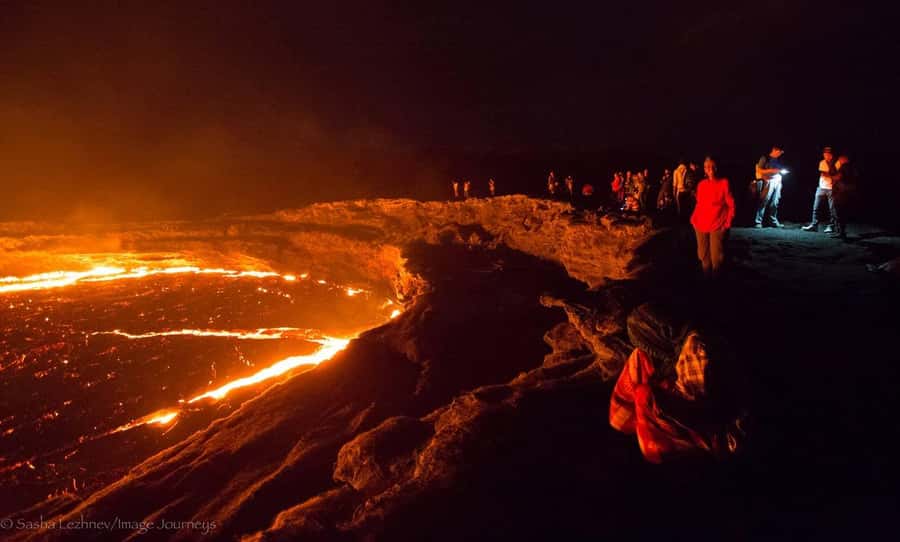
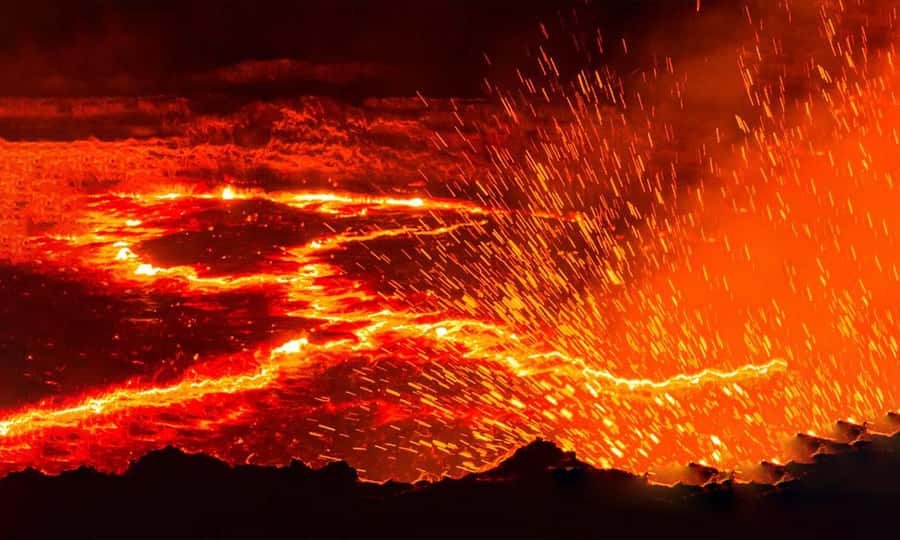
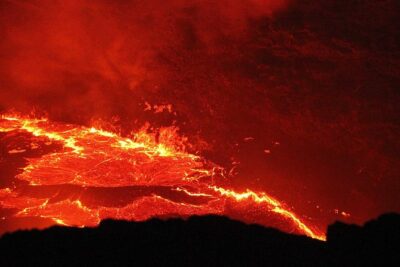
Erta Ale means smoky mountain in the Afar language. The volcano has a summit caldera about one kilometer square and has long been known for its permanent lava lake. The planned highlight is the view from the rim, where you spend the night watching the volcanic activity.
I would treat that lava view as a possibility, not a promise. One recent update says the volcano has partly collapsed and that no lava may be visible. That does not make the volcano pointless, but it changes the value calculation. You should book this day for the entire volcanic setting and the rare chance of activity, not for a guaranteed glowing crater.
After a short break, you trek upward to Erta Ale. The walk is the first serious test of the trip. You need comfortable shoes, light hiking clothing, a hat, sunglasses, sunscreen, and plenty of water. The operator supplies bottled water, but you still need to take hydration seriously in extreme heat.
Camping materials and food are carried by vehicle to the rim. That is a practical advantage, since you do not need to haul the full camp yourself. Even so, the walk takes place on uneven terrain and can feel strenuous in the heat. This is not a good fit if you have heart or back problems, are pregnant, or are bringing a child under 12.
The night at the volcano is the tour’s most dramatic moment when conditions cooperate. You are outside, watching the crater rather than viewing it through a museum display or from a distant road. Bring the required flashlight, and expect the night to be basic. A warm layer is also wise because the packing list specifically calls for warm clothing, even though daytime temperatures can be severe.
Day 2: Craters, saltwater, and Hamedela camping
The second day begins early with a sunrise view at the northern pit crater. You then walk about five minutes to the southern and central pits. The main pit is described as roughly 200 meters deep and 350 meters across, while the smaller southern pit is about 65 meters wide and 100 meters deep.
These measurements help explain why the morning walk matters. You are seeing several volcanic openings rather than a single viewpoint. The short distance between the pits is manageable, but the uneven ground and early start still call for steady footing and practical shoes.
Around 9 a.m., the group descends from Erta Ale and returns to Dodom after an early breakfast. The schedule says you reach camp around 10:30 a.m. and have time to rest before the next drive. That rest period is welcome, since the combination of a night outdoors, an early start, heat, and a difficult trek can take a toll.
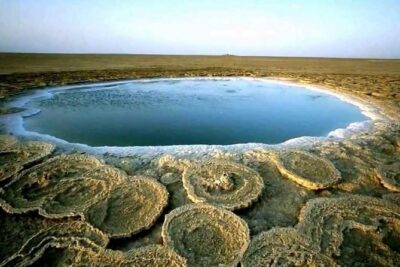
The route then continues to Lake Giulietti, a saltwater lake more than 100 meters below sea level. It is one of the most unusual stops because the lake is not only scenic. Its water supports a long-standing salt-gathering economy in the region.
You also visit the salt flats, where water is evaporated to obtain salt. This adds useful context to the colorful volcanic stops. Instead of seeing the Danakil only as a strange natural attraction, you begin to understand how local communities use its extreme conditions.
The drive continues through Erbiti toward Abaala and Hamedela. The second night is spent at Hamedela. Again, expect outdoor camping rather than a conventional room. There is no stated promise of a bed, shower, or toilet, and the trip should be approached as a basic field journey.
I like this day because it balances geology with human activity. The drawback is the amount of time spent on the road. The Danakil Depression is vast, and reaching its key sites requires long four-wheel-drive transfers. If you want constant sightseeing with little sitting, this will feel slow.
Day 3: Salt mining, camel caravans, and Dallol
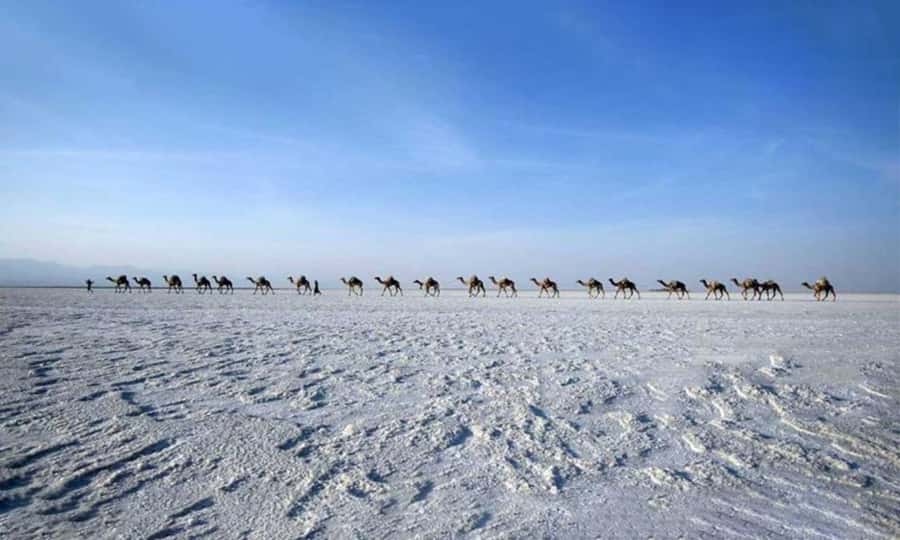
The final day starts with a drive to Ragad, also called Asebo. This is where local workers mine salt. You watch them break salt from the ground, cut it into rectangular pieces, and load it onto camels.
For me, this is one of the tour’s most valuable stops. The work is concrete and easy to understand. You see the full process rather than a staged craft demonstration: salt comes from the ground, workers shape it by hand, and camels carry it onward.
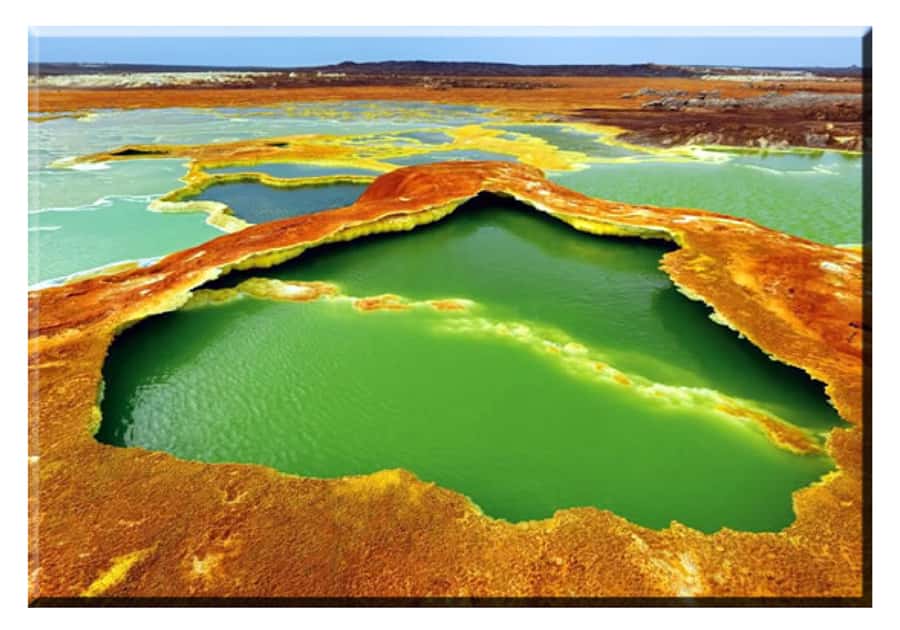
The next stop is Dallol, a place known for unusual volcanic formations and colorful salts. The mineral colors are a major visual attraction, but you should remember that color alone does not make the visit easy. The tour includes walking across uneven ground in a very hot region, so you need to move carefully and protect yourself from the sun.
Dallol is also described as one of the lowest places in the world. That makes it more than a colorful photo stop. The low elevation, volcanic activity, and salt deposits combine to create terrain that looks unlike ordinary mountain or desert scenery.
The day also includes Lake Assal and a chance to follow camel caravans. This ties together the geology and the region’s working life. You see the salt source, the mining activity, and the animals used to transport the material.
After Dallol and Lake Assal, the group drives back to Semera for the flight to Addis Ababa. The schedule is ambitious, so you should expect a long final day. The return airfare is not included in the $300 price, and you need to account for that separately when calculating the real cost.
A few more options to weigh up in Addis Ababa
- Full Day Tour of Addis Ababa with Hotel Pickup and Drop-off
★ 5.0 · 430 reviews - Taste of Ethiopia
★ 5.0 · 406 reviews - Day Trip From Addis Ababa See Historical Monastery,Stunning Nature,Animals,Birds
★ 5.0 · 303 reviews - Addis Ababa: Debre Libanos, Blue Nile Gorge, and Cave Tour
★ 4.5 · 256 reviews
What the $300 price really covers
At $300 per person, this is a strong price for a three-day remote expedition if you value access over comfort. The fee includes all entrance fees and licenses, accommodation in the form of camping, meals, bottled water, four-wheel-drive transport, fuel, drivers, a local Afar guide, cooking equipment, camping equipment, scouts, and police service.
That list matters. In a remote area, transport and security are not small extras. Food, water, fuel, and camping supplies would be difficult and expensive to organize alone. Having those elements bundled into one fee makes the trip much simpler.
The price does not include the roundtrip flight between Addis Ababa and Semera. Since the first day begins with ET110 and the final day ends with a flight back to Addis Ababa, you need to check airfare before deciding that the whole trip costs only $300.
Personal expenses are also excluded. The supplied information does not specify additional fees for particular personal needs, so I would keep a little extra money available without assuming a fixed amount.
The value is best for someone who wants a guided route into a difficult region. If you already have a vehicle, camping kit, local contacts, and permission arrangements, you might compare costs independently. For most visitors, the included logistics, local guide, security, and supplies make the package practical.
Heat, walking, and basic facilities
The physical demands deserve more attention than the attractive photographs. You need to walk on uneven terrain, trek up Erta Ale, and cope with very high temperatures. The operator specifically advises hydration, light clothing suitable for hiking, sunscreen, sunglasses, a hat, comfortable shoes, and a flashlight.
Warm clothing may seem odd in a hot region, but the packing advice includes it because conditions can change between hot daytime travel and outdoor nights. Pack light, but do not skip that layer.
Camping for three days means no normal hotel routine. A recent account describes the experience as three days outside without a toilet, shower, or bed. That is the clearest practical warning in the available information, and you should take it seriously.
The tour is listed as wheelchair accessible, but the actual itinerary includes a challenging trek and substantial walking over uneven ground. I would not treat the accessibility label as proof that every part of the route is suitable for every wheelchair user. Ask the operator for precise arrangements before booking.
The tour is not suitable for children under 12, pregnant women, or people with back or heart problems. Those restrictions fit the heat, walking, camping, and rough-road conditions.
Guides, language, and what to expect on the road
The listed guiding language is English, and an English-speaking live guide is provided for the Afar region. You are also picked up from a hostel, hotel, airport, or guesthouse, which helps if your Addis Ababa plans change before the flight.
Do not assume every driver will speak fluent English. One recent account notes that communication with some drivers can be limited, so save detailed questions for the English-speaking guide. This is a small point, but it can make a difference during long transfers.
The local guide is especially important here. The trip involves Afar communities, salt production, volcanic sites, and security arrangements. A guide gives the journey context and helps the group move through a remote area with the required local support.
The experience has received a 4.8 rating from 31 reviews, with especially strong praise for the unusual sights. One recent visit highlighted the many colors of the sulfur. That praise makes sense: Dallol’s mineral colors and the volcano are the visual rewards after long drives and basic camping.
Who should book this three-day trip?
I would recommend it to you if you want rare natural sights, can handle heat and rough conditions, and care about seeing how salt is mined and transported. It suits active adults who accept that the journey itself is part of the experience.
You should think twice if you need a predictable sleep schedule, private washing facilities, easy walking, or guaranteed lava. The volcano may not show the fiery scene you expect, and the itinerary still requires a demanding trek.
The tour may also work for photographers, but you need to carry your own camera and flashlight while staying within the practical limits of a hot, dusty, outdoor trip. Protect your equipment and your eyes with the listed sunglasses and other sun protection.
Should you book the Danakil Depression tour?
Book it if you want a rugged, well-supported route through Erta Ale, Lake Giulietti, Ragad, Dallol, and Lake Assal, and if the $300 ground package fits your budget after adding flights. The salt mines and camel caravans give the trip real local meaning, while the volcanic sites supply the spectacle.
Skip it if you are chasing a guaranteed lava lake or cannot manage three days without a bed, shower, or toilet. The best reason to go is the combination of extreme geology, Afar salt work, and remote travel. The sensible reason not to go is that the conditions are hard and the volcano’s current state may reduce the headline attraction.
FAQ
How long is the Danakil Depression tour?
The tour lasts three days and two nights.
Does the $300 price include flights?
No. Roundtrip flight tickets are not included. The itinerary uses a morning flight from Addis Ababa to Semera and a return flight from Semera to Addis Ababa.
What happens on the first day?
You fly from Addis Ababa to Semera, meet the pickup team, drive toward Erta Ale, trek to the volcano rim, and camp overnight while watching for volcanic activity.
Is lava at Erta Ale guaranteed?
No. A recent update says the volcano has partly collapsed, so you may not see lava.
What is Lake Giulietti?
Lake Giulietti is a saltwater lake located more than 100 meters below sea level. The tour also visits nearby salt flats where water is evaporated to obtain salt.
What can you see at Ragad?
At Ragad, also called Asebo, you can watch local workers break salt from the ground, cut it into rectangular pieces, and load it onto camels.
What should I bring?
Bring comfortable shoes, warm clothing, sunglasses, a hat, a camera, sunscreen, and a flashlight.
Is the Erta Ale trek difficult?
Yes. Physical fitness is required, and the route includes significant walking on uneven terrain in very high temperatures.
Is the tour suitable for children or people with medical conditions?
It is not suitable for children under 12, pregnant women, or people with back or heart problems.
Just added in Addis Ababa
- Yod Abyssinia Cultural Night: Dinner, Music, and Dance★ 5.0 · 7 reviews
- Addis Ababa City Tours Full-Day Tours★ 5.0 · 5 reviews
- Locally crafted beer and wine tasting and nightlife in Addis tour★ 5.0 · 6 reviews
- Stunning Views Wonchi Crater Lake a Private Day Trip★ 5.0 · 3 reviews
- Unique Ethiopian Cooking Class and Coffee Ceremony with a Local in Addis Ababa★ 4.5 · 7 reviews
- Visiting the wonders of Lalibela in Three (3) days and Two ( 2) nights★ 5.0 · 2 reviews
- .2- Days and 1 Night Tour To Awash National Park water falls★ 5.0 · 1 review
- Two days Lake Wenchi and Menagesha Forest★ 5.0 · 1 review
Danakil Depression Expeditions, compared.
12 Days SIMIEN MOUNTAIN-LALIBELA-DANAKIL-TIGRAY CHURCHES
Read our review →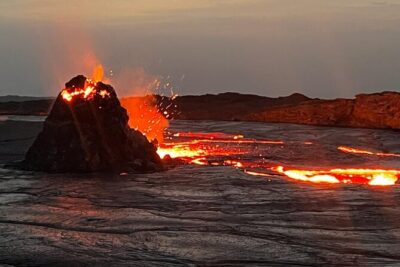
3 Day Danakil Depression Ertale and Dallol Tours
Read our review →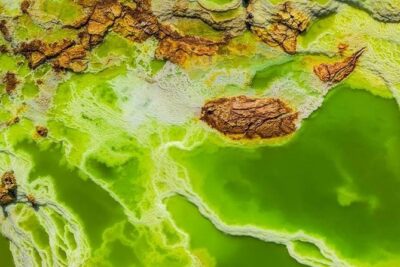
5 DAYS Lalibela, Axum, Tigray churches and Danakil
Read our review →
6 Days tour Package (Simien Mountains, Lalibela, and Danakil Depression)
Read our review →
Lalibela, Axum, Danakil and Omo Valley 8 DAYS
Read our review →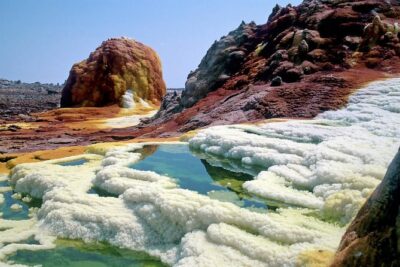
Browse the lists this tour appears in