
Reviewed · HISTORICAL TOURS
Lalibela and Gondar: Two great UNESCO World Heritage sites
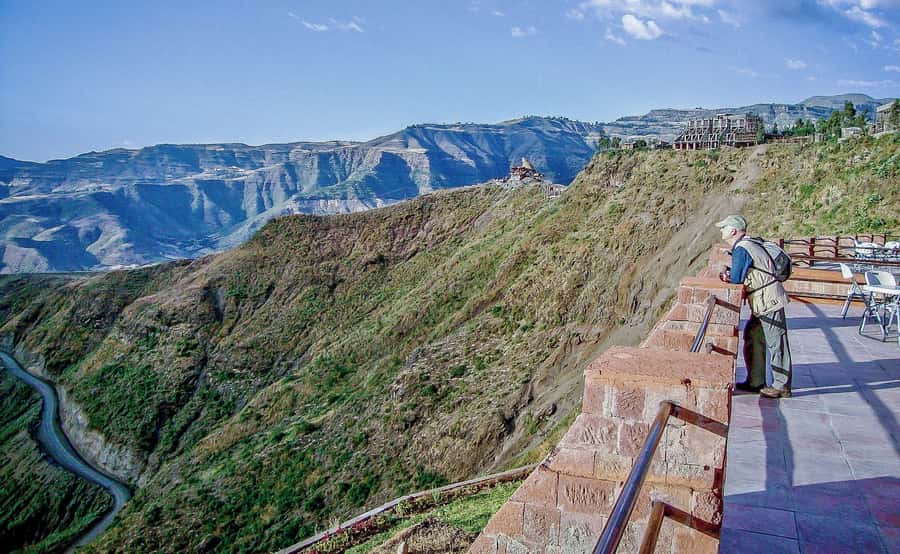
Stone churches lie below your feet. This three or four-day journey links Lalibela’s eleven rock-hewn churches with Gondar’s remarkable castle compound, two of Ethiopia’s most important UNESCO sites. I like the small group limit of six and the way the trip adds Awra Amba, a community with shared work and personal religious choice. The main caution is the rough ground and many steps in Lalibela, so this is not a good fit if walking is difficult.
The route also gives you a fine taste of Ethiopian food, coffee, mountain scenery, and local guiding. Abebe, who owns and guides in Lalibela, and Philimon, the guide in Gondar, have both been praised for their warmth and clear explanations. The long road transfer between the two towns is the tradeoff: it takes time, but it lets you see far more of the countryside than a flight would.
In This Review
- Key things to know before booking
- Why these two UNESCO sites belong together
- Lalibela’s churches, carved down into the earth
- A comfortable Lalibela base and local hospitality
- The road from Lalibela to Gondar
- Gondar’s Castle Compound and royal past
- Debre Birhan Selassie and Ethiopia’s painted church art
- The optional Simien Mountains day
- What the $842 price really covers
- Who should book this Ethiopia tour?
- Should you book Lalibela and Gondar?
- FAQ
- How long does the tour last?
- How much does the tour cost?
- What is included in the price?
- Can the tour begin in Gondar instead of Lalibela?
- Is the Simien Mountains visit included?
- What languages are available, and how large is the group?
Key things to know before booking
- Lalibela is the star attraction: Eleven churches were carved into the ground in the late 12th century, creating one of the world’s most unusual sacred sites.
- Gondar adds a very different chapter: Its central Castle Compound contains eleven 16th-century buildings linked to Ethiopia’s former royal capital.
- Awra Amba breaks up the road journey: You visit a community where men and women share essential work and religious belief is left to each person.
- The four-day version reaches Simien: Expect grand mountain views and close sightings of endemic gelada families.
- The price covers most daily costs: At $842 per person, the package includes hotels, transport, guides, entrance fees, meals, water, and coffee stops.
- The walking is real: Lalibela includes steps and rough rocky ground, while the tour runs in all weather.
Why these two UNESCO sites belong together
Lalibela and Gondar show two very different sides of Ethiopia. Lalibela is a place of faith, carved stone, and pilgrimage. Gondar is a place of royal power, defensive walls, and former court life.
That contrast gives this trip a strong shape. You begin with churches cut from living rock, then move through the countryside to a former capital filled with castles. The sights do not blur together because each town tells a different story.
The tour can run in either direction. You may begin in Lalibela and finish in Gondar, as described here, or start in Gondar and travel south. This flexibility matters if your wider Ethiopia plans already place you in one of the two towns.
The group is limited to six people, which should make the road journey and site visits more personal than a large coach tour. You also have an accompanying guide throughout, plus local guides at the main attractions. That combination is useful in Ethiopia, where the meaning of a church painting or a royal building is easy to miss without explanation.
More history tours in Lalibela:
- From Addis Ababa: Historical & Iconic Landmarks 6-Day Tour
★ 5.0 · 1 review - Day Trip From Addis Ababa See Historical Monastery,Stunning Nature,Animals,Birds
★ 5.0 · 303 reviews - Hidden Treasures of Addis Ababa – Food, Culture and History Tour
★ 5.0 · 57 reviews
Lalibela’s churches, carved down into the earth
Most people arrive in Lalibela by plane. After an early lunch, your first church visit begins with a local guide, and the timing can be adjusted around your arrival.
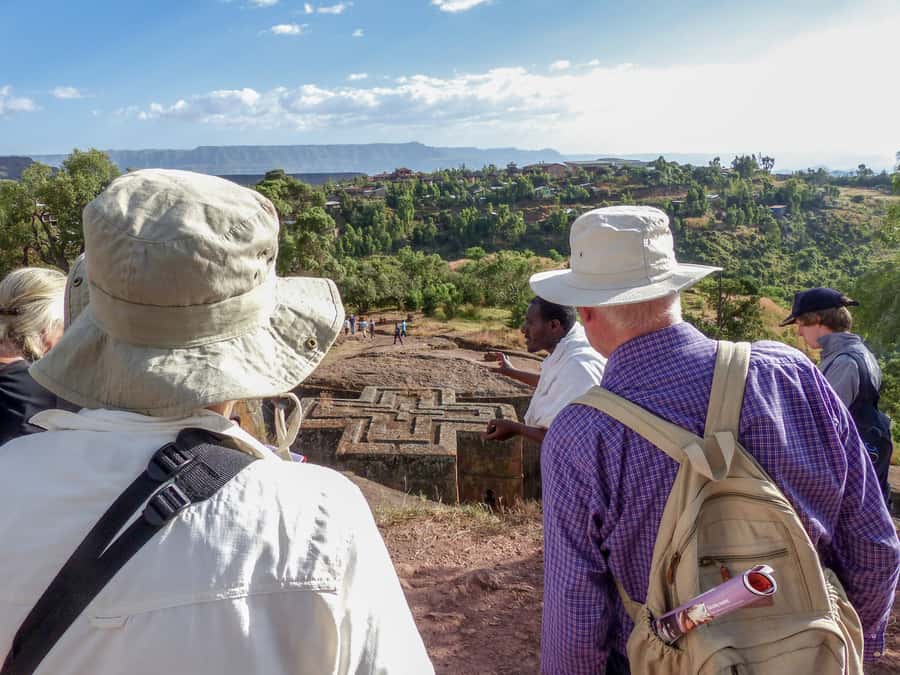
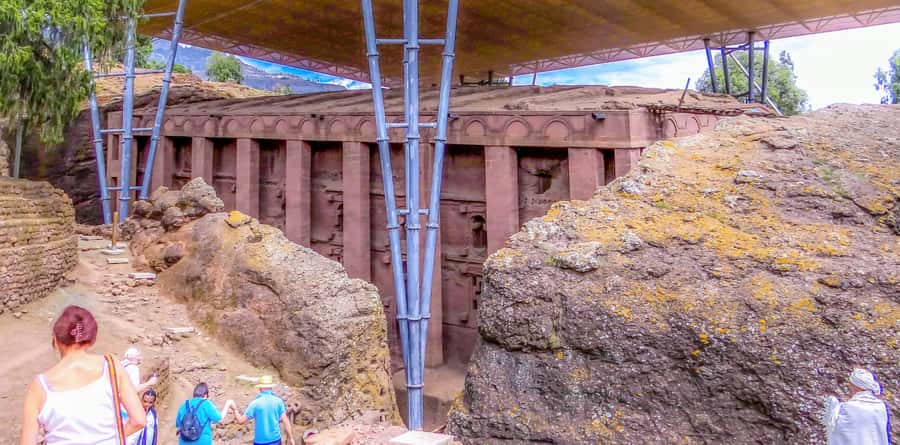
The churches are not built on top of the ground in the usual way. They were cut down into rock, with courtyards, trenches, passageways, and walls shaped from the same stone. Eleven churches date from the late 12th century, when King Lalibela ruled from this mountain town.
That is the first thing you notice: the buildings feel like part of the earth rather than objects placed on it. You may walk along a narrow cut in the rock, then look down into a church courtyard. The setting makes a normal sightseeing habit, simply walking up to a building, impossible.
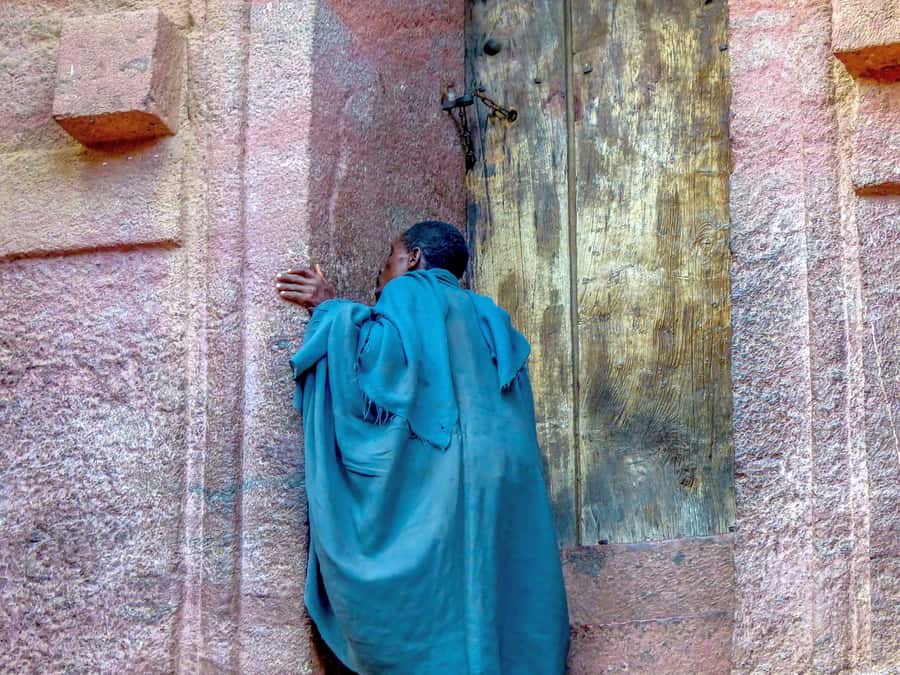
The churches are still holy places, not museum pieces. Your guide helps you understand their role in Ethiopian Christianity and explains what you are seeing as you move among them. The experience works best if you allow time to pause instead of rushing from one church to the next for photographs.
You return to the churches on the following morning with the same guide. This second visit is valuable because Lalibela can feel overwhelming at first. A return gives you time to notice details you missed, ask questions, and see the complex at a calmer pace.
Plan for uneven footing. There are steps and rough rocky surfaces, and suncream is a sensible addition to your day bag. The tour is specifically not suitable for people with mobility impairments, and you should take that warning seriously.
After the first church visit, you check into your hotel and enjoy dinner in an unusual restaurant surrounded by mountain scenery. The setting is part of the appeal, but meals are not unlimited within the package. At lunch and dinner, one plate of food and a soft drink are included. Extra food, personal drinks, and alcohol cost more.
A comfortable Lalibela base and local hospitality
Accommodation is included for two nights on the three-day version, or three nights if you add Simien Mountains. In Lalibela, a particularly well-regarded choice is Zan-seyoum Hotel, praised for its comfortable setting and welcoming service.
Food is another strong part of the experience. Ma’ed Restaurant in Lalibela received special praise for its cooking, and the included meals are a chance to try Ethiopian dishes without having to search for a restaurant after a full day of sightseeing.
Abebe, the owner and guide in Lalibela, is an important part of the local experience. He has been praised for his kindness, religious devotion, and ability to make visitors feel at home. A good local guide changes Lalibela from an impressive set of stones into a place with living meaning.
That personal contact is one reason a small-group tour can be worthwhile here. You are not left to work out the sites alone, and you have someone to help with practical matters from airport pickup to restaurant choices.
The road from Lalibela to Gondar
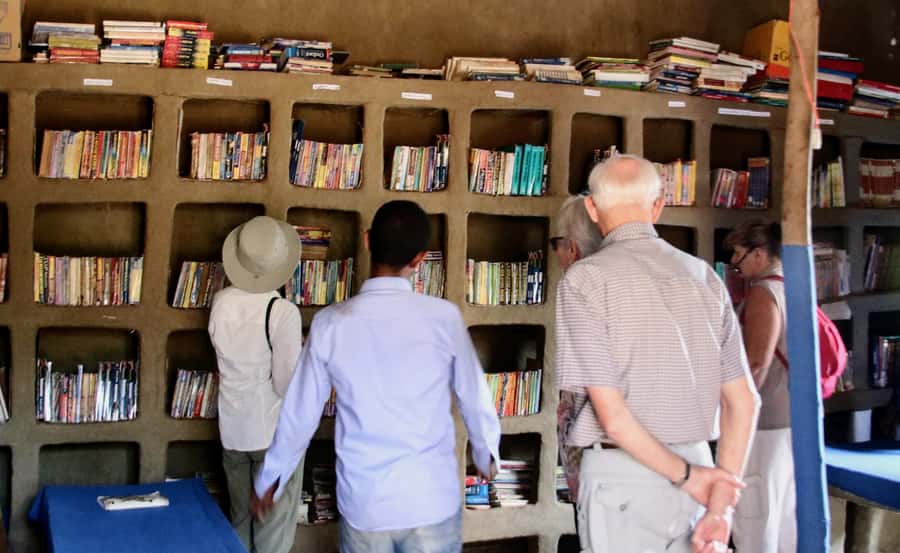
The second day begins with more time among Lalibela’s churches. After an early lunch, you set out by road toward Gondar.
This is a long touring day, but it is not simply dead time between two airports. The countryside changes as you go, with mountain scenery and broad views along the route. You can request coffee stops, and Ethiopian coffee is much more than a quick caffeine break. It is a useful pause, a chance to stretch, and a small connection with daily life along the road.
The main intermediate stop is Awra Amba. This community follows egalitarian rules, with men and women sharing essential tasks. Religious belief is a personal choice rather than a single required faith.
Your guided visit is short, but it adds an important social dimension to the trip. After churches and castles, you see a community organized around a different set of rules. It is worth asking questions respectfully and listening carefully to the guide’s explanation rather than treating the stop as a quick photo opportunity.
The road transfer does require patience. If you prefer to spend as little time as possible in a vehicle, the journey may feel demanding. If you value seeing the countryside and making a meaningful stop along the way, it earns its place in the schedule.
On arrival in Gondar, you check into a good hotel before dinner. Ethiopian dancing is part of the evening, giving you a lively introduction to the city. Another recommended dining choice is Four Sisters Restaurant, which has been singled out as a highlight for its food and atmosphere.
A few more options to weigh up in Lalibela
- Visiting Lalibela churches
★ 5.0 · 40 reviews - Visit the rock hewn churches
★ 5.0 · 39 reviews - Tour 11 monolithic rock churches & museum in Lalibela & cave church with mummies
★ 5.0 · 37 reviews - Lalibela, Axum, Danakil and Omo Valley 8 DAYS
★ 5.0 · 29 reviews
Gondar’s Castle Compound and royal past
Gondar was one of Ethiopia’s former capitals and became a major centre of power in the 17th century. European visitors came to the city during its period of importance, and the central Castle Compound remains the clearest reminder of that royal age.
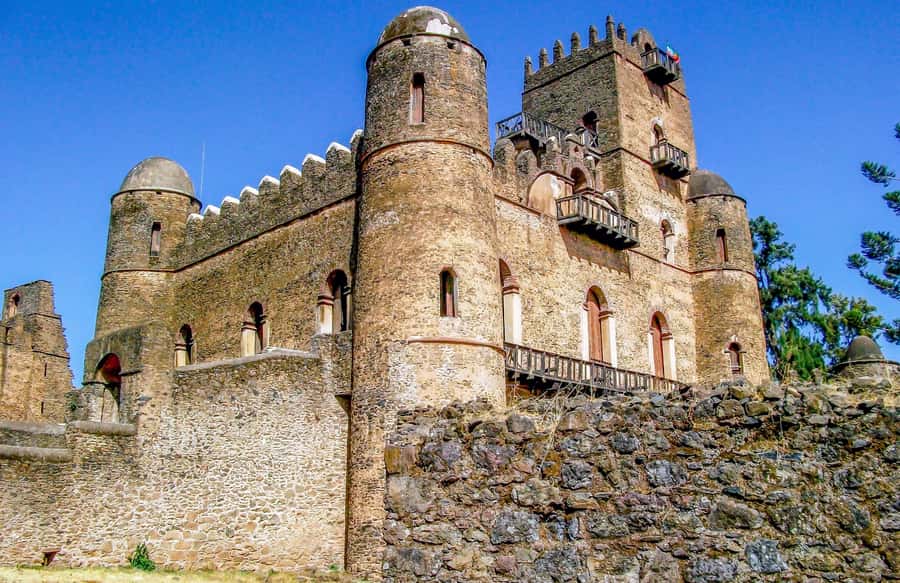
The compound contains eleven castle buildings dating from the 16th century. It is an unexpected sight in Ethiopia: stone structures with a formal, fortress-like presence gathered in the middle of the city.
Your local guide, Philimon, leads the Gondar visits and explains the buildings in context. His role is especially useful here because the individual castles can otherwise look like a collection of old walls. With help, you begin to understand the compound as a centre of government, residence, ceremony, and defence.
You have a full, flexible day in Gondar. That flexibility allows room for a proper lunch and a rest before the afternoon church visit. I like this rhythm. Ethiopia’s highland sites can be physically tiring, and a tour that insists on nonstop sightseeing can leave you too worn out to pay attention.
The Castle Compound is not the only reason to visit Gondar, but it is the anchor. Its appeal is not just architectural. It shows that Ethiopia’s past includes powerful royal capitals and international contact, not only ancient religious monuments.
Debre Birhan Selassie and Ethiopia’s painted church art
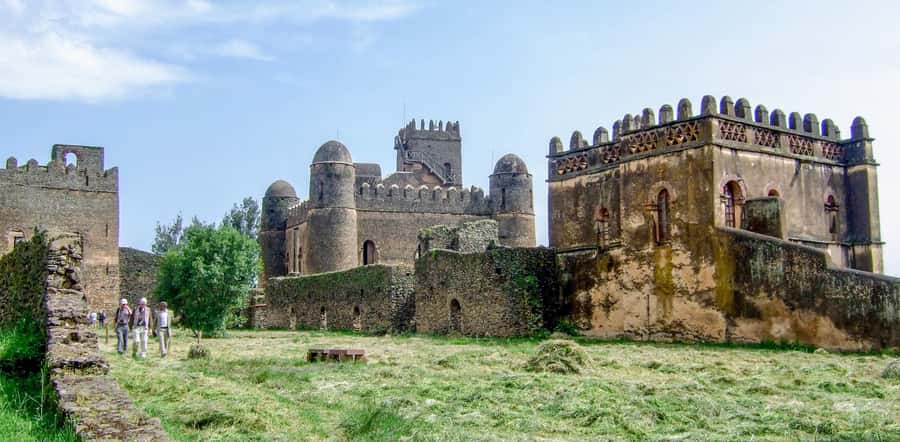
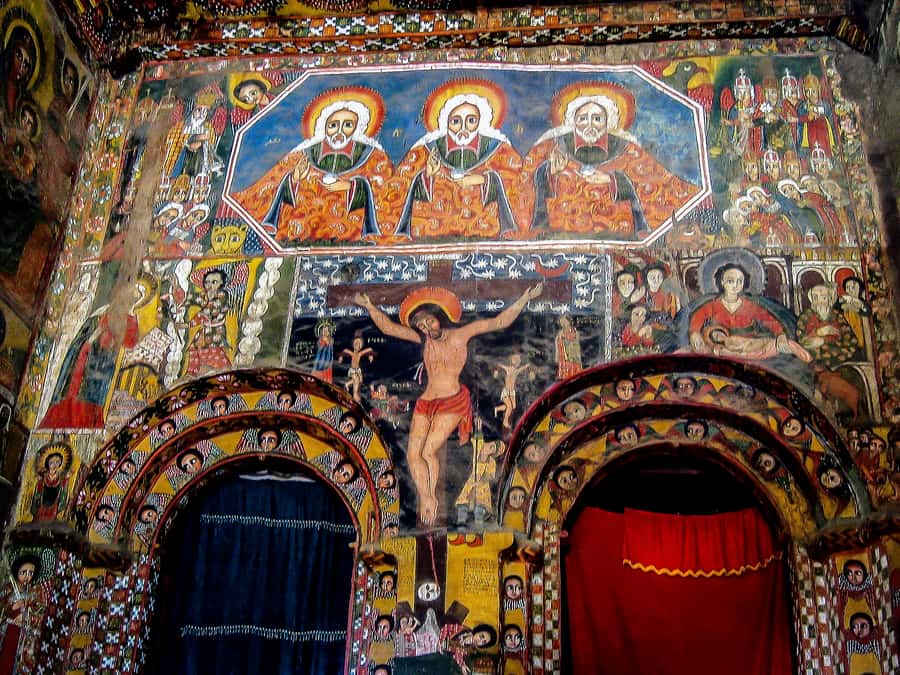
Later in the day, you visit Debre Birhan Selassie, often described as Ethiopia’s most famous church. Its interior is covered with old paintings that present biblical stories.
The church offers a strong contrast with Lalibela. Lalibela impresses through the scale and method of its construction, while Debre Birhan Selassie draws you into its painted interior. Your guide explains the scenes and helps you read the artwork rather than simply glance at it.
Take your time inside. The paintings are the reason for the visit, and a hurried look would reduce the church to a quick stop between larger attractions. The tour includes an expert local guide, so ask about the stories shown and the role of the church in Ethiopian religious life.
The day closes with Ethiopian coffee and a farewell. If you have not arranged accommodation for the following night, the accompanying guide can help you organize a hotel. That is a useful service, especially if your plans change after the tour.
The optional Simien Mountains day
The four-day option adds a trip into the Simien Mountains near Gondar. You drive through the countryside to mountain country known for dramatic views and endemic gelada baboons.
The geladas live in large family groups, and the tour description notes that close encounters are common without being threatening. These are not isolated animals in a zoo-like setting. You may see extended families together, making the wildlife experience especially appealing for anyone interested in animal behaviour.
The mountain day changes the balance of the tour. The three-day version focuses tightly on UNESCO sites and cultural history. The four-day version adds open scenery and wildlife, but also means another full day on the road and an additional hotel night.
After the Simien visit, you return to Gondar for a third comfortable night and another included dinner. I would choose this option if you have enough time and want more than churches and castles. It is less necessary if your schedule is already tight or if your main goal is Ethiopia’s heritage sites.
The tour does not promise a strenuous trek, and the information provided focuses on scenery and gelada sightings. Still, mountain conditions and walking can vary, so sensible shoes, sun protection, and flexibility are wise.
What the $842 price really covers
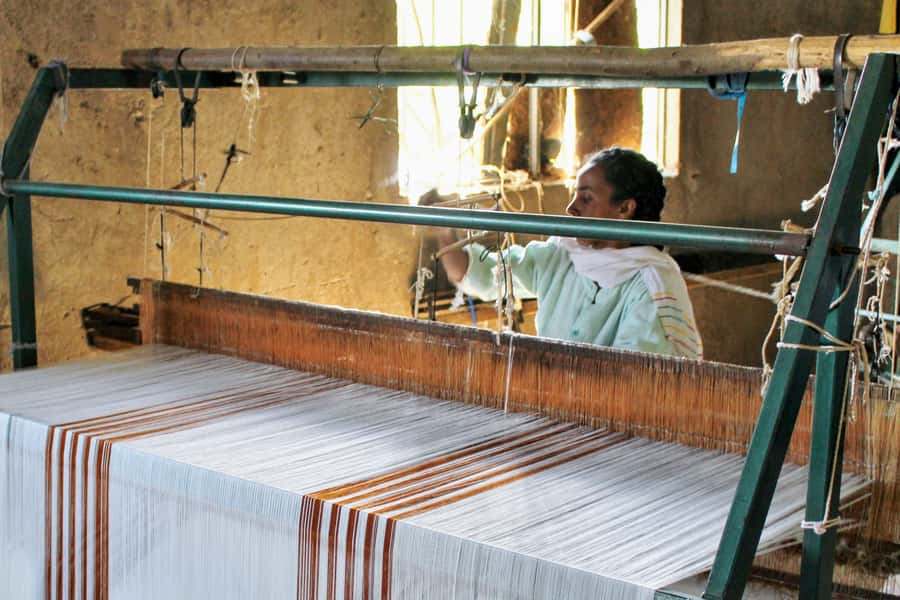
At $842 per person, this is not a budget transport option. It is a bundled private-style experience for a small group, with much of the daily planning handled for you.
The price includes:
- Two nights of hotel accommodation for the three-day tour
- Three nights for the four-day option
- All transport during the tour
- An accompanying guide
- Additional local guides
- Entrance fees to all tourist sites
- All meals during the tour
- Water throughout
- Coffee stops when required
That list gives the price real value. Entrance fees, multiple guides, road transport, meals, and hotel rooms can add up quickly when arranged separately. You also avoid having to find transport between two remote highland destinations or negotiate every stop along the way.
The value is strongest for someone who wants a guided cultural trip with little logistical work. It is weaker for an independent visitor who already has transport and hotels arranged, or who wants to choose every meal and sightseeing stop personally.
Remember the limits. Extra food and drinks are not included, and alcohol costs more than the included mealtime soft drink. Pickup arrangements can vary by booking. You may be met at Gondar airport if you pay the return taxi fare from Gondar, or collected from a hotel in Gondar, with the exact details agreed near the travel date.
Who should book this Ethiopia tour?
I would recommend it to you if you want the major sights explained properly and prefer a small group to a large coach. It is also a good fit if you want local assistance with hotels, meals, airport arrangements, and the long journey between Lalibela and Gondar.
History and architecture fans will find the three-day version satisfying. The churches, Castle Compound, and Debre Birhan Selassie provide a full program without adding the Simien Mountains.
Choose the four-day option if you want mountain scenery and geladas as well. It gives the trip more variety, though you should be comfortable with another day of driving and sightseeing.
This is not the right choice for you if you have significant mobility problems. Lalibela includes steps and rough rock, and the tour runs rain or shine. You should also allow some flexibility around road travel, coffee stops, and the timing of arrivals.
English and Amharic are available, and the group is limited to six participants. Free cancellation is available up to 24 hours before departure, and you can reserve now and pay later, which helps if your Ethiopia schedule is still taking shape.
Should you book Lalibela and Gondar?
Book this tour if you want two of Ethiopia’s finest cultural sites in one carefully arranged trip, with local guides who can add meaning to what you see. The strongest points are the small group, the included costs, the personal service associated with Abebe and Philimon, and the thoughtful addition of Awra Amba.
Choose three days for a focused heritage journey. Add the fourth day if the Simien Mountains and gelada families matter to you. The price is substantial, but it covers enough transport, guiding, accommodation, meals, and entrance fees to make sense for a first visit, especially when you value ease and local support over doing every arrangement yourself.
FAQ
How long does the tour last?
The tour lasts three days, or four days if you add the optional Simien Mountains visit near Gondar.
How much does the tour cost?
The price is $842 per person.
What is included in the price?
The package includes two nights of hotel accommodation for the three-day option, or three nights for the four-day option, all transport, an accompanying guide, local guides, entrance fees, meals, water, and coffee stops.
Can the tour begin in Gondar instead of Lalibela?
Yes. The route can run in reverse, from Gondar to Lalibela instead of Lalibela to Gondar.
Is the Simien Mountains visit included?
No. The Simien Mountains are an optional fourth-day addition to the main three-day tour.
What languages are available, and how large is the group?
Guiding is available in English and Amharic. The group is limited to six participants.
Just added in Lalibela
- Lalibela Backpacker tours★ 5.0 · 6 reviews
- Trekking in Ethiopia’s Lalibela Wollo Highland 4 Days / 3 Nights★ 5.0 · 6 reviews
- The Rock-Hewn Churches of Lalibela: 3 Days / 2 Nights★ 5.0 · 6 reviews
- Lasta Mountains: Highland Eco Trekking Tour in Lalibela★ 5.0 · 4 reviews
- Lalibela Churches Day Tour★ 5.0 · 7 reviews
- Day Tour of the Rock Hewn Churches of Lalibela★ 5.0 · 2 reviews
- Lalibela churches Guided Tour★ 5.0 · 6 reviews
- Full Day Tour To The 11 Rock Hewn Churches Of Lalibela★ 5.0 · 5 reviews
Historical Tours, compared.
Day Trip From Addis Ababa See Historical Monastery,Stunning Nature,Animals,Birds
Read our review →
Hidden Treasures of Addis Ababa – Food, Culture and History Tour
Read our review →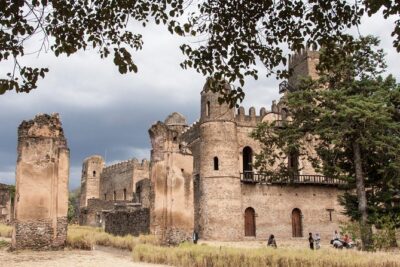
5 Days Tour to World Heritage–listed Harrar, Dire Dawa and Awash NATIONAL PARK
Read our review →
DAY TRIP TO THE UNESCO HERITAGE SITE TIYA & Melka Kunture
Read our review →
Experience a Cultural and Historical Journey through Addis Ababa
Read our review →
Historical tours – in five days, Addis Ababa, Axum, Laliebla and Gonder
Read our review →
city tour of Addis Ababa ( history ,culture , food and more)
Read our review →Browse the lists this tour appears in