
Reviewed · HISTORICAL TOURS
Experience a Cultural and Historical Journey through Addis Ababa
Addis Ababa rewards curious visitors. This private half-day tour connects the city’s major sights with Lucy at the National Museum and the long-running coffee ritual at Tomoca Coffee. I especially like the mix of archaeology and daily life, plus the included Ethiopian lunch and coffee ceremony. The main drawback is a crowded schedule: six stops in roughly five to six hours leaves limited time at some places.
The tour also gives you a private, air-conditioned vehicle and a guide who can explain Ethiopia beyond the postcard version. Eyob has been praised for his grasp of the country’s history, geography, people, current affairs, and travel practicalities. Still, Mercato can be intense, and the day may feel hurried if you prefer slow museum visits or extended shopping.
In This Review
- Key Points Before You Book
- Why This Tour Works for a First Day in Addis Ababa
- Lucy and the National Museum of Ethiopia
- Holy Trinity Cathedral and Ethiopia’s Imperial Past
- Mount Entoto: Addis Ababa from Above
- Lunch Before Mercato
- Mercato, Addis Ababa’s Great Marketplace
- Tiglachin Memorial and a More Recent Chapter
- Tomoca Coffee and the Ethiopian Coffee Tradition
- What $100 Per Person Gets You
- Timing, Pickup, and Who Will Enjoy It Most
- Should You Book This Addis Ababa Tour?
- FAQ
- What is included in the $100 tour price?
- How long does the Addis Ababa tour last?
- What time does the tour begin?
- Is hotel or location pickup available?
- Is this a private tour?
- Is lunch included?
- Can I cancel for a full refund?
Key Points Before You Book
- Lucy anchors the morning: See the famous 3.5-million-year-old Australopithecus afarensis fossil at the National Museum.
- Six very different stops: The route moves from archaeology and imperial history to mountain views, markets, political memory, and coffee culture.
- Private touring matters: Only your group participates, so the pace can be more flexible than on a large group outing.
- Food and coffee are included: Lunch, coffee or tea, and a traditional coffee ceremony add local flavor to a sightseeing day.
- The price covers the main costs: At $100 per person, the fee includes transport, guide service, admissions, lunch, coffee or tea, and taxes.
- Start early and expect a full morning: Pickup is offered, with an advertised 8:30 am start and a total duration of about five to six hours.
Why This Tour Works for a First Day in Addis Ababa

Addis Ababa is a large, layered capital. Its story reaches from early human ancestors to imperial rule, socialist-era politics, religious tradition, highland forests, and modern commerce. Seeing only one part of that story can leave you with a thin picture of the city.
This route gives you a useful first orientation. The National Museum explains why Ethiopia matters to human history. Holy Trinity Cathedral introduces the country’s Orthodox Christian tradition and imperial past. Mount Entoto gives you a view of the capital and the hills around it. Mercato brings you close to trade and ordinary city life, while Tiglachin Memorial offers a reminder of the country’s more recent political and military past.
I like that the tour does not treat Addis Ababa as just a collection of monuments. The coffee stop and lunch help connect the formal sights to living culture. The result is a broad introduction rather than a specialist visit to one museum or church.
The schedule is also practical if you have only one day in the capital. A private vehicle saves you from working out transport between widely separated stops. The air-conditioning will be welcome, particularly after time in the market or on the road to Entoto.
More history tours in Addis Ababa:
- Day Trip From Addis Ababa See Historical Monastery,Stunning Nature,Animals,Birds
★ 5.0 · 303 reviews - Hidden Treasures of Addis Ababa – Food, Culture and History Tour
★ 5.0 · 57 reviews - Northern Ethiopia Historic Route
★ 5.0 · 12 reviews
Lucy and the National Museum of Ethiopia
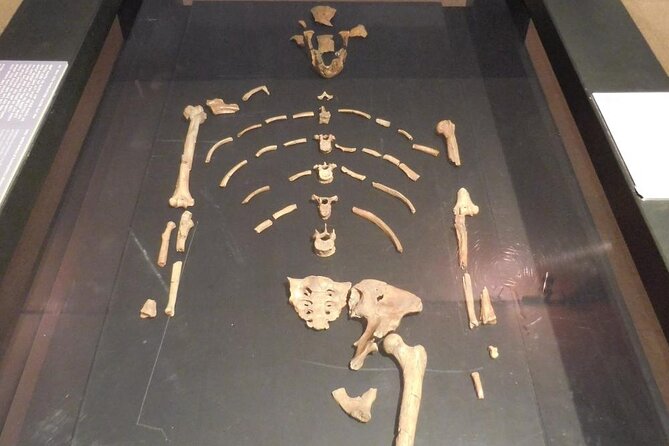
The National Museum is the intellectual heart of the tour. Its most famous object is Lucy, also called Dinkinesh, a name translated as thou art wonderful in the local language. Her fossil is about 3.5 million years old and belongs to Australopithecus afarensis.
Lucy matters because her discovery in 1974 changed the accepted timeline of human development. The fossil showed that ancestors were walking upright around 2.5 million years earlier than had previously been assumed. You do not need to be an archaeology expert to appreciate the importance of that moment. The museum gives you a direct connection to one of the discoveries that reshaped the study of human origins.
The museum also presents archaeological objects from pre-Aksumite civilization. That wider collection is important. Lucy gets the headlines, but Ethiopia’s story did not begin with one fossil. The exhibits help place early human development alongside later societies and material culture.
The scheduled visit lasts about one hour, and admission is included. That is enough time to see the main displays, though it may feel short if you read every label or want to study the archaeological material closely. I would treat this as a focused introduction, not a full museum day.
Your guide can add context that a display case cannot. Eyob has been praised for explaining Ethiopian history and current affairs in a way that connects the past with the country you see outside the museum. If you enjoy asking questions, this is likely one of the best parts of the morning.
Holy Trinity Cathedral and Ethiopia’s Imperial Past
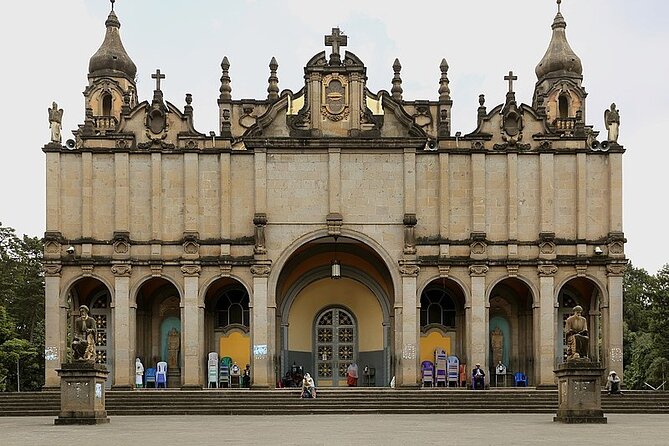
Holy Trinity Cathedral brings a different kind of history. It is one of Ethiopia’s most important churches, and the mausoleum of Emperor Haile Selassie and his wife is located there. The visit gives you a look at the country’s religious identity and its imperial past in one place.
The cathedral is also a working religious site. You may have a chance to observe a religious ceremony, although the timing will depend on what is taking place during your visit. That possibility makes the stop feel less like a museum visit and more like an encounter with an active institution.
You have about one hour here, with admission included. Use that time to pay attention to the atmosphere as well as the building and memorials. A guide can help explain why the cathedral matters to Ethiopian Orthodox Christians and how Haile Selassie remains linked to national memory.
The practical point is to approach the church respectfully. Religious ceremonies are not performances arranged for a tour, so observation should be quiet and considerate. The tour description does not specify a dress code or photography rules, so ask your guide before taking pictures.
Mount Entoto: Addis Ababa from Above

After the city center, the vehicle heads uphill to Mount Entoto. Emperor Menelik II once used the area as a permanent camp, giving the mountain an important place in the foundation story of Addis Ababa.
The drive changes the feel of the day. You leave the dense city and pass through an area covered with eucalyptus trees. The climb brings a considerable change in altitude, and the air is described as scented by the trees. At the top, you get a panoramic view of Addis Ababa and the surrounding countryside.
Only about 30 minutes are scheduled here. That is enough for a quick look and photographs, but not for a long walk or a leisurely mountain visit. I would see Entoto as a viewpoint and historical pause rather than a hiking excursion.
The mountain can also help you understand the shape of Addis Ababa. From above, the capital is easier to read as a highland city spread across hills and valleys. The view is a welcome contrast to the close quarters of Mercato later in the day.
Because the tour includes a considerable change in altitude, pace yourself and tell your guide if you need a moment before moving on. The supplied details do not give an exact elevation, so there is no reason to make strong assumptions about how you will feel. The sensible approach is to take the stop calmly.
A few more options to weigh up in Addis Ababa
- Full Day Tour of Addis Ababa with Hotel Pickup and Drop-off
★ 5.0 · 430 reviews - Taste of Ethiopia
★ 5.0 · 406 reviews - Addis Ababa: Debre Libanos, Blue Nile Gorge, and Cave Tour
★ 4.5 · 256 reviews - Addis Ababa Guided City Tour With Airport & Hotel Pick Up
★ 5.0 · 237 reviews
Lunch Before Mercato

Lunch is included, and the tour description presents it as an authentic Ethiopian meal. That is a useful part of the day, not just a convenience. Food gives you another way to understand the country, especially when it is paired with explanations from a local guide.
The exact restaurant and menu are not specified, so you should ask at the start of the day if you have dietary needs or want to know what will be served. Alcoholic drinks are not included. Coffee or tea is included, and the coffee ceremony is one of the cultural features promoted as part of the experience.
Lunch comes before the Mercato visit. That order makes sense. You can eat before entering a large market, then spend the next 90 minutes looking around without treating the market as a rushed food stop.
Mercato, Addis Ababa’s Great Marketplace
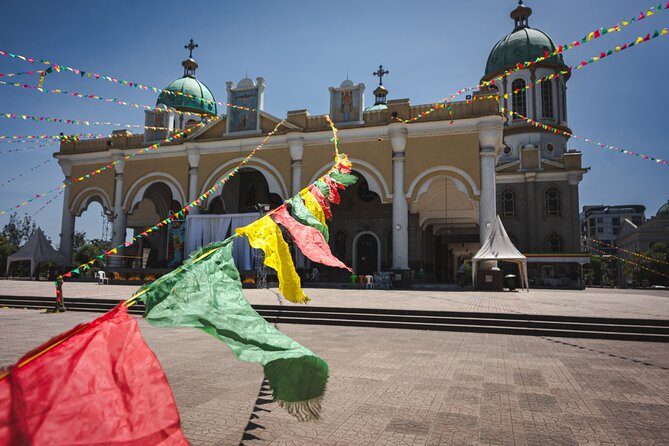
Mercato is described as Africa’s largest open-air market, and the visit lasts about one hour and 30 minutes. Almost every kind of commodity is sold there, making this the most active and potentially unpredictable part of the tour.
Do not expect a quiet shopping street. Mercato is a place to observe trade, movement, negotiation, and the scale of Addis Ababa’s commercial life. The market can give you a stronger feel for the city than a polished sightseeing district can, but it may also be crowded and noisy.
Your guide is particularly useful here. A local guide can help you understand what you are seeing, keep the visit focused, and offer advice if you want to shop. One of the strengths of a private tour is that you can ask to spend more time on a subject that interests you, though the day still has several scheduled stops.
I would not plan an ambitious shopping list unless you are willing to sacrifice time elsewhere. Ninety minutes sounds generous, but it passes quickly in a market of this size. If shopping is your main goal, ask whether the route can be adjusted. If your goal is simply to experience the place, follow your guide and keep your belongings secure.
Mercato may be the stop that divides opinions. Some people love the direct contact with city life. Others may find the crowds and constant activity tiring. The tour is strongest when you approach the market as a cultural visit, not as a carefully arranged retail experience.
Tiglachin Memorial and a More Recent Chapter

Tiglachin Memorial adds a political and military layer to the route. Located on Churchill Avenue, it commemorates Ethiopian and Cuban soldiers involved in the Ogaden War. The memorial was built under Mengistu Haile Mariam.
The visit lasts about 30 minutes. That is enough for a concise explanation and a look at the site, but not an extended study of the period. The stop is valuable because it prevents the tour from presenting Ethiopia only through ancient history, churches, and coffee.
Your guide can help place the memorial within Ethiopia’s modern political story. This is one of the moments when a good explanation matters more than the amount of time spent on site. The memorial may raise questions about the Ogaden War, Mengistu’s government, and Ethiopia’s relationship with Cuba. If those subjects interest you, ask for more background.
The stop may feel abrupt if you are mainly seeking cultural highlights. I think it earns its place because it shows that Addis Ababa’s past includes difficult and contested chapters, not only grand emperors and ancient discoveries.
Tomoca Coffee and the Ethiopian Coffee Tradition

Tomoca Coffee is a fitting final stop. Established in 1953, it was Ethiopia’s first coffee roaster and uses highland beans from Kaffa, identified as the birthplace of coffee. You can enjoy a brewed cup while taking in the atmosphere of this historic coffee shop.
This is more than a caffeine break. Coffee is central to Ethiopian social life, and the experience includes a coffee ceremony. The ceremony gives the day a slower, more personal ending after the museum, market, and memorial.
The stop lasts about 30 minutes. That is enough for a cup and a taste of the setting, but the schedule may not allow a long ceremony or extended conversation. The precise format of the ceremony is not described, so ask your guide what to expect when you arrive.
An optional extension is a visit to Leghar Train Station, Addis Ababa’s oldest station. The description links the station with Tomoca and presents it as a place where transport history and coffee culture meet. Confirm with the guide whether this extension fits within your available time, since the advertised tour already covers six stops.
What $100 Per Person Gets You
At $100 per person, this is not the cheapest way to see Addis Ababa independently. The value depends on how much you place on private transport, a guide, and an organized route.
The fee includes:
- Pickup offered for the tour
- An air-conditioned vehicle
- A professional guide
- Lunch
- Coffee or tea
- All fees and taxes
- Admission to the listed stops
That package makes the price easier to justify, especially if you are visiting Addis Ababa for a short time or do not want to arrange several rides across the city. A private tour also means only your group participates, which can make questions and timing more manageable.
The price is less compelling if you already have transport, prefer to explore markets at your own pace, or want to spend half a day in one museum. This itinerary favors range and convenience over depth.
The published rating is 5 from 9 ratings, and the strongest praise centers on guide quality, thoughtful arrangements, flexibility, and useful advice for the rest of an Ethiopia trip. Eyob is repeatedly singled out as friendly, personable, and able to explain Addis Ababa in a wider national context. That matters because the route covers subjects that benefit from interpretation.
Timing, Pickup, and Who Will Enjoy It Most
The advertised start time is 8:30 am, and the duration is about five to six hours. Pickup is offered, but the supplied information does not name a fixed pickup location. Confirm the meeting details when you book.
A mobile ticket and booking confirmation at the time of reservation make the practical side simple. The tour is near public transportation, though the included vehicle means you do not need to rely on it during the route.
Most people can participate, according to the available details. Still, the day includes a mountain drive, a busy market, walking through cultural sites, and several changes of scene. If you have mobility or health concerns, discuss them with the provider before booking rather than assuming every stop will suit you.
This tour is a good match for:
- First-time visitors with limited time in Addis Ababa
- Solo visitors who want company and local guidance
- People interested in archaeology, religion, politics, and food
- Anyone who wants a private route rather than a large group
- Visitors who value practical advice for the rest of an Ethiopia trip
It is less suitable for someone who wants a quiet, slow museum day or a full afternoon devoted to shopping. The itinerary is broad by design.
Should You Book This Addis Ababa Tour?
I would book this tour if you want a well-rounded first look at Addis Ababa and value having the day arranged for you. The strongest features are the variety of stops, the included lunch and coffee experiences, the private vehicle, and Eyob’s reported ability to connect individual sights with Ethiopia’s wider story.
Go in with realistic expectations. You will not study every museum display, linger for hours at Entoto, or fully explore Mercato in one visit. You will get a brisk, well-planned introduction to the capital, with enough history and local culture to help you decide what deserves a longer return visit.
At $100 per person, the tour makes the most sense when convenience and context matter as much as admission tickets. Free cancellation is available if you cancel at least 24 hours before the start time. Inside that window, the amount paid is not refunded, and changes are not accepted.
FAQ
What is included in the $100 tour price?
The price includes lunch, coffee or tea, all fees and taxes, a professional guide, an air-conditioned vehicle, and admission fees for the listed stops.
How long does the Addis Ababa tour last?
The experience lasts approximately five to six hours.
What time does the tour begin?
The advertised start time is 8:30 am.
Is hotel or location pickup available?
Pickup is offered. The provided details do not specify the exact pickup locations, so confirm your meeting arrangements when booking.
Is this a private tour?
Yes. Only your group participates in the activity.
Is lunch included?
Yes. Lunch is included, and the tour describes it as an authentic Ethiopian lunch.
Can I cancel for a full refund?
Yes, if you cancel at least 24 hours before the experience start time. Cancellations or changes made less than 24 hours before the start time are not refunded or accepted.
Just added in Addis Ababa
- Yod Abyssinia Cultural Night: Dinner, Music, and Dance★ 5.0 · 7 reviews
- Addis Ababa City Tours Full-Day Tours★ 5.0 · 5 reviews
- Locally crafted beer and wine tasting and nightlife in Addis tour★ 5.0 · 6 reviews
- Stunning Views Wonchi Crater Lake a Private Day Trip★ 5.0 · 3 reviews
- Unique Ethiopian Cooking Class and Coffee Ceremony with a Local in Addis Ababa★ 4.5 · 7 reviews
- Visiting the wonders of Lalibela in Three (3) days and Two ( 2) nights★ 5.0 · 2 reviews
- .2- Days and 1 Night Tour To Awash National Park water falls★ 5.0 · 1 review
- Two days Lake Wenchi and Menagesha Forest★ 5.0 · 1 review
Historical Tours, compared.
Day Trip From Addis Ababa See Historical Monastery,Stunning Nature,Animals,Birds
Read our review →
Hidden Treasures of Addis Ababa – Food, Culture and History Tour
Read our review →
5 Days Tour to World Heritage–listed Harrar, Dire Dawa and Awash NATIONAL PARK
Read our review →
DAY TRIP TO THE UNESCO HERITAGE SITE TIYA & Melka Kunture
Read our review →
Historical tours – in five days, Addis Ababa, Axum, Laliebla and Gonder
Read our review →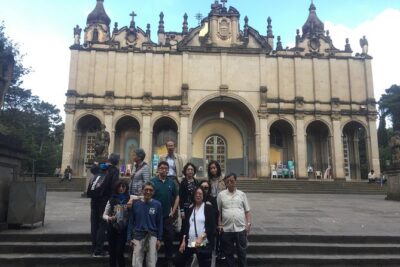
city tour of Addis Ababa ( history ,culture , food and more)
Read our review →
Browse the lists this tour appears in