
Reviewed · DANAKIL DEPRESSION EXPEDITIONS
All inclusive Ethiopia 12 Days Historical Tour and Danakil Depression
Volcanoes, monasteries, and camel caravans share one trip. I like this tour because it brings together Ethiopia’s major northern sights in one organized route, from Addis Ababa and Lake Tana to Lalibela, Gondar, Axum, Tigray, and the Danakil Depression. I also like the broad all-inclusive setup, with domestic flights, hotels, meals, guides, airport transfers, and desert transport covered.
The main caution is the pace. This is not a relaxed hotel-to-hotel holiday. The tour includes long drives, early starts, mountain walks, rough desert roads, a three-hour trek to Erta Ale, and very hot conditions. You need moderate physical fitness and a willingness to accept changes in timing, especially around the Danakil section.
In This Review
- Key things to know before booking
- Why this 12-day route is unusually ambitious
- Addis Ababa: a useful introduction rather than a long city visit
- Lake Tana and Bahir Dar: boats, markets, and old monasteries
- Gondar’s Royal Enclosure and Ethiopia’s imperial past
- Lalibela: two days for churches and mountain views
- Axum: stelae, tombs, and archaeological sites
- Tigray’s cliff churches: the most demanding cultural section
- Mekelle to Ahmedela: the Danakil journey begins
- Erta Ale: a 9-kilometer trek to a volcanic crater
- Sunrise at Erta Ale and the salt country around Lake Afdera
- Dallol, Lake Assal, and the Afar salt trade
- What the $2,990 price covers
- Who will enjoy this tour most
- Should you book this Ethiopia tour?
- FAQ
- How long is the Ethiopia historical tour and Danakil Depression experience?
- Where does the tour begin?
- Is airport pickup available regardless of arrival time?
- What domestic flights are included?
- Are meals included?
- Is the Danakil Depression camping included?
- How difficult is the Erta Ale portion?
- Are camel caravans available all year?
- What is not included in the tour price?
Key things to know before booking
- The route covers Ethiopia’s northern highlights: Addis Ababa, Bahir Dar, Gondar, Lalibela, Axum, Tigray, Mekelle, and the Danakil Depression.
- Lake Tana adds a quieter cultural day: You take a boat to ancient island monasteries after visiting the Bahir Dar market.
- Lalibela gets two days: One day focuses on the famous rock-hewn churches, while the next includes a mule-supported hike to Mount Asheton.
- Tigray requires a head for heights: Abuna Yemata Guh, Maryam Korkor, and Daniel Korkor involve steep, exposed approaches.
- Erta Ale is a real physical undertaking: The trek from Askoma to the volcano takes about three hours over roughly 9 kilometers.
- The $2,990 price includes a lot: Domestic flights, 11 breakfasts, 12 lunches, 12 dinners, accommodation, guides, transport, and airport transfers are included.
Why this 12-day route is unusually ambitious
Many Ethiopia trips focus on one region. This one tries to connect the country’s great northern sites with one of Africa’s most extreme desert areas. You move from highland churches and imperial castles to salt flats, volcanic craters, Afar villages, and camel caravans.
That variety is the strongest reason to consider it. You are not seeing the same type of attraction day after day. One morning may involve a quiet boat ride on Lake Tana, while another ends beside a glowing volcanic crater. The route also gives you more cultural context than a Danakil-only excursion.
The tradeoff is obvious: the itinerary is packed. A flight, a full sightseeing day, and a long road transfer can all occur within a short stretch. I would choose this tour if you value range over leisure and want one booking to handle the complicated parts of northern Ethiopia.
The group size is capped at 15 people, which is small enough to make guided visits manageable without promising a private experience. Pickup is offered regardless of your arrival time. If your flight reaches Addis Ababa in the morning, you may begin after checking into your hotel. Afternoon and evening arrivals generally mean starting the sightseeing the next day.
More Danakil expeditions:
- 12 Days SIMIEN MOUNTAIN-LALIBELA-DANAKIL-TIGRAY CHURCHES
★ 5.0 · 45 reviews - 3 Day Danakil Depression Ertale and Dallol Tours
★ 5.0 · 44 reviews - 5 DAYS Lalibela, Axum, Tigray churches and Danakil
★ 5.0 · 34 reviews
Addis Ababa: a useful introduction rather than a long city visit
Your first day begins with an airport pickup and hotel transfer. The schedule allows about six hours, though the actual sightseeing depends on your arrival time.
If time permits, the Ethnographic Museum offers a practical introduction to Ethiopia’s many cultures. It is a sensible first stop because the rest of the journey crosses several distinct regions. The Mercato gives you a look at daily commerce in one of Africa’s largest outdoor markets, while Trinity Cathedral connects the capital to the country’s imperial and religious past. Emperor Haile Selassie is buried there.
Do not expect a full Addis Ababa city program. The capital works here mainly as your arrival point and a short orientation before the northern circuit begins. Airport pickup is especially useful after an international flight, when arranging a taxi and hotel transfer is one less task to manage.
Lake Tana and Bahir Dar: boats, markets, and old monasteries
Day two takes you to Bahir Dar, where the focus is Lake Tana, the source of the Blue Nile. You also visit the local marketplace, giving the day a good mix of everyday life and sacred sites.
The boat trip is the key experience. Ancient monasteries sit on islands in the lake, and reaching them by water gives the outing a slower rhythm than the road-heavy days that follow. Admission is included, and the six-hour schedule leaves room for the boat visit and market stop.
The practical point is that this is an active sightseeing day, not a free afternoon beside the water. You should expect the schedule to be shaped by boat arrangements and the time needed to reach the monasteries. Still, this is one of the more balanced days in the program, with scenery, local commerce, and religious art in one outing.
Gondar’s Royal Enclosure and Ethiopia’s imperial past
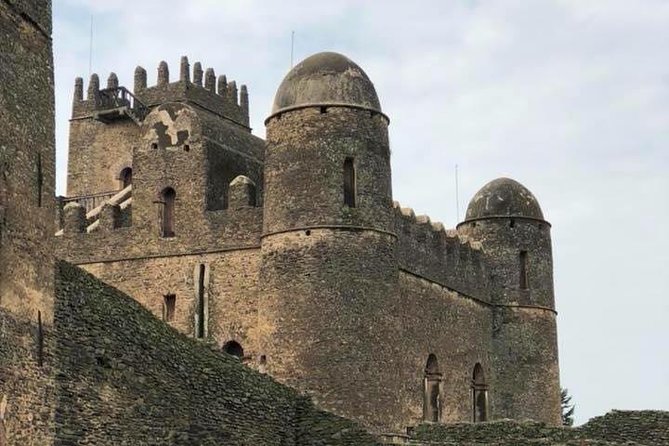
The third day is devoted to Gondar, including the Royal Enclosure, a UNESCO World Heritage site. Five castles were built there by successive Ethiopian kings beginning in the early 17th century.
The enclosure gives you a physical sense of Ethiopia’s royal power. Instead of seeing a single palace, you walk among a group of stone buildings that reflect different rulers and periods. The eight-hour visit allows time for a substantial tour rather than a quick photo stop.
Gondar is also an important transition in the route. After the lake and monasteries around Bahir Dar, the program moves into royal architecture and then toward the more dramatic church sites of Lalibela and Tigray. If you enjoy political history, architecture, and old capitals, Gondar is likely to be one of your favorite stops.
More history tours in Addis Ababa:
- Day Trip From Addis Ababa See Historical Monastery,Stunning Nature,Animals,Birds
★ 5.0 · 303 reviews - Hidden Treasures of Addis Ababa – Food, Culture and History Tour
★ 5.0 · 57 reviews - Northern Ethiopia Historic Route
★ 5.0 · 12 reviews - DAY TRIP TO THE UNESCO HERITAGE SITE TIYA & Melka Kunture
★ 4.5 · 10 reviews
Lalibela: two days for churches and mountain views
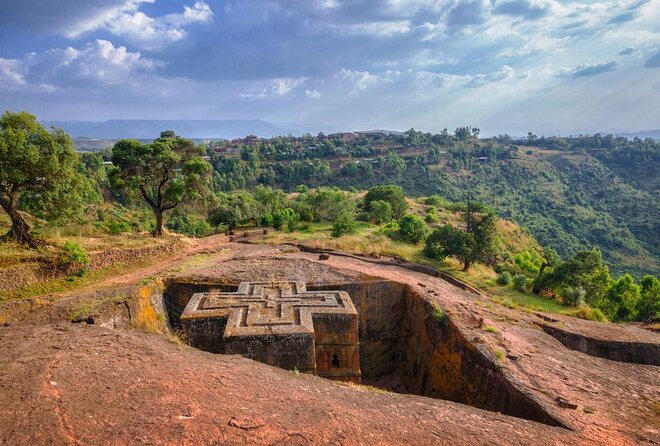
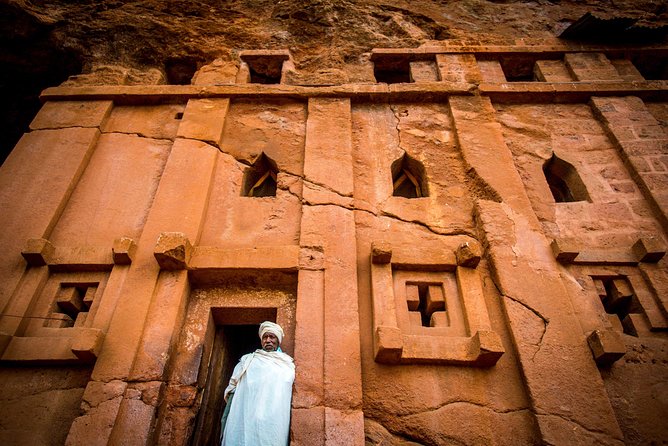
Lalibela receives two days, which is a wise choice. The first day focuses on the famous rock-hewn churches, eleven monolithic and semi-monolithic buildings carved directly into the stone.
These churches are not simply old structures placed on top of a hill. They were cut downward and inward from the rock, creating courtyards, passages, walls, and sanctuaries from one continuous mass of stone. The scale and method are what make the site so memorable. An eight-hour visit gives you time to see the church complex at a pace that is more useful than a rushed stop.
The second day changes the mood. You take a morning hike with mules to Mount Asheton, where a 13th-century rock-hewn monastery offers wide views over Lalibela. The mule support is a practical feature, but you should not read it as a completely easy outing. The tour still describes this as a hike, and highland walking can be tiring after several full sightseeing days.
I particularly like the contrast between the two Lalibela days. The first is about sacred architecture and carved stone. The second gives you open views and a more rural setting. If you want time to appreciate Lalibela rather than simply check it off a list, this is one of the better-planned parts of the route.
Axum: stelae, tombs, and archaeological sites
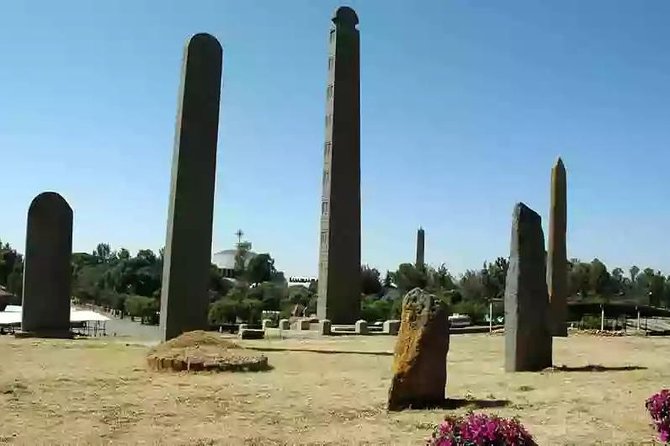
On day six, you fly to Axum on Ethiopian Airlines. Domestic flights are included, which matters here because flying avoids turning the connection into another long road day.
Axum’s main stop is the field of ancient stelae, some of which have stood for about 2,000 years. You also visit the archaeological museum and other tombs and excavated sites as time allows. The wording about time is important: the program leaves room for additional sites, but the exact number may depend on the day’s schedule.
Axum adds another layer to the trip. After the castles of Gondar and the churches of Lalibela, you encounter monumental stone markers and archaeological remains tied to one of Ethiopia’s oldest centers of power. The eight-hour schedule should give you a substantial visit, but the flight timing can influence how much flexibility you have.
Tigray’s cliff churches: the most demanding cultural section
The route from Axum to Hausien passes through Adwa and Adigrat, with visits planned for Abba Garima, Yeha, Debre Damo, and the Gheralta plains. Hausien serves as a base for the rock-hewn churches of Gheralta.
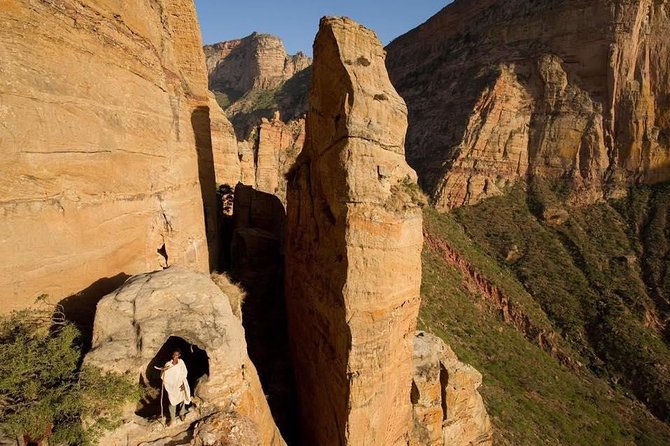
This section is one of the tour’s biggest strengths, but it is also where fitness and comfort with heights matter most. The next day includes three churches in one day: Abuna Yemata Guh, Maryam Korkor, and Daniel Korkor.
Abuna Yemata Guh is especially demanding because the approach involves steep rock and exposed sections. The tour description does not provide technical difficulty ratings, so you should ask the operator for current conditions and the exact access requirements before booking. A moderate fitness level is listed, but that phrase should not be treated as a guarantee of an easy walk.
The reward is a set of churches placed in dramatic rock formations, far removed from the grand urban monuments earlier in the trip. You are seeing religious buildings shaped by the terrain itself, not just entering a conventional church. This is a good place to slow down and listen to your local guide, since the setting and access route are part of the experience.
The itinerary information groups the first Tigray transfer and visits under a duration of three days and eight hours, which is not perfectly clear. I would confirm the overnight locations and daily driving times with Addis Ethiopia Tours before paying. That clarification is especially important because the route includes several remote church sites.
Mekelle to Ahmedela: the Danakil journey begins
Day nine shifts from the northern highlands to the Danakil Depression. In Mekelle, you meet the support vehicle and drive toward Ahmedela via Berhaile. The plan is to camp and watch camel caravans pass through the desert at sunset.
This is the point where the tour becomes much more expedition-like. The schedule is not about polished attractions and short transfers. It is about moving through a remote region with support vehicles, camping equipment, food, mattresses, sleeping materials, and camels carrying supplies.
The camel caravans are not a staged performance. They are linked to the salt trade that continues in the area. That gives the Danakil portion a human dimension beyond its extreme temperatures and volcanic scenery.
You should prepare mentally for basic conditions. The information confirms camping in this section, but it does not promise the comforts of a standard hotel. The desert route also depends on local conditions, and the description notes that some parts may not be available in summer.
Erta Ale: a 9-kilometer trek to a volcanic crater
Day ten begins with breakfast at about 6:30 in the morning, followed by an approximately 80-kilometer drive to Askoma. That drive may take about six hours over solidified lava, rock, sand, and occasional palm-lined oases.
From Askoma, you trek about 9 kilometers to the new Erta Ale area. The walk takes around three hours. Dinner is planned for about 5:00 p.m., followed by an evening trek that should reach the volcano around 8:00 p.m.
This is the most physically demanding day of the tour. The distance alone is manageable for a fit person, but the heat, uneven ground, remote setting, and timing make it more serious than an ordinary sightseeing walk. Camels carry camping supplies and some food, which reduces the amount you need to transport yourself, but it does not remove the need for proper footwear, water, sun protection, and stamina.
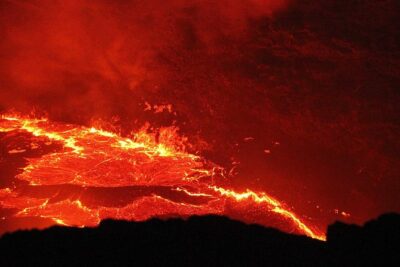
The appeal is clear. Erta Ale gives you a rare chance to see a volcanic crater in a remote desert setting. The experience is more about scale, darkness, heat, and isolation than comfort. I would not book this section if you need predictable road travel, air-conditioning, or easy access to medical services.
Sunrise at Erta Ale and the salt country around Lake Afdera
Day eleven begins early, with time to walk around pits and craters after sunrise. The main crater is described as about 613 meters above sea level, roughly 200 meters deep, and around 350 meters across. A smaller southern pit is about 65 meters wide and 100 meters deep.
You return to Askoma around 7:00 a.m. for breakfast and reach camp by about 10:30. After time to rest, the route continues toward Lake Afdera, also called Lake Giulietti, a saltwater lake more than 100 meters below sea level.
The stop at Lake Afdera gives you a needed change of scenery after the volcano. The lake’s low elevation and saltwater setting help explain why the Danakil is so unusual, but you should note that this optional visit may not be available during summer.
This day combines a hard morning with a recovery period and another remote excursion. That structure is sensible, though the heat can still make even short walks tiring. Your guide’s handling of timing will matter a great deal here.
Dallol, Lake Assal, and the Afar salt trade
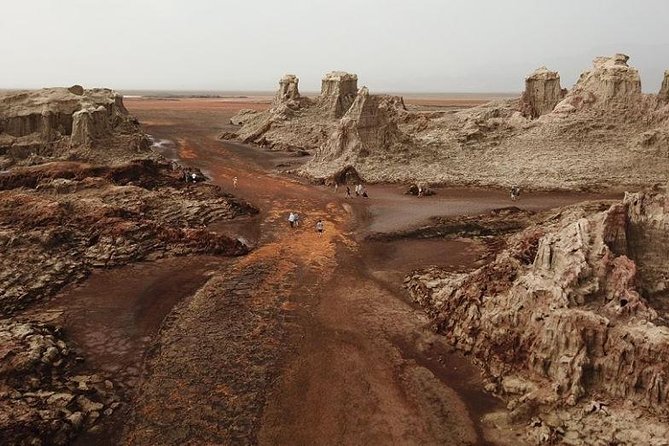
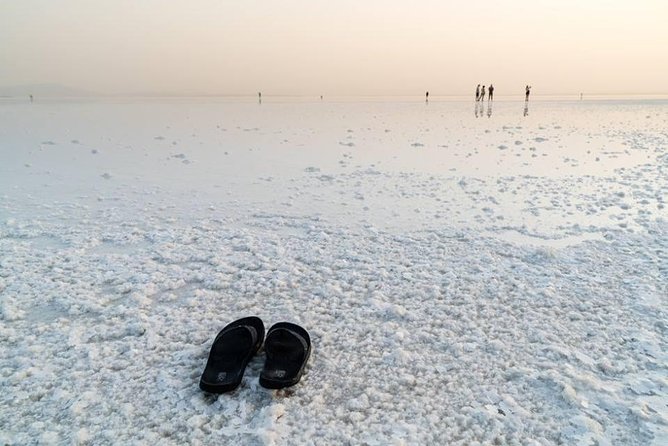
The final full day begins with a drive to Ragad, also called Asebo, where salt is mined. You can observe workers breaking salt from the ground, cutting it into rectangular pieces, and loading it onto camels.
The route continues to Dallol, listed at about 116 meters below sea level, and Lake Assal at roughly 130 meters below sea level. Volcanic activity has created striking colors and unusual salt formations in this area. You also follow camel caravans and walk with Afar people before returning to Hamedela and continuing to Mekelle.
This is the part of the tour that most clearly links natural spectacle with local work. Dallol is visually remarkable, but the salt route explains how people use this harsh region. The camel caravans give the day a living connection to the desert economy.
Seasonal timing matters. No camel caravan is expected in July, August, or early September according to the tour information. If that sight is important to you, check your travel dates before booking. The plan ends with a transfer to the airport for an evening flight to Addis Ababa.
What the $2,990 price covers
At $2,990 per person, this is a substantial purchase, but the value depends on how much of the route you would otherwise arrange yourself. The price includes accommodation, fuel surcharge, taxes, handling charges, professional and local guides, an English-language Blue Badge guide, air-conditioned transport, hotel and airport transfers, and all domestic flights.
Food coverage is also extensive: 11 breakfasts, 12 lunches, and 12 dinners are included. Nonalcoholic beverages are listed as included, while the information also lists alcoholic beverages under included items and separately excludes alcohol. Because those statements conflict, I would ask the company to clarify exactly which drinks are covered.
The Danakil section is where the package can save you the most organizational work. Support vehicles, camping equipment, camel transport, desert drivers, and local arrangements are not simple additions to a standard Ethiopia trip. Having one operator coordinate them may be worth paying for, particularly if you do not speak local languages or want to arrange remote transport independently.
International flights, insurance, photography and filming fees, tips, laundry, souvenirs, and personal purchases are not included. Build those costs into your budget. The tour also says that meals not specifically listed are excluded, so do not assume every snack or extra drink is covered.
Who will enjoy this tour most
I would recommend this tour to someone who wants a concentrated introduction to northern Ethiopia and is comfortable with long, active days. It suits you if sacred sites, archaeology, mountain scenery, desert geology, and local trade all appeal to you.
The tour is less suitable if you want free time, luxury camping, gentle walking, or a flexible schedule. The Tigray churches and Erta Ale trek require physical effort, while the Danakil section may feel basic and demanding.
A group limit of 15 keeps the experience from becoming a large coach tour. You still need to accept group timing, though, especially when flights, long drives, and remote desert conditions are involved.
Addis Ethiopia Tours received particularly strong praise for organizing an all-inclusive northern Ethiopia route, and one customer specifically credited Zenamarkos with arranging an 11-day, 10-night program covering Addis Ababa, Bahir Dar, Gondar, Mekelle, Danakil, and Lalibela. That is useful evidence of the company’s ability to coordinate a complicated route, though you should still confirm current road, flight, and regional conditions.
Free cancellation is available if you cancel at least 24 hours before the start time. Changes or cancellations made within 24 hours are not accepted for a refund, and the cut-off follows local time.
Should you book this Ethiopia tour?
Book it if you want maximum northern Ethiopia coverage in 12 days and value having flights, meals, guides, hotels, and Danakil logistics arranged together. The combination of Lalibela, Tigray, Axum, Gondar, Lake Tana, and Erta Ale is unusually broad.
Think twice if you prefer a slow pace or are uncertain about steep walks, desert camping, and a three-hour volcanic trek. Before booking, confirm the Tigray schedule, the summer availability of Lake Afdera and camel caravans, and the conflicting information about alcoholic drinks.
For an active first trip through Ethiopia’s northern circuit, this is an ambitious and potentially rewarding choice. You will work for some of the best moments, but that effort is part of what makes the churches, volcano, salt routes, and remote desert feel real.
FAQ
How long is the Ethiopia historical tour and Danakil Depression experience?
The tour lasts approximately 12 days.
Where does the tour begin?
The tour begins in Addis Ababa, Ethiopia, with airport pickup provided.
Is airport pickup available regardless of arrival time?
Yes. The operator states that all clients are met at the airport regardless of arrival time. Morning arrivals may begin after checking into the hotel, while afternoon or evening arrivals may start sightseeing the next day.
What domestic flights are included?
All domestic flights are included. The itinerary specifically states that you fly from the northern circuit to Axum on Ethiopian Airlines and later transfer to the airport for an evening flight to Addis Ababa.
Are meals included?
Yes. The package includes 11 breakfasts, 12 lunches, and 12 dinners. Meals not mentioned as included are excluded.
Is the Danakil Depression camping included?
Accommodation is included according to the itinerary, and the Danakil section includes camping near Ahmedela and Erta Ale. Camels carry camping materials, food, sleeping materials, and mattresses.
How difficult is the Erta Ale portion?
The route includes an approximately 9-kilometer trek from Askoma to Erta Ale, taking about three hours. The tour recommends a moderate level of physical fitness.
Are camel caravans available all year?
No. The information states that camel caravans are not available in July, August, or early September.
What is not included in the tour price?
International air tickets, tourist insurance, photography and filming fees, tips, laundry, souvenirs, personal purchases, alcohol according to the exclusions, and anything not specifically listed as included are not covered.
Just added in Addis Ababa
- Yod Abyssinia Cultural Night: Dinner, Music, and Dance★ 5.0 · 7 reviews
- Addis Ababa City Tours Full-Day Tours★ 5.0 · 5 reviews
- Locally crafted beer and wine tasting and nightlife in Addis tour★ 5.0 · 6 reviews
- Unique Ethiopian Cooking Class and Coffee Ceremony with a Local in Addis Ababa★ 4.5 · 7 reviews
- Stunning Views Wonchi Crater Lake a Private Day Trip★ 5.0 · 3 reviews
- Visiting the wonders of Lalibela in Three (3) days and Two ( 2) nights★ 5.0 · 2 reviews
- .2- Days and 1 Night Tour To Awash National Park water falls★ 5.0 · 1 review
- Two days Lake Wenchi and Menagesha Forest★ 5.0 · 1 review
Danakil Depression Expeditions, compared.

12 Days SIMIEN MOUNTAIN-LALIBELA-DANAKIL-TIGRAY CHURCHES
Read our review →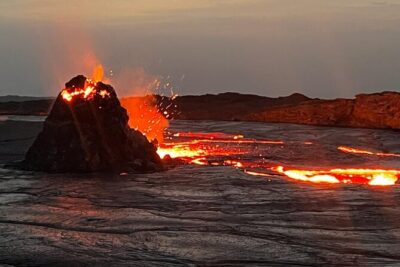
3 Day Danakil Depression Ertale and Dallol Tours
Read our review →
5 DAYS Lalibela, Axum, Tigray churches and Danakil
Read our review →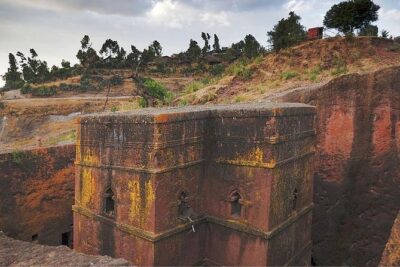
6 Days tour Package (Simien Mountains, Lalibela, and Danakil Depression)
Read our review →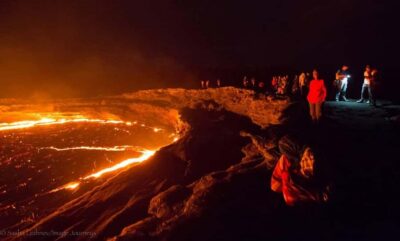
2-Night 3-Day Danakil Depression Tour without Flights
Read our review →
Lalibela, Axum, Danakil and Omo Valley 8 DAYS
Read our review →Browse the lists this tour appears in