

Reviewed · OMO VALLEY TRIBAL TOURS
2 Days Omo Valley Tribes Tour
Remote Ethiopia gets under your skin. I like this tour for its direct contact with Omo Valley communities and its efficient two-day format, which combines a flight to Jinka with visits to the Mursi people. I also like that the price includes a vehicle, driver, guide, park fees, village fees, accommodation, and full-board meals. The main drawback is that domestic flights are not included, so the final cost will be higher than the advertised $454 per person.
This is not a leisurely hotel-based break. You will spend long stretches in a vehicle, cross rough ground, and visit communities whose customs may be unfamiliar. The experience also depends heavily on communication, local guiding, and careful treatment of people you meet. Feedback has been very positive about the guides and the operator’s flexibility, though one severe complaint means I would confirm every arrangement before paying.
In This Review
- Key points before you book
- Why this two-day trip works
- Landing in Jinka after the morning flight
- Ari and Benna communities on the first afternoon
- The Jinka Museum and the value of context
- The morning drive to the Mursi
- Meeting the Mursi with respect
- What the guides add to the experience
- Is $454 good value?
- Practical preparation for a hot, remote route
- Who should book this Omo Valley trip?
- Should you book the 2 Days Omo Valley Tribes Tour?
- FAQ
- How long is the Omo Valley Tribes Tour?
- Are domestic flights included in the $454 price?
- What is included in the tour price?
- Is the Jinka Museum guaranteed?
- Which languages are available with the live guide?
- Where will I be met in Jinka?
- What items should I bring?
Key points before you book
- Fly to Jinka, then head into the Omo Valley: The tour begins with a morning flight from Addis Ababa, saving considerable road time.
- Meet Ari or Benna communities on the first day: Your market and village visits offer a broader view of the region before the Mursi visit.
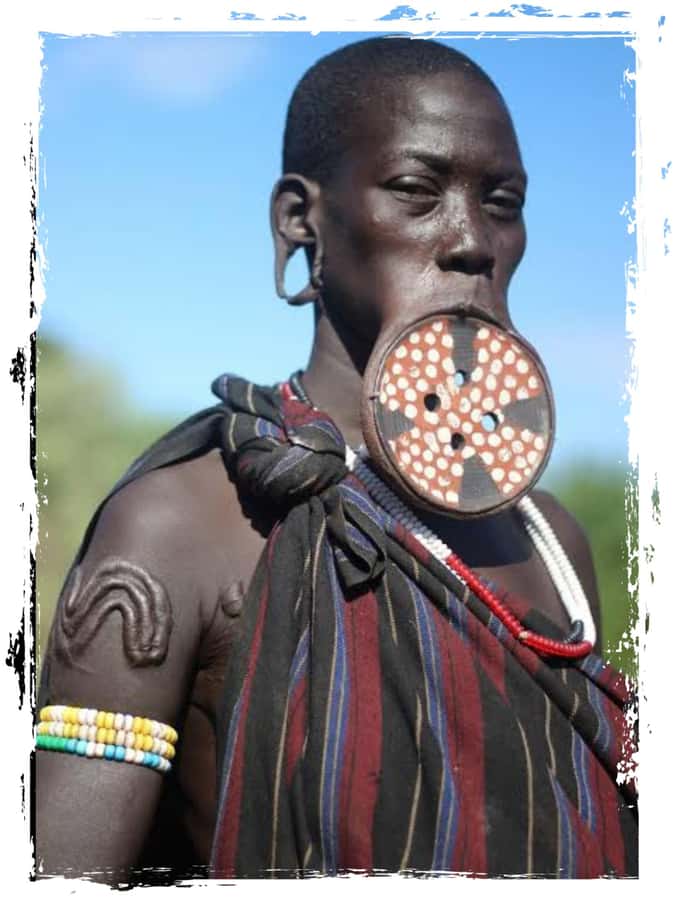
- Visit the Mursi on the second morning: The Mursi are known for distinctive body decoration, scarification, and lip plates.
- Expect striking desert scenery: The drive includes solidified lava rocks, sand dunes, and isolated hamlets.
- The $454 price covers many ground costs: Accommodation, meals, vehicle, entrance charges, guides, scouts, and park fees are included.
- Plan for extra flight and photo costs: Domestic flights, alcohol, and photography fees are not part of the package.
Why this two-day trip works

The Omo Valley is difficult to fit into a short Ethiopia visit. Roads are long, distances are large, and several communities live far from the country’s main tourist routes. By flying from Addis Ababa to Jinka, you spend your limited time on the ground rather than using both days for road travel.
The schedule is compact, but it has a sensible shape. The first day introduces you to Jinka and nearby communities. The second day is reserved for the Mursi, one of the best-known groups in southern Ethiopia. You then return to Jinka for lunch and fly back to Addis Ababa.
I see this as a focused introduction, not a complete study of the Omo Valley. Two days allow you to see important places, but not to build a slow, intimate understanding of every community in the region. If your main goal is to meet the Mursi and get a taste of the area, the format makes sense. If you want several days of village visits, you will need a longer tour.
More Omo Valley tours:
- 5 Day Private tour to the Omo Valley Tribes and Adventure Tour
★ 5.0 · 11 reviews - Omo Valley Tribes 6 Days Tours
★ 4.9 · 10 reviews - From Jinka: Omo Valley Tribe 3-Day Tour
★ 5.0 · 9 reviews
Landing in Jinka after the morning flight
Your experience begins with a morning flight from Addis Ababa to Jinka. The transfer is important because Jinka works as the base for this short visit. Once you arrive, the driver or guide is expected to meet you at the airport with a sign showing your name and the company logo.
That small detail matters in a place where you may not know the airport layout or local transport system. If you are staying in Jinka before the tour begins, pickup is arranged from your hotel lobby instead.
The first afternoon includes lunch, followed by a visit to local markets and nearby Omo Valley communities. The exact community may be Ari or Benna, depending on the day’s timing and local arrangements. This flexibility is practical, since village access and timing can vary.
The market visit gives you a useful first look at daily trade and local life. It is also a gentler introduction than beginning immediately with a long trip into a remote settlement. You can get your bearings, meet your guide, and start to understand the region before the next day’s drive.
Ari and Benna communities on the first afternoon

The Ari and Benna are not simply a warm-up stop. Visiting one of these communities helps you avoid treating the Omo Valley as if it has only one culture. The area is home to several peoples with their own languages, customs, dress, and daily routines.
Your guide and local contacts are especially important here. The tour includes local guide fees, village entrance fees, and scout fees, which suggests that access is organized through people who understand the area. That is preferable to arriving independently and attempting to walk into a community without local support.
You should approach these visits with patience. A village visit is not a stage show, and you may find that interactions are brief, structured, or shaped by local expectations. Ask your guide how to greet people, when photographs are appropriate, and how any photography fee works before taking out your camera.
The supplied information does not promise a particular activity in the Ari or Benna visit. I would therefore judge the stop by the quality of the contact and explanation, not by expecting a fixed performance. If time allows, the Jinka Museum adds useful background.
The Jinka Museum and the value of context
The Jinka Museum is a worthwhile option if the schedule permits. Its purpose on this tour is to help you understand local communities before or after meeting them in person. That context can make a major difference.
Without background, it is easy to reduce the Omo Valley to striking clothes, body decoration, and dramatic photographs. A museum visit can help you see the people you meet as communities with languages, social systems, and traditions, rather than as photo subjects.
The wording if time allows is important. Do not assume the museum is guaranteed. The afternoon includes lunch, markets, and community visits, and flight timing may affect the schedule. If the museum matters to you, ask the operator before departure how much time is normally available.
You spend the night in Jinka at a lodge or hotel. The accommodation is included, but the exact property is not specified. That makes the trip easier to budget, though you should not book it expecting a particular hotel standard unless the operator confirms one.
A few more options to weigh up in Arba Minch and the Omo Valley
- 3 days around Arbaminch and Konso Adventure Tours Life Time
★ 5.0 · 24 reviews - Private 3 Days Adventure Tour Through Arba Minch
★ 5.0 · 16 reviews - 6 Days Omo valley Tribal Tour (Starts Arba Minch End Jinka)
★ 5.0 · 7 reviews - 3 days, Arba Minch and Dorze
★ 5.0 · 7 reviews
The morning drive to the Mursi
Day two begins with a morning drive to the Mursi. This is the tour’s main event, but the drive is part of the experience. You may pass through solidified lava rocks, sand dunes, and isolated hamlets set among the dry, dramatic surroundings of southern Ethiopia.
These roads are not presented as a polished sightseeing route. The description points to a remote journey, and the presence of a driver, scout, and local guide is central to making it possible. You should wear comfortable clothes and be ready for dust, heat, and a good deal of time sitting in the car.
The scenery gives the journey its own value. Dark volcanic rock beside pale sand creates a stark setting, while small hamlets show how widely spread communities are across the region. Keep your camera ready, but do not let photography take over the drive. The views are part of the story, not just a backdrop.
The tour provides a vehicle with fuel and driver allowance. That removes several practical worries, including arranging transport in a remote area. Still, the distance and road conditions may make the day feel tiring, especially if you are not used to rough roads.
Meeting the Mursi with respect
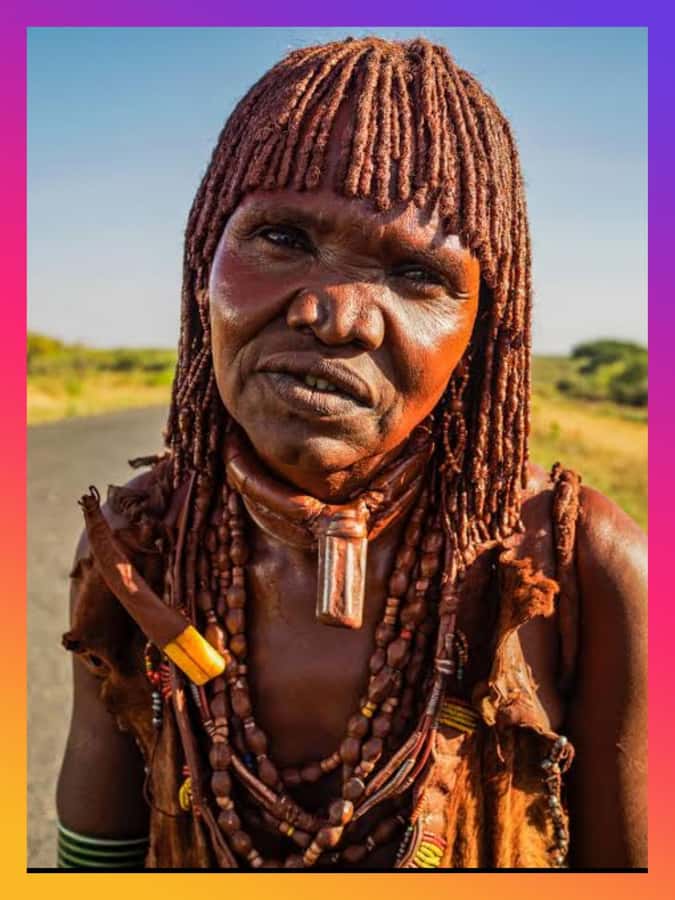
The Mursi are part of the Nilo-Saharan language group and speak a language similar to that of the Surma and Me’en people. They are widely known for the lip plate tradition, in which some women cut the lower lip to insert a clay disc. Mursi men may also have scarification on their shoulders and arms.
These customs are visually striking, but you should not treat the visit as a human curiosity display. The most meaningful encounter comes from listening to your guide, following local instructions, and remembering that you are entering someone else’s community. Your guide should explain how to behave, where to stand, and how photography fees work.
One useful point is that the tour includes village entrance fees, a scout, a local guide, and park fees. These costs are not just paperwork. They help organize access and provide local involvement, which is essential in a place where outside visitors need guidance.
Previous booking feedback gives this part of the tour strong praise. One visitor described the experience as a lifelong dream and appreciated the chance to meet people, see body painting, and experience local customs in a safe and organized way. That enthusiasm is understandable, but I would keep your expectations grounded. A short visit cannot represent an entire culture, and the quality of the encounter will depend on the guide and the circumstances that day.
What the guides add to the experience
The tour is more than a car ride because several local roles are included. You have a driver, a local guide, and a scout, with language support listed in English, Russian, and German. That range is useful if you do not speak Amharic or another local language.
One highly praised part of the experience is the attitude of the guides. A booking from Jack described both guides as kind and helpful, and praised the operator for being easy to work with and focused on making the trip go well. That is exactly what you need on a short, complicated route.
The operator is identified as EcoTours By Local. A previous customer also noted that the company arranges trips in Somaliland, Somalia, South Sudan, Kenya, Tanzania, Djibouti, and Eritrea. That wider regional experience may be useful if you are building a longer East African journey, though you should still confirm the details of this particular departure.
There is also one serious negative account connected to the operator, using strong accusations about Yilikal. Because the available feedback is limited and conflicting, I would ask for the name of your guide, airport pickup confirmation, accommodation details, flight timing, and a full list of extra charges in writing. That is sensible preparation, not needless suspicion.
Is $454 good value?

At $454 per person, the ground portion is reasonably strong if you value convenience and local support. The package includes accommodation, full-board meals, a vehicle with fuel and driver allowance, entrance fees, village fees, scout and local guide fees, and park fees.
Those inclusions matter in the Omo Valley. Transport is not a minor add-on here, and local access often depends on people who know the area. Paying for those elements separately could make a short trip harder to organize and less predictable.
The price does not include domestic flights. Since you need a flight from Addis Ababa to Jinka and another from Jinka back to Addis Ababa, add those costs before comparing this tour with other options. Photography fees are also extra, and alcohol is not included.
I would also ask whether the listed full-board plan covers meals from arrival through departure, and whether drinks are separate. The information says full board, but it does not give meal times or menus. Confirming this is especially helpful because the itinerary includes early driving and flights.
Practical preparation for a hot, remote route
Pack lightly, but bring the basics. Sunglasses, a sun hat, sunscreen, comfortable clothes, insect repellent, a towel, and a camera are specifically recommended. A second hat is also listed, so sun protection is clearly worth taking seriously.
Choose clothes that let you sit comfortably for long drives and that you do not mind getting dusty. The instructions also prohibit alcohol and drugs, fireworks, making fires, and nudity. Those rules are straightforward and appropriate for a remote protected area and village setting.
The tour is listed as wheelchair accessible, but the description does not explain how the vehicle, roads, village paths, or aircraft transfers are adapted. If you use a wheelchair, ask for exact details before booking rather than relying on the general label.
The tour is not suitable for babies under one year or people over 95. The age limits are blunt, but the rough driving, heat, remote setting, and compact schedule explain why the operator may set them.
Free cancellation is available up to 24 hours in advance for a full refund, and you can reserve now and pay later. Those terms make planning easier, but confirm the flight conditions separately because the domestic flights are not part of the tour price.
Who should book this Omo Valley trip?
I would recommend it to you if you have limited time in Ethiopia and want to reach the Omo Valley without committing to a long overland itinerary. It suits people who want a clear focus on Jinka, the Mursi, and encounters with at least one additional local community.
It is also a good match if you prefer having transport, park charges, local access, and meals arranged in advance. The inclusion of a scout and local guide is a real advantage in a remote region.
I would hesitate if you want a slow, private cultural exchange or a detailed visit to many communities. Two days is a compressed schedule, and flight delays or changing local conditions could reduce the time available. I would also think carefully if photography is your main goal, since photo fees are extra and respectful access should come before getting the perfect image.
Should you book the 2 Days Omo Valley Tribes Tour?
Book it if you want a short, organized route to the Mursi and accept that the journey will be rough, fast, and dependent on local arrangements. The strongest reasons are the efficient flight-based schedule, broad coverage of major costs, dramatic desert drives, and positive feedback about the guides and operator’s helpful attitude.
Before paying, get the domestic flight cost, guide name, hotel name, photography fees, and pickup details confirmed. If those points are clear, the $454 ground package can offer solid value for a rare visit to one of Ethiopia’s most remote regions. If you want more time with the Ari, Benna, or Mursi, choose a longer itinerary instead of trying to squeeze the whole Omo Valley into two days.
FAQ
How long is the Omo Valley Tribes Tour?
The tour lasts two days. Day one covers the flight from Addis Ababa to Jinka, lunch, local markets, and a visit to Ari or Benna communities, with an optional Jinka Museum visit if time allows. Day two focuses on the Mursi before returning to Jinka and flying to Addis Ababa.
Are domestic flights included in the $454 price?
No. Domestic flights are specifically excluded, so you must budget separately for the flight from Addis Ababa to Jinka and the return flight.
What is included in the tour price?
Accommodation, a car with fuel and driver allowance, entrance fees, village entrance fees, scout and local guide fees, park fees, and full-board meals are included.
Is the Jinka Museum guaranteed?
No. The museum visit is offered if time allows, so flight timing and the first afternoon’s markets and community visits may affect whether you can go.
Which languages are available with the live guide?
Live guide support is listed in English, Russian, and German.
Where will I be met in Jinka?
The driver or guide will wait at Jinka airport with your name on a sign carrying the company logo. If you are already staying in Jinka, pickup is arranged from your hotel lobby.
What items should I bring?
Bring sunglasses, a sun hat or hat, a towel, a camera, sunscreen, comfortable clothes, and insect repellent. Alcohol, drugs, fireworks, fire-making, and nudity are not allowed.
Just added in Arba Minch and the Omo Valley
- 6 days private Sight Seeing Tours.★ 5.0 · 4 reviews
- 5 Days Omo Valley Tour: Experience Ethiopia’s Tribal Traditions★ 5.0 · 2 reviews
- 3 Days, Arba Minch, Dorze village and Konso Village★ 5.0 · 5 reviews
- 4 day amazing tour with the tribes★ 5.0 · 1 review
- 5 Days adventure tour in omo valley with the tribes.★ 4.5 · 2 reviews
- 6 Days Omo valley Tribal Tour (Starts Arba Minch End Jinka)★ 5.0 · 7 reviews
- 5 Day tour from arbaminch to omo valley★ 5.0 · 2 reviews
- 3 days, Arba Minch and Dorze★ 5.0 · 7 reviews
Omo Valley Tribal Tours, compared.
6 Days Omo Valley Tribes Tours From Addis Ababa
Read our review →
Lalibela, Axum, Danakil and Omo Valley 8 DAYS
Read our review →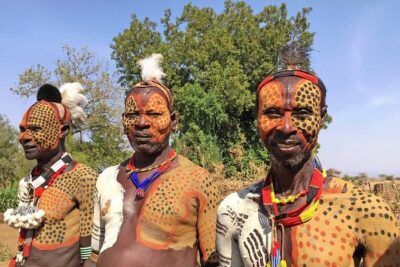


9 Days Tours To Danakil Depression, Simen MNP, Lalibela With Omo Valley Tribes
Read our review →
5 Day Private tour to the Omo Valley Tribes and Adventure Tour
Read our review →Browse the lists this tour appears in