
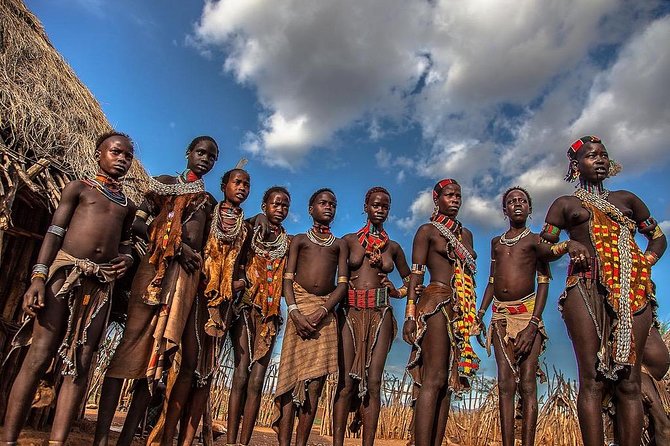
Reviewed · OMO VALLEY TRIBAL TOURS
TRIBES OF THE OMO VALLEY – 8 Days PHOTOGRAPHY EXPEDITION
Remote Ethiopia rewards patient photographers. This 8-day Omo Valley photography expedition combines village visits, cultural encounters, and long overland drives through southern Ethiopia. I like the small-group format and the chance to work in useful morning and afternoon light, rather than rushing through each stop. I also like that the trip includes an air-conditioned 4×4 Land Cruiser, entrance fees, breakfasts, and a local tour leader.
The route offers memorable access to Konso, Mursi, Hamer, and Dassench or Geleb communities, with time for body painting, cattle herding, farming, village life, and ceremonies. The main drawback is the amount of road time. You will cover large distances on rough or tiring roads, and domestic flights, photography fees, and alcoholic drinks cost extra. The planned route also names Kara and Nyangatom communities in its overview, but the day-by-day schedule does not clearly show visits to them, so confirm the final route before paying.
In This Review
- Key points before you book
- Why the Omo Valley works for a photography trip
- Day 1: A soft landing in Addis Ababa
- Day 2: Arba Minch, Chencha, and the Dorze people
- Day 3: Konso terraces and the long road to Jinka
- Day 4: Mursi portraits and an Ari village
- Day 5: Turmi and Hamer village life
- Day 6: Omorate, the Omo River, and Dassench or Geleb communities
- Day 7: The long return to Arba Minch
- Day 8: Back to Addis Ababa and a traditional farewell
- What the $2,933.08 price really covers
- Comfort, fitness, and practical preparation
- Who should book this expedition?
- FAQ
- Where does the expedition start?
- What time is the meeting?
- How long does the expedition last?
- Is airport pickup available?
- Is the Addis Ababa to Arba Minch flight included?
- Which communities are included in the route?
- Are photography fees included?
- What meals are included?
- Is this a private tour?
- Can I cancel for a refund?
- Should you book it?
Key points before you book
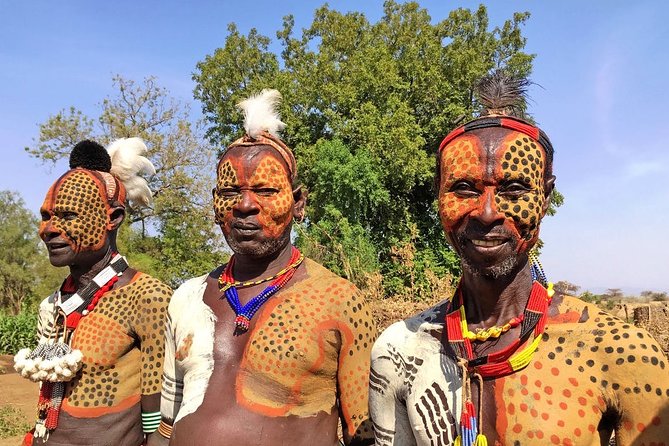
- Photograph four or more distinct communities: The route includes Konso, Mursi, Hamer, Dassench or Geleb, Ari, and Dorze experiences, although the exact communities visited can depend on timing and local conditions.
- Expect serious road mileage: The journey includes drives of 142, 270, 290, and 75 kilometers, plus smaller transfers by 4×4.
- The photo schedule has real purpose: Morning and afternoon visits are intended to give you better light for portraits, face painting, livestock, farming, and daily activity.
- A domestic flight is not included: The 40-minute Addis Ababa to Arba Minch flight must be paid for separately.
- This is private, not a large coach trip: Only your own group participates, which gives the schedule more flexibility.
- Photography fees are extra: Budget separately for any fees requested when photographing people or communities.
Why the Omo Valley works for a photography trip
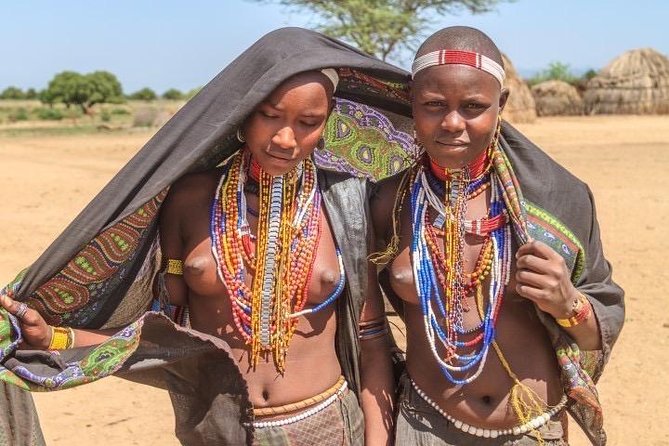
The Omo Valley is remote, and that remoteness is central to the experience. You are not simply moving between scenic viewpoints. You are visiting communities whose traditions include distinctive clothing, hairstyles, body paint, ceremonies, farming, herding, and village life.
That makes this trip especially attractive if your main goal is people photography. You can work with faces, hands, tools, cattle, painted bodies, household activity, and wider village scenes. The plan allows more than a quick roadside stop in several places, which matters when you need time to ask permission, find a respectful position, and wait for good light.
You should also keep your expectations grounded. The word authentic can be used too casually in tourism. A visit arranged for photography is still an organized encounter, and photography fees are not included. Treat people as hosts and individuals rather than as photo subjects. Ask before taking pictures, follow your guide’s advice, and accept a no without argument.
The tour’s small private format helps here. You are not attached to a large bus full of cameras. Your guide and driver can help explain what is happening and adjust the pace when conditions allow. The supplier’s past trips have been praised for being organized, honest, and clear about what to expect. One guide named in the feedback is Dr Turmi, who was praised for finding a good balance between guiding and giving people room to enjoy the trip.
More Omo Valley tours:
- 6 Days Omo Valley Tribes Tours From Addis Ababa
★ 5.0 · 33 reviews - 3 Days Omo Valley Tour
★ 5.0 · 24 reviews - 5 Days Omo Valley Tours
★ 5.0 · 15 reviews
Day 1: A soft landing in Addis Ababa
Your trip begins at Bole International Airport at 6:30 a.m., where you meet the local tour leader and transfer to the Golden Tulip Hotel. The first day is mainly for arrival, rest, and preparation.
Addis Ababa sits at about 2,500 meters above sea level. That altitude may make your first hours feel slower than expected, especially after a long international flight. The schedule gives you time to rest at the hotel, which is sensible before the long southern journey.
The city itself offers museums, broad avenues lined with jacarandas, and the Mercato, one of Africa’s largest open-air markets. Those sights are described as part of the city setting, but they are not listed as formal stops on this eight-day route. If you want time in Addis Ababa, ask about adding it before or after the expedition.
Your first night is important for practical reasons. Check your camera batteries, memory cards, dust protection, and personal medication. The Omo Valley portion is remote, and this is the easiest point in the trip to solve small equipment problems.
Day 2: Arba Minch, Chencha, and the Dorze people
After breakfast, you attend a pre-tour briefing before transferring to Addis Ababa airport for a flight to Arba Minch. The flight takes about 40 minutes, but the airfare is not included in the tour price.
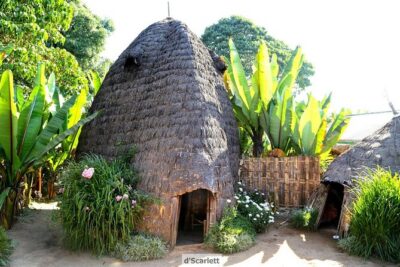
Arba Minch is the gateway to the southern part of the route. From the airport, you travel by road to Chencha, a mountain village on the southwestern edge of the Great Rift Valley. Chencha is home to the Dorze people, who were once known as warriors in the region.
This first cultural stop changes the pace of the trip. You are moving away from the capital and toward smaller communities, highland roads, and rural settings. For a photographer, Chencha can provide an early chance to adjust to portrait work in Ethiopia before the more remote Omo Valley days begin.
The road transfer also gives you a useful warning about the week ahead. Distances that look manageable on a map can take time by 4×4. Roads, stops, village visits, and photography all affect the day. Bring water, keep your camera protected from dust, and avoid assuming that every scheduled arrival will happen exactly on time.
Day 3: Konso terraces and the long road to Jinka
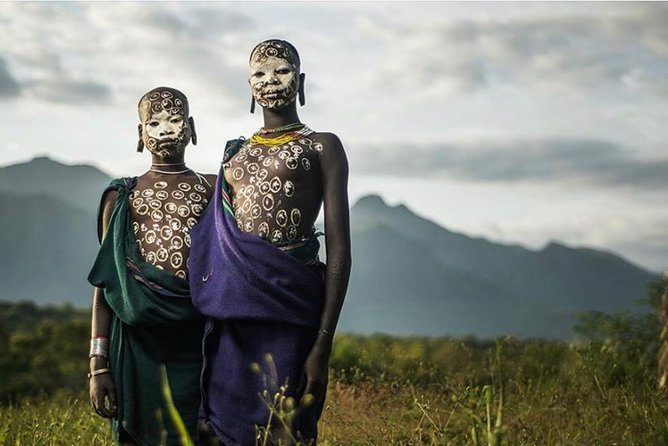
Day 3 begins with a drive toward Jinka, with a stop at Konso. The itinerary gives a distance of about 270 kilometers from Arba Minch toward Jinka and places Konso about 90 kilometers from Arba Minch. You visit a Konso village, eat lunch there, and continue to Jinka for the night.
Konso is one of the strongest cultural stops on the route. The area is known for carefully built agricultural terraces, colorful clothing, and engraved wooden grave markers. The terraces have UNESCO World Heritage status, giving the visit significance beyond photography. They show how people have shaped steep ground for farming over generations.
The wooden markers and clothing also offer strong visual subjects, but they deserve care. Ask your guide how to approach graves and memorial objects. Good photographs come from understanding what you are seeing, not simply collecting dramatic images.
After lunch, the journey continues to Jinka, where you check into the NASA Hotel. This is a long transfer day, so do not plan on a full afternoon of relaxed shooting. The payoff is reaching Jinka, a base for the Mago National Park and nearby communities.
More photo sessions in Addis Ababa:
- Photography Expeditions to Omo Valley
★ 5.0 · 5 reviews - 9 days Omo Valley Tribes and Photography Tour
★ 5.0 · 4 reviews - Omo Valley Tribes Photography Tour by Locals
★ 5.0 · 2 reviews
Day 4: Mursi portraits and an Ari village
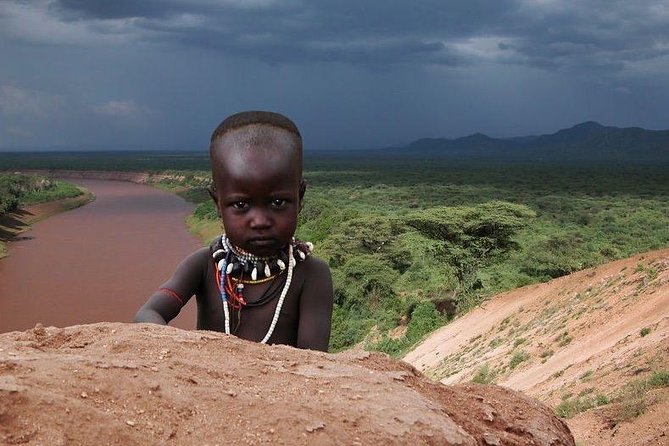
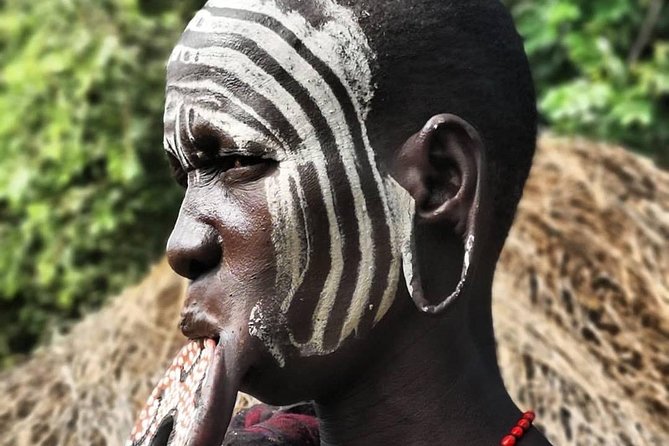
From Jinka, you drive about 55 kilometers to visit a Mursi village in or near Mago National Park. The Mursi are widely known for the clay plates worn by some women in their lower lips. This is one of the most recognizable cultural images associated with the Omo region.
That fame can make this visit feel complicated. You may arrive with a clear photographic idea, but the community is not a stage set. Listen carefully to local instructions, ask about photography fees, and let the guide explain how portraits should be made. The unusual visual details are only one part of the visit. You are also seeing a living community with its own routines and choices.
After returning to Jinka for lunch, you visit a nearby Ari village and a museum. This creates a useful contrast with the Mursi visit. Instead of focusing on one famous custom, you get a broader look at local life and regional culture.
You spend another night at the NASA Hotel. Two nights around Jinka reduce the need to pack and unpack every morning, although the day still involves a rough road out and back. I would keep your camera setup simple here. A versatile lens, spare batteries, and a small dust cloth will be more useful than a heavy collection of gear.
Day 5: Turmi and Hamer village life
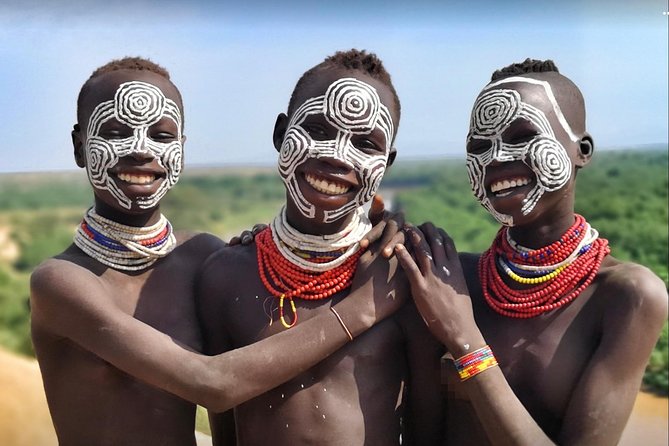
After breakfast, you drive about 142 kilometers from Jinka to Turmi, stopping at an interesting village along the way. Once in Turmi, you check into a lodge and have lunch before walking to a Hamer village described as non-touristic.
The Hamer are known for elaborate hairstyles and body painting. Clay and vegetable pigments are used to create patterns on faces, chests, arms, and legs. These details give photographers plenty to work with, from close portraits to wider scenes showing preparation and social life.
The walking visit is a welcome change after long drives. It lets you slow down and look carefully rather than shooting through a vehicle window. Still, the phrase non-touristic should not lead you to expect a completely private encounter. The visit is arranged as part of an expedition, so courtesy and permission remain essential.
Turmi is also where the trip begins to feel more focused on the Omo Valley communities named in the tour’s main description. The combination of a village visit, time on foot, and a lodge base gives you a better chance to work patiently with changing light.
Day 6: Omorate, the Omo River, and Dassench or Geleb communities
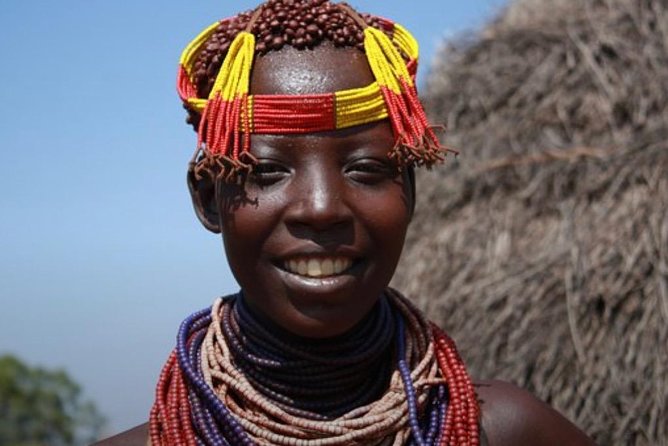
Day 6 starts early with a drive of about 75 kilometers from Turmi to Omorate. Early departure is practical. It gives you more time at the destination and may offer softer light for photography.
At Omorate, you take a boat on the Omo River and visit a Dassench or Geleb village. The river crossing adds a different setting to the trip, and the village visit gives you another cultural point of comparison after the Hamer and Mursi communities.
The schedule brings you back to Turmi for lunch. The afternoon is free for your own program or another Hamer village visit. This open time is one of the better features for photographers. You can return to a subject, work with a different light angle, or simply rest after several demanding days.
The wording of the route deserves attention here. The overview names Kara and Nyangatom tribes, yet the listed daily stops focus on Dassench or Geleb, Hamer, Mursi, Konso, Ari, and Dorze communities. If Kara or Nyangatom photography is a priority, ask the operator exactly where those visits fit, and how seasonal conditions affect them.
Day 7: The long return to Arba Minch
After breakfast, you drive roughly 290 kilometers from Turmi to Arba Minch, stopping for lunch in Konso. This is one of the longest road days of the expedition.
The return route may feel less exciting than the outward journey, but it serves an important purpose. It brings you back toward the airport and gives you a final chance to remember the change from the highland setting around Chencha and Konso to the drier southern communities.
You spend the night at a lodge in Arba Minch. That overnight stop is more comfortable than trying to reach Addis Ababa the same day. It also protects the final day from becoming an impossible rush.
Day 8: Back to Addis Ababa and a traditional farewell
The final morning takes you by road from Arba Minch to Addis Ababa. An optional stop may be arranged at the Tiya or Melka-Kuntare archaeological sites on the way back.
The schedule expects you to reach Addis Ababa in the late afternoon, take a short break, and then attend a farewell dinner at a traditional Ethiopian restaurant such as Habesha 2000 or YOD Abyssinia. The evening includes Ethiopian food and drinks, live music, and dance before your airport transfer.
This closing meal gives the expedition a pleasant cultural finish, but you should check the timing of your flight carefully. The schedule already includes a long return drive, a possible archaeological stop, a break, dinner, and airport transport. If your international departure is early, confirm that the farewell plan fits safely.
What the $2,933.08 price really covers
At $2,933.08 per person, this is not a budget trip. Its value depends on what you want from the Omo Valley.
The price includes an air-conditioned 4×4 Land Cruiser, entrance fees, breakfasts, accommodations listed through the route, local guiding, and the planned transfers. For an isolated region with long road distances, a private vehicle and local coordination are meaningful inclusions. You are paying for access, logistics, and time, not just sightseeing tickets.
The domestic flight from Addis Ababa to Arba Minch is extra. Photography fees are also extra, and you should set aside money for them rather than treating them as an unexpected nuisance. Alcoholic drinks are not included.
The private format improves the value if you care about photography. You are not sharing the schedule with a large mixed group, and the free afternoon in Turmi may be easier to use well. The price is harder to justify if you dislike long drives or want a relaxed holiday with lots of comfort and little moving around.
Comfort, fitness, and practical preparation
The tour asks for a moderate level of physical fitness. That means you should be ready for long 4×4 rides, village walking, early starts, and repeated changes between road travel and outdoor visits.
Accommodation includes the Golden Tulip Hotel in Addis Ababa, NASA Hotel in Jinka, and lodges in Turmi and Arba Minch. The information provided does not give room details, meal menus, or lodge standards, so ask specific questions if comfort matters to you.
Pickup is offered, and the meeting point is Bole Airport. Mobile tickets and booking confirmation are available. Free cancellation applies up to 24 hours before the start time, while late cancellations and late changes are not accepted. Poor weather may lead to a different date or a full refund.
I would bring lightweight clothing, sturdy walking shoes, sun protection, spare camera batteries, memory cards, a camera cover, and a small day bag. Keep your equipment secure during road travel and ask before photographing people, ceremonies, homes, graves, or children.
Who should book this expedition?
I would recommend this trip to photographers who value access and patience more than luxury. It suits you if you want portraits, village scenes, body painting, cattle, farming, river travel, and cultural encounters in one demanding week.
It is also a good fit if you prefer a private group and want a local guide to handle the complex driving and village arrangements. The positive feedback points to an organized company, honest communication, and guides who balance information with personal freedom.
I would hesitate if you have limited tolerance for long drives, need a fixed timetable, or want every promised community visit spelled out in detail. The Kara and Nyangatom references should be clarified before booking, as should the separate photography fees and domestic airfare.
FAQ
Where does the expedition start?
It starts at Bole International Airport in Addis Ababa, Ethiopia.
What time is the meeting?
The stated start time is 6:30 a.m.
How long does the expedition last?
The expedition lasts approximately eight days.
Is airport pickup available?
Yes, pickup is offered, and the itinerary begins with an arrival transfer from Bole International Airport.
Is the Addis Ababa to Arba Minch flight included?
No. The domestic flight is listed as an extra cost.
Which communities are included in the route?
The route includes Konso, Mursi, Ari, Hamer, and Dassench or Geleb communities, plus a visit to the Dorze people around Chencha. The overview also names Kara and Nyangatom, but their exact visit is not clear in the daily schedule.
Are photography fees included?
No. Photography fees are not included in the price.
What meals are included?
Eight breakfasts are included. Alcoholic drinks are not included.
Is this a private tour?
Yes. Only your own group participates in the activity.
Can I cancel for a refund?
You can cancel up to 24 hours before the experience start time for a full refund. Cancellations or changes made less than 24 hours before the start time are not accepted, and poor weather may lead to a new date or a full refund.
Should you book it?
Book this expedition if your priority is access to southern Ethiopia’s communities and time to make serious photographs. The route is demanding, but the mix of Konso terraces, Mursi customs, Hamer body painting, Dassench or Geleb village life, and the Omo River creates a varied week.
Before committing, confirm three things: the final community list, the domestic airfare, and the expected photography fees. If those costs and the long road days suit you, the private vehicle, local support, and flexible photography time make the $2,933.08 price easier to understand. If you want a gentle holiday, choose a slower itinerary with fewer miles.
Just added in Addis Ababa
- Yod Abyssinia Cultural Night: Dinner, Music, and Dance★ 5.0 · 7 reviews
- Addis Ababa City Tours Full-Day Tours★ 5.0 · 5 reviews
- Locally crafted beer and wine tasting and nightlife in Addis tour★ 5.0 · 6 reviews
- Unique Ethiopian Cooking Class and Coffee Ceremony with a Local in Addis Ababa★ 4.5 · 7 reviews
- Stunning Views Wonchi Crater Lake a Private Day Trip★ 5.0 · 3 reviews
- .2- Days and 1 Night Tour To Awash National Park water falls★ 5.0 · 1 review
- Visiting the wonders of Lalibela in Three (3) days and Two ( 2) nights★ 5.0 · 2 reviews
- Two days Lake Wenchi and Menagesha Forest★ 5.0 · 1 review
Omo Valley Tribal Tours, compared.
6 Days Omo Valley Tribes Tours From Addis Ababa
Read our review →
Lalibela, Axum, Danakil and Omo Valley 8 DAYS
Read our review →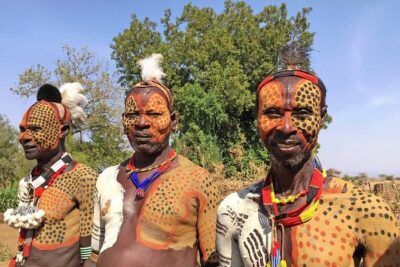
9 Days Tours To Danakil Depression, Simen MNP, Lalibela With Omo Valley Tribes
Read our review →
5 Day Private tour to the Omo Valley Tribes and Adventure Tour
Read our review →Browse the lists this tour appears in