
Reviewed · FOOD & DRINK
Food Tour in Addis Ababa
Addis Ababa tastes best at the source. This private food tour combines Merkato shopping, an injera-making lesson, a family meal, and Ethiopia’s famous coffee ceremony in about five hours. I like the personal format, with a private minivan and guide for your own group, and I like that the day reaches beyond a restaurant table into a working market and local home. The main drawback is that lunch at the traditional restaurant is not included, despite the home-cooked food being included, so you should budget extra for the restaurant stop.
You will also need good walking shoes, a hat, and a current passport. The market can be active and crowded, and the schedule includes several food stops rather than one long sit-down meal. For a group of up to six, the flat price can be excellent value, but it is less attractive for one or two people.
In This Review
- Five things to know before you book
- Why this Addis Ababa food tour feels different
- Atikilt Tera and the first taste of Merkato
- Spices, dairy, and false banana tree bread
- Mount Entoto views and a family kitchen
- The Ethiopian coffee ceremony
- Restaurant dishes from around Ethiopia
- Tej, Ethiopia’s honey wine
- What the $205.16 group price really buys
- Practical advice for the five-hour schedule
- Who should book this Addis Ababa food experience?
- Should you book it?
- FAQ
- How long does the Addis Ababa food tour last?
- How much does the tour cost?
- Is hotel pickup available?
- Is this a private tour?
- Is food included?
- Is the coffee ceremony included?
- Is tej included?
- What should I wear and bring?
- Do I need a passport?
Five things to know before you book
- Merkato comes first: You shop for vegetables, spices, false banana tree ingredients, dairy products, and the seasonings used later in the cooking lesson.
- You make injera yourself: At a family home on Mount Entoto, you learn how teff becomes Ethiopia’s famous sour flatbread and taste what you prepare.
- Coffee is a full ceremony: This is not simply a quick cup. You attend a traditional Ethiopian coffee ceremony, with coffee included.
- The group price favors families and friends: The $205.16 rate covers up to six people, including private transportation and a guide.
- Tej adds a local finish: Two glasses of Ethiopian honey wine are included per person at a tej bet, a traditional honey-wine bar.
- One meal costs extra: Home-cooked food is included, but food and drinks at the traditional restaurant are not.
Why this Addis Ababa food tour feels different
Many city food tours stay inside cafés and restaurants. This one uses food as a reason to see several sides of Addis Ababa: the produce and spice trade at Merkato, a family kitchen on Mount Entoto, a traditional coffee ritual, a restaurant serving food from different parts of Ethiopia, and a tej bar.
That range is the tour’s real strength. You are not only eating finished dishes. You are seeing ingredients before they reach the cooking pot and taking part in two important food traditions yourself. The market visit gives context to the meal, while the family visit puts cooking into a more personal setting.
The private setup matters. Your group has its own vehicle and English-speaking guide, with pickup and drop-off from your hotel or the airport. You can ask questions as you go, and the guide can explain unfamiliar spices, breads, and drinks without having to keep pace with a large group.
The advertised duration is about five hours. The listed stops add up to roughly four and a half hours, leaving some natural room for driving and transitions. Expect a half-day that feels full rather than leisurely.
More food tours in Addis Ababa:
- Ethiopian Culinary Tour – Market, Food, Coffee Ceremony & more
★ 5.0 · 65 reviews - Hidden Treasures of Addis Ababa – Food, Culture and History Tour
★ 5.0 · 57 reviews - Addis Ababa City Tours With Cocking Class of Ethiopian Food
★ 5.0 · 20 reviews
Atikilt Tera and the first taste of Merkato
Pickup begins at your hotel in Addis Ababa, followed by a drive to Atikilt Tera. This is the fruit and vegetable section of Merkato, where you begin by looking at produce and selecting ingredients for the cooking session later in the day.
The stop is listed at about 30 minutes. That is enough time for an introduction and for buying key ingredients, but not enough for a long, unhurried market wander. I would treat this as a practical opening chapter rather than a stand-alone sightseeing visit.
The best part is the connection between the market and the meal. You are not simply looking at vegetables with no context. You are choosing ingredients that will reappear when you prepare Ethiopian food at the family home.
If you have mobility concerns, note that the tour includes walking through market areas. The exact walking surface and pace are not specified, so good shoes are sensible. The operator also advises a hat and clothing suited to the weather.
Spices, dairy, and false banana tree bread
The next portion continues through Merkato, moving from produce to the spice market. Your guide explains local Ethiopian spices and helps you pick up distinctive ingredients for the cooking session.
This is one of the most useful parts of the tour because Ethiopian food can be hard to understand from a finished plate alone. The seasonings are central to the cuisine, and the tour gives you a chance to see them in their market setting before tasting them in food.
You also walk about ten minutes to a special section selling ingredients for kotcho, also spelled qotcho. This southern Ethiopian bread is made from the roots and stalk of enset, often called the false banana tree. It is a useful reminder that Ethiopian food traditions extend well beyond the dishes most commonly served to visitors.
The final Merkato activity focuses on dairy. You see homemade cow’s cheese, butter, and yogurt, along with niter kibbeh, clarified butter infused with ginger, garlic, and spices. That butter is used in many Ethiopian meals, so this stop helps explain the savory, aromatic flavor found in dishes such as shiro.
The full Merkato visit lasts about an hour, and admission is free. The market is a working place, not a polished food hall, which is exactly why it can be interesting. At the same time, you should expect a sensory, walking-based stop rather than a calm tasting room.
Mount Entoto views and a family kitchen
After Merkato, the minivan makes a quick stop at Entoto Park for views over Addis Ababa before continuing to a local family home on Mount Entoto. The viewpoint is brief, so do not book this tour expecting a long sightseeing session at the park. It works better as a pause between the market and the cooking experience.
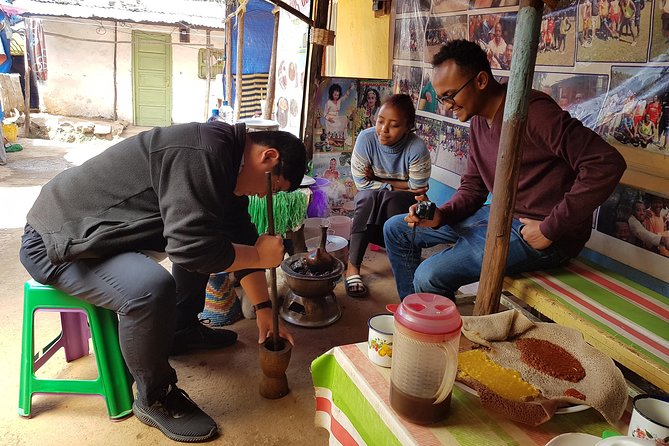
The family visit is scheduled for about two hours and is the heart of the tour. You learn how injera is prepared from teff, an Ethiopian grain used to make the soft, slightly sour flatbread served with many Ethiopian meals.
The experience is hands-on. You try to bake injera in the local style, then taste the bread you made. That practical step gives you a better sense of the skill involved. Injera looks simple on the plate, but making a thin, even round requires practice, timing, and a feel for the batter.
The tour description also points out that teff is gluten free and contains fiber, protein, iron, and calcium. If you have dietary requirements, tell the operator when booking. The information provided does not promise that every dish will suit every diet, so specific requests should be discussed in advance.
Using spices selected at Merkato, you then learn to prepare shiro be kibbe. Shiro is a familiar Ethiopian dish made from ground legumes, while the kibbe refers to the spiced clarified butter that adds flavor. The market visit now pays off: the ingredients you saw earlier become part of the meal.
This is the most authentic-feeling section for me because it links shopping, preparation, and eating in one sequence. You are also visiting a local family, not only watching a guide demonstrate a recipe. The family visit fee is included in the price.
A completely different kind of day:
- Full Day Tour of Addis Ababa with Hotel Pickup and Drop-off
★ 5.0 · 430 reviews - Taste of Ethiopia
★ 5.0 · 406 reviews - Day Trip From Addis Ababa See Historical Monastery,Stunning Nature,Animals,Birds
★ 5.0 · 303 reviews - Addis Ababa: Debre Libanos, Blue Nile Gorge, and Cave Tour
★ 4.5 · 256 reviews
The Ethiopian coffee ceremony
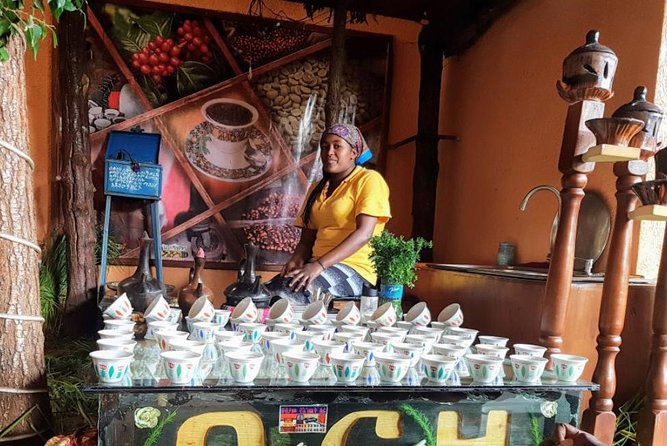
The family stop also includes a traditional Ethiopian coffee ceremony. Coffee is deeply tied to Ethiopian hospitality, and here it is presented as a cultural activity rather than a grab-and-go drink.
You attend the ceremony and receive coffee as part of the tour. The supplied details do not specify how many rounds are served or how long the coffee portion lasts, so the two-hour estimate covers the bread lesson, cooking, eating, and ceremony together.
I would save room for this moment. After the quick market stops, the ceremony offers a slower change of pace and helps explain why coffee is such an important part of social life in Ethiopia. If you are not a coffee drinker, you can still appreciate the preparation and setting, but coffee is clearly one of the main points of the visit.
A past booking with Merit Ethiopian Experience Tours praised the combination of the spice market, coffee ceremony, injera making, and home-cooked Ethiopian food. That is a useful guide to the tour’s strongest qualities: participation and local hospitality, not simply sampling a long list of prepared bites.
Restaurant dishes from around Ethiopia
The final food section takes you to Taytu Hotel or another highly regarded traditional Ethiopian restaurant. Here, you taste a variety of dishes from different parts of Ethiopia.
This stop broadens the meal beyond the home cooking at Mount Entoto. At the family home, you focus on preparation and personal instruction. At the restaurant, you get a wider sampling of regional dishes in a more formal setting.
There is an important price detail here. The home-cooked food at the family visit is included, but meals and drinks at the traditional restaurant are not. The tour price therefore does not cover the full cost of the restaurant lunch. Ask your guide which restaurant is being used and check the menu prices if you are watching your budget.
This arrangement has one advantage: you are free to choose what you want at the restaurant instead of paying for a fixed meal you may not want. The disadvantage is that the final food cost is less predictable. A group should plan for this before setting out.
Tej, Ethiopia’s honey wine
On the way back to your hotel, you stop at a tej bet. Tej is a honey-based drink similar to mead and is traditionally brewed in Ethiopia.
Two glasses per person are included. That makes this more than a passing look at a local bar. It gives you a chance to try one of the country’s distinctive drinks after learning about food preparation and coffee.
The listing does not state the alcohol strength or offer nonalcoholic alternatives. If you do not drink alcohol, mention that when booking or ask the guide what options are available. Children must be accompanied by an adult, and the tour includes alcohol for adults, so families should keep the final stop in mind when deciding if this is the right outing.
You can also stop at a supermarket along the route if you want to buy roasted or ground Ethiopian coffee. This is optional, but it is a practical way to take home something connected to the day. Since the tour does not include the cost of coffee purchases, bring a little extra money if you want to shop.
What the $205.16 group price really buys
The price is $205.16 per group of up to six people. At the maximum group size, that works out to about $34.19 per person before the restaurant bill and tips. For six friends or family members, that is a strong value for private transportation, a guide, market visits, a family cooking class, a coffee ceremony, and tej.
For two people, the same flat rate works out to about $102.58 each. For a solo visitor, it is a costly half-day, even though the private format gives you more personal attention.
Included services are an experienced English-speaking guide, hotel or airport pickup and drop-off, the family food preparation visit, the coffee ceremony and coffee, two glasses of tej per person, and the home-cooked food. Tips, the traditional restaurant meal and drinks, and unlisted personal expenses are extra.
The flat pricing is easiest to justify if you value comfort and a private schedule. It also removes the uncertainty of paying separately for the vehicle and guide. If you are traveling alone and mainly want tastings, you may find a smaller shared food walk better value, but this private tour offers a broader cultural program.
Practical advice for the five-hour schedule
Wear good walking shoes. The tour includes Atikilt Tera, the spice market, a ten-minute walk to another Merkato section, and additional movement around the day’s stops.
The operator advises formal dress. That is worth taking seriously, especially because you visit a family home, a traditional restaurant, and a tej bet. At the same time, you also need clothing suitable for walking and changing weather, so neat, comfortable clothing is the sensible compromise.
A current valid passport is required on the day of travel. Confirmation is provided at booking, and the tour runs in all weather, so bring weather-appropriate clothing.
Tell the operator about dietary requirements when you book. The tour includes injera, shiro be kibbe, dairy products at the market, home cooking, coffee, and tej, but the supplied information does not give a complete menu or promise substitutions.
Pickup is available from your location, specifically including hotels and the airport. Round-trip transport is a major benefit in Addis Ababa, since the day moves between Merkato, Mount Entoto, the restaurant, and the tej stop.
Free cancellation is available if you cancel at least 24 hours before the start time. Changes or cancellations made inside that window are not accepted for a refund.
Who should book this Addis Ababa food experience?
I would recommend it most strongly to first-time visitors who want food to open the door to Ethiopian culture. You get a useful introduction to ingredients, cooking, coffee, bread, regional dishes, and honey wine without having to arrange several separate visits.
It also suits families and small groups. The private minivan keeps everyone together, and the up-to-six pricing becomes much better value as the group fills out. People who enjoy doing rather than only watching will get the most from the injera and shiro lessons.
This may not be ideal if you want a relaxed, restaurant-focused food tour. The schedule moves through a market, includes walking, and has several stops. It is also not the best match if you need the exact total price upfront, since the restaurant meal and drinks are extra.
The experience has only a single published rating, so I would not treat the perfect score as a broad measure of consistency. Still, the strongest praise is directed at the right parts: the coffee ceremony, injera making, spice market, and home-cooked food. Those are also the parts that give this tour its value.
Should you book it?
Book this tour if you want a private, hands-on introduction to Addis Ababa food and you can fill several seats. The combination of Merkato, a family kitchen, teff injera, coffee, and tej offers far more context than a standard lunch.
Before booking, confirm the restaurant plan, explain any dietary needs, and remember that the restaurant bill is extra. If that arrangement suits you, this is a well-rounded half-day for curious eaters who want to understand how Ethiopian food reaches the plate.
FAQ
How long does the Addis Ababa food tour last?
The experience lasts approximately five hours. The scheduled activities total about four and a half hours, with the remaining time allowing for transport and transitions.
How much does the tour cost?
The price is $205.16 per private group of up to six people. The restaurant meal and drinks are not included.
Is hotel pickup available?
Yes. Hotel and airport pickup and drop-off are included, and pickup is offered from your location in Addis Ababa.
Is this a private tour?
Yes. Only your group participates, with a private vehicle and an English-speaking professional guide.
Is food included?
Home-cooked Ethiopian food at the family visit is included. Food and drinks at the traditional restaurant are not included.
Is the coffee ceremony included?
Yes. The traditional Ethiopian coffee ceremony and coffee are included in the tour price.
Is tej included?
Yes. Two glasses of Ethiopian honey wine, called tej, are included per person.
What should I wear and bring?
The operator advises formal dress, good walking shoes, and a hat. You should also dress appropriately for the weather because the tour runs in all conditions.
Do I need a passport?
Yes. A current valid passport is required on the day of the tour.
Just added in Addis Ababa
- Yod Abyssinia Cultural Night: Dinner, Music, and Dance★ 5.0 · 7 reviews
- Addis Ababa City Tours Full-Day Tours★ 5.0 · 5 reviews
- Locally crafted beer and wine tasting and nightlife in Addis tour★ 5.0 · 6 reviews
- Unique Ethiopian Cooking Class and Coffee Ceremony with a Local in Addis Ababa★ 4.5 · 7 reviews
- Stunning Views Wonchi Crater Lake a Private Day Trip★ 5.0 · 3 reviews
- Visiting the wonders of Lalibela in Three (3) days and Two ( 2) nights★ 5.0 · 2 reviews
- .2- Days and 1 Night Tour To Awash National Park water falls★ 5.0 · 1 review
- Two days Lake Wenchi and Menagesha Forest★ 5.0 · 1 review
Food & Drink, compared.
Ethiopian Culinary Tour – Market, Food, Coffee Ceremony & more
Read our review →
Hidden Treasures of Addis Ababa – Food, Culture and History Tour
Read our review →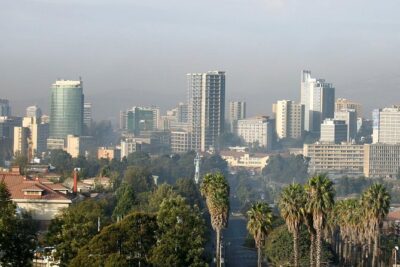
Addis Ababa City Tours With Cocking Class of Ethiopian Food
Read our review →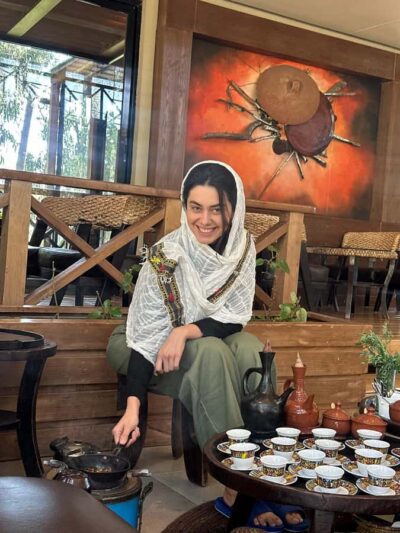
Ethiopia coffee cupping class/Ethiopian food injera making
Read our review →
city tour of Addis Ababa ( history ,culture , food and more)
Read our review →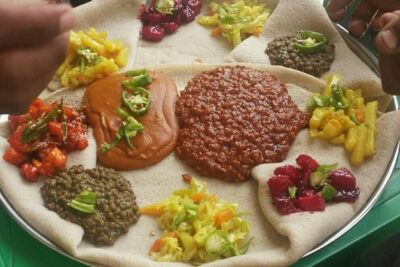

Locally crafted beer and wine tasting and nightlife in Addis tour
Read our review →
Browse the lists this tour appears in