
Reviewed · DANAKIL DEPRESSION EXPEDITIONS
All Inclusive 03 Day Group Tour to Dalol, Danakil Depression From Semera
Salt, fire, and vast empty horizons. This three-day journey from Semera reaches some of Ethiopia’s strangest sights, from Dallol’s mineral colors and camel-carried salt to the glowing lava of Erta Ale. I like the less-used Semera route, which gives the trip a more remote feel, and I like that the price includes transport, meals, guides, fuel, parking, and entrance fees. The main caution is simple: this is a hot, demanding trip with long drives, basic camping, and a steep night trek.
The tour costs $450 per person and accepts a maximum of 15 people. That makes it a reasonable package for a difficult region where you need vehicles, local support, food, permits, and a guide. Still, you should have strong physical fitness, tolerate rough conditions, and accept that the schedule can feel tiring rather than leisurely.
In This Review
- Five details that shape the experience
- Why start from Semera?
- Day 1: Lake Afdera, salt cutting, and Dallol
- Day 2: Sunrise, camel routes, and the walk to Erta Ale
- Day 3: Sunrise over magma and the return to Semera
- What the $450 price really covers
- The guide and the human side of the trip
- Heat, walking, and comfort: know the trade
- The best time to choose this trip
- Who should book this Danakil tour?
- Should you book the $450 trip?
- FAQ
- Where does the tour begin?
- How long does the experience last?
- What places does the tour visit?
- Is Erta Ale included?
- How difficult is the tour?
- Are meals included?
- Are flights included?
- How many people can join the group?
- Can I cancel for a full refund?
Five details that shape the experience
- Dallol sits about 116 meters below sea level, among colorful mineral deposits formed by volcanic activity.
- Salt is still cut from the ground and loaded onto camels, giving you a direct look at an old trade system.
- Erta Ale requires a night trek, with the walk up beginning around 5 p.m. and the volcano reached near 8 p.m.
- Lake Afdera is seasonal in appearance, with the best chance of seeing it during Ethiopia’s rainy season.
- The group can include up to 15 people, a size that keeps costs down but may make the vehicle and camp feel social.
- No camel caravan is expected in July, August, or early September, so the salt-mining visit changes with the season.
Why start from Semera?
Semera is the departure point at 8 a.m., with pickup available from your hotel or the airport. Starting here takes you toward the Danakil through a route described as less explored than the better-known approaches. That matters if you want the journey itself to feel like part of the trip, not just a transfer to a famous viewpoint.
The first day is long, about nine hours, so you should not expect a quick arrival followed by a relaxed afternoon. The road passes Lake Afdera and open, harsh terrain before reaching the salt-mining area near Dallol. The air-conditioned vehicle is an important inclusion. In this part of Ethiopia, a comfortable vehicle is not a luxury detail. It gives you a cooler place to recover between stops.
The group limit of 15 keeps the price at a manageable level, but this is still a group departure. You will share transport, meal times, camps, and walking plans. If you prefer to stop for as long as you wish at every viewpoint, a private arrangement would likely suit you better, but it would not offer the same $450 price point.
More Danakil expeditions:
- 3 Days Danakil Depression Tour
★ 4.5 · 135 reviews - 3 Days Danakil Depression Tours Via Semera
★ 5.0 · 47 reviews - 12 Days SIMIEN MOUNTAIN-LALIBELA-DANAKIL-TIGRAY CHURCHES
★ 5.0 · 45 reviews
Day 1: Lake Afdera, salt cutting, and Dallol
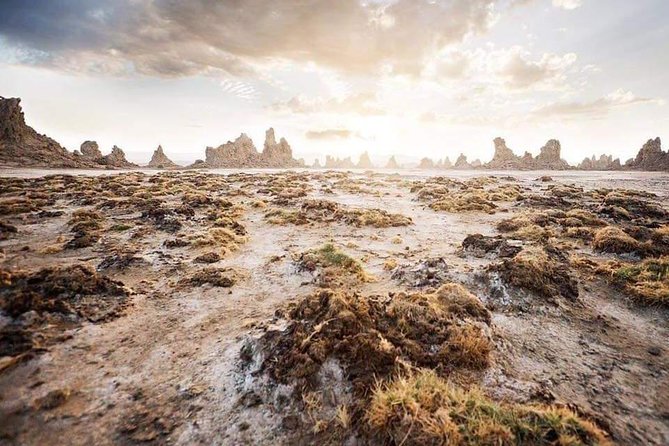
The first stop is Lake Afdera, a saltwater lake more than 100 meters below sea level. Its appearance depends heavily on the season. The lake is most visible during the Ethiopian rainy season, while a summer visit may offer only a small chance of seeing it clearly. You should treat the lake as a possible bonus rather than the one sight that defines the day.
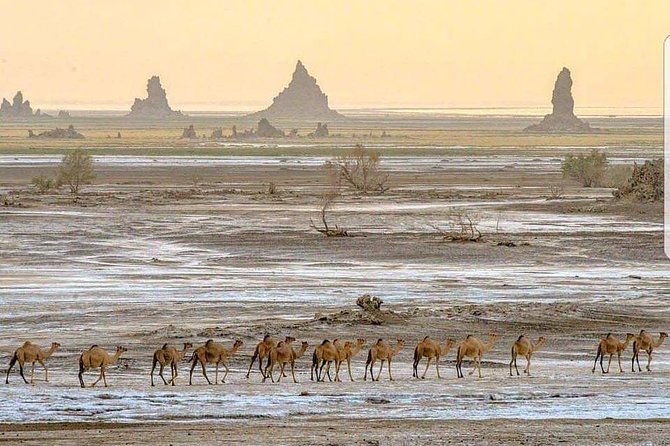
The salt works near Asebo provide one of the most memorable human scenes on the route. You can watch salt being broken from the ground, cut into rectangular pieces, and loaded onto camels. This is not a staged cultural display. It is a working process tied to the Afar region and its long salt trade.
The camel caravans are an important part of the timing. They travel toward the salt mine and later carry their loads north toward the highlands. The schedule notes that caravans are not expected in July, August, or early September, so check your travel dates if this scene matters to you. Even without the camels, the salt-cutting area remains a strong stop because it shows how people work with an extreme environment.
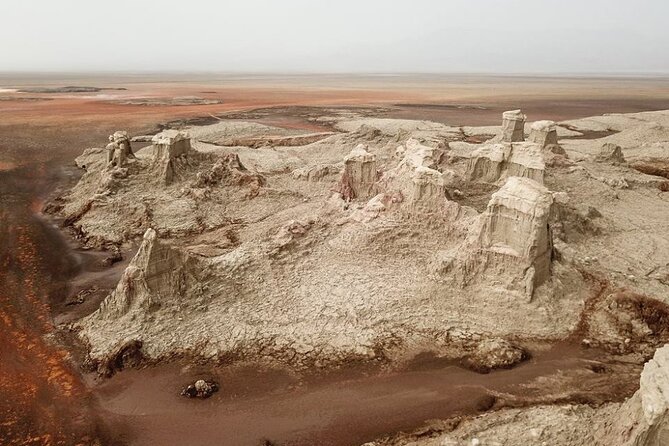
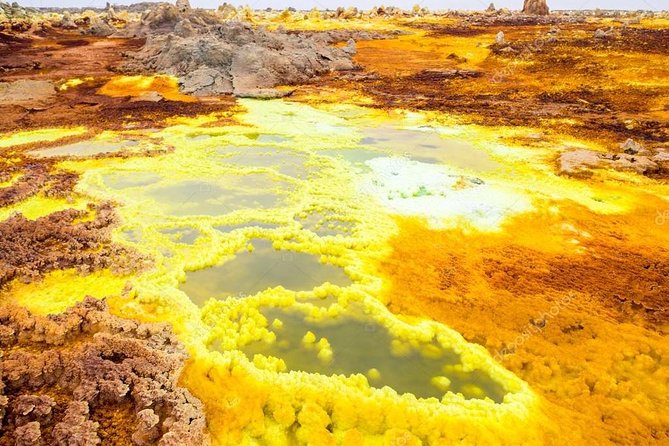
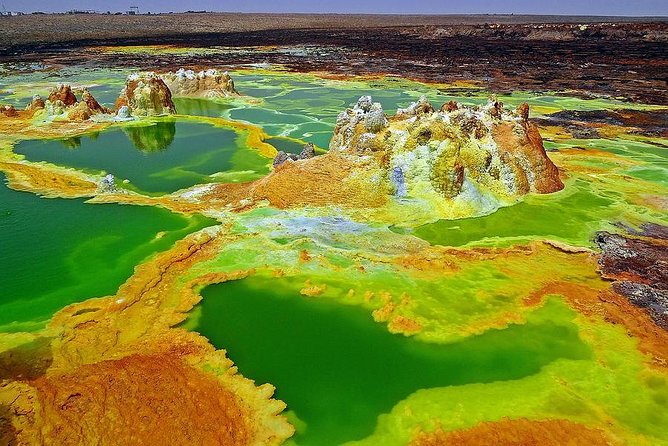
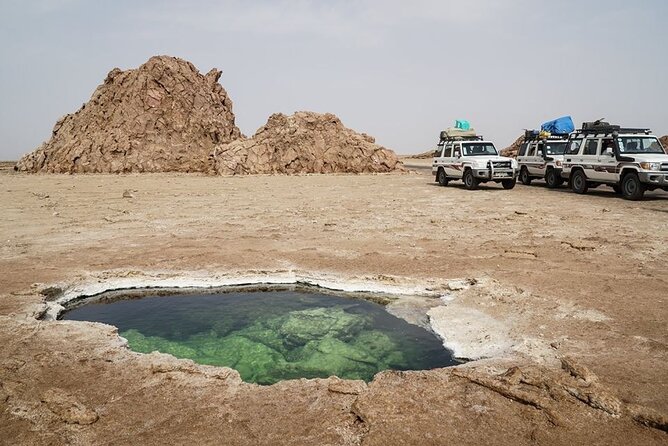
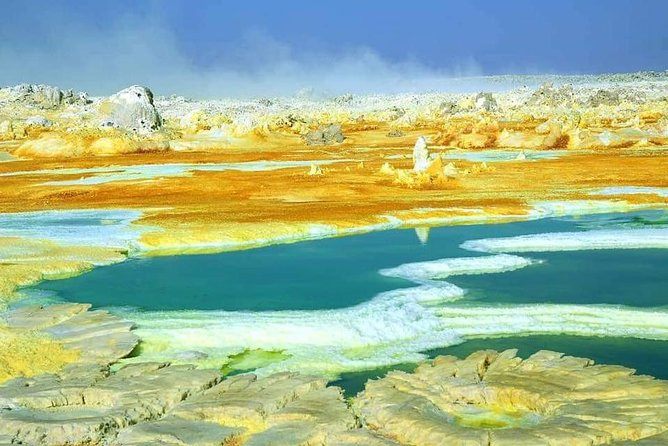
Dallol itself is the day’s visual centerpiece. At roughly 116 meters below sea level, it is one of the lowest places on Earth. Volcanic activity has created patches of yellow, green, orange, and other mineral colors, along with salt formations and stark ground patterns. The colors are striking, but you should not expect a gentle walk through a park. This is exposed volcanic terrain, and the heat can make even short walks feel serious.
The route also includes Lake Assal, another low-lying salt area, and time to walk with Afar people near the salt routes. The wording of the schedule suggests several short visits rather than one long hike. Even so, the day lasts about nine hours, with the drive, heat, and repeated stops adding up.
The group then returns toward Hamedela for overnight camping. The schedule refers to the night as camping in the Dallol area, so expect a basic desert camp rather than a hotel room. This night is part of the appeal for some people. You sleep close to the region you came to see, with no need to return to Semera after the first day. For others, it will be the least comfortable part of the experience.
Day 2: Sunrise, camel routes, and the walk to Erta Ale
Day two begins early, with a drive back to Dallol for sunrise. Morning light can change the color and shape of the mineral formations, so this second look is not simply a repeat of the previous afternoon. It also means another early start after a basic night outside, so save your energy.
The route passes through Berhale, a small town where camel caravans pause before crossing toward the northern highlands. You may see caravans heading to the salt mine and others leaving the Danakil with salt already loaded. The schedule cannot promise the caravans in every month, but the town’s role helps explain the movement you see across this otherwise empty region.
After Berhale, the vehicle continues to Askoma. From there, the hike to Erta Ale begins with a trek of about 10 minutes to reach the main route, followed by the climb toward the volcano. The information provided calls Erta Ale physically challenging, and you should take that seriously. The tour is not suitable for someone looking for a low-effort sightseeing trip.
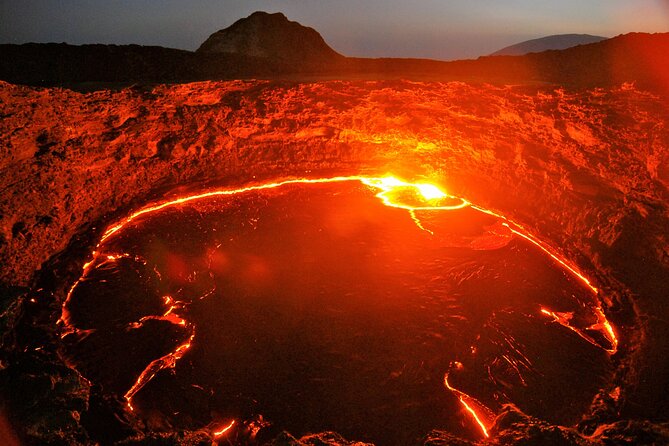
Dinner is planned around 5 p.m., followed by the trek up to the volcano. The group is expected to reach Erta Ale at about 8 p.m. That timing lets you spend the night near the summit watching the boiling lava. The volcano is a shield volcano, and its active lava gives the stop a rare sense of drama. You are not simply looking at an old crater. You are waiting in darkness for the glow and movement of molten rock.
This is the trip’s biggest reward, but also its hardest section. You must walk uphill in heat that may still linger from the day, then remain alert late into the evening. The surface can be difficult, and the schedule does not promise a fast or easy ascent. The guide support matters here. One account describes guide Kebede Dalacho helping an older participant through a difficult hike, including a person over 60. That does not make the trek easy, but it shows why local guidance is valuable.
The overnight volcano experience is basic and exposed. You are there for the view and the setting, not for hotel-style sleep. If you want to see Erta Ale at night, this is the price in effort and comfort.
Day 3: Sunrise over magma and the return to Semera
The final morning begins with two striking sights: sunrise and the volcano’s magma. The schedule calls this an early wake-up, followed by the trek back to Askoma. Breakfast is served at the campsite, and there is some time to rest before the return drive.
The walk down may be easier than the climb for some people, but tired legs can make it awkward. You have already spent two long days driving, walking in heat, and sleeping in simple camps. Good fitness helps not only on the way up but also on this final morning.
From Askoma, the vehicle returns to Semera, with another visit to Lake Afdera along the way. If the lake was not clearly visible on day one, the return may offer another chance, especially during the rainy season. The schedule describes only a small possibility of seeing it during summer, so do not book this trip solely for the lake.
The third day lasts about eight hours. You should plan your onward arrangements with that length in mind. The tour finishes in Semera, but the details provided do not give a specific arrival time. If you have a flight or another fixed connection, leave enough margin.
A completely different kind of day:
- Full Day Tour of Addis Ababa with Hotel Pickup and Drop-off
★ 5.0 · 430 reviews - Taste of Ethiopia
★ 5.0 · 406 reviews - Day Trip From Addis Ababa See Historical Monastery,Stunning Nature,Animals,Birds
★ 5.0 · 303 reviews - Addis Ababa: Debre Libanos, Blue Nile Gorge, and Cave Tour
★ 4.5 · 256 reviews
What the $450 price really covers
At $450 per person, the package offers solid value for a three-day expedition into a remote and difficult area. The price includes an air-conditioned vehicle, fuel surcharge, parking fees, a guide, entrance fees, three lunches, two breakfasts, and two dinners. Those inclusions remove many costs that can add up quickly on a road trip.
The vehicle is particularly important. The itinerary includes long drives on both the first and third days, plus transfers around Dallol, Berhale, and Askoma. An air-conditioned vehicle gives you a place to cool down and rest between walks.
Meals are covered for the main tour periods, but the inclusion list is specific: three lunches, two breakfasts, and two dinners. Anything not mentioned is excluded, and flights are not included. You should check what you need for drinks, snacks, or other personal expenses before departure rather than assuming the package covers every meal and purchase.
The maximum group size is 15. That is small enough for a shared experience without becoming a large coach tour, though the actual group size may vary. A group tour also helps spread the cost of vehicles, guides, camping arrangements, and entrance fees. For this region, that shared structure is a practical advantage.
The guide and the human side of the trip
Local support is one of the strongest reasons to choose an organized tour here. The route includes salt workers, Afar communities, volcanic ground, very low elevations, remote camps, and a physically demanding climb. You are not just paying for a driver to point out a road. You need someone who knows how to move through the area and help with the walking sections.
Guide Kebede Dalacho is specifically associated with this experience. An older participant found the hike difficult but received help from the guide, and the effort proved worthwhile. If you are over 60 or worried about your fitness, tell the operator before booking and ask how the group handles the climb.
The best moments also come from the local activity. Watching salt cut by hand and carried by camel gives the Danakil a human dimension. It keeps the trip from becoming a string of strange colors and dramatic photographs. You see how the Afar region connects its harsh ground to work, trade, and movement.
Heat, walking, and comfort: know the trade
The tour requires strong physical fitness. That phrase should guide your decision. You will deal with long road days, hot exposed stops, an early morning schedule, basic camping, and the ascent to Erta Ale.
One account describes the Dallol hike as difficult for someone over 60, though help from the guide made it possible. Use that as a practical warning, not as a strict age rule. Fitness, heat tolerance, and walking ability matter more than a number, but anyone with limited mobility should think carefully before booking.
The experience is not designed around comfort. Camping near Hamedela and at Erta Ale places you close to the sights, but it also means less sleep and fewer conveniences. The reward is access. You wake near a volcano and spend the night close to the desert rather than commuting from a distant hotel.
The heat can affect the mood of the entire day. Even a beautiful mineral formation may be hard to enjoy if you rush, feel unwell, or lack enough water. The provided details do not specify a packing list, so ask the operator what drinking water, protective clothing, and other personal supplies you need to bring.
The best time to choose this trip
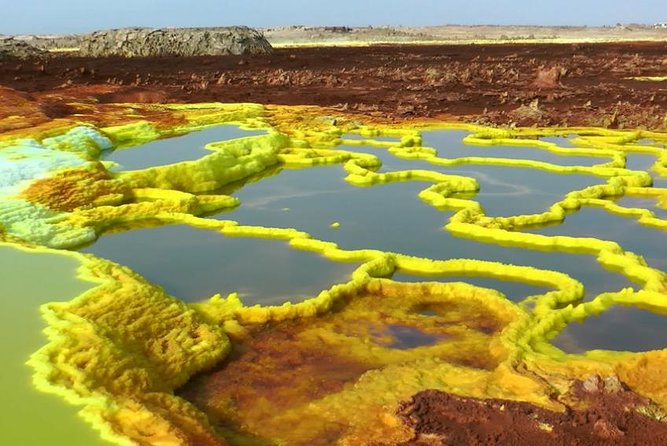
Season affects what you see. Camel caravans are not expected in July, August, or early September, so those dates may be less suitable if salt transport is a major reason for your visit.
Lake Afdera is most visible during Ethiopia’s rainy season. During summer, the tour only offers a small chance of seeing the mythical saltwater lake clearly. Dallol and Erta Ale remain the core attractions, but the seasonal details show why you should match your expectations to your dates.
The tour description does not provide a full month-by-month weather guide. Ask Addis Ethiopia Tours for current conditions before you book, especially because the route includes exposed walking and a night at the volcano.
Who should book this Danakil tour?
I would recommend it to you if you want a focused expedition rather than a relaxed holiday. It suits people who value unusual geology, working salt routes, Afar culture, camel caravans, and the chance to watch active lava more than polished accommodation.
It also suits budget-minded visitors who want the main transport, food, guide, and entrance costs bundled into one price. The less-used departure route from Semera is appealing if you want a more remote approach to the Danakil.
I would hesitate to recommend it if you need reliable comfort, dislike early starts, or cannot manage a strenuous walk. It may also disappoint if you visit in July, August, or early September expecting to see camel caravans, or if you travel outside the rainy season mainly to see Lake Afdera.
Free cancellation is available when you cancel at least 24 hours before the local start time. Cancellations inside that window are not refunded, and late changes are not accepted.
Should you book the $450 trip?
Book this tour if your priority is access to Dallol and Erta Ale with the major practical costs handled. The salt-cutting work, Afar connections, low volcanic ground, and night beside boiling lava create an unusual three-day journey that is hard to arrange casually.
Do not book it for comfort or an easy schedule. The value comes from reaching places that demand long drives, basic camping, and real physical effort. If you can accept those limits, the $450 price is fair for the transport, guide, meals, fees, and local support included.
FAQ
Where does the tour begin?
The tour begins in Semera, Ethiopia, with pickup from a hotel or the airport at 8 a.m.
How long does the experience last?
The tour lasts approximately three days. The first day takes about nine hours, the second about nine hours, and the third about eight hours.
What places does the tour visit?
The route includes Dallol, Lake Assal, Lake Afdera, the Asebo salt-mining area, Berhale, Askoma, and Erta Ale.
Is Erta Ale included?
Yes. The itinerary includes the trek to Erta Ale, an overnight stay near the volcano, and an early morning view of the sunrise and magma.
How difficult is the tour?
The tour requires a strong physical fitness level. It includes walking around Dallol and a physically challenging trek to Erta Ale.
Are meals included?
Yes. The package includes three lunches, two breakfasts, and two dinners.
Are flights included?
No. Flights are not included in the tour price.
How many people can join the group?
The maximum group size is 15 people.
Can I cancel for a full refund?
Yes, if you cancel at least 24 hours before the experience start time. Cancellations or changes made less than 24 hours in advance are not accepted for a refund.
Just added in Ethiopia
- Yod Abyssinia Cultural Night: Dinner, Music, and Dance★ 5.0 · 7 reviews
- Mekele City Tour★ 5.0 · 2 reviews
- Day trip to Tigray Churches★ 5.0 · 2 reviews
- Tigray Mountain Church’s Day Trip from Mekele★ 5.0 · 2 reviews
- 3 Day Tour of Geralta Churches Tigray Church’s★ 5.0 · 2 reviews
- 3 days tour Danakil Depression (Dallol & Erta Ale)★ 4.0 · 5 reviews
- 2 Days Dallol Trip★ 5.0 · 4 reviews
- Lalibela Backpacker tours★ 5.0 · 6 reviews
Danakil Depression Expeditions, compared.
12 Days SIMIEN MOUNTAIN-LALIBELA-DANAKIL-TIGRAY CHURCHES
Read our review →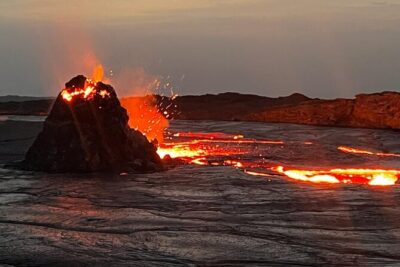
3 Day Danakil Depression Ertale and Dallol Tours
Read our review →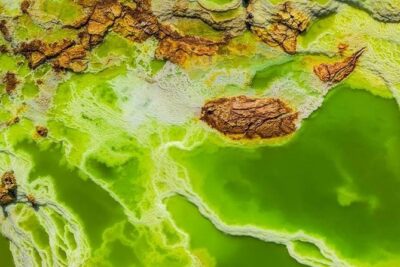
5 DAYS Lalibela, Axum, Tigray churches and Danakil
Read our review →
6 Days tour Package (Simien Mountains, Lalibela, and Danakil Depression)
Read our review →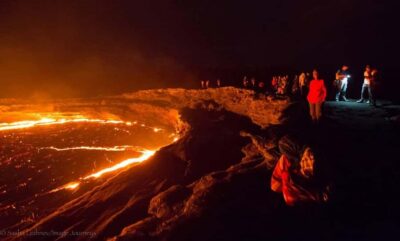
2-Night 3-Day Danakil Depression Tour without Flights
Read our review →
Lalibela, Axum, Danakil and Omo Valley 8 DAYS
Read our review →Browse the lists this tour appears in