
Reviewed · DANAKIL DEPRESSION EXPEDITIONS
2 Days Dallol Trip
A salt desert can look like another planet. This two-day trip from Mekele takes you into the Danakil Depression, where sulfur springs, mineral colors, salt mines, camel caravans, and Lake Assal create one of Ethiopia’s strangest settings. I like the close look at traditional salt cutting and the chance to follow the route of Afar camel caravans. The main drawback is the demanding pace: long drives, desert heat, camping, and a moderate fitness requirement all come with the scenery.
I also like that the price of $307.70 per person covers transport, meals, water, camping equipment, a local guide, and scout and police service. The small maximum group size of 15 should make the trip easier to manage. Still, this is not a soft adventure. Expect roughly eight-hour days, simple conditions, and little room for comfort or schedule changes.
In This Review
- Key points to know before booking
- Why Dallol feels like another planet
- Day one: crossing the Danakil Depression
- Salt mining at Ragad and Asebo
- Dallol, Lake Assal, and the Afar people
- What the $307.70 price really covers
- The pace, group size, and comfort level
- The strongest parts of the experience
- Practical preparation for the desert
- Who should book this two-day Dallol trip?
- Should you book it?
- FAQ
- Where does the 2 Days Dallol Trip start?
- How long does the tour last?
- What is the price per person?
- What meals are included?
- Is camping equipment included?
- How many people can join the tour?
- Can I cancel for a full refund?
Key points to know before booking
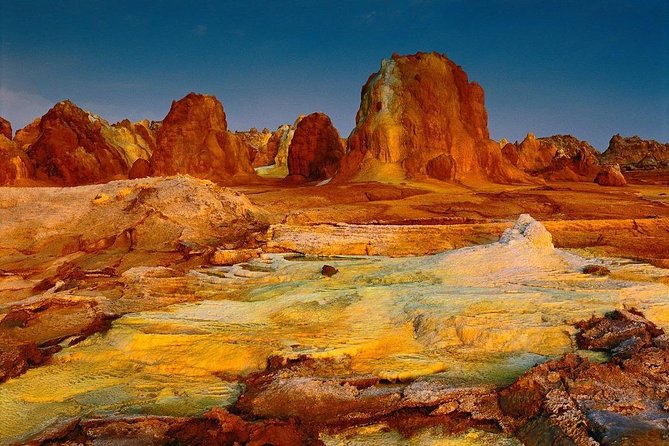
- Dallol sits about 116 meters below sea level, with acidic hydrothermal springs and striking mineral colors.
- Salt mining is still done by hand, with workers cutting rectangular blocks and loading them onto camels.
- Hamedela camp is the overnight base, a small settlement with a population of about 500.
- Lake Assal and the camel caravans give the second day its strongest sense of place and daily life.
- The $307.70 price includes the main practical costs, including meals, water, camping gear, transport, and local support.
- The tour is physically demanding, with long drives and desert conditions, even though no technical outdoor skill is required.
Why Dallol feels like another planet
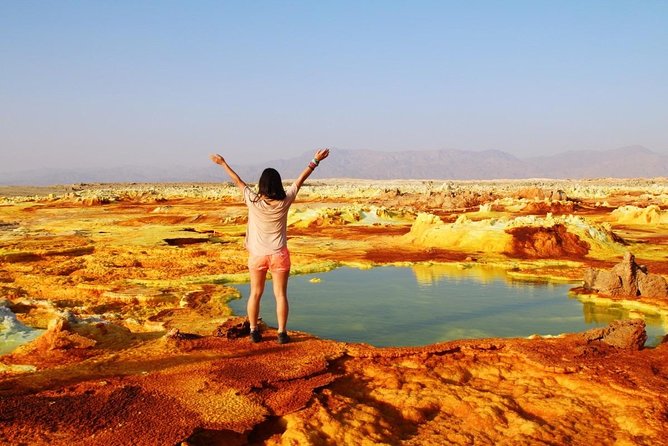
Dallol is not a conventional sightseeing stop. You are not going to see one grand monument or a neatly marked trail. You are going to see ground shaped by volcanic activity, acidic fluids, salt deposits, and intense mineral colors.
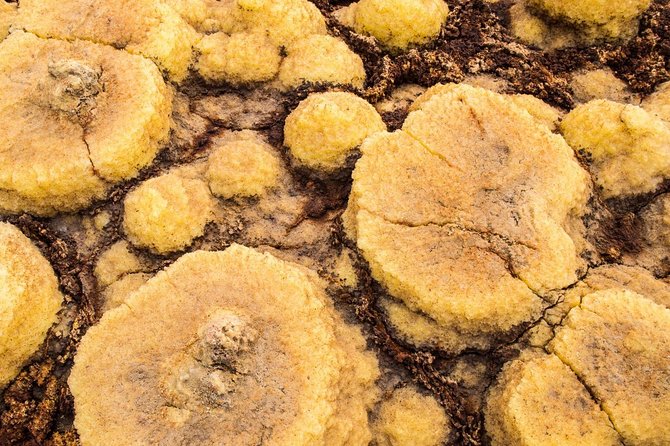
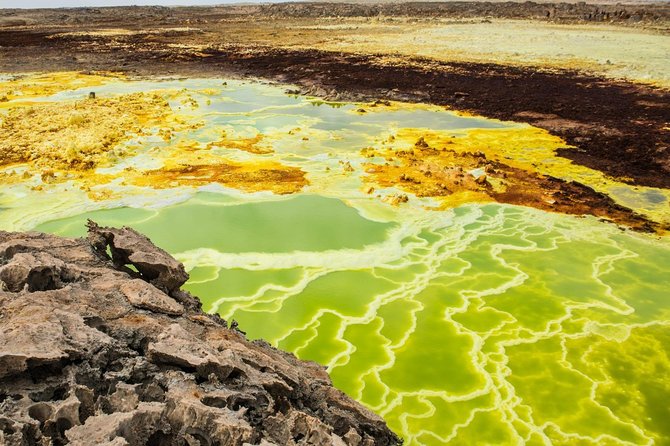
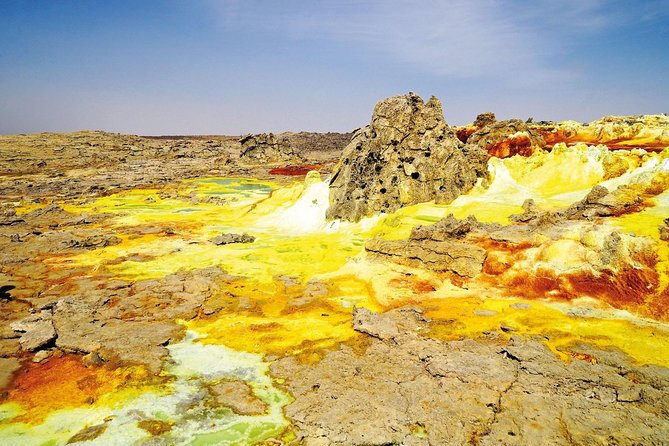
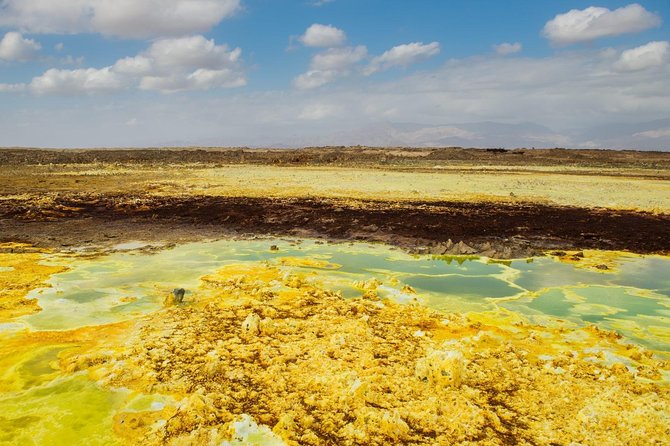
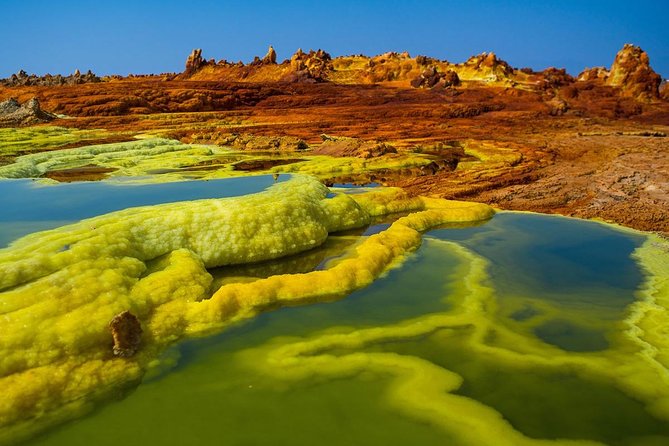
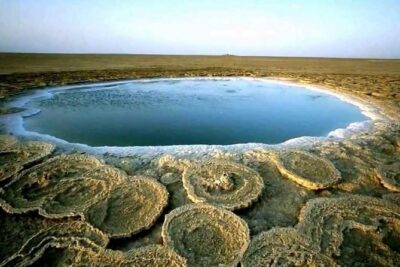
The hydrothermal springs are the main visual draw. Their surfaces can show unusual yellow, orange, green, and white tones created by minerals and sulfur. The colors are memorable because they appear in a setting that is otherwise stark and dry. You get a scene that feels almost unreal, but the geology is very real and very active.
The acidic fluids are part of what makes Dallol special, and also part of why you should follow the local guide closely. This is not a place for casual wandering. Stay with the group, watch where you step, and treat the area as a fragile natural system rather than a photo backdrop.
The trip also takes you to one of the lowest points in the world. Dallol is described as being about 116 meters below sea level, while several parts of the Danakil Depression sit more than 100 meters below sea level. That unusual elevation helps explain the area’s harsh climate and strange geology.
More Danakil expeditions:
- Danakil 3 days tour
★ 5.0 · 10 reviews - From Semera: Danakil Depression 3-Day Tour
★ 4.3 · 10 reviews - 3 days tour Danakil Depression (Dallol & Erta Ale)
★ 4.0 · 5 reviews
Day one: crossing the Danakil Depression
The first day begins with the journey from Mekele toward the Danakil Depression. The drive is a major part of the experience, not just a transfer between attractions. The route gives you a sense of how quickly the setting changes from the highlands toward one of the hottest and driest regions on Earth.
The schedule allows roughly three to four hours of driving toward the Berhale area. Berhale is important because camel caravans stop here before continuing toward the northern highlands. Along the way, you may see long lines of camels heading toward the salt mines, as well as loaded caravans leaving the depression.
That sight gives the region a human rhythm. The desert is severe, but it is not empty. Salt has been moved through this area by camel for generations, and the caravan route remains one of the clearest ways to understand the local economy.
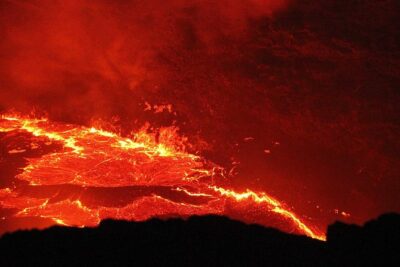
The schedule names Erta Ale as the first stop, and the description places you in the wider Danakil region, where sulfur springs and volcanic activity shape the scenery. The material provided does not promise a specific crater walk or a lava lake visit, so you should not book this trip expecting a full Erta Ale volcano expedition. The clear focus is the Danakil setting, the salt route, and the overnight stay near Hamedela.
After the drive, you reach Hamedela, a small village with about 500 residents. This is where the group camps for the night. Camping equipment is included, along with dinner, so you do not need to arrange separate overnight gear through the operator.
The campfire near Afdera Lake is one of the more appealing details of the trip. A simple dinner and soup beside a desert campfire may sound modest, but in a remote place like this, those small comforts matter. The setting gives you time to sit with the day’s sights instead of rushing from one attraction to the next.
Do not expect a polished hotel experience. The supplied details confirm camping, but they do not describe bathrooms, showers, bedding standards, or electricity. Ask the operator about current camp facilities before you pay if those details matter to you.
Salt mining at Ragad and Asebo
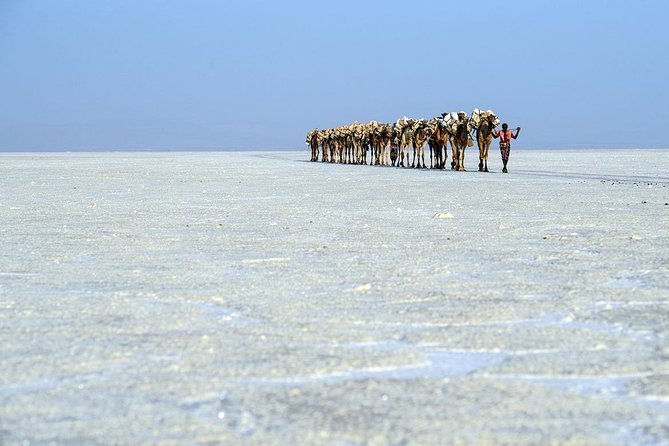
The second morning begins with a drive to Ragad, also called Asebo. This is where local workers mine salt from the ground. You can watch the process closely: salt is broken out of the earth, cut into rectangular pieces, and loaded onto camels.
This is one of the tour’s most valuable stops because it connects the strange geology to everyday work. The colored springs at Dallol are easy to admire as scenery, but the salt mine shows how the region supports a long-standing trade. You see the labor behind the camel caravans rather than only photographing them from a distance.
The work is done in a hot, exposed setting, and that should shape your expectations. The visit is not a staged cultural performance. It is an operating salt-mining area, so your guide’s instructions and local customs deserve respect. Keep a sensible distance from workers and animals, and listen before taking photographs.
The camel caravans are a recurring sight rather than a single scheduled show. Some are moving toward the salt fields, while others carry salt away from the depression. Their pace is slow, steady, and perfectly suited to a place where roads and fuel are limited.
Dallol, Lake Assal, and the Afar people
From Ragad, the route continues to Dallol and Lake Assal. The scenery changes through volcanic forms, salt deposits, and mineral-stained ground. The itinerary describes an excursion to Dallol, the colorful salt-mining areas, Lake Assal, and the camel routes.
Dallol is the visual centerpiece. The colors come from mineral deposits and sulfur-rich activity, not from painted rock or ordinary desert soil. You may find the most impressive scenes close to the hydrothermal springs, where bright mineral patterns contrast with the pale salt crust around them.
This is also where the physical demands become clear. You will walk in an exposed area and may need to move carefully over uneven ground. The tour asks for moderate physical fitness, so you should be comfortable with walking in hot conditions and spending much of the day outdoors.
Lake Assal adds another kind of beauty. The lake is part of the salt-producing environment, and seeing it alongside the caravans helps you understand how water, salt, and trade are linked in this region. The stop is not only about taking in a view. It shows why this harsh place has practical value.
The schedule also includes time to walk with Afar people. That can be a meaningful part of the trip when handled with care. You are given a chance to experience the human side of the Danakil rather than treating the area as an empty wilderness. Your guide is important here, since local interaction should follow local expectations.
The second day ends with a return to Hamedela and then onward travel to Mekele. With about eight hours allocated to the day, this is a full outing. You should expect the return journey to feel long, especially after walking and spending time in the heat.
A few more options to weigh up in Mekelle and the Danakil
- Ethiopia Tigray Tours: Guided tour of Tigray rock hewn churches
★ 5.0 · 36 reviews - Two Days Tigray Churches Trip
★ 5.0 · 10 reviews - Tigray: Gheralta Mountains 2-Day Tour
★ 5.0 · 8 reviews - 3 Days Desert Adventure: Discover Danakil’s Hidden Wonders!
★ 4.7 · 5 reviews
What the $307.70 price really covers
At $307.70 per person, this trip is not priced like a basic day excursion. The value comes from the remote setting and the number of practical services bundled into the cost.
Included are:
- Air-conditioned vehicle
- Local guide service
- Scout and police service
- Camping equipment
- Dinner and breakfast
- Two lunches
- Bottles of water
- All fees and taxes
The vehicle matters because the route is long and the climate is severe. Air conditioning is not a minor luxury here. It gives you a better chance of arriving at each stop with enough energy to enjoy it.
The local guide also adds real value. Dallol is not the kind of place where you should rely only on a map application. The guide helps organize the route, interpret the salt work, and keep the group together around sensitive hydrothermal areas.
Scout and police service are included as well. The provided information does not explain the exact duties or staffing arrangement, but their presence is part of the support structure for the trip. In a remote border-region setting, that is a meaningful inclusion.
Water is supplied, but you should still ask how much is provided per person and bring any personal drinks you need. Alcoholic beverages are not included, and services not listed in the inclusions are also outside the price.
The average booking lead time is 51 days. That does not guarantee every departure sells out, but it is a useful planning signal. If your Ethiopia schedule is fixed, booking early makes sense.
The pace, group size, and comfort level
The trip lasts approximately two days and allows up to 15 people. That is a reasonable maximum for a remote desert route. A group of this size can still feel organized, while the guide and support team have a manageable number of people to watch.
Pickup is offered, and the stated start time is 9:00 a.m. The meeting area is near public transportation. Confirm the exact pickup point and whether your accommodation is covered before the day begins, since the supplied details do not specify the pickup radius.
The long driving periods shape the whole experience. You will spend several hours in the vehicle on the first day and complete another roughly eight-hour day on the second. This is a good trip for someone who sees the drive as part of the adventure. If you want short transfers and long walks at each stop, this is the wrong format.
The camping arrangement also deserves an honest look. Dinner and breakfast are supplied, and the campfire near Afdera Lake adds warmth to the overnight stop. But the information does not promise private rooms, showers, or hotel-style beds. Pack for simple conditions and ask about the current equipment if you have special needs.
The physical requirement is listed as moderate. That likely means the tour is manageable for people who can walk over uneven ground and cope with heat, but it is not designed around accessibility equipment or a relaxed pace. If you have a medical condition affected by heat or exertion, get professional advice before booking.
The strongest parts of the experience
The most praised qualities are the drivers, organization, and sense of adventure. The available comments describe the drivers and guides as professional and helpful, and they repeatedly praise the company’s organization. That matters on a two-day trip where timing, transport, food, security, and local access all need to work together.
The comments also highlight the soup at dinner and the campfire near Afdera Lake. These are small details, but they tell you something useful about the trip’s mood. After a hot day, a warm meal and a fire can turn a basic camp into a memorable evening.
The best visual moments are likely to come from the sulfur-colored ground, salt lake, and camel caravans. The combination is unusual. You are not choosing between nature and culture here. The geology, salt trade, and Afar communities are all part of the same setting.
The trip is also praised as challenging but exciting. That is the right way to frame it. The difficulty is not a flaw for the right person, but it will be tiring if you are expecting a comfortable sightseeing tour.
Practical preparation for the desert
Bring lightweight clothing that covers your skin, sturdy footwear, sun protection, and any personal medication you need. Water is included, but it is sensible to confirm the supply and carry a personal reserve if possible.
A mobile ticket is provided, and confirmation is received at booking. Keep the confirmation available on your phone, but also make sure you know the pickup details before departure.
Photography will be a major reason to bring a phone or camera, especially around Dallol’s mineral colors and the camel trains. Still, the best photographs should not come at the expense of safety or local courtesy. Ask before photographing people, workers, or animals.
You should also prepare mentally for repetition. The region’s beauty comes from subtle shifts in color, salt, volcanic ground, and open space. It is not a rapid sequence of different attractions. The long drives are part of seeing how the environment changes.
Free cancellation is available if you cancel at least 24 hours before the start time. Cancellation within 24 hours is not refunded, and changes made inside that period are not accepted. The cut-off follows local time, so keep that in mind when arranging flights or other Ethiopia plans.
Who should book this two-day Dallol trip?
I would recommend it to you if you want unusual geology, traditional salt mining, camel caravans, and a close look at the Danakil Depression. It is especially suitable if you value local guides, organized transport, and a clear two-day structure rather than arranging a remote expedition yourself.
It also suits people who enjoy simple camping and can accept long drives. The maximum group size of 15 keeps the outing from becoming a huge convoy, while the included guide, scouts, police service, meals, and equipment remove much of the planning burden.
I would think twice if you need hotel comfort, short driving days, or guaranteed accessibility features. The tour requires moderate fitness, and the information does not provide details about toilets, showers, bedding, or specific accessibility arrangements.
Should you book it?
Book this tour if Dallol’s acidic springs, salt colors, Lake Assal, and camel caravans are high on your Ethiopia wish list. The price is fair for a remote two-day trip because it includes transport, food, water, camping gear, guiding, fees, and security support.
Before paying, confirm the exact Erta Ale activities, camp facilities, pickup arrangements, water allowance, and walking conditions. If you are comfortable with heat, basic camping, and long road hours, this is a powerful way to see a place that feels unlike almost anywhere else.
FAQ
Where does the 2 Days Dallol Trip start?
The trip is based in Mekele, Ethiopia. Pickup is offered, the meeting area is near public transportation, and the stated start time is 9:00 a.m.
How long does the tour last?
The tour lasts approximately two days. Both days are described as full days of about eight hours, including travel and visits.
What is the price per person?
The listed price is $307.70 per person.
What meals are included?
Dinner and breakfast are included, along with two lunches. Bottles of water are also supplied for the trip.
Is camping equipment included?
Yes. Camping equipment is included in the tour price.
How many people can join the tour?
The tour has a maximum group size of 15 people.
Can I cancel for a full refund?
Yes, if you cancel at least 24 hours before the experience start time. Cancellations made within 24 hours are not refunded, and changes made during that period are not accepted.
Just added in Mekelle and the Danakil
- Mekele City Tour★ 5.0 · 2 reviews
- Day trip to Tigray Churches★ 5.0 · 2 reviews
- Tigray Mountain Church’s Day Trip from Mekele★ 5.0 · 2 reviews
- 3 Day Tour of Geralta Churches Tigray Church’s★ 5.0 · 2 reviews
- 3 days tour Danakil Depression (Dallol & Erta Ale)★ 4.0 · 5 reviews
- 2 days Tigray Church★ 5.0 · 3 reviews
- Mekele: 3-Days Danakil Depression Tour & “Velcano”.★ 5.0 · 1 review
- Mekelle: 3-Day Danakil Depression Tour with Accommodation★ 5.0 · 1 review
Danakil Depression Expeditions, compared.
12 Days SIMIEN MOUNTAIN-LALIBELA-DANAKIL-TIGRAY CHURCHES
Read our review →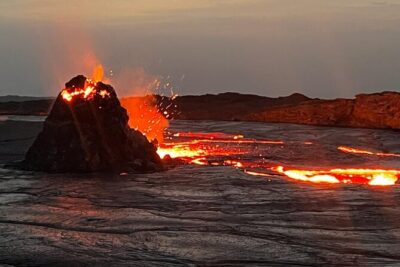
3 Day Danakil Depression Ertale and Dallol Tours
Read our review →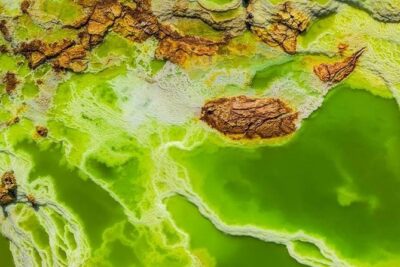
5 DAYS Lalibela, Axum, Tigray churches and Danakil
Read our review →
6 Days tour Package (Simien Mountains, Lalibela, and Danakil Depression)
Read our review →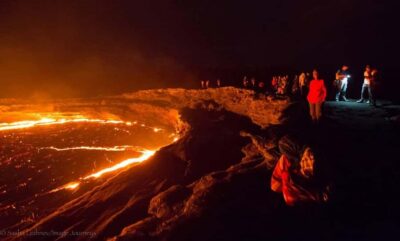
2-Night 3-Day Danakil Depression Tour without Flights
Read our review →
Lalibela, Axum, Danakil and Omo Valley 8 DAYS
Read our review →Browse the lists this tour appears in