
Reviewed · DANAKIL DEPRESSION EXPEDITIONS
3 Day Guided Tour Throughout Danakil Depression in a Small Group
The Danakil is as wild as travel gets. This three-day trip takes you across Ethiopia’s harsh Afar region to see boiling lava at Erta Ale, the mineral colors of Dallol, salt flats, hot springs, and camel caravans still carrying freshly cut salt. I like the small maximum of six people, which should make long drives and rough camp arrangements easier to manage. I also like that the price includes transport, local guiding, meals, water, camping equipment, and camels.
The main catch is the physical strain. You face extreme heat, long road journeys, basic outdoor sleeping, and a one-hour trek from Dodom to the volcano rim. The schedule is also tightly packed, so you need to be comfortable with early starts, plain facilities, and changing conditions in a very exposed desert.
In This Review
- Key points before you book
- Why the Danakil Depression is worth the effort
- Day 1: From Semera to Lake Afdera and Erta Ale
- Erta Ale after dark: the trip’s biggest reward
- Day 2: Hamad Ela, salt workers, and Dallol
- Day 3: Sunrise at Lake Assale and return to Semera
- What the $525.87 price covers
- Comfort, group size, and physical demands
- The strongest part of the guiding and organization
- Cancellation and booking points to keep in mind
- Should you book this Danakil tour?
- FAQ
- Where does the tour start and end?
- How long does the tour last?
- How many people can join the tour?
- Is Erta Ale part of the tour?
- What meals are included?
- Are flights included in the price?
- Can I cancel for a full refund?
Key points before you book
- Watch boiling lava at Erta Ale: A camel-supported overnight camp brings you close to the volcano rim for a night view of its active crater.
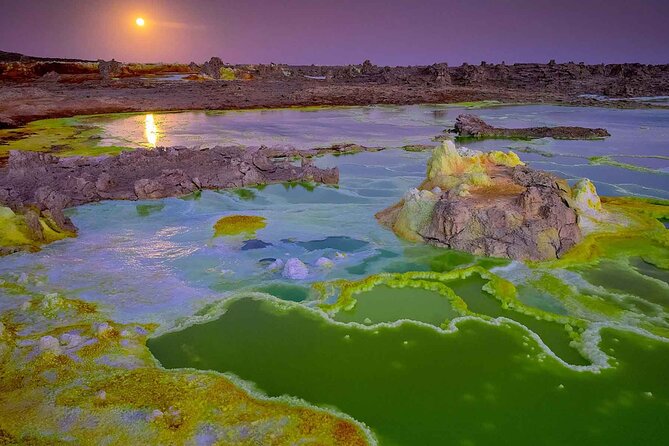
- See Dallol’s striking mineral colors: Sulfur and potash create unusual shades around volcanic ground and salt formations.
- Follow the salt trade at Ragad: Local workers cut salt into rectangular blocks and load it onto camels.
- Travel in a group of no more than six: A small party matters on long drives and during a demanding overnight camp.
- Expect a true desert expedition: Heat, lava rock, basic sleeping conditions, and several hours on the road are part of the experience.
- Most major costs are covered: Meals, bottled water, camping gear, a local Afar guide, camels, and vehicle transport are included.
Why the Danakil Depression is worth the effort
The Danakil Depression is not a soft-edged holiday setting. It is a hot, dry region shaped by salt, volcanic activity, acid springs, and mineral deposits. That severity is exactly what makes the trip memorable. You are not simply looking at scenery from a roadside viewpoint. You are watching natural forces and old local industries work side by side.
The experience combines two very different kinds of interest. Erta Ale gives you raw volcanic drama, while Dallol and Lake Assale show the quieter effects of minerals, evaporation, and underground heat. The salt-cutting activity adds a human story that keeps the trip from becoming only a geology outing.
The small-group limit is one of the strongest features. With no more than six people, you should have less crowding in the vehicle and a better chance to stay connected with the guide. That matters when the route is remote and the timetable is built around heat, darkness, sunrise, and road conditions.
Lucy Ethiopia Tours is represented in the supplied material by Kiros, with guides and staff named Abiti, Yousef, Solomon, and Anwar. Communication before departure is described as clear, friendly, and reliable, including contact by email and WhatsApp. That kind of preparation is useful here because this is not a trip where you want to arrive unsure about meeting arrangements or basic equipment.
More Danakil expeditions:
- 3 Days Danakil Depression Tour
★ 4.5 · 135 reviews - 3 Days Danakil Depression Tours Via Semera
★ 5.0 · 47 reviews - 12 Days SIMIEN MOUNTAIN-LALIBELA-DANAKIL-TIGRAY CHURCHES
★ 5.0 · 45 reviews
Day 1: From Semera to Lake Afdera and Erta Ale
Your meeting point is Sultan Alimirah Hanfare Airport in Semera. From there, the drive heads toward Lake Afdera, a salt lake in the center of the Danakil Depression. The route takes about five hours according to the scheduled program, so the first day is not a gentle introduction. Much of your time goes into reaching the remote places that make the trip worthwhile.
Lake Afdera gives you an early look at the region’s unusual geology. The program notes natural hot springs near the lake, with time for swimming around the lake. The combination of salt water and hot spring activity is a memorable start, but you should still think practically: the area is exposed, the heat can be severe, and the day involves more driving afterward.
After lunch, the group continues to Dodom, the settlement or base area for Erta Ale. The stated departure is around 1:30 p.m., though exact timing may depend on local conditions. From Dodom, Erta Ale is about 9.5 kilometers away, and the walk to the volcano rim takes about one hour.
That distance may not sound daunting on paper, but the setting makes it more demanding. You are walking in a hot, rough volcanic area, and the tour requires a moderate level of physical fitness. Wear sturdy footwear and carry the water supplied for the trip. The program includes camel transport for camping materials, food, light mattresses, mats, and water, so you are not expected to carry the entire camp yourself.
Dinner is planned for around 5 p.m. The group then spends the night near the volcano rim, watching the boiling lava. This is the emotional center of the trip. Seeing active volcanic activity at close range, under a dark sky and far from ordinary city life, is the kind of moment that makes the discomfort feel worthwhile.
Still, you should keep expectations sensible. The sleeping arrangement is an outdoor camp with light mattresses and mats, not a hotel room. The night may feel basic, and the volcano visit depends on local conditions. If you need a proper bed, private facilities, and a cool indoor room, this is the wrong tour.
Erta Ale after dark: the trip’s biggest reward
Erta Ale is the part most likely to define your memory of the Danakil. The program describes a dramatic display of boiling lava viewed from near the rim. That combination of movement, heat, darkness, and isolation gives the experience a force that photographs may not fully capture.
The camel support also adds a strong Afar-region touch. Camels carry the camp and food toward the rim, linking the modern guided expedition with the long-established way people move supplies across this desert. You get more than a volcano stop. You see how transport works in a place where roads, heat, and distance make ordinary logistics difficult.
The key limitation is that the experience is physically basic. You should prepare for a long day, a trek, outdoor sleeping, and a very hot climate. The listing calls for moderate fitness, which is a useful warning rather than a formality.
Day 2: Hamad Ela, salt workers, and Dallol
The second day begins early, with a planned departure for Hamad Ela at 4:30 a.m. Early movement makes sense in this climate because the morning is more manageable than the hotter part of the day. Hamad Ela is described as a village of about 500 people and a place where you can see camel caravans.
The route then moves toward Ragad, also called Asebo, where local workers mine salt. Around 1,200 square kilometers of the Afar Depression are covered by salt, and this section shows how that resource is gathered by hand. You can watch salt being broken from the ground, cut into rectangular pieces, and loaded onto camels.
This is one of the most valuable parts of the tour because it connects the scenery to daily work. The salt is not just a bright surface for photographs. It is a material that people cut, shape, carry, and trade. The camel caravans help you understand the scale and difficulty of that work in a way a quick roadside stop would not.
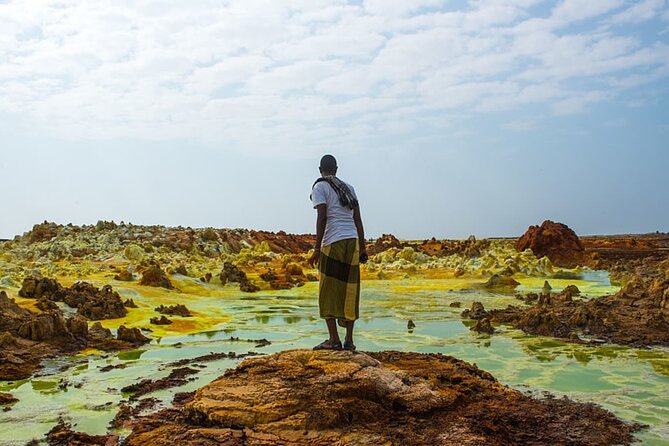
You then continue to Dallol, one of the area’s most unusual volcanic sites. The program includes several formations created by volcanic activity, along with Dallol, Lake Assale, the salt canyon, and camel caravans. The colors come from sulfur and potash, producing yellow, orange, green, and other mineral shades across the ground.
Dallol is visually strange, but you should pay attention to the practical side. The ground and water features are tied to volcanic and chemical activity, so you need to follow the local guide closely and respect any instructions about where to walk. Do not treat the area like an ordinary park with unrestricted wandering.
Lake Assale adds another memorable stop. The program mentions a view of the shallow salt lake, including a sunset look, and a possible sunrise view on the following morning. These quiet moments balance the more dramatic volcano visit. The lake, salt flats, and open horizon show the scale of the depression without requiring a major hike.
Day 2 is also the most demanding in terms of combined activity. The schedule gives about six hours for the tours, but you also spend time driving between remote locations. The early start, heat, and long day can wear you down. Plan to rest whenever the schedule allows and keep your water close.
A few more options to weigh up in Ethiopia
- Addis Ababa Guided City Tour With Airport & Hotel Pick Up
★ 5.0 · 237 reviews - Authentic Addis Ababa City Tour with a Local Guide
★ 4.9 · 109 reviews - Addis Ababa: Guided Expedition through Ethiopia’s Capital
★ 4.9 · 103 reviews - Addis Ababa Guided City Tours
★ 5.0 · 57 reviews
Day 3: Sunrise at Lake Assale and return to Semera
The final morning may offer another chance to see sunrise at Lake Assale. This is a useful second opportunity because light changes the appearance of salt and mineral surfaces. The quiet morning setting can also feel very different from the busy movement of the previous day.
After breakfast, the route returns to Lake Afdera. This gives you another look at the salt lake and hot spring area before the final drive to Semera. The planned return portion takes about four hours, followed by airport drop-off.
The return schedule is relatively short compared with the earlier drives, but you should not assume the day will feel effortless. Three days in high heat, with an overnight camp and early departures, can leave you tired. If you are connecting to another flight or tour, allow flexibility because the program is subject to conditions and changes.
The activity begins and ends at Semera airport. The stated start time is 12:00 a.m., which is unusual beside the airport meeting point and the first day’s schedule. Confirm the exact pickup time with Lucy Ethiopia Tours before you travel, especially if you are arriving by air.
What the $525.87 price covers
At $525.87 per person, the tour is not cheap, but the package includes many costs that could add up quickly in a remote region. You receive an air-conditioned vehicle, all listed fees and taxes, cooking and camping equipment, bottled water, a local Afar guide, camel support, two dinners, three breakfasts, and two lunches.
That inclusion list gives the price real value. The vehicle is important because the route covers large distances in a harsh area. The guide is equally important because this is not a self-drive destination, and the salt sites, volcanic areas, and local communities require local direction.
The food plan covers the meals listed, but do not expect a restaurant-based trip. Cooking equipment is part of the arrangement, which points to simple camp meals rather than dining with a menu. Alcohol is not included, and flights are also your responsibility. Camera and video charges are listed separately, so ask about those costs if photography is central to your plans.
The price is best understood as an expedition package rather than a standard sightseeing tour. You are paying for transport, support staff, food, camp logistics, and access to remote places over three days. For someone who wants the Danakil without arranging every vehicle, guide, meal, and camp detail alone, that can be a fair deal.
Comfort, group size, and physical demands
The group is capped at six people. That is small enough to keep the vehicle personal and make communication easier, while still allowing the operator to spread costs across a group. It also matters during camp setup and the volcano trek, when a very large party would make the experience feel less direct.
Comfort remains basic. The tour includes light mattresses and mats, but no hotel accommodation is described. You should be ready for outdoor sleeping and a hard environment. The supplied information also describes the wider trip experience as involving many hours on the road, sleeping in the open air, and walking on lava.
A moderate fitness level is required. The main physical test is the approximately one-hour trek from Dodom to Erta Ale, but heat, rough ground, and repeated movement in the desert add to the challenge. Bring practical clothing, sturdy shoes, sun protection, and any personal items you need to sleep outdoors. The tour supplies water, but sensible water management is still important.
This trip suits you if you enjoy unusual geology, active volcanoes, local working traditions, and remote travel more than comfort. It is less suitable if you dislike heat, long drives, simple camping, or early mornings.
The strongest part of the guiding and organization
The human side of the operation receives especially strong praise in the supplied comments. Kiros is singled out for organizing the trip, responding through email and WhatsApp, and helping with wider Ethiopia planning that included Lalibela and Harar. Abiti, Yousef, Solomon, and Anwar are also named as helpful members of the team.
That matters because the Danakil requires coordination. You need a driver, local guide, camp support, food preparation, camel handling, and timing around the volcano and salt sites. Clear communication before departure can make the difference between feeling prepared and feeling stranded at the edge of a very hot desert.
The praise also extends beyond one stop. The team is described as friendly, thoughtful, organized, and reliable, with care shown from the first contact through the end of the journey. I would still ask direct questions before booking about the exact pickup time, current volcano conditions, sleeping arrangements, and any camera charges. Good organization is valuable, but conditions in the Danakil can change.
Cancellation and booking points to keep in mind
You can cancel for a full refund if you do so at least 24 hours before the local start time. Changes or cancellations inside that period are not accepted for a refund.
The tour requires suitable weather and a minimum number of people. If poor weather cancels the trip, you are offered another date or a full refund. If the minimum group size is not reached, you are offered another date or experience, or a full refund.
The activity is listed as mobile-ticket enabled, and confirmation is provided at booking. Public transportation is nearby, but the actual tour begins at Semera airport and ends back at that meeting point.
Should you book this Danakil tour?
Book it if you want a compact, guided expedition to the Afar region with the major highlights in one package: Erta Ale’s boiling lava, Dallol’s mineral colors, Lake Assale, Lake Afdera, salt-cutting, and camel caravans. The small group, included meals, camp gear, water, vehicle, guide, and camels make the $525.87 price easier to justify.
Skip it if you need predictable comfort or a relaxed timetable. The heat, one-hour volcano trek, outdoor camp, long drives, early departures, and exposed volcanic ground are not minor details. For an adventurous visitor with moderate fitness and a strong interest in geology and local life, this is a rare chance to see one of Ethiopia’s most extreme regions with practical support already arranged.
FAQ
Where does the tour start and end?
It starts at Sultan Alimirah Hanfare Airport in Semera, Ethiopia, and ends back at the same meeting point.
How long does the tour last?
The experience lasts approximately three days.
How many people can join the tour?
The maximum group size is six people.
Is Erta Ale part of the tour?
Yes. You travel from Dodom to Erta Ale, trek for about one hour to the volcano rim, and spend the night watching the boiling lava.
What meals are included?
The tour includes two dinners, three breakfasts, and two lunches.
Are flights included in the price?
No. Flights are not included.
Can I cancel for a full refund?
Yes, if you cancel at least 24 hours before the experience start time. Poor weather or failure to meet the minimum group size may also lead to a different date or a full refund.
Just added in Ethiopia
- Yod Abyssinia Cultural Night: Dinner, Music, and Dance★ 5.0 · 7 reviews
- Tigray Mountain Church’s Day Trip from Mekele★ 5.0 · 2 reviews
- Mekele City Tour★ 5.0 · 2 reviews
- Day trip to Tigray Churches★ 5.0 · 2 reviews
- 3 Day Tour of Geralta Churches Tigray Church’s★ 5.0 · 2 reviews
- 3 days tour Danakil Depression (Dallol & Erta Ale)★ 4.0 · 5 reviews
- 2 Days Dallol Trip★ 5.0 · 4 reviews
- Lalibela Backpacker tours★ 5.0 · 6 reviews
Danakil Depression Expeditions, compared.
12 Days SIMIEN MOUNTAIN-LALIBELA-DANAKIL-TIGRAY CHURCHES
Read our review →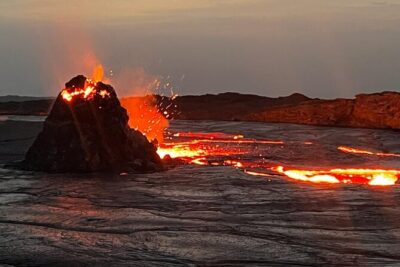
3 Day Danakil Depression Ertale and Dallol Tours
Read our review →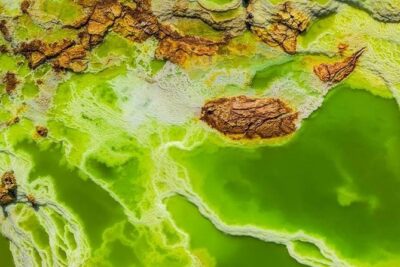
5 DAYS Lalibela, Axum, Tigray churches and Danakil
Read our review →
6 Days tour Package (Simien Mountains, Lalibela, and Danakil Depression)
Read our review →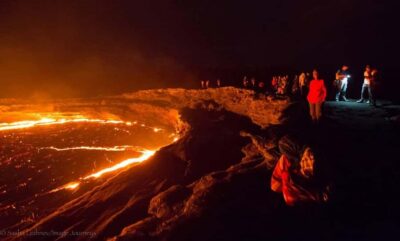
2-Night 3-Day Danakil Depression Tour without Flights
Read our review →
Lalibela, Axum, Danakil and Omo Valley 8 DAYS
Read our review →Browse the lists this tour appears in