

Reviewed · OMO VALLEY TRIBAL TOURS
3-Day Cultural Tour in South Omo Valley
Three days can open a very different Ethiopia. This tour takes you from Addis Ababa to the Lower Omo region, where Hamer, Dassanech, Bana, and Mursi communities maintain distinct languages, dress, ceremonies, and ways of life. I like the small maximum group of six, which should make long drives and village visits more manageable, and I like that the route is led by an English-speaking guide with a local focus.
I also like the chance to see more than one community in a short trip. The Hamer near Turmi, Dassanech near Omorate, and Mursi in Mago National Park offer very different encounters. The main drawback is the pace: you cover large distances in only three days, and lunch, dinner, and tips are not included.
The tour costs $700 per person and includes flights within the route, an air-conditioned vehicle, accommodation with breakfast, entrance fees, and a guide. That is a serious price, but the remote setting, limited time, and complicated transport make organized support useful. Previous customers gave especially warm praise to the care provided by guide Tariku and driver Sitotaw, who were described as treating the group like family.
In This Review
- Five things to know before you book
- Why the Lower Omo Valley matters
- Day one: flying to Jinka and meeting the Hamer near Turmi
- Day two: the long road to Omorate and the Dassanech
- Day three: Mago National Park and the Mursi village
- What the $700 price really covers
- The people behind the trip
- Practical tradeoffs you should consider
- Who should book this South Omo tour?
- FAQ
- Where does the tour start and end?
- What time does the tour start?
- How long is the tour?
- How many people can join the tour?
- Is airport pickup available?
- What is included in the price?
- Are lunch and dinner included?
- Which communities does the tour visit?
- Can I cancel for a full refund?
- Should you book it?
Five things to know before you book

- Four cultural encounters in three days: You visit Bana, Hamer, Dassanech, and Mursi communities, each with different customs and dress.
- A dugout canoe crossing near Omorate: The Dassanech excursion includes an Omo River crossing and striking river views.
- Possible Hamer ceremonies: If timing allows, you may see a marriage ceremony, bull jumping, or related traditions near Turmi.
- A very small group: The tour accepts no more than six people, useful for a remote route with long drives.
- A fast, demanding schedule: The plan includes a flight to Jinka, several road journeys, and one 70-kilometer drive each way to Omorate.
Why the Lower Omo Valley matters
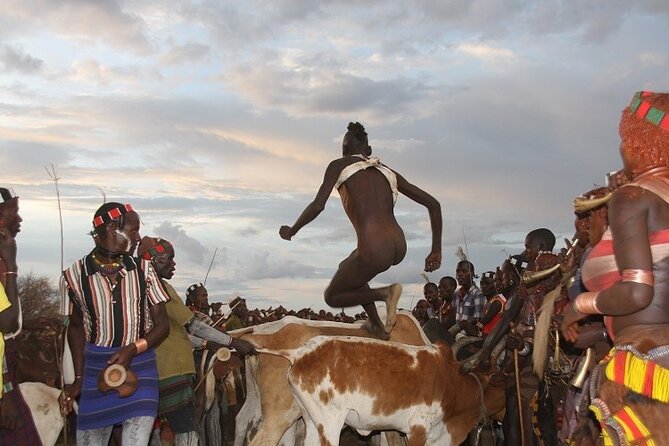
The Lower Omo River region is home to eight ethnic groups with a combined population of about 200,000. Each community has its own language, clothing, food, ceremonies, and work traditions. In a short visit, you cannot understand every part of these cultures, but you can begin to see how much variety exists within one corner of Ethiopia.
This is not a standard sightseeing trip built around monuments. Its value comes from meeting communities whose daily life has remained closely tied to farming, livestock, craftwork, and local ceremony. The tour description presents these visits as a privilege, and that is the right attitude to bring. You are entering living communities, not a museum arranged for your convenience.
Your guide matters here. A good guide can explain what you are seeing, help with local introductions, and keep the visit respectful. The strong praise for Tariku and Sitotaw points to one of the tour’s most important strengths: careful support on a route where roads, distances, and cultural etiquette can be difficult to manage alone.
More Omo Valley tours:
- 6 Days Omo Valley Tribes Tours From Addis Ababa
★ 5.0 · 33 reviews - 3 Days Omo Valley Tour
★ 5.0 · 24 reviews - 5 Days Omo Valley Tours
★ 5.0 · 15 reviews
Day one: flying to Jinka and meeting the Hamer near Turmi
The first morning begins at Bole Addis Ababa International Airport, with a stated start time of 9:00 a.m. You fly to Jinka, then continue by road toward Turmi, an important center for the Hamer people. The route also includes a visit to a Bana village.
The Hamer, also called Hamar, live east of the Omo River, with communities around Turmi and Dimeka. They are known for elaborate body adornment, colorful beads, and heavy polished iron neck jewelry worn by women. These details are visually striking, but your guide should help put them in cultural context rather than leaving you with a quick photograph and a vague impression.
The Hamer are also associated with ceremonies involving marriage, cattle, and initiation. The description refers to ritual flogging connected to marriage traditions, including the scars some women regard as signs of devotion. This is a sensitive subject. You should approach it with respect and avoid treating pain or permanent marks as entertainment.
The Bana visit adds another cultural stop on a long day. The itinerary gives roughly six hours to the first day’s activities, but the full day also includes the flight and road transfer. In practical terms, you should expect a busy start, plenty of time in the vehicle, and limited room for delays.
Turmi is a good base because it gives you access to Hamer communities and traditional events. If a Hamer marriage ceremony or bull jumping ceremony takes place, the schedule may change. That flexibility is a plus. A genuine ceremony is more valuable than following a fixed timetable simply to check off the next stop.
At the same time, ceremonies do not happen on demand. The tour gives you a chance, not a guarantee. Go in expecting a cultural visit, with any ceremony treated as an added possibility rather than the main reason to pay for the trip.
Day two: the long road to Omorate and the Dassanech
Day two is the longest section of the trip. You travel about 70 kilometers each way to Omorate, a settlement associated with the Dassanech people. The stated activity time is around eight hours, so this is a full day with substantial time on the road.
The Dassanech are known for a nomadic lifestyle and distinctive decoration and scarification. As with the Hamer visit, your guide’s explanation is important. Body decoration can carry social and cultural meaning that is not obvious at first glance. You will get more from the stop if you listen first and photograph second.
One of the day’s special details is the crossing of the Omo River in a dugout canoe. The crossing offers a different view of the region and gives the journey a real sense of place. It is not simply a drive to another village. The river has shaped movement, trade, and settlement in the area, and the canoe ride connects the visit to that setting.
The Omorate excursion is also where the tour feels most remote. That is part of its appeal, but it also explains the long travel time and the need for a capable vehicle and driver. Sitotaw’s role is especially important on a route where comfort and timing depend heavily on road conditions and transport decisions.
The itinerary allows for the possibility that the afternoon excursion could be canceled if a Hamer bull jumping ceremony is taking place. This may sound like a change of plans, but it reflects a sensible travel choice. A rare local ceremony should take priority over a less time-sensitive outing.
Later, you drive to Jinka for the night. The move to Jinka sets up the final day’s visit to Mago National Park and the Mursi. It also means another long transfer after an already demanding excursion. You should keep your expectations realistic: this is an efficient regional tour, not a slow holiday with long afternoons at one hotel.
Day three: Mago National Park and the Mursi village
The final morning takes you by road through Mago National Park toward a Mursi village. The activity is listed at around four hours, but the drive itself forms a major part of the experience.
The Mursi are widely known for lower lip and earlobe plates. These are among the most recognizable cultural markers in the Omo Valley, yet they should not be reduced to a single visual image. You are seeing one part of a larger community with its own social customs and daily routines.
Mago National Park gives the journey a natural setting as you approach the village. The route combines protected countryside with a cultural visit, rather than separating nature and local life into unrelated stops. The tour does not promise a wildlife-focused safari, so you should book it for the Mursi encounter and the journey through the park, not for animal sightings.
This last day may feel short compared with the long second day, but it still requires road time and coordination. The tour then returns you to Bole Addis Ababa International Airport. Because the end point is the airport, the arrangement may work well if you are connecting with another flight, but you should keep your onward plans flexible unless the operator confirms exact return timing.
More history tours in Addis Ababa:
- Day Trip From Addis Ababa See Historical Monastery,Stunning Nature,Animals,Birds
★ 5.0 · 303 reviews - Hidden Treasures of Addis Ababa – Food, Culture and History Tour
★ 5.0 · 57 reviews - Northern Ethiopia Historic Route
★ 5.0 · 12 reviews - 5 Days Tour to World Heritage–listed Harrar, Dire Dawa and Awash NATIONAL PARK
★ 4.5 · 10 reviews
What the $700 price really covers
At $700 per person, this is not a cheap add-on from Addis Ababa. The price makes more sense when you look at what the route requires: a flight to Jinka, several days of private or small-group road travel, an air-conditioned vehicle, accommodation, breakfast, an English-speaking guide, and entrance fees.
The small group limit of six adds value. On a road-heavy tour, you do not want to be one of a large crowd packed into a vehicle or moving through a village in a noisy line. A small group can also make it easier to ask questions and adjust the schedule when a ceremony or local opportunity appears.
Still, the inclusions have limits. Lunch and dinner are not included, and tips are also separate. You should budget for those costs before deciding that the $700 price is your full spending amount. The supplied information does not give hotel names, meal venues, flight times, or vehicle specifications beyond air conditioning, so ask for those details before payment if they matter to you.
The value is strongest for someone who wants a managed visit to a difficult-to-reach region and has only three days. It is weaker for someone who prefers to travel slowly, choose accommodation personally, or spend more time in each village.
The people behind the trip
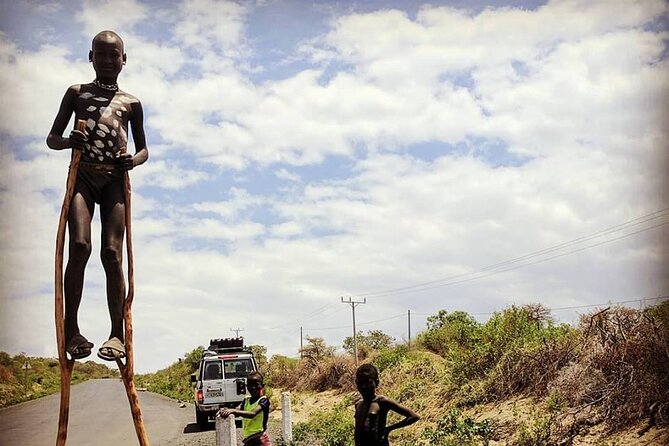
The most praised feature of this tour is the personal care provided by the team. Tariku, the guide, and Sitotaw, the driver, are specifically named in the feedback, with strong comments about their responsibility and attention to detail. That matters more here than it would on a simple city tour.
A guide in the Omo Valley needs to do more than recite facts. You need help understanding local customs, managing introductions, and recognizing when a photograph or approach may be inappropriate. You also need someone who can explain schedule changes without turning the day into confusion.
The driver’s work is just as important. The itinerary includes long distances to Omorate, a drive through Mago National Park, and the transfer between Turmi and Jinka. A careful driver makes the physical side of the trip easier, especially when the schedule is already tight.
The tour provider is Liyu Ethiopia Tours. Its stated approach is to use local-led visits and less-traveled routes suited to individual interests. The exact route here is already set, but the company may be able to discuss adjustments for private bookings or special interests. Ask before booking rather than assuming every request can fit into three days.
Practical tradeoffs you should consider
The first tradeoff is speed versus variety. You see several communities in a short time, but you do not have long stays with any one group. If your priority is broad exposure to the region, this plan works well. If you want quiet observation and repeated contact with one community, a longer trip would be better.
The second tradeoff is comfort versus remoteness. An air-conditioned vehicle and included accommodation with breakfast make the route easier, but this remains a remote southern journey with long drives. The tour does not promise luxury, and the information provided does not describe the accommodation standard.
The third tradeoff is cultural access versus ethical responsibility. Hamer, Dassanech, Bana, and Mursi communities are not attractions created for visitors. You should follow your guide’s instructions, ask permission before taking photographs, and remember that ceremonies have meaning beyond what a visitor can see in a few minutes.
The fourth tradeoff is flexibility versus certainty. A ceremony may change the schedule, and weather or minimum group size can affect departures. That uncertainty can be frustrating if you have a tightly packed Ethiopia itinerary, but it also allows the tour to respond to events that cannot be planned months ahead.
Free cancellation is available up to 24 hours before the local start time. Inside 24 hours, the payment is not refunded. If poor weather or an insufficient number of participants cancels the trip, you should be offered another date, another experience, or a full refund.
Who should book this South Omo tour?

I would recommend this tour to you if you have limited time, want several cultural stops, and prefer a guide and driver to handle the difficult parts. It suits curious visitors who care about local traditions and are comfortable with long road journeys, basic travel conditions, and a schedule that may change.
It is also a sensible choice for solo visitors or couples who want the advantages of a small group without arranging every transfer themselves. The maximum of six people gives you a better chance of personal attention than a large coach trip.
I would hesitate to recommend it if you need a slow pace, guaranteed access to a specific ceremony, or fully inclusive meals. It may also disappoint you if you expect a wildlife safari, since the main focus is cultural visits, not animal viewing.
FAQ
Where does the tour start and end?
The tour starts at Bole Addis Ababa International Airport in Addis Ababa and ends at the same airport.
What time does the tour start?
The stated start time is 9:00 a.m.
How long is the tour?
The experience lasts approximately three days.
How many people can join the tour?
The tour has a maximum group size of six travelers.
Is airport pickup available?
Yes. Pickup is offered, and the stated meeting point is Bole Addis Ababa International Airport.
What is included in the price?
The price includes an air-conditioned vehicle, all fees and taxes, accommodation with breakfast, and an English-speaking guide.
Are lunch and dinner included?
No. Lunch and dinner are not included.
Which communities does the tour visit?
The route includes Bana, Hamer, Dassanech, and Mursi communities.
Can I cancel for a full refund?
Yes, if you cancel at least 24 hours before the experience start time. Cancellations within 24 hours are not refunded. Poor weather or failure to meet the minimum number of travelers may lead to another date, another experience, or a full refund.
Should you book it?
Book this tour if you want a compact introduction to South Omo with trusted logistical support and several distinct cultural encounters. The strongest reasons are the small group, the chance to see a Hamer ceremony, the Omo River canoe crossing, and the attentive service associated with Tariku and Sitotaw.
Skip it if you want an unhurried trip or need every meal and hotel detail fixed in advance. For the right visitor, $700 buys access to a remote part of Ethiopia that would be difficult to arrange alone. Just bring patience, respect, and enough time for the road.
Just added in Addis Ababa
- Yod Abyssinia Cultural Night: Dinner, Music, and Dance★ 5.0 · 7 reviews
- Addis Ababa City Tours Full-Day Tours★ 5.0 · 5 reviews
- Locally crafted beer and wine tasting and nightlife in Addis tour★ 5.0 · 6 reviews
- Unique Ethiopian Cooking Class and Coffee Ceremony with a Local in Addis Ababa★ 4.5 · 7 reviews
- Stunning Views Wonchi Crater Lake a Private Day Trip★ 5.0 · 3 reviews
- Visiting the wonders of Lalibela in Three (3) days and Two ( 2) nights★ 5.0 · 2 reviews
- .2- Days and 1 Night Tour To Awash National Park water falls★ 5.0 · 1 review
- Two days Lake Wenchi and Menagesha Forest★ 5.0 · 1 review
Omo Valley Tribal Tours, compared.

6 Days Omo Valley Tribes Tours From Addis Ababa
Read our review →
Lalibela, Axum, Danakil and Omo Valley 8 DAYS
Read our review →



9 Days Tours To Danakil Depression, Simen MNP, Lalibela With Omo Valley Tribes
Read our review →
5 Day Private tour to the Omo Valley Tribes and Adventure Tour
Read our review →Browse the lists this tour appears in