

Reviewed · OMO VALLEY TRIBAL TOURS
Tribes of the Ethiopian Omo Valley – 9 Day Tour
The road south is part of the story. This nine-day journey links Addis Ababa with Ethiopia’s remote Omo Valley, where you meet Mursi, Hamer, Dorze, Erbore, Konso, and other communities. I like the way the trip combines major cultural sights with everyday places such as the Key Afer market, and I also like that meals, guide services, transport, entrance fees, and scout fees are included.
The main catch is the amount of time spent on the road. You cover a huge stretch of southern Ethiopia in an air-conditioned vehicle, with several long driving days and only brief stops in some communities. Still, the company’s strong reputation for careful planning and custom arrangements makes this a tempting choice for anyone who wants an organized introduction to the Omo Valley rather than a trip assembled on the fly.
In This Review
- The details that shape this Omo Valley journey
- What the $1,111 price really covers
- Addis Ababa begins with Lucy and old royal quarters
- Tiya brings ancient stone markers before Arba Minch
- Lake Chamo and Dorze traditions make Arba Minch worthwhile
- The long road to Turmi reaches Erbore and Hamer country
- Key Afer market is the social heart of the route
- Mago Park and the Mursi visit require respect
- Langano gives the final road day a break
- Meals, transport, fitness, and timing
- The planning strength of Simien Image
- Who should book this nine-day trip?
- Should you book the Omo Valley tour?
- FAQ
- How long is the Omo Valley tour?
- Where does the tour start?
- What communities are included in the route?
- Is the Mursi visit included?
- Can I visit a local market?
- Is the Hamer bull-jumping ceremony guaranteed?
- Are meals included?
- Is transportation included?
- How large can the group be?
- Can I cancel for a full refund?
The details that shape this Omo Valley journey
- Nine days from Addis Ababa to the Omo Valley: The route includes Addis Ababa, Tiya, Arba Minch, Turmi, Jinka, Konso, Langano, and a return to the capital.
- Several distinct cultural encounters: You visit Dorze, Erbore, Hamer, Mursi, and Konso areas, with local markets included where the schedule allows.
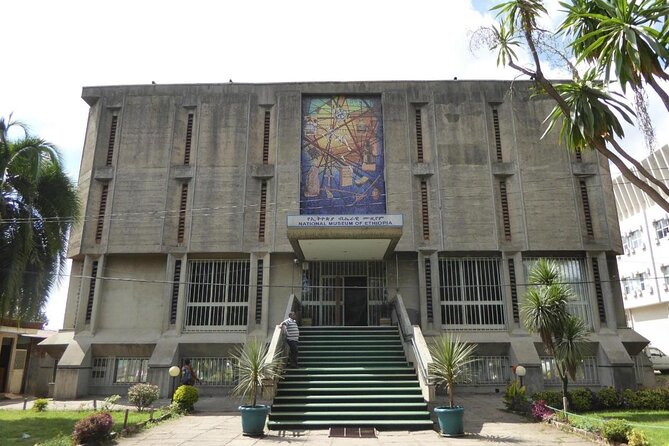
- A full Addis Ababa introduction: The National Museum, Ethnological Museum, Holy Trinity Cathedral, St. George’s Cathedral, and Mount Entoto fill your first full day.
- Nature along the route: Lake Chamo brings chances to see crocodiles, hippos, and water birds, while Langano offers time for a swim.
- Included practical costs: Eight breakfasts, eight lunches, eight dinners, entrance fees, scout fees, a professional guide, and an air-conditioned vehicle are included.
- A small maximum group: The tour accepts no more than 20 people, though the actual group size may be smaller.
What the $1,111 price really covers
At $1,111 per person, this tour offers reasonable value if you want one company to handle a demanding route. You are not simply paying for sightseeing. You are paying for a vehicle, a professional guide, entrance fees, local scout fees, and most meals across a region where independent transport can be difficult to arrange.
Eight breakfasts, eight lunches, and eight dinners are included. Alcoholic drinks are not included, and services not listed in the inclusions are extra. The supplied details do not clearly state the accommodation cost, so I would confirm exactly which hotels and lodges are covered before paying. The itinerary refers to a city-center hotel, a lodge in Turmi, and a hotel in Jinka, but the accommodation terms deserve a direct question.
The value is strongest for a first visit. You get cultural sites, wildlife, archaeology, markets, religious buildings, and scenic stops in one continuous trip. The trade-off is comfort and pace. This is not a relaxed resort holiday, and the long road sections take up a large part of several days.
The maximum group size is 20. That is manageable for a minibus-style tour, but it is not the same as traveling privately. If personal attention matters to you, ask how many people are booked for your departure and whether a private vehicle is possible.
More Omo Valley tours:
- 6 Days Omo Valley Tribes Tours From Addis Ababa
★ 5.0 · 33 reviews - 3 Days Omo Valley Tour
★ 5.0 · 24 reviews - 5 Days Omo Valley Tours
★ 5.0 · 15 reviews
Addis Ababa begins with Lucy and old royal quarters
Day 1 is intentionally light. You are met at the airport, transferred to a city-center hotel, and given time to rest. That pause matters after an international flight, especially since the next day is packed with museums, churches, and mountain views.
Your first full day in Addis Ababa lasts about seven hours. The National Museum of Ethiopia is the essential stop. Its main attraction is Lucy, the fossilized remains of an Australopithecus afarensis hominid who lived in Ethiopia about 3.2 million years ago. The visit gives the rest of the journey useful context: you are not only seeing present-day communities, but also moving through one of humanity’s oldest known regions.
The Ethnological Museum occupies Haile Selassie’s former palace, within the gardens and fountains of Addis Ababa University. This is one of the most useful stops for understanding Ethiopia’s many peoples, customs, and material traditions before you head south. Give it your attention even if museums are not normally your priority.
The religious portion includes Holy Trinity Cathedral and St. George’s Cathedral. Holy Trinity, known in Amharic as Kidist Selassie, is the highest-ranking Orthodox cathedral in Addis Ababa and was built to commemorate liberation from Italian occupation. St. George’s was built by Italian prisoners of war after their defeat at Adwa in 1896. Its connection to the Ark carried into that battle gives the building a strong national meaning.
Mount Entoto finishes the day with a change of air and a broad view over Addis Ababa. Menelik tried to establish a capital here in 1881. The church museum near St. Mary and Menelik’s old house add historical interest to the mountain visit.
An evening at a traditional Ethiopian restaurant, with local food and dancing, is offered as part of the program. The exact restaurant and meal arrangements are not specified, so consider it an optional cultural evening rather than a guaranteed named venue.
Tiya brings ancient stone markers before Arba Minch
On Day 3, you leave Addis Ababa and head south toward Arba Minch. The drive includes a stop at the Tiya World Heritage Site and lunch in Sodo, followed by arrival in Arba Minch late in the afternoon.
Tiya contains 36 monuments, including 32 carved stelae marked with symbols that remain difficult to interpret. The age and full meaning of the culture that created them have not been precisely determined. That uncertainty is part of the appeal, though you should not expect a large museum complex or a long list of fully explained answers.
The planned two-hour stop gives you enough time to see the carved stones and absorb the setting. Afterward, the road continues to Arba Minch. This is a day for patience. The archaeological stop breaks up the drive, but you still spend much of the day in the vehicle.
Lake Chamo and Dorze traditions make Arba Minch worthwhile
Day 4 combines wildlife with a visit to the Dorze people. In the morning, you take a boat on Lake Chamo, part of Nech Sar Park. The boat trip offers the chance to observe large crocodiles and hippos in the wild, along with many water birds.
Wildlife sightings are never guaranteed, so keep your expectations sensible. The appeal is the open-water setting and the chance to see animals without turning the day into a formal safari. The listed visit lasts about three hours, including the time needed for the lake experience.
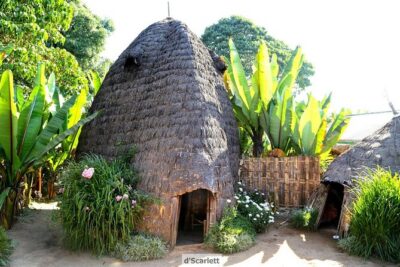
After lunch in Arba Minch, you drive to Chencha to visit a Dorze village. The focal point is a traditional Dorze house, where you can see bread made from false banana and sample locally produced alcohol. This is one of the more hands-on stops of the tour because it connects architecture, food, and household life.
The Dorze visit also shows why local markets and village encounters add value to this itinerary. A museum can explain a culture, but watching food being prepared gives you a more direct sense of daily routines. Return to Arba Minch in the evening.
A few more options to weigh up in Addis Ababa
- Full Day Tour of Addis Ababa with Hotel Pickup and Drop-off
★ 5.0 · 430 reviews - Taste of Ethiopia
★ 5.0 · 406 reviews - Day Trip From Addis Ababa See Historical Monastery,Stunning Nature,Animals,Birds
★ 5.0 · 303 reviews - Addis Ababa: Debre Libanos, Blue Nile Gorge, and Cave Tour
★ 4.5 · 256 reviews
The long road to Turmi reaches Erbore and Hamer country

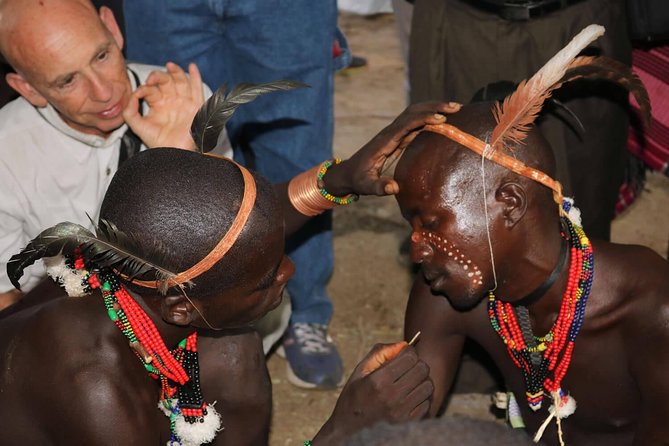
Day 5 is one of the trip’s harder travel days. You leave Arba Minch for Turmi, stopping at Karat Konso, Weito, and Erbore. The schedule allows time to photograph Erbore people, but the wording is a reminder to be respectful and to follow the guide’s direction about photography.
The day is listed at about five hours, though road conditions and stop lengths can affect the actual timing. Turmi is an important base for the Hamer area. If the timing is right, and if a ceremony is taking place, you may attend a bull-jumping ceremony in a nearby Hamer village.
The ceremony is not promised. That is important. Do not book this trip solely for bull-jumping. If it happens, it can be a powerful cultural event, but the schedule depends on local circumstances. If it does not, you still have the regional visits and the evening rest at the Turmi lodge.
This is also a point where a good guide matters. The company is praised for staying in contact, arranging details carefully, and adjusting trips to suit requests. Ask before departure how ceremonial visits are handled, including photography rules and appropriate conduct.
Key Afer market is the social heart of the route

Day 6 takes you from Turmi to Jinka, with a stop at Key Afer. The market takes place every Thursday and attracts Hamer, Benna, Konso, Ari, and other people from the South Omo area.
If your departure lines up with Thursday, this may be one of the most rewarding stops of the entire trip. Markets are not staged cultural displays. They are working places where people come to buy, sell, meet, and exchange news. You will get more from the visit if you treat it as a public part of local life, not as a photo set.
The market visit is scheduled for about two hours. That is enough for an introduction, but not enough to explore every corner at a slow pace. The drive continues to Jinka, where you arrive late in the afternoon and rest at the hotel.
Because the tour covers several communities in quick succession, try to remember that each group is not simply another stop on a checklist. The value comes from noticing differences in clothing, food, architecture, farming, and social customs, then listening to your guide’s explanations.
Mago Park and the Mursi visit require respect
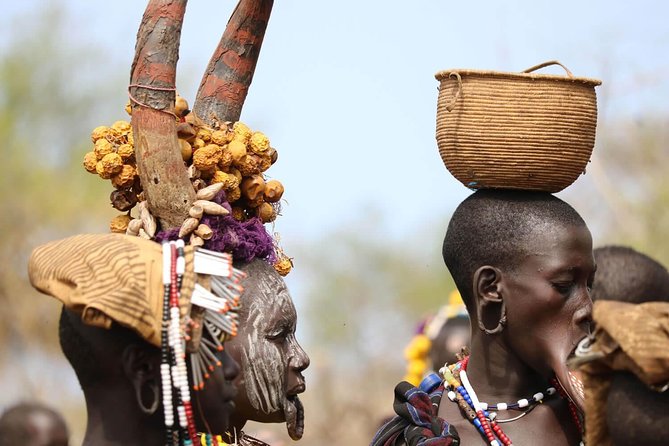
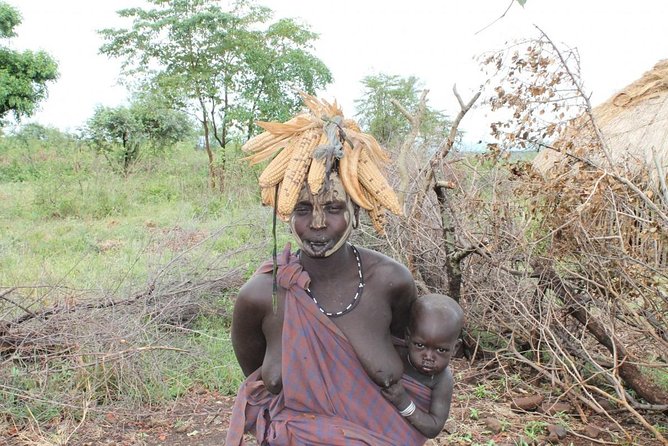
Day 7 begins with an excursion toward Mago Park, home to Mursi communities. The Mursi are widely known for the lip plates worn by some women. The itinerary also refers to donga, a traditional stick fight associated with determining eligible bachelors.
These customs are often presented in simplified ways, so listen carefully to the guide and avoid treating people as curiosities. Photography should be handled with care and according to local guidance. The tour specifically includes a scout fee, which is an important part of access and local coordination in this area.
The excursion is listed at about five hours. You return to Jinka around lunchtime, then continue to Karat Konso. That means another road section follows the Mursi visit, so this is not a day for lingering over a long lunch or extensive independent exploration.
The itinerary labels the stop Konso Cultural Centre, but the description focuses mainly on Mago Park and the Mursi visit before the drive to Karat Konso. I would ask the operator exactly what is planned at the Konso cultural center and whether it is a formal visit or simply the overnight area.
Langano gives the final road day a break
On Day 8, you drive early from Karat Konso to Langano. The listed driving time is about five hours. After several demanding days, the lake provides a welcome change of pace.
Langano is one of the Rift Valley lakes and offers the chance to swim. The area is popular with people from Addis Ababa seeking a short rest, so this is the closest thing to a leisure stop on the route. Bring swimwear if you want to take advantage of the water, though the tour details do not specify changing facilities or how long you will have at the lake.
Day 9 brings the final drive to Addis Ababa, arriving in the afternoon. The program ends once you reach the capital. There is no airport transfer listed for the final day, so arrange that separately if you are flying out immediately.
Meals, transport, fitness, and timing
The air-conditioned vehicle is a major practical benefit. Southern Ethiopia involves long transfers, and air conditioning makes those hours easier. Still, a comfortable vehicle does not remove the strain of repeated early departures and rough or slow roads.
The tour requires a moderate level of physical fitness. The details do not list a special mobility arrangement, so ask the provider about walking surfaces, boat boarding, museum steps, and village access if those issues affect you.
The start time is 8:30 a.m., but individual days may begin earlier. Day 8 specifically says to leave early, and Day 1 depends on your arrival time. Confirm the pickup details and daily departure times before you go.
Food is covered for eight breakfasts, eight lunches, and eight dinners. Alcohol is extra. Since the route enters remote areas, do not assume you can choose from a wide menu at every stop. Ask about dietary needs before departure.
The planning strength of Simien Image
Simien Image Ethiopian Tour and Travel Company is the provider. The strongest praise attached to its service concerns planning, communication, and flexibility. The company has arranged customized two-week journeys, kept in regular contact, and adjusted details to match individual requests.
That matters here because the Omo Valley schedule depends on road timing, market days, local ceremonies, and access arrangements. A company that communicates clearly can help you understand what is fixed and what depends on local conditions.
No guide names are provided, so you cannot choose a particular guide from the supplied information. Ask who will lead your departure, how many people are booked, and how the company approaches photography and community visits. Those answers will tell you a great deal about the experience you are likely to have.
The company has received a top rating across five published comments, with particular praise for custom scheduling and assistance from planning through the trip itself. That is encouraging, but I would still ask precise questions about accommodation, vehicle size, final-day airport transport, and the exact Konso program.
Who should book this nine-day trip?
I would recommend it to you if you want a broad first look at southern Ethiopia and prefer having transport, meals, guides, fees, and route planning handled together. It suits people who value cultural contact, archaeological sites, local markets, and unusual road journeys more than long hotel stays.
It is less suitable if you want a slow holiday, guaranteed ceremonies, or several free afternoons. You will spend substantial time driving, and the most famous cultural encounters may be brief. The tour also asks you to behave thoughtfully around communities whose traditions are often photographed without enough care.
Cancellation is flexible only up to three full days before the local start time. Cancelling later means no refund, and late changes are not accepted. That policy is worth noting before you commit, especially if your international flights are not yet settled.
Should you book the Omo Valley tour?
Book this tour if you want the Omo Valley in one organized sweep, from Addis Ababa’s museums to Mursi country, with Dorze food traditions, Lake Chamo wildlife, Key Afer market, Konso-area stops, and a final rest at Langano.
Before booking, get written confirmation about accommodation, the number of people in your vehicle, the final airport transfer, and what happens if the Hamer bull-jumping ceremony is not available. If you accept the long drives and keep your expectations realistic, the $1,111 price offers a practical way to reach places that are difficult to connect independently.
FAQ
How long is the Omo Valley tour?
The tour lasts approximately nine days, beginning with arrival in Addis Ababa and ending after the return drive to Addis Ababa on Day 9.
Where does the tour start?
The experience starts in Addis Ababa, Ethiopia. Airport pickup is offered, and the start time is listed as 8:30 a.m.
What communities are included in the route?
The itinerary includes visits connected with the Dorze, Erbore, Hamer, Mursi, and Konso areas, along with other communities encountered in the South Omo region.
Is the Mursi visit included?
Yes. The tour includes an excursion to Mago Park, where Mursi communities live. The excursion is scheduled for Day 7.
Can I visit a local market?
Yes. The route includes Key Afer market on Thursday. The market attracts Hamer, Benna, Konso, Ari, and other people from South Omo.
Is the Hamer bull-jumping ceremony guaranteed?
No. The itinerary says you may attend one if you are lucky and if a ceremony takes place near Turmi.
Are meals included?
Yes. Eight breakfasts, eight lunches, and eight dinners are included. Alcoholic beverages are not included.
Is transportation included?
Yes. An air-conditioned vehicle is included, along with a professional guide, entrance fees, taxes, and scout fees.
How large can the group be?
The maximum group size is 20 people. The exact number for a particular departure is not provided.
Can I cancel for a full refund?
You can receive a full refund if you cancel at least three full days before the experience start time. Cancellations or changes made less than three full days before the local start time are not accepted for a refund.
Just added in Addis Ababa
- Yod Abyssinia Cultural Night: Dinner, Music, and Dance★ 5.0 · 7 reviews
- Addis Ababa City Tours Full-Day Tours★ 5.0 · 5 reviews
- Locally crafted beer and wine tasting and nightlife in Addis tour★ 5.0 · 6 reviews
- Unique Ethiopian Cooking Class and Coffee Ceremony with a Local in Addis Ababa★ 4.5 · 7 reviews
- Stunning Views Wonchi Crater Lake a Private Day Trip★ 5.0 · 3 reviews
- Visiting the wonders of Lalibela in Three (3) days and Two ( 2) nights★ 5.0 · 2 reviews
- .2- Days and 1 Night Tour To Awash National Park water falls★ 5.0 · 1 review
- Two days Lake Wenchi and Menagesha Forest★ 5.0 · 3 reviews
Omo Valley Tribal Tours, compared.
6 Days Omo Valley Tribes Tours From Addis Ababa
Read our review →
Lalibela, Axum, Danakil and Omo Valley 8 DAYS
Read our review →



9 Days Tours To Danakil Depression, Simen MNP, Lalibela With Omo Valley Tribes
Read our review →
5 Day Private tour to the Omo Valley Tribes and Adventure Tour
Read our review →Browse the lists this tour appears in