
Reviewed · OMO VALLEY TRIBAL TOURS
South Omo Valley Tribes 8 Days Tour Package
Ethiopia gets wilder by the mile. This eight-day private tour takes you from Addis Ababa through the Rift Valley to the remote South Omo region, with visits to Dorze, Konso, Karo, Mursi, Hamer, and Dasenech communities. You also see ancient stone stelae, national parks, Rift Valley lakes, bird-filled shores, local markets, and thermal springs.
I like the way the trip combines serious cultural stops with big natural scenery, rather than treating the Omo Valley as a single tribal photo stop. I also like that transport, meals, water, entrance fees, and local guides are included. The main drawback is the road time: the route covers roughly 2,200 kilometers, and conditions in the Omo Valley are basic. The published route also has a few unclear place references, so I would confirm the exact overnight towns before paying.
This is not a polished resort holiday. You should expect long drives, simple accommodation, early starts, heat, dust, and a tour that asks you to be flexible. In return, you get access to one of Ethiopia’s most unusual regions, with guides who can help explain customs and local life in a respectful way.
In This Review
- Key points to know before booking
- What the eight days are really like
- Day 1: Addis Ababa, museums, and first impressions
- Day 2: Tiya and the Dorze highlands
- Day 3: Nechisar National Park and the lakes near Arbaminch
- Day 4: Konso stone villages and carved wagas
- Day 5: Karo villages along the Omo River
- Day 6: Mursi culture and Key Afer market
- Day 7: Hawassa and Abijatta-Shalla National Park
- Day 8: Hawassa fishing market, Shashemene, and Wendo Genet
- Price, comfort, and the value of private travel
- Who should book this South Omo trip?
- Should you book it?
- FAQ
- Where does the tour start?
- How long does the tour last?
- Which tribes and cultural groups are included?
- Is transportation included?
- Are meals included?
- Are flights included?
- Are camera and video fees included?
- What fitness level is required?
Key points to know before booking
- Mursi, Karo, Hamer, Dorze, Konso, and Dasenech communities give the tour wide cultural range rather than focusing on only one group.
- About 2,200 kilometers by road means the journey itself is a major part of the experience.
- Haile and Danny received especially warm praise for their communication, cultural knowledge, flexibility, and care with the route.
- Nechisar and Abijatta-Shalla national parks add wildlife, lakes, and birdlife to the cultural program.
- The $1,890.54 price includes meals, transport, guides, water, fees, and taxes, but not flights, drinks, tips, or camera charges.
- A moderate fitness level is needed, mainly because of long road days, early departures, and basic conditions.
What the eight days are really like
The route begins in Addis Ababa and heads south through the Rift Valley. It is ambitious. You see many places, but you do not spend several quiet days in each one. This suits you if variety matters more than a slow pace.
The private format is useful here. You are not tied to a large group, and the tour can sometimes be adjusted. One solo customer reported being able to change the route because no other passenger was involved. That flexibility can matter when roads, local schedules, or your own energy level affect the day.
The package includes an air-conditioned vehicle, English-speaking guidance, local guide fees, two liters of bottled water per day, seven breakfasts, eight lunches, and eight dinners. That is a meaningful bundle for a remote road trip. International and domestic flights are separate, as are alcohol, tips, laundry, phone calls, personal purchases, and video or camera fees where charged.
More Omo Valley tours:
- 6 Days Omo Valley Tribes Tours From Addis Ababa
★ 5.0 · 33 reviews - 3 Days Omo Valley Tour
★ 5.0 · 24 reviews - 5 Days Omo Valley Tours
★ 5.0 · 15 reviews
Day 1: Addis Ababa, museums, and first impressions
After landing at Bole International Airport, a Finot Tour Ethiopia representative meets you in the arrivals area and helps with the transfer to your hotel. You have a break before the afternoon sightseeing.
The cultural program includes the Ethnological Museum and the National Museum. The Ethnological Museum gives you a useful introduction to Ethiopia’s many peoples, crafts, and customs before you reach the south. That context helps you listen better later, instead of viewing each community as an isolated curiosity.
The National Museum is home to Lucy, the famous 3.2-million-year-old hominid fossil discovered in Ethiopia’s Afar region. It is a strong first-day stop because it places the country’s human story far beyond the more recent tribal encounters that shape the rest of the tour.
The day is described with a Mercato Market heading, but the available schedule mainly explains the two museums. I would ask Finot to confirm if Mercato is included and when it takes place. Addis Ababa traffic can also make a half-day program feel fuller than expected.
Day 2: Tiya and the Dorze highlands
You leave Addis Ababa early and drive south via Butajira and Hosaina toward Arbaminch. The first important stop is Tiya, a UNESCO-listed field of carved stone stelae. It breaks up the long road journey and gives you an early look at Ethiopia’s older archaeological traditions.
Lunch is scheduled in Wolayita Sodo before the road continues to Arbaminch. Then you climb into the Gughe Mountains to visit the Dorze people. The change in altitude brings cooler air and broad views toward Lake Abaya and Lake Chamo.
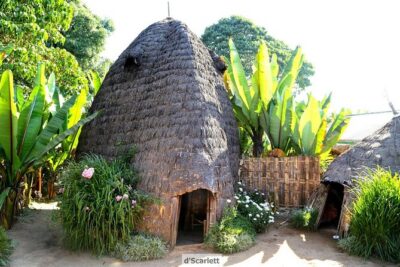
The Dorze are best known here for their tall, beehive-shaped houses and fine cotton weaving. You can also learn about food preparation and daily life in the village. The distinctive homes are not just attractive buildings. They show how local design responds to weather, materials, and household needs.
This is an eight-hour sightseeing day, though the driving may make it feel longer. The highland visit is one of the more rewarding parts of the trip because it combines scenery, architecture, craft, and a community visit without yet reaching the most remote roads.
Day 3: Nechisar National Park and the lakes near Arbaminch
Nechisar National Park covers about 750 square kilometers and includes parts of Lake Abaya, Lake Chamo, and the high ground known as the Bridge of God between the two lakes. The park is noted for sweeping views across open plains, volcanic hills, and the two large Rift Valley lakes.
A boat trip is included in the day. This gives you a different view from the road and may bring you close to the park’s water wildlife. The supplied information describes Nechisar as especially scenic and less frequently visited, which makes the stop a welcome change from the long drives.
The park is not presented as a guaranteed big-animal safari. Your focus is more likely to be scenery, lake life, and the setting around Arbaminch. Keep that distinction in mind if your main goal is to see large mammals.
The day lasts about six hours before the drive onward to Konso for the night. That onward transfer adds to the road burden, but it positions you for the cultural visits ahead.
A few more options to weigh up in Addis Ababa
- Full Day Tour of Addis Ababa with Hotel Pickup and Drop-off
★ 5.0 · 430 reviews - Taste of Ethiopia
★ 5.0 · 406 reviews - Day Trip From Addis Ababa See Historical Monastery,Stunning Nature,Animals,Birds
★ 5.0 · 303 reviews - Addis Ababa: Debre Libanos, Blue Nile Gorge, and Cave Tour
★ 4.5 · 256 reviews
Day 4: Konso stone villages and carved wagas
The Konso visit is one of the tour’s strongest cultural stops. Traditional villages sit on hilltops and are enclosed by high stone walls. Terraced fields extend beyond the homes, showing how the Konso have adapted farming and settlement to a difficult environment.
You can look closely at village planning, defensive walls, terraces, compounds, and social organization. The architecture feels practical rather than decorative. It tells you how people manage land, security, and community life over generations.
The famous wagas are carved wooden figures made in honor of a warrior who killed an enemy or a dangerous animal. These memorial sculptures offer a direct link between personal status, memory, and public art.
Konso is listed as a World Heritage cultural site, and the visit gives the trip an important historical and social center. You are not simply looking at clothing or body decoration. You are seeing how a society organizes land, honors achievement, and preserves identity.
The schedule uses Dasenech Village as the stop heading, while the description is clearly about Konso. Ask for the final route confirmation, since this matters when you are checking accommodation and driving times.
Day 5: Karo villages along the Omo River
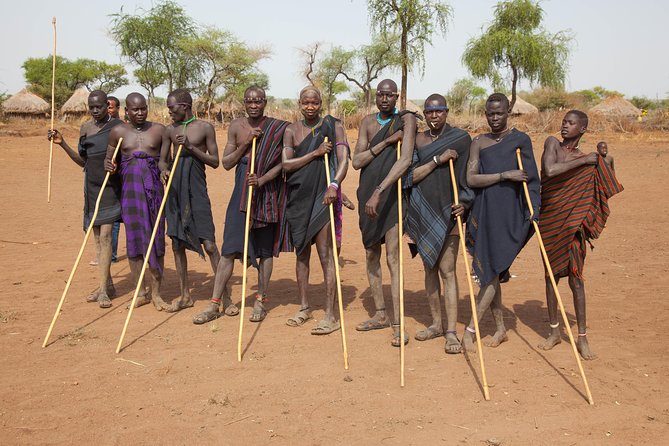
The next cultural focus is the Karo people, who live along the eastern bank of the Omo River. Their communities are associated with elaborate body and facial paint, often made from combinations of white chalk, yellow rock, red iron ore, and charcoal.
The patterns are connected with ceremony and presentation, not simply decoration for visitors. You should approach the visit with patience and respect, and follow your guide’s advice about photography and personal interaction.
The Karo practice flood-retreat cultivation, growing maize, sorghum, and beans. They keep relatively few cattle because tsetse flies make livestock keeping more difficult in this area. These details help explain why communities in the same broad region can have different economies and customs.
The road day runs about seven hours. That is manageable on paper, but road conditions and stops can affect the pace. The tour description lists Dasenech Village as the heading for this day, although the written program describes the Karo area. Confirm the exact village and overnight plan in advance.
Day 6: Mursi culture and Key Afer market
The Mursi visit is likely to be the most famous part of the route. Mursi women are known internationally for the custom of wearing circular clay lip plates after the lower lip is cut at maturity.
This practice is often reduced to a strange image in quick travel coverage. A good local guide can give you better context and help you see it as one part of a broader cultural system, rather than the entire identity of the Mursi community. You should also be prepared for photography rules and possible camera charges, which are not included in the price.
The schedule then takes you to the weekly market at Key Afer. Several ethnic groups attend, and the market includes animal, vegetable, and grain sections. This is a useful counterpoint to village visits because it shows people meeting for trade and routine business, not only ceremonial display.
The written route says you leave Jinka, visit a Mursi village, continue to Key Afer, and then drive back toward Konso. It also lists Konso Cultural Centre as the stop heading and describes another overnight in Konso. Because the timing is only listed as about six minutes for the named stop, I would treat this day as the part of the schedule most in need of clarification.
Day 7: Hawassa and Abijatta-Shalla National Park
After breakfast, you drive toward Hawassa through Ethiopia’s southern Rift Valley. The program includes Abijatta-Shalla National Park, about 200 kilometers south of Addis Ababa, with the two lakes that give the park its name.
The park is particularly useful for birdwatching. Great white pelicans, greater and lesser flamingoes, and other aquatic birds are mentioned, along with ostriches, warthogs, and gazelles. The stop gives you a different view of southern Ethiopia, with water and wildlife replacing the more concentrated cultural visits.
The day is also meant to include hot springs and a visit to Hawassa. Exact timing is not provided, so ask how much time is planned at the park and whether the hot spring stop is on the same day or part of the return route.
After several demanding days, Hawassa can feel like a welcome reset. Still, the transfer from the Omo area is another long road section, so this is not a restful resort day.
Day 8: Hawassa fishing market, Shashemene, and Wendo Genet
The final morning begins at Amora Gedel, the daily fishing market on the shore of Lake Hawassa. Pelicans, storks, and other birds are accustomed to people around the market, allowing you to see birdlife at close range in a working setting.
That working setting matters. It connects the lake to everyday income and food, rather than presenting it only as a scenic stop. You should expect a lively, practical place, not a quiet nature walk.
The road then continues to Shashemene, where you visit the Rastafarian community. The town was given to the community by Emperor Haile Selassie I. This is a short but distinctive stop that adds a twentieth-century political and religious chapter to the route.
Before returning to Addis Ababa, you visit Wendo Genet Spa for a thermal bath and time to relax. After the long Omo Valley circuit, the hot water is a sensible final break. The evening ends with a traditional Ethiopian buffet and local drinks to mark the end of the journey.
Price, comfort, and the value of private travel
At $1,890.54 per person, this is not a cheap Ethiopian road trip. It becomes more reasonable when you account for an eight-day private vehicle, an English-speaking guide, local guides, entrance fees, meals, water, taxes, and the amount of driving involved.
Seven breakfasts, eight lunches, and eight dinners reduce the daily planning burden. The air-conditioned vehicle is also important in a hot region with long road sections. Accommodation is described in the available feedback as fine, with at least one property offering air-conditioning, but you should not expect uniform comfort at every stop.
The private format adds value if you want flexibility. Haile received especially strong praise for communication, good humor, country knowledge, and personal attention. Danny was also praised for his understanding of culture and nature. If either guide is assigned to you, their names are worth confirming before departure.
The main cost risks are excluded extras. International and domestic flights are not included. Alcohol, tips, phone calls, laundry, personal purchases, and video or camera fees are also separate. Carry a clear budget for these items.
Who should book this South Omo trip?
You should consider it if you want cultural variety, remote road travel, and a private schedule. It suits people who can handle early departures, long drives, basic conditions, and a moderate level of physical effort.
You may not enjoy it if you want luxury hotels, short transfers, predictable timing, or a relaxed pace. The tour covers a lot of ground in eight days, and the published place names need clarification.
The strongest reason to book is the range. In one trip, you see museums in Addis Ababa, Dorze houses, Konso terraces, Karo body paint, Mursi traditions, a multi-group market, Rift Valley lakes, national parks, and the Shashemene community.
Finot Tour Ethiopia offers free cancellation up to 24 hours before the local start time for a full refund. Cancellations within 24 hours are not refunded, and last-minute changes are not accepted.
Should you book it?
Book this tour if you want a demanding but highly varied introduction to southern Ethiopia and prefer a private vehicle with meals and local guiding arranged. I would book only after confirming the exact day-by-day route, overnight towns, guide assignment, camera fees, and accommodation standard.
If Haile or Danny is available, that may strengthen the choice. Their communication and flexibility are among the most reassuring features of the experience. For a first South Omo trip, the package offers strong value, but only if you are ready for the roads and accept that comfort comes second to access.
FAQ
Where does the tour start?
The tour starts in Addis Ababa, with airport pickup offered at Bole International Airport. The listed meeting start time is 7:00 am.
How long does the tour last?
The tour lasts approximately eight days.
Which tribes and cultural groups are included?
The program includes visits connected with the Dorze, Konso, Karo, Mursi, Hamer, and Dasenech communities. The exact village schedule should be confirmed because some day headings and descriptions do not match.
Is transportation included?
Yes. An air-conditioned vehicle is included, along with a driver allowance and English-speaking guide.
Are meals included?
Seven breakfasts, eight lunches, and eight dinners are included.
Are flights included?
No. International and domestic flights are not included in the tour price.
Are camera and video fees included?
No. Video and camera fees, where applicable, are excluded. Alcohol, tips, phone calls, laundry, and other personal expenses are also separate.
What fitness level is required?
A moderate physical fitness level is recommended. The trip includes early starts, long drives, village visits, and basic conditions in the South Omo region.
Just added in Addis Ababa
- Yod Abyssinia Cultural Night: Dinner, Music, and Dance★ 5.0 · 7 reviews
- Addis Ababa City Tours Full-Day Tours★ 5.0 · 5 reviews
- Locally crafted beer and wine tasting and nightlife in Addis tour★ 5.0 · 6 reviews
- Unique Ethiopian Cooking Class and Coffee Ceremony with a Local in Addis Ababa★ 4.5 · 7 reviews
- Stunning Views Wonchi Crater Lake a Private Day Trip★ 5.0 · 3 reviews
- Visiting the wonders of Lalibela in Three (3) days and Two ( 2) nights★ 5.0 · 2 reviews
- .2- Days and 1 Night Tour To Awash National Park water falls★ 5.0 · 1 review
- Two days Lake Wenchi and Menagesha Forest★ 5.0 · 1 review
Omo Valley Tribal Tours, compared.
6 Days Omo Valley Tribes Tours From Addis Ababa
Read our review →
Lalibela, Axum, Danakil and Omo Valley 8 DAYS
Read our review →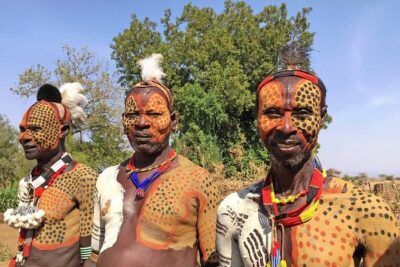


9 Days Tours To Danakil Depression, Simen MNP, Lalibela With Omo Valley Tribes
Read our review →
5 Day Private tour to the Omo Valley Tribes and Adventure Tour
Read our review →Browse the lists this tour appears in