

Reviewed · OMO VALLEY TRIBAL TOURS
Omo Valley 5 Days
Culture starts before the road. This five-day Omo Valley trip links southern Ethiopia’s villages, wildlife, mountain scenery, and lakeside wildlife in one compact journey. I especially like the Karo body-painting traditions and the chance to visit Hamer, Mursi, and Dorze communities. I also like that the price includes a 4WD, local guides, village payments, entrance fees, and the Lake Chamo boat ride. The main drawback is the pace: long drives, early starts, and some unclear itinerary labels require patience and good communication.
I find this tour most appealing if you want a guided introduction to a hard-to-reach part of Ethiopia without arranging every road transfer yourself. A local Omo Valley guide named Euale has been singled out for praise, and one family traveling with children aged 14 and 8 attended a Hamer bull-jumping ceremony. Still, the experience is not polished at every turn, and one booking ended with complaints about poor organization and communication.
At $1,153.85 per person, the tour is not a budget outing. Yet the cost covers substantial transport and guiding in a remote region, along with domestic flights, accommodation, breakfasts, admissions, community payments, and the boat trip. Before paying, I would confirm the flight times, exact hotels, daily route, and who will guide each section.
In This Review
- Key points at a glance
- Why five days in the Omo Valley is a useful length
- Day 1: Addis Ababa to Arba Minch, then Konso
- Day 2: Karo body painting and a Hamer village
- Day 3: Key Afar, Jinka, and a small museum
- Day 4: Mago National Park and a Mursi village
- Day 5: Dorze weaving and Lake Chamo crocodiles
- What the $1,153.85 price really covers
- Communication, guides, and organization
- Who should book this Omo Valley trip?
- Should you book it?
- FAQ
- Where does the Omo Valley tour begin?
- How long does the tour last?
- What type of vehicle is used?
- What is the maximum group size?
- Is pickup available?
- Is the Lake Chamo boat trip included?
- Are accommodation and breakfast included?
- Are domestic flights included in the price?
- What wildlife might I see?
- What is the cancellation policy?
Key points at a glance
- Karo village on the Omo River: See traditional body painting at Kolcho, a distinctive cultural encounter in a striking dry setting.
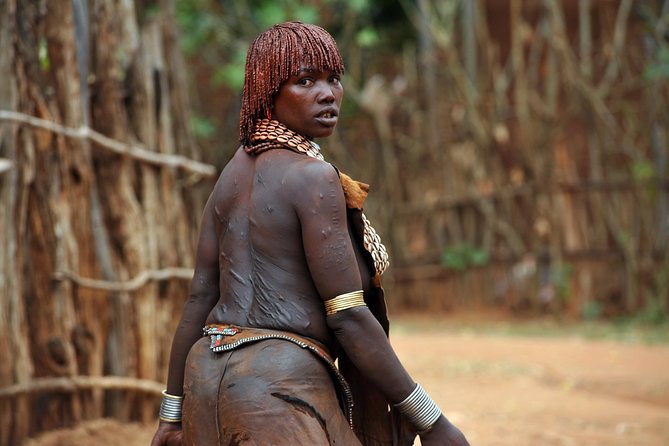
- Hamer village visit: Meet a community known for red-dyed braided hair, decorated leather clothing, and traditional houses made from mud, wood, and thatch.
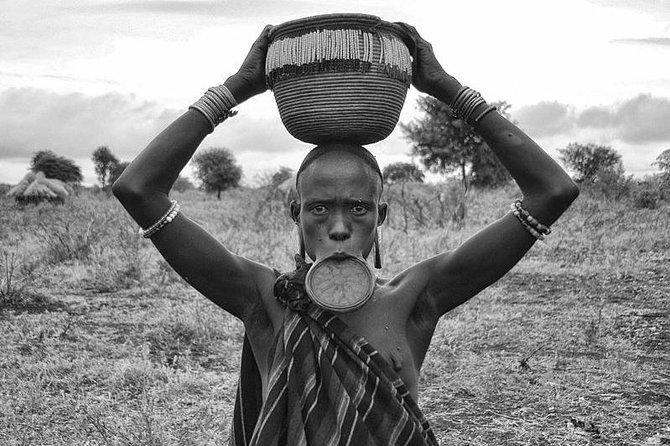
- Mago National Park and Mursi village: Search for Dik-dik and lesser kudu before visiting a Mursi community known for its lip-plate tradition.
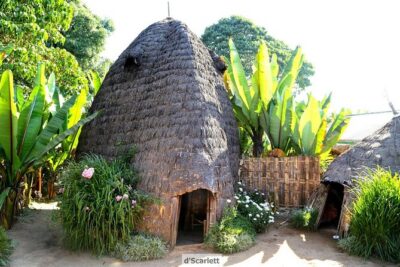
- Dorze homes and weaving: Visit a tall, beehive-shaped house near Chencha and learn how the false banana is used.
- Lake Chamo boat trip: Look for large crocodiles and possibly hippopotamuses before flying back to Addis Ababa.
- Small group format: The maximum is 12 people, with pickup, mobile tickets, a 4WD Toyota Land Cruiser, and local support included.
Why five days in the Omo Valley is a useful length
The Omo Valley is not a quick side trip from Addis Ababa. This route uses two domestic flights and several long road journeys, so five days gives you a practical introduction without turning the trip into a much longer expedition.
I like the way the program combines cultural visits with natural scenery. You are not spending every hour moving between villages. The route also includes Arba Minch, Konso, Jinka, Mago National Park, the Chencha mountains, and Lake Chamo, giving the trip more variety than a simple village circuit.
The tradeoff is clear. Several days include about seven hours of driving, and the road conditions are not described in detail. You should expect the journey itself to be part of the experience. This is best for someone who accepts dust, rough roads, changing scenery, and early departures as part of southern Ethiopia.
The group limit of 12 is helpful. A smaller group should make transfers and village visits easier than a large coach tour, though the actual number in your departure should be confirmed before booking.
More Omo Valley tours:
- 6 Days Omo Valley Tribes Tours From Addis Ababa
★ 5.0 · 33 reviews - 3 Days Omo Valley Tour
★ 5.0 · 24 reviews - 5 Days Omo Valley Tours
★ 5.0 · 15 reviews
Day 1: Addis Ababa to Arba Minch, then Konso

The tour begins with a flight from Addis Ababa to Arba Minch. From there, you continue by road to Konso.
This opening day is mostly about positioning you for the Omo Valley. Arba Minch is the southern gateway for the final part of the route, while Konso provides the base for the first cultural visits. Since the schedule combines a flight and a long road transfer, I would keep this day flexible and avoid arranging anything important in Addis Ababa that evening.
The tour includes ground transport in a 4WD Toyota Land Cruiser. That vehicle matters here. The itinerary reaches dry plains, mountain roads, national park tracks, and rural villages, so a standard city car would not suit the full route.
Accommodation is included on a bed-and-breakfast basis. The exact properties are not listed in the supplied details, though Konso Hotel has been praised as a pleasant stay in one account. Ask for the confirmed hotel list before departure, especially if room standards matter to you.
Day 2: Karo body painting and a Hamer village
The route heads toward Kolcho village, where the Karo people live beside the Omo River. The Karo are known for traditional body painting, and this is one of the most visually distinctive parts of the tour.
The setting adds to the visit. The Omo River is a major feature of the region, and the drive reaches dry, remote country far from Ethiopia’s capital. The details of the painting are likely to be the focus, but you should approach the visit with respect. This is a living community, not a staged museum display.
The schedule then includes a visit to a Hamer village near the accommodation. Hamer women are known for red-dyed, braided hair and leather skirts decorated with shells. The village homes are made from local mud, wood, and thatch, with around 10 to 15 huts arranged around an extended family unit.
I like that this visit is described through daily life and household design rather than only through costumes. You get a sense of how the village is organized and how local materials shape the homes. The tour also says the villages remain largely free from Western materials, though you should avoid expecting every community to look exactly as described.
The day is listed at about seven hours. That includes the road time and village visits, so the schedule may feel full. Take water, sun protection, and patience. The itinerary heading uses the name Dasenech for this day, while the description focuses on Karo and Hamer visits. I would ask the operator to clarify the exact villages before departure.
Day 3: Key Afar, Jinka, and a small museum

The road crosses dry, sandy plains toward Key Afar, then enters more fertile rolling country on the way to Jinka. That change in scenery is one of the rewards of this route. You see how quickly southern Ethiopia shifts from open, dry terrain to greener hills and cultivated areas.
In Jinka, the tour visits a small museum. The museum is intended to provide context about local tribal customs, which is important because village visits can otherwise become a series of quick photographs without much understanding.
You can also take an optional walk through town, meeting people along the way before continuing to the accommodation. The word optional matters. If you are tired after the drive, you can skip it. If you want a closer look at ordinary town life, the walk offers a less formal contrast to the organized village visits.
This day is also listed at about seven hours. The itinerary again labels the stop as Dasenech even though the description names Key Afar and Jinka. That inconsistency does not necessarily mean the route is wrong, but it does make confirmation worthwhile. Ask whether the Dasenech community is actually included, or whether the heading is simply an error.
A few more options to weigh up in Addis Ababa
- Full Day Tour of Addis Ababa with Hotel Pickup and Drop-off
★ 5.0 · 430 reviews - Taste of Ethiopia
★ 5.0 · 406 reviews - Day Trip From Addis Ababa See Historical Monastery,Stunning Nature,Animals,Birds
★ 5.0 · 303 reviews - Addis Ababa: Debre Libanos, Blue Nile Gorge, and Cave Tour
★ 4.5 · 256 reviews
Day 4: Mago National Park and a Mursi village

Day four begins early with a drive through the mountains. The route is described as some of the most beautiful scenery in Ethiopia before entering the drier Mago National Park area.
The park may offer sightings of Dik-dik and lesser kudu. These are possibilities, not guarantees, so I would treat the wildlife as a bonus rather than the main reason to book. The changing scenery and the visit to a Mursi village are the more dependable features of the day.
The Mursi are widely known for decorated clay plates inserted into the lower lips of some women. The itinerary notes that the custom is used less often now, and some older women have loose skin without a plate. That detail is worth keeping in mind. You should not arrive expecting every woman to wear a large plate, and you should treat the tradition as part of a complex culture rather than a spectacle.
This is a good day for a thoughtful guide. A guide can help explain the custom without reducing people to a single visual feature. The included local guide and scout support are useful here, particularly in a national park and during visits that require local arrangements.
After Mago National Park and the Mursi village, the route returns to Konso. Another long driving day follows, so the early departure and road time may be tiring. On the positive side, the loop gives you a broad sample of the southern region rather than keeping you in one town.
Day 5: Dorze weaving and Lake Chamo crocodiles
The final day travels from the fertile area around Arba Minch toward the Chencha mountains. Arba Minch means Forty Springs and is associated with fertile soils and false bananas, also called ensete.
In the Dorze village, you can visit a tall, beehive-shaped house and see weaving in wool and cotton. The tour also includes a demonstration of the many uses of the false banana. Dorze textiles offer one of the clearest shopping opportunities on the route, but bring a practical budget if you are interested in buying woven goods.
I like this stop because it adds craft and food culture to the earlier village visits. The houses are visually memorable, yet the weaving and false-banana demonstration give you something more useful to understand. You see how local materials support both household life and income.
After a picnic lunch, the trip continues to Lake Chamo for a boat ride. The included cruise searches for large crocodiles and possibly hippopotamuses. This is a strong finish because it changes the pace from roads and village visits to open water.
The boat trip is included, along with entrance fees and village and elder payments. Those inclusions reduce the chance of small costs appearing at every stop. After Lake Chamo, you return to the airport and fly from Arba Minch to Addis Ababa.
The final day is listed at about five hours, but the flight schedule will control the timing. Confirm how the boat trip fits with the airport transfer and when you are expected to arrive back in Addis Ababa.
What the $1,153.85 price really covers
The price needs to be judged against the amount of logistics involved. You are not paying only for sightseeing. The package includes accommodation, airport transfers, road transport in a 4WD Toyota Land Cruiser, local guides, a scout where needed, entrance fees, village and elder payments, the Lake Chamo boat trip, and four breakfasts.
That is meaningful coverage for a remote route. Hiring a vehicle, arranging local access, and managing the domestic flights independently could be complicated. The group size of up to 12 also gives the cost some practical value.
The price does not include international or domestic flights. This is the most important point to clarify. The itinerary begins and ends with flights between Addis Ababa and Arba Minch, but the inclusions state that flights are excluded. Ask for a written breakdown of exactly what you must purchase and what the operator arranges.
You also pay separately for alcoholic drinks, videography or camera fees when required, laundry, internet, fax, telephone use, and personal expenses. Services not listed are excluded. I would carry enough cash for personal needs and potential photography charges, though the exact amount is not provided.
Communication, guides, and organization
The operator is Ethio Travel And Tours. The tour offers pickup and a mobile ticket, and confirmation is received at booking. Public transportation is nearby, but this is primarily a private 4WD route rather than a public-transit experience.
A local guide named Euale has been specifically recommended for the Omo Valley. If possible, ask whether Euale will lead your departure. A good local guide can make a major difference when interpreting customs, handling village arrangements, and explaining what you are seeing.
The record is not entirely smooth. One booking ended in complaints about poor organization and communication, including confusion over a supposedly tailored trip that became a group tour. That is a serious point for anyone paying for a private or customized experience. Confirm in writing whether your departure is shared, the final group size, the guide’s name, and the planned accommodation.
Other accounts describe the package as well organized, with positive comments about the route, Konso Hotel, the Lake Chamo cruise, and the overall cultural program. The mixed picture suggests that communication before departure is your best protection.
Who should book this Omo Valley trip?
I would recommend it to you if you want a guided overview of southern Ethiopia and are comfortable with long drives. It suits people who value cultural contact, rural scenery, wildlife possibilities, and local crafts more than luxury or a relaxed schedule.
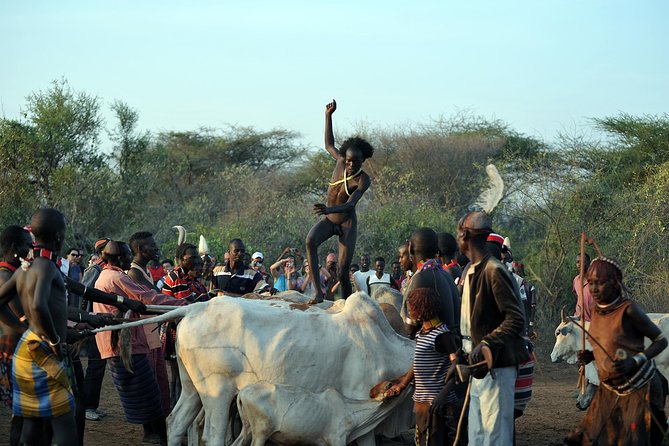
Families can consider it too. A family with children aged 14 and 8 completed a similar five-day Omo Valley program, including a Hamer bull-jumping ceremony. Still, children should be prepared for early starts, long vehicle days, and basic rural conditions.
I would hesitate to recommend it if you need fixed schedules, polished communication, or a quiet pace. The route is demanding, and the wording of several day headings is unclear. You should also think carefully about the ethics of village photography and cultural visits. Ask your guide about permission before taking pictures, and listen when people say no.
Most travelers can participate according to the supplied details, but the program does not describe specific accessibility arrangements. If you need mobility support, ask before booking.
Should you book it?
Book this tour if you want the hard work of southern Ethiopia’s transport, local payments, guiding, and park access handled in one package. The strongest reasons are the range of communities, the Omo River setting, the Dorze visit, Mago National Park, and the included Lake Chamo cruise.
Before you commit, get the flight arrangements and daily route in writing. Confirm the group size, guide, hotels, photography charges, and the meaning of the Dasenech labels. If those details are clear and you are ready for long road days, $1,153.85 can be reasonable value for a tightly packed introduction to the Omo Valley.
FAQ
Where does the Omo Valley tour begin?
The tour begins in Addis Ababa, with a flight to Arba Minch on the first day.
How long does the tour last?
The experience lasts approximately five days.
What type of vehicle is used?
Ground transport is provided in a 4WD Toyota Land Cruiser.
What is the maximum group size?
The tour has a maximum of 12 people.
Is pickup available?
Yes, pickup is offered.
Is the Lake Chamo boat trip included?
Yes, the Lake Chamo boat trip is included in the package.
Are accommodation and breakfast included?
Accommodation is included, along with bed and breakfast. Four breakfasts are listed as included.
Are domestic flights included in the price?
The supplied tour details list domestic flights as not included. Confirm the exact flight arrangements and costs before booking.
What wildlife might I see?
In Mago National Park, you might see Dik-dik and lesser kudu. During the Lake Chamo boat trip, you may see large crocodiles and possibly hippopotamuses.
What is the cancellation policy?
You can receive a full refund if you cancel at least three full days before the experience start time. Cancellations within three full days are not refunded, and changes within that period are not accepted. If poor weather causes the tour to be canceled, you will be offered another date or a full refund.
Just added in Addis Ababa
- Yod Abyssinia Cultural Night: Dinner, Music, and Dance★ 5.0 · 7 reviews
- Addis Ababa City Tours Full-Day Tours★ 5.0 · 5 reviews
- Locally crafted beer and wine tasting and nightlife in Addis tour★ 5.0 · 6 reviews
- Unique Ethiopian Cooking Class and Coffee Ceremony with a Local in Addis Ababa★ 4.5 · 7 reviews
- Stunning Views Wonchi Crater Lake a Private Day Trip★ 5.0 · 3 reviews
- Visiting the wonders of Lalibela in Three (3) days and Two ( 2) nights★ 5.0 · 2 reviews
- .2- Days and 1 Night Tour To Awash National Park water falls★ 5.0 · 1 review
- Two days Lake Wenchi and Menagesha Forest★ 5.0 · 1 review
Omo Valley Tribal Tours, compared.
6 Days Omo Valley Tribes Tours From Addis Ababa
Read our review →
Lalibela, Axum, Danakil and Omo Valley 8 DAYS
Read our review →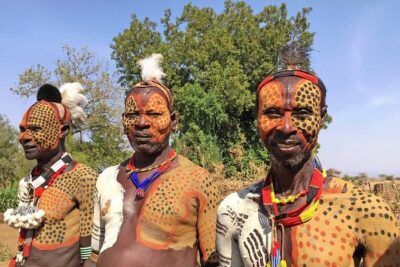



9 Days Tours To Danakil Depression, Simen MNP, Lalibela With Omo Valley Tribes
Read our review →
5 Day Private tour to the Omo Valley Tribes and Adventure Tour
Read our review →Browse the lists this tour appears in