
Reviewed · HISTORICAL TOURS
Ethiopia Historical Site/Northern Ethiopia
History lives in the stone here. This nine-day private journey links Ethiopia’s great northern sites, from the 3.5-million-year-old Lucy fossil in Addis Ababa to Lalibela’s churches carved from living rock. I like the route because it covers several World Heritage locations without asking you to arrange domestic flights, hotels, meals, guides, and private transport separately.
I also like the range of experiences. You move from museums and imperial castles to island monasteries, mountain wildlife, ancient obelisks, and a traditional farewell dinner with music and dance. The main drawback is the pace: long road journeys and several full sightseeing days leave little spare time, while the Blue Nile Falls may be weak because of a nearby hydroelectric project.
The tour provider is Ethiopian Photography Tours, and the one available rating gives particular praise to guide and fixer Mulie, especially for arranging detailed trips at short notice. If photography matters to you, that personal recommendation is useful. If you prefer slow mornings and unplanned wandering, this schedule may feel tight.
In This Review
- Key things to know before booking
- Addis Ababa begins with Lucy and imperial memory
- Lake Tana brings monasteries and open water
- Gondar shows Ethiopia’s royal side
- The Simien Mountains add wildlife to the route
- The road to Axum is one of the tour’s hardest days
- Axum connects trade, empire, and Christianity
- Lalibela saves its most astonishing work for last
- The farewell dinner closes a very full journey
- What the $2,980 price really covers
- Who will enjoy this route most
- FAQ
- How long is the Ethiopia Historical Site tour?
- What destinations are included?
- Are domestic flights included?
- Are meals included?
- Is this a private tour?
- What is not included in the price?
- Should you book this northern Ethiopia tour?
Key things to know before booking
- Lucy anchors the Addis Ababa introduction: The National Museum gives you a direct connection to Ethiopia’s place in human evolution.
- Lake Tana combines water, faith, and scenery: A boat ride reaches Ura Kidane Mihret church on the Zeghie Peninsula before the trip continues to the Blue Nile Falls.
- Gondar adds royal architecture: The walled Fasil Ghebbi enclosure contains well-preserved 17th-century castles.
- The Simien Mountains are more than a viewpoint: A mostly flat or downhill walk may bring you near endemic gelada baboons and other wildlife.
- Lalibela is the grand finale: Two sightseeing sessions cover its famous rock-hewn churches, including St. George, Bete Emanuel, and Bete Gabriel and Rafael.
- The price bundles most major costs: At $2,980 per person, the package includes domestic flights, private transport, accommodation, meals, entrance fees, and guiding, but not international flights, visas, drinks, tips, or personal purchases.
Addis Ababa begins with Lucy and imperial memory
Your arrival day starts with an airport pickup and transfer to your hotel in Addis Ababa. At about 2,438 meters above sea level, the capital is one of the world’s highest national capitals, so I would keep the first morning gentle if you are not used to altitude.
The sightseeing begins with the National Museum of Ethiopia. Its star object is Lucy, the 3.5-million-year-old early hominid whose remains were found in Ethiopia. This is not a quick photo stop. Give the museum time to put the rest of your journey into context, because many of the places ahead belong to Ethiopia’s long religious and political story.
The Ethnographic Museum is also included in the first city visit, although the schedule gives less separate detail about it. It adds a cultural angle to the archaeology and royal monuments, helping you see Ethiopia as more than a collection of old stones.
At Holy Trinity Cathedral, you visit Ethiopia’s main cathedral and the burial place of Emperor Haile Selassie. The cathedral gives the opening day a modern historical link after the ancient material at the museum. Altogether, the Addis sightseeing lasts about five hours, with a separate hour listed for the National Museum and another hour for the cathedral.
More museums in Addis Ababa:
- Addis Ababa +Mount Entoto View Point,Museums Palace Market Tours
★ 5.0 · 42 reviews - Museum Highlights Guided Day Tour in Addis Ababa
★ 5.0 · 9 reviews - Airport Layover Tour | Half Day Addis City Tour : sightseeing, museum , markets
★ 5.0 · 4 reviews
Lake Tana brings monasteries and open water
On day two, you fly early from Addis Ababa to Bahir Dar. The domestic flight saves you from a much longer overland journey and lets the northern route reach its first major stop quickly.
Lake Tana is Ethiopia’s largest lake and the setting for a boat trip to churches and monasteries on its islands and peninsula. The planned visit is Ura Kidane Mihret church on the Zeghie Peninsula. The value of this outing is the change of pace: after a city museum and cathedral, you are on the water, reaching religious sites by boat rather than road.
The schedule gives Lake Tana and the falls a full eight hours. That sounds generous, but the day still has a lot packed into it. Bring sun protection and practical footwear, since the boat ride and church visit are only part of a full day outdoors.
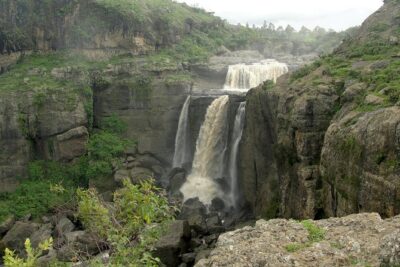
Later, you head to Tis Abay, better known as the Blue Nile Falls. The Amharic name Tississat means water that smokes, an apt image when the falls are flowing strongly. The important warning is that full flow cannot be guaranteed. A nearby hydroelectric scheme has reduced the certainty of the spectacle, so do not make the whole trip depend on a roaring wall of water.
Gondar shows Ethiopia’s royal side
Day three involves a three to four-hour drive of about 185 kilometers to Gondar. That is a manageable road day by the standards of this route, but it is still worth treating the drive as part of the experience rather than as dead time.
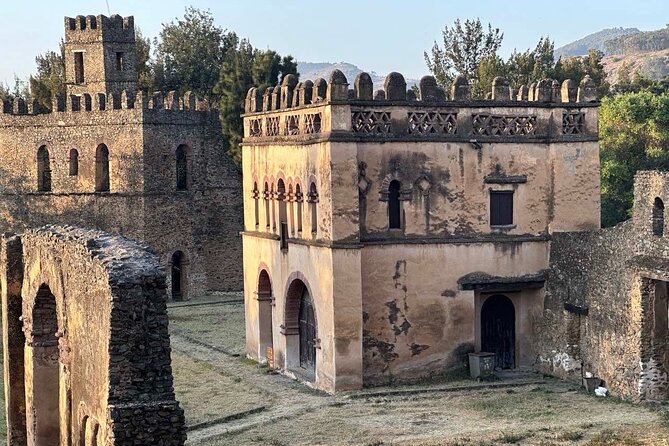
Gondar was once Ethiopia’s capital and is now one of its major cities. The Fasil Ghebbi royal enclosure is the main attraction, with stone walls and unusually well-preserved 17th-century castles. I like this stop because it gives the historical route a strong architectural center. Instead of seeing only isolated churches, you get a clear sense of royal power and court life.
The afternoon visit to Debre Birhan Selassie Church adds a very different visual experience. Its ceiling, filled with angelic faces, is famous for good reason. The church also contains murals, so your guide’s explanation can make a short visit much more meaningful than simply looking up and taking pictures.
The listed sightseeing time is about five hours. The church visit itself is brief in the schedule, so ask your guide how much time will be available for photography and close viewing.
The Simien Mountains add wildlife to the route
On day four, you drive toward Debark and the Simien Mountains National Park. The day is planned for about nine hours, including the journey into the mountains and time for views and a walk.
The Simien Mountains are valuable because they break up the religious and architectural focus of the tour. Here, the attraction is a high mountain ecosystem with broad views and wildlife. An optional walk lasts about 1.5 hours and is described as mostly flat or downhill, which makes it less demanding than a steep mountain hike.
The possible sightings include endemic gelada baboons, klipspringers, lammergeyer vultures, and bushbuck. No sighting is guaranteed, so think of the walk as a chance to experience the area rather than a wildlife excursion with a fixed result.
This is one of the days where good shoes and patience matter. You are spending much of the day on the move, and the route can feel tiring after the previous sightseeing days. Still, the mountain air and open views provide a welcome change before the long drive to Axum.
More history tours in Addis Ababa:
- Day Trip From Addis Ababa See Historical Monastery,Stunning Nature,Animals,Birds
★ 5.0 · 303 reviews - Hidden Treasures of Addis Ababa – Food, Culture and History Tour
★ 5.0 · 57 reviews - Northern Ethiopia Historic Route
★ 5.0 · 12 reviews - DAY TRIP TO THE UNESCO HERITAGE SITE TIYA & Melka Kunture
★ 4.5 · 10 reviews
The road to Axum is one of the tour’s hardest days
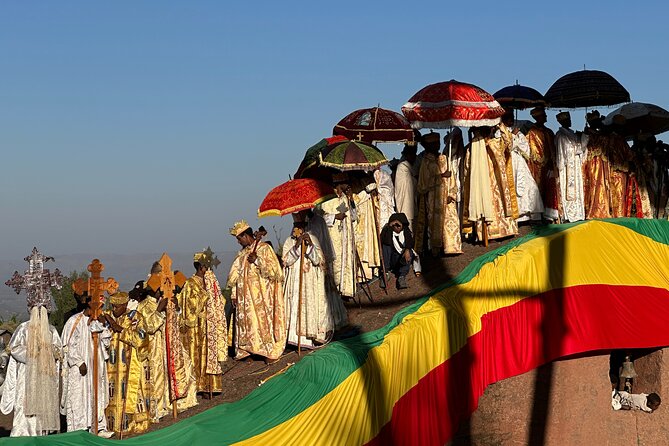
Day five is a full day’s drive to Axum through the lowlands near the Simien Mountains and the Tekeze River gorge. The road is described as rugged, and the day lasts about nine hours.
I would pay close attention to this detail before booking. Axum is one of the most important stops on the route, but reaching it by road takes time. The journey may reward you with changing scenery and a better sense of northern Ethiopia’s distances, yet it leaves little energy for sightseeing on arrival.
This is also why the included private vehicle matters. You are not trying to coordinate public transport or find your own way through a long overland section. A private guide can also adjust stops as conditions allow, though the schedule does not promise extra sightseeing during the drive.
Axum connects trade, empire, and Christianity
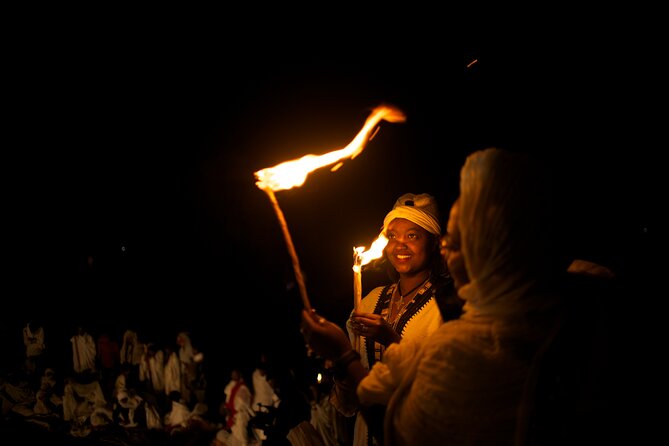
Day six is devoted to Axum, the ancient capital of the Kingdom of Axum. The city once sat at the center of trade between the Mediterranean and India, with links to the port of Adulis on the Red Sea. At its height, the kingdom controlled territory on both sides of the Red Sea.
The famous stelae are the main visual marker. The tallest still standing rises more than 21 meters, while the largest, once about 34 meters high, lies toppled on the ground. It remains the largest monolith ever erected by humans. These stones are not just tall monuments. They show the technical skill and political ambition of an ancient kingdom.
The Church of Our Lady Mary of Zion adds a strong religious dimension. Axum is regarded as the birthplace of Christianity in Ethiopia, and the city is traditionally believed to be the resting place of the Ark of the Covenant. The old Church of St. Mary of Zion was built around 330 AD, making its ruins part of the church compound especially important.
The day provides about three hours for the church area and related sightseeing. Because the religious sites carry deep meaning, dress and behavior should be respectful. Your private guide is particularly useful here, where local belief, history, and access rules can overlap.
Lalibela saves its most astonishing work for last
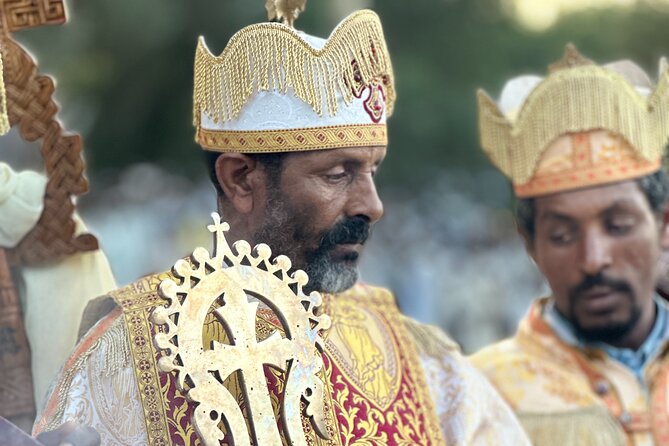
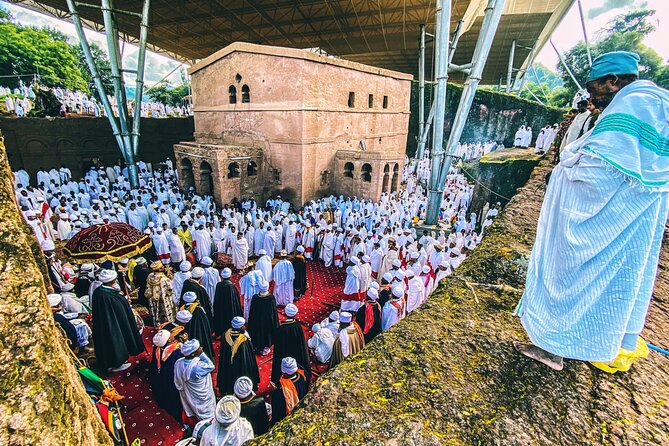
On day seven, you fly to Lalibela and begin visiting the first cluster of rock-hewn churches in the afternoon. Lalibela is often called the New Jerusalem, and the churches are associated with King Lalibela, who is thought to have ordered their construction about 800 years ago.
The churches were carved downward into solid rock rather than built up from separate blocks. That basic fact is easy to understand, but seeing the scale and detail in person is another matter. Walkways, courtyards, trenches, and carved walls make the site feel like an entire sacred complex rather than a single monument.
The first visit lasts about four hours. Since you arrive by air that morning, this is a sensible way to use the afternoon without forcing a rushed full-day schedule immediately after the flight.
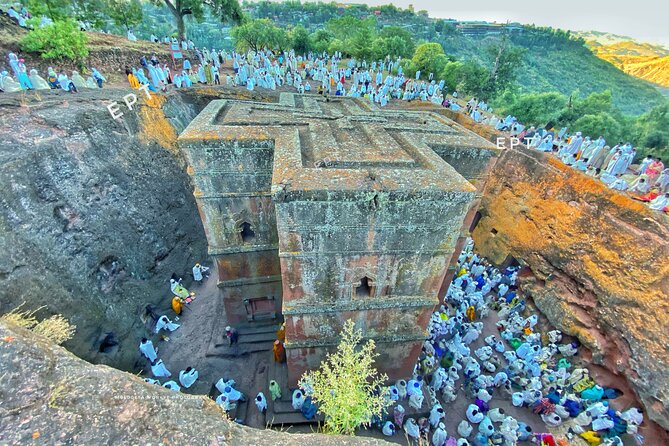
Day eight continues with the remaining churches, including Bete Gabriel and Rafael, Mercurous, Emanuel, and Abba Libanos. Bete Emanuel is singled out for its careful carving and distinctive Axumite architectural features. The Church of St. George is another major stop, famous for its cross-shaped form cut into the rock.
Again, plan on about four hours. The two-day arrangement is one of the tour’s better choices because Lalibela deserves more than a quick glance. You can see the main clusters while keeping the visits within a manageable block of time.
The farewell dinner closes a very full journey
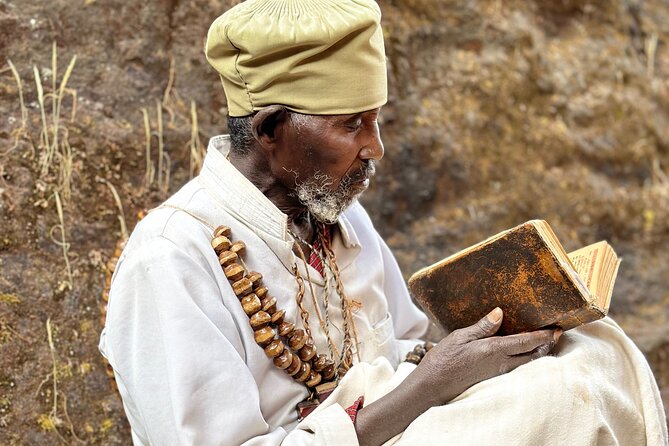
On day nine, you fly back to Addis Ababa. The return flight prevents another long road journey and leaves room for an evening farewell dinner before your airport transfer.
The dinner takes place at one of the country’s traditional restaurants, with traditional music and live dancing by performers representing different ethnic groups. It is a polished ending after days spent visiting churches, monasteries, castles, and archaeological sites. I would treat it as a cultural introduction rather than a replacement for meeting people in daily life, but it gives the route a pleasant final note.
The schedule says you are transferred to the airport afterward for your international departure. Since international flights are not included, you will need to arrange those separately and check that your flight time works with the dinner and transfer plan.
What the $2,980 price really covers
At $2,980 per person, this is not a budget trip. Its value depends on how much help you want in a country where the route covers large distances and several domestic flights.
The package includes:
- Domestic flight tickets
- Hotel rooms
- Entrance fees
- A local guide and private tour guide
- Private transportation
- Eight breakfasts
- Nine lunches
- Nine dinners
That bundle removes many of the costs that can make a multi-city journey difficult to price. Entrance fees and domestic air tickets are already handled, and private transport is especially useful for the long sections to Gondar, the Simien Mountains, and Axum.
You still need to budget for international flights, visa fees, alcoholic drinks, tips, shopping, and other personal expenses. The tour is private, so only your group participates. That can be worth paying for if you want flexibility, photography help, or a guide who can focus on your interests instead of managing a large group.
The available rating is five out of five, based on one submission. The strongest specific praise is for Mulie’s work as a photography guide and fixer, including arranging detailed trips at short notice and managing the practical details. That is useful evidence for photographers, but it is not enough to promise the same experience for every departure. Ask who will guide your group and how much photography support is included.
Who will enjoy this route most
I would recommend this experience to you if you want to see Ethiopia’s main northern sights in one organized trip. It suits first-time visitors who value private transport, included meals, domestic flights, and a guide who can connect the sites.
It also fits photographers who want a dedicated fixer, people with a strong interest in religious architecture, and history enthusiasts who would rather cover a lot of ground than spend several days in one town.
I would be more cautious if you dislike long drives, rugged roads, early flights, or tightly scheduled days. The route is not built around rest. It is a serious sightseeing trip, and the combination of altitude, road time, and repeated church visits can be tiring.
The tour is described as suitable for most people, and only your own group participates. Still, you should consider your comfort with walking, uneven historic sites, and full days on the road before paying.
FAQ
How long is the Ethiopia Historical Site tour?
The tour lasts approximately nine days, beginning in Addis Ababa and ending with a flight back to Addis Ababa for the farewell dinner and airport transfer.
What destinations are included?
The route includes Addis Ababa, Lake Tana and Bahir Dar, the Blue Nile Falls, Gondar, the Simien Mountains, Axum, and Lalibela.
Are domestic flights included?
Yes. Domestic flight tickets are included, including the flights to Bahir Dar, Lalibela, and back to Addis Ababa.
Are meals included?
Yes. The package includes eight breakfasts, nine lunches, and nine dinners.
Is this a private tour?
Yes. Only your group participates in the private tour or activity.
What is not included in the price?
International flights, visa fees, alcoholic drinks, tips for service providers, shopping, and personal expenses are not included.
Should you book this northern Ethiopia tour?
Book it if you want a well-supported route through Ethiopia’s major northern historical cities and you accept a fast pace. The combination of Lalibela, Axum, Gondar, Lake Tana, and the Simien Mountains is the real strength, while included flights and private transport make the distance far easier to manage.
Before booking, confirm the flight schedule, the identity of your guide, and the amount of photography assistance available from Mulie or another guide. Also accept that the Blue Nile Falls may not be at full strength and that day five is a long road journey.
For a first visit focused on heritage, faith, scenery, and practical support, the $2,980 price can be reasonable. For a slower holiday, choose a longer version of the route or a trip with fewer destinations.
Just added in Addis Ababa
- Yod Abyssinia Cultural Night: Dinner, Music, and Dance★ 5.0 · 7 reviews
- Addis Ababa City Tours Full-Day Tours★ 5.0 · 5 reviews
- Locally crafted beer and wine tasting and nightlife in Addis tour★ 5.0 · 6 reviews
- Stunning Views Wonchi Crater Lake a Private Day Trip★ 5.0 · 3 reviews
- Unique Ethiopian Cooking Class and Coffee Ceremony with a Local in Addis Ababa★ 4.5 · 7 reviews
- Visiting the wonders of Lalibela in Three (3) days and Two ( 2) nights★ 5.0 · 2 reviews
- .2- Days and 1 Night Tour To Awash National Park water falls★ 5.0 · 1 review
- Two days Lake Wenchi and Menagesha Forest★ 5.0 · 1 review
Historical Tours, compared.
Day Trip From Addis Ababa See Historical Monastery,Stunning Nature,Animals,Birds
Read our review →
Hidden Treasures of Addis Ababa – Food, Culture and History Tour
Read our review →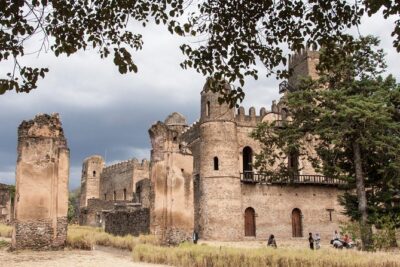
5 Days Tour to World Heritage–listed Harrar, Dire Dawa and Awash NATIONAL PARK
Read our review →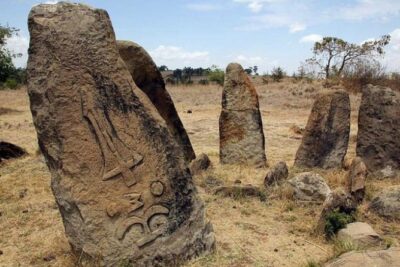
DAY TRIP TO THE UNESCO HERITAGE SITE TIYA & Melka Kunture
Read our review →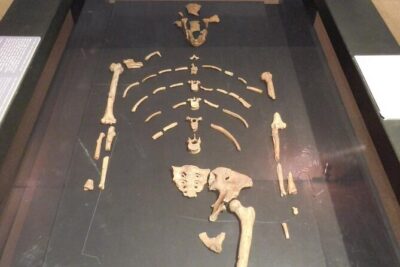
Experience a Cultural and Historical Journey through Addis Ababa
Read our review →
Historical tours – in five days, Addis Ababa, Axum, Laliebla and Gonder
Read our review →
city tour of Addis Ababa ( history ,culture , food and more)
Read our review →Browse the lists this tour appears in