
Reviewed · ADDIS ABABA CITY TOURS
Addis Ababa City Tours
Addis rewards a full day. This tour gives you a useful first look at Ethiopia’s capital, combining ancient fossils, imperial history, local markets, and mountain views. I especially like the mix of major sights and everyday city life, and the included hotel or airport pickup is a real help during a short stopover. The main drawback is the pace: seven or eight hours is a lot of time in a busy city, and some stops may feel brief.
I also like that the tour includes both the National Museum and the Red Terror Martyrs Memorial Museum, two places that explain very different parts of Ethiopia’s story. Guides such as Mickey, Mulate, Getachew, Alex, Haile, and Yosef have been praised for friendly service, clear explanations, and careful attention to solo visitors and families. Still, museum hours can change. One visitor missed Lucy because the National Museum was closed, so confirm opening times before you go.
In This Review
- Key points to know before booking
- A full day that explains Addis Ababa
- Lucy, Selam, and Ethiopia’s first museum stop
- The Ethnological Museum inside Haile Selassie’s former palace
- Shiro Meda, a friendly place to shop for cloth
- Merkato, where Addis commerce gets serious
- St. George’s Cathedral and the memory of Adwa
- Meskel Square, a public stage for Addis
- The Red Terror Martyrs Memorial Museum
- Mount Entoto and the best city views
- Food, coffee, and the cost of the day
- The guide makes or breaks the experience
- Timing, flexibility, and who should book
- Should you book this Addis Ababa tour?
- FAQ
- How long does the Addis Ababa city tour last?
- Is hotel or airport pickup available?
- What is included in the price?
- Are food and drinks included?
- Can I see Lucy at the National Museum?
- How large is the tour group?
- Is the tour suitable for most people?
- What is the cancellation policy?
Key points to know before booking
- Lucy and Selam: The National Museum includes Lucy, the famous 3.2 to 3.3-million-year-old fossil, plus a display on Selam, an early child.
- Markets with different characters: Shiro Meda is best for handwoven cotton clothing and gifts, while Merkato gives you a much larger look at Addis commerce.
- A strong city overview: You see museums, a cathedral, Meskel Square, markets, and Mount Entoto in one long day.
- Useful for a layover: Hotel and airport pickup, air-conditioned transport, and drop-off make this practical when your time in Addis is limited.
- Small group format: The maximum group size is 10 people, though some bookings may operate as private tours.
- Bring room for flexibility: Food and drinks are not included, and traffic or museum closures may affect the order of stops.
A full day that explains Addis Ababa
Addis Ababa can feel hard to read at first. It is a high-altitude capital with wide roads, crowded commercial areas, grand public spaces, churches, museums, and steep roads leading toward Mount Entoto. A guide helps connect these pieces instead of leaving you to view them as disconnected stops.
The route covers about seven to eight hours, although one booking ran close to nine hours and another visitor completed a shortened version in less than six. That tells you the schedule has some flexibility. Your guide may adjust the timing for traffic, opening hours, lunch, or your flight departure.
Transport is by air-conditioned minivan. Pickup is offered from your hotel or the airport, and hotel drop-off is included. The stated meeting point is Edna Mall on Cameroon Street, but pickup arrangements should be confirmed directly, especially if you are arriving at Bole International Airport or using the tour during a long layover.
The group limit is 10 people. That is small enough for questions and easier movement through market streets, though the actual feel depends on how many people book that day. Several bookings became private tours, which is a pleasant bonus but not something you should assume in advance.
More Addis Ababa city tours:
- Authentic Addis Ababa City Tour with a Local Guide
★ 4.9 · 109 reviews - Every day Addis Ababa City Tour
★ 5.0 · 54 reviews - Addis Ababa City Tours Full Day With Hotel Pickup And Drop Off.
★ 5.0 · 51 reviews
Lucy, Selam, and Ethiopia’s first museum stop
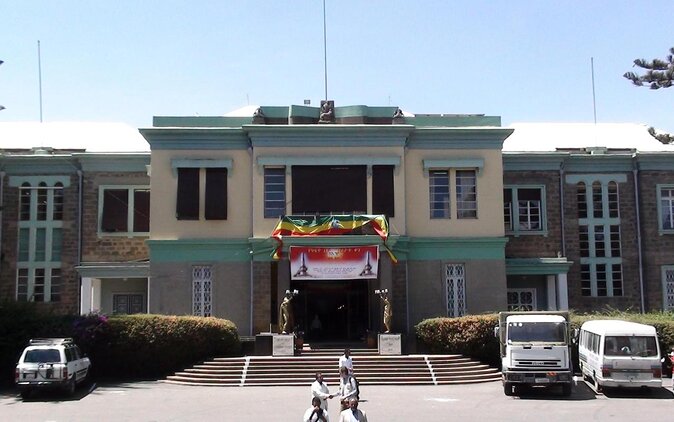
The National Museum of Ethiopia is the intellectual anchor of the day. You get two hours here, enough time to focus on the displays rather than rush past every case.
Lucy is the star. Discovered near Hadar in 1974, the fossilized remains of this early hominid helped bring Ethiopia’s place in human evolution to worldwide attention. The museum also displays Selam, estimated at 3.3 million years old and regarded as the earliest known child from the human family record.
The museum is not only about fossils. Its collections cover archaeology, anthropology, ancient and medieval objects, royal belongings, artwork, clothing, crafts, and other material from Ethiopia’s many communities. That wider range matters. Lucy gives you a connection to the distant past, while the cultural displays show that Ethiopia cannot be reduced to one archaeological discovery.
I would give this stop your full attention. Ask your guide to explain what you are seeing, since the displays can feel dense if you move through them alone. The museum’s opening status needs checking before departure. A closure caused one visitor to miss Lucy, which is particularly disappointing when the museum is the main reason many people book this tour.
The Ethnological Museum inside Haile Selassie’s former palace
The Ethnological Museum occupies the main campus of Addis Ababa University and is part of the Institute of Ethiopian Studies. You spend about an hour here, looking at objects connected to Ethiopian culture, music, anthropology, and daily life.
The setting adds weight to the visit. The museum is housed in a former palace connected with Emperor Haile Selassie, so the building itself helps place Ethiopia’s modern royal period beside its wider cultural story. The collections move beyond national rulers and famous battles, showing objects tied to music, customs, and regional life.
This stop works well after the National Museum. The first museum asks where humanity began and traces Ethiopia’s archaeological record. The second gives more space to the people, traditions, and objects of the country as it developed.
One practical point: two museums in one morning can be a lot for anyone who prefers a slow pace. If you are more interested in markets or food than museum displays, tell your guide early. The tour appears adaptable, and several guides have been praised for adjusting the day to fit limited time.
Shiro Meda, a friendly place to shop for cloth
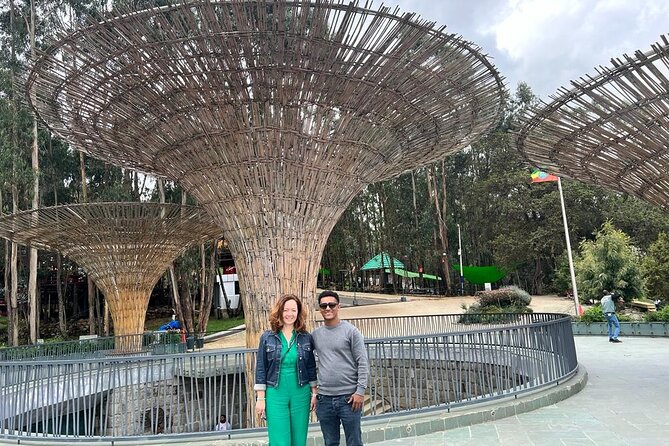
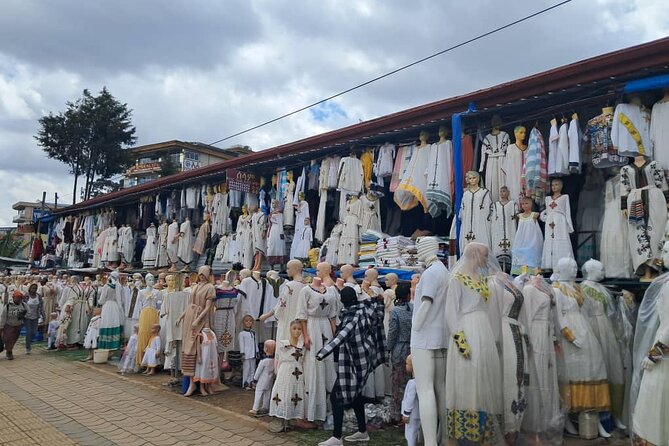
Shiro Meda is a smaller local market near the US Embassy. You have about 30 minutes here, so think of it as a focused shopping stop rather than a full market visit.
The market is known for handwoven cotton clothing, especially women’s scarves, dresses, and shawls decorated with colorful embroidery. You can also look for small gifts such as T-shirts, necklaces, and earrings.
Bargaining is expected. Keep it good-natured and take a moment to inspect the fabric and stitching before agreeing to a price. The short stop means you should have a rough idea of what interests you before you arrive.
I like this market because it gives you a chance to buy something made in Ethiopia rather than a generic airport souvenir. The limitation is time. Thirty minutes can pass quickly if you want to compare fabrics, negotiate, and browse several stalls. If shopping matters to you, ask whether this stop can be extended by trimming another part of the day.
More city tours in Addis Ababa:
- Addis Ababa Guided City Tour With Airport & Hotel Pick Up
★ 5.0 · 237 reviews - Full-Day Private City Tour of Addis Ababa
★ 5.0 · 147 reviews - Addis Ababa Authentic Private City Tour
★ 5.0 · 134 reviews - Addis Ababa highlight city tour
★ 4.8 · 107 reviews
Merkato, where Addis commerce gets serious
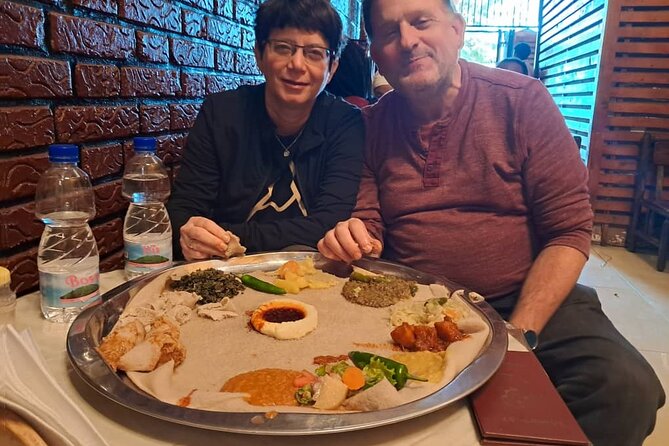
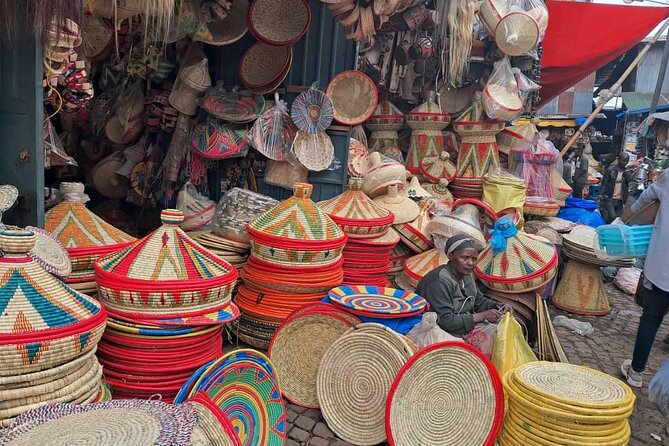
Merkato is the largest open-air market in Africa, and the two-hour visit gives you much more time than the stop at Shiro Meda. This is where the tour shifts from museums and formal monuments to the daily business of the city.
The market’s past is tied to the Italian occupation of the 1930s. The original marketplace near St. George Church was moved west, creating the present Merkato area. The Italians separated European commercial activity around Piazza from the market serving other communities, and those policies shaped the district’s development.
The historical background is useful, but Merkato is best understood by watching how people use it now. You will see commerce on a large scale, with goods, shoppers, bargaining, and movement filling the streets. Stay close to your guide and keep your belongings secure. The market is large enough that a first-time visitor could easily lose their bearings.
This is also where a guide earns their fee. A good guide can explain what you are seeing, help with purchases, and prevent the stop from becoming a confusing walk through unfamiliar streets. The supplied information does not promise a specific food tasting at Merkato, so do not assume meals or samples are included.
St. George’s Cathedral and the memory of Adwa
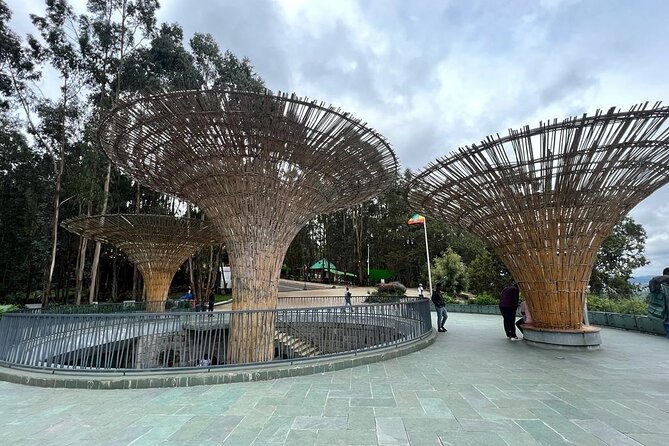
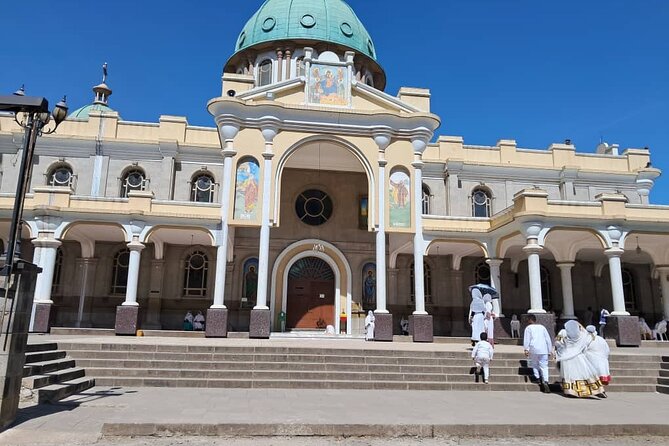
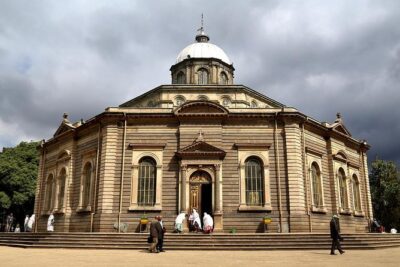
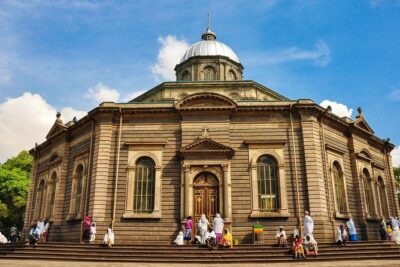
St. George’s Cathedral has an unmistakable octagonal shape and sits at the northern end of Churchill Road. You get about an hour here, including access to the cathedral museum.
The church was designed by Sebastiano Castagna and built by Italian prisoners of war after Ethiopia’s victory at Adwa in 1896. Its name refers to Saint George, whose sacred object was carried into the battle. The building was later set on fire by Italian Fascist forces in 1937 and restored after Ethiopia’s liberation in 1941.
The small museum adds useful detail. It displays an imperial throne and weapons connected with wars against Italy, including curved swords, tridents, and large helmets made from lion manes. These are not merely decorative objects. They connect national identity, religious tradition, and military history in one compact visit.
Dress and behavior should be respectful inside the cathedral. The exact time spent may depend on access and the pace of the group. If religious buildings are a highlight for you, this is a stop worth protecting in the schedule.
Meskel Square, a public stage for Addis
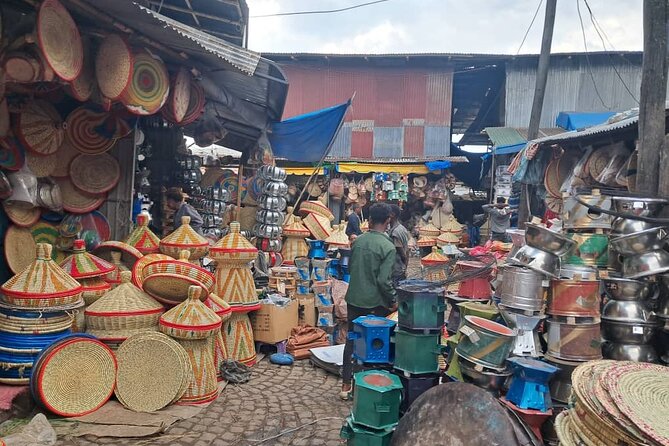
Meskel Square is less about a single building and more about how Addis Ababa gathers in public. The large square hosts demonstrations, festivals, and public events, including the Meskel Festival that gives the place its name.
It was previously called Stephen Square before being renamed in the early 1950s. The square is strongly linked with the Ethiopian Orthodox celebration of the finding of the cross, and historic images show Emperor Haile Selassie taking part in the ceremony there.
Your time at Meskel Square is not specified, so it may be a short photo and orientation stop between longer visits. That is fine. The square helps you understand the city’s public life and gives your guide a natural place to explain modern Addis Ababa.
Do not expect a museum-style visit here. Its value comes from context. You are seeing a major civic space used for ceremony, politics, and celebration.
The Red Terror Martyrs Memorial Museum
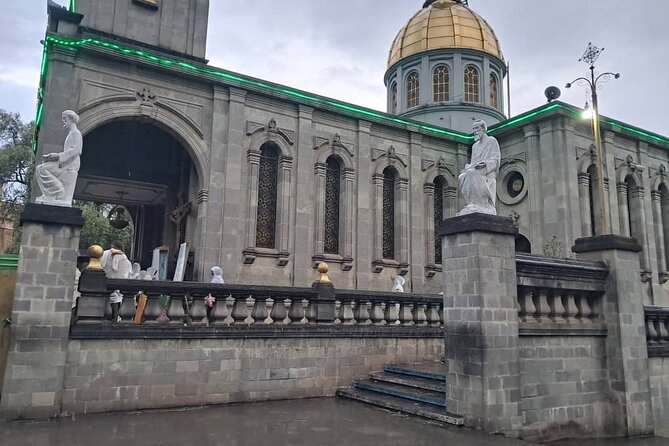
The Red Terror Martyrs Memorial Museum is one of the day’s most difficult stops. It was established in 2010 to remember people killed during the Red Terror under the Derg government.
The exhibits include torture instruments, skulls and bones, coffins, clothing stained with blood, and photographs of victims. The museum’s free guided explanations cover the events that led to the Red Terror, the treatment of prisoners, and the secret ways prisoners communicated with one another.
You spend about 30 minutes here. That may be enough for a powerful introduction, but it is not enough for a detailed study of the period. The material is direct and upsetting, so consider your own comfort and the age of anyone traveling with you.
I value this stop because it prevents the tour from presenting Ethiopia only through ancient fossils, churches, and royal objects. The country’s recent past matters too. Ask your guide to explain the political background carefully, and allow yourself a quiet pause before moving on.
Mount Entoto and the best city views
Mount Entoto gives the day its change of scale. After city streets and indoor collections, you climb to a historic mountain above Addis Ababa for broader views and cooler forest surroundings.
Emperor Menelik II lived here and built his palace after coming from Ankober. Entoto is also regarded as a sacred mountain, with monasteries and churches including Saint Raguel and Saint Mary.
The slopes are covered with eucalyptus trees introduced from Australia during Menelik II’s reign and planted extensively during Haile Selassie’s period. The forest has long supplied Addis with firewood and building materials, and it is often called the city’s lungs.
You have about an hour at Mount Entoto. This is the place to slow down, take photographs, and look back at the capital’s size and setting. The tour description promises panoramic views, but visibility can vary, so treat the lookout as a valuable chance rather than a guaranteed perfect panorama.
The mountain also gives you historical context. Addis Ababa was not simply placed on a map as a modern capital. Its royal, religious, and natural setting helped shape the city that grew below.
Food, coffee, and the cost of the day
Food and drinks are not included, and alcoholic drinks are specifically excluded. The overview points to traditional Ethiopian coffee and cuisine as part of the experience, but you should confirm exactly what is planned and budget separately for anything you eat or drink.
That matters because a full day is easier when you have time for a proper meal. If you want an Ethiopian coffee ceremony or a traditional dish, ask your guide where and when it can fit. One booking included a food-focused addition, and another guide took a visitor to a well-regarded juice shop, but these extras should not be treated as guaranteed parts of every departure.
At $600 per person, this is expensive for a city tour, especially for one person. The value improves if you are using the tour to make a difficult layover practical, need airport transport, want entrance fees handled, or prefer a private arrangement with a guide and driver.
Your fee covers the air-conditioned minivan, driver-guide, Blue Badge guide service, hotel pickup and drop-off, entrance fees, taxes, and handling charges. Merkato admission is also included, although the market itself has no ticket fee. It does not cover airport departure tax, meals, drinks, or alcohol.
I would compare this price with the cost and effort of arranging several separate visits. If you have only one day in Addis, the convenience may justify it. If you are staying several days and enjoy independent city walks, you may find the price harder to defend.
The guide makes or breaks the experience
The strongest part of this tour is the personal service. Mickey is frequently praised for quick communication, friendly conversation, and careful handling of airport and hotel pickups. Mulate has been described as an outstanding guide for both history and practical care, while Getachew, Alex, Haile, and Yosef have also received warm praise for making the day comfortable and personal.
Guide assignments can vary, so you cannot book with certainty around one person unless the operator confirms it. Still, the repeated pattern is encouraging: guides have helped solo visitors feel at ease, adapted tours for families, and kept the day moving when time was tight.
The tour is also suitable for different language needs. One family specifically praised a Spanish-speaking guide. Ask ahead if language is important to you, since the available guide will depend on the date.
Timing, flexibility, and who should book
This is a good choice for a first visit, a long layover, or anyone who wants history explained rather than simply photographed. Families can cover a lot without organizing separate transport, and solo visitors receive the security and company of a guide.
It is less suitable if you want a slow, unplanned day. Seven major stops plus transport is ambitious. Museums, markets, and the mountain each deserve more time than the schedule can give them, so you are choosing breadth over depth.
The tour requires a minimum number of participants. If that minimum is not met, you will be offered another date or experience, or a full refund. You can cancel for a full refund up to 24 hours before the start time. Inside 24 hours, cancellation and changes are not accepted.
Should you book this Addis Ababa tour?
I would book it for a layover or a first day in Addis Ababa, particularly if airport pickup, city orientation, and a full set of entrance fees are worth paying for. The combination of Lucy, imperial collections, Merkato, St. George’s Cathedral, the Red Terror museum, and Entoto gives you a serious introduction to the capital.
I would first confirm the National Museum’s opening hours, ask how food and coffee fit into the day, and clarify the pickup point. If the $600 price is within your budget and you value a flexible guide, this can be an efficient and rewarding day. If you have several days in the city, consider slowing down and visiting fewer places on your own.
FAQ
How long does the Addis Ababa city tour last?
The tour lasts approximately seven to eight hours. Some departures may run longer or be shortened depending on timing, traffic, and the day’s arrangements.
Is hotel or airport pickup available?
Yes. Hotel and airport pickup are offered, and hotel drop-off is included. The stated meeting point is Edna Mall on Cameroon Street, so confirm the exact pickup arrangement when booking.
What is included in the price?
The price includes air-conditioned minivan transport, a driver-guide, a Blue Badge guide, hotel pickup and drop-off, entrance fees, taxes, and handling charges.
Are food and drinks included?
No. Food, nonalcoholic drinks, and alcoholic drinks are not included. They can be purchased separately.
Can I see Lucy at the National Museum?
Lucy is displayed at the National Museum of Ethiopia, along with a display on Selam. Museum closures can occur, so confirm that the museum will be open on your tour date.
How large is the tour group?
The maximum group size is 10 people. Some departures may operate as private tours, but that is not guaranteed.
Is the tour suitable for most people?
Yes. The activity information says most people can participate. The day includes walking through museums, markets, a cathedral, and Mount Entoto, so consider your own comfort with a long sightseeing day.
What is the cancellation policy?
You can cancel up to 24 hours before the start time for a full refund. Cancellations or changes made less than 24 hours before departure are not accepted and are not refunded.
Just added in Addis Ababa
- Yod Abyssinia Cultural Night: Dinner, Music, and Dance★ 5.0 · 7 reviews
- Addis Ababa City Tours Full-Day Tours★ 5.0 · 5 reviews
- Locally crafted beer and wine tasting and nightlife in Addis tour★ 5.0 · 6 reviews
- Unique Ethiopian Cooking Class and Coffee Ceremony with a Local in Addis Ababa★ 4.5 · 7 reviews
- Stunning Views Wonchi Crater Lake a Private Day Trip★ 5.0 · 3 reviews
- .2- Days and 1 Night Tour To Awash National Park water falls★ 5.0 · 1 review
- Visiting the wonders of Lalibela in Three (3) days and Two ( 2) nights★ 5.0 · 2 reviews
- Two days Lake Wenchi and Menagesha Forest★ 5.0 · 1 review
Addis Ababa City Tours, compared.

Authentic Addis Ababa City Tour with a Local Guide
Read our review →

Addis Ababa City Tours Full Day With Hotel Pickup And Drop Off.
Read our review →

Addis Ababa City Tours With Cocking Class of Ethiopian Food
Read our review →
Browse the lists this tour appears in