

Reviewed · CITY TOURS
Addis Ababa Authentic Private City Tour
Addis Ababa reveals itself one stop at a time. This private tour brings together imperial history, Ethiopian culture, and everyday city life, from Haile Selassie’s tomb to the crowded lanes of Mercato. I like the personal guide and driver, and I like that entrance fees, hotel or airport pickup, bottled water, and coffee are included. The one concern is the pace: eight major stops in six to eight hours can feel full, especially with city traffic and a mountain visit.
I also like the chance to visit Tomoca, Ethiopia’s oldest coffee shop, and eat at Taitu Hotel, built in 1905 by Empress Taytu Betul. Lunch costs extra, and the itinerary may need adjusting if traffic, weather, or your arrival time slows the day.
In This Review
- Key points to know before booking
- Why this private Addis Ababa tour works well
- Holy Trinity Cathedral and the imperial tombs
- Tomoca Coffee in Piazza
- Mercato, where Addis Ababa gets practical
- Lunch at Taitu Hotel
- Meeting Lucy at the National Museum
- Haile Selassie’s former palace at the Ethnological Museum
- Entoto Natural Park at 2,600 meters
- Shiro Meda and Ethiopian textiles
- Guides, drivers, and the private format
- Who should book, and who should choose something slower?
- Booking value and practical details
- Should you book the Addis Ababa Authentic Private City Tour?
- FAQ
- How long does the Addis Ababa private city tour last?
- What time does the tour start?
- Is pickup available from my hotel?
- Is airport pickup available?
- Is this a private tour?
- Are entrance fees included?
- Is lunch included?
- Is transportation included?
- Are coffee and water provided?
- What happens if bad weather cancels the tour?
Key points to know before booking
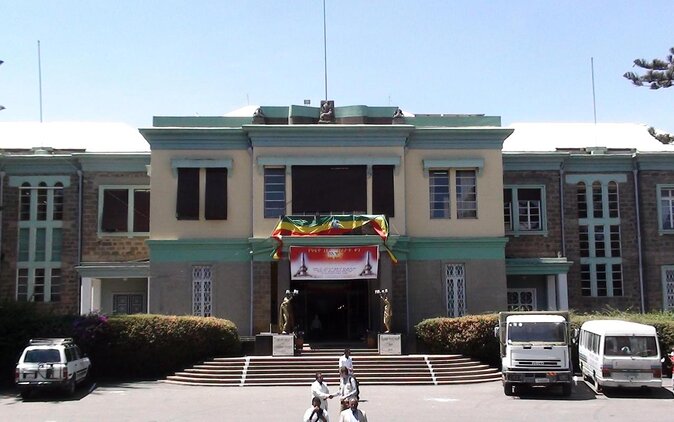
- Lucy and imperial Ethiopia in one day: The National Museum and Holy Trinity Cathedral give you two very different views of the country’s past.
- A private car keeps the day flexible: Only your group participates, and pickup is offered from your hotel or the airport.
- Mercato is a real working market: You see zones for coffee, spices, leather, jewelry, pottery, baskets, and other goods.
- Tomoca offers a quick coffee stop: The visit lasts about 15 minutes, but it connects your cup to Ethiopia’s long coffee tradition.
- Entoto changes the feel of the city: At about 2,600 meters, eucalyptus trees and broad views offer a cool break from central Addis Ababa.
- The guides are a major strength: Alex, Mulu, and Acham are praised for clear explanations, punctual pickup, good communication, and friendly service.
Why this private Addis Ababa tour works well

Addis Ababa can be hard to read at first. It is spread across hills, roads can be slow, and major sights sit far apart. This tour solves much of that problem with private transportation and a guide who connects the stops instead of leaving you to piece them together alone.
The day begins at 8:30 am and usually lasts six to eight hours. That is long enough to see the city’s main cultural sights without committing to a multi-day program. Since your group has the vehicle, you can ask questions, request a little more time at a museum, or discuss an alternative lunch stop.
The private format also matters if you are arriving at Bole International Airport. Airport pickup and drop-off are included, so you can use the day as an introduction to Addis Ababa during a longer stopover. Still, arriving tired may make the full schedule feel demanding. One particularly useful detail from the tour’s feedback is that Alex kept a visitor engaged even after arriving directly from the airport. That kind of attentive guiding can make a big difference on a first day.
The price is $75 per person. For a private tour with a driver, guide, transportation, fuel surcharge, entrance fees, and hotel or airport transfers, that is a reasonable package. Lunch and tips are extra, so your real spending will be higher, but you are not paying separately at each museum or church.
More city tours in Addis Ababa:
- Addis Ababa Guided City Tour With Airport & Hotel Pick Up
★ 5.0 · 237 reviews - Full-Day Private City Tour of Addis Ababa
★ 5.0 · 147 reviews - Authentic Addis Ababa City Tour with a Local Guide
★ 4.9 · 109 reviews
Holy Trinity Cathedral and the imperial tombs
Holy Trinity Cathedral, known in Amharic as Kidist Selassie, is the first major stop. Allow about an hour here. The cathedral was built in 1942 to mark Ethiopia’s victory over Italian occupation, giving the building a direct link to one of the country’s most important modern chapters.
Inside are the tombs of Emperor Haile Selassie and Empress Menen Asfaw, along with other members of the Imperial Family. The visit is not only about architecture or religious art. Your guide can help explain how the cathedral connects faith, monarchy, national memory, and the struggle against foreign rule.
I would pay close attention to the difference between visiting a working place of worship and visiting a museum. Dress and behavior should be respectful, and your guide is the right person to ask about local customs. The one-hour stop gives you time to look around without turning the visit into a quick photograph from the car.
The cathedral also sets the tone for the rest of the day. Ethiopia’s past is not presented as a single story. You will see Orthodox Christianity, imperial power, archaeology, commerce, textiles, and mountain life all within a few hours.
Tomoca Coffee in Piazza
The Tomoca stop lasts only about 15 minutes, but it is one of the most distinctive parts of the route. Located in the Piazza area, Tomoca has served coffee since 1953 and is described as Ethiopia’s oldest coffee shop.
This is a short stop, not a full coffee ceremony or a long café break. You can expect a taste of a long-running local institution, with coffee or tea included in the tour. The brevity makes sense in a packed day, though coffee lovers may wish they had more time.
I like this stop because it gives the itinerary an everyday connection. The cathedral and museums explain Ethiopia’s past. Tomoca lets you pause and experience one small part of Addis Ababa’s continuing social life.
If coffee is especially important to you, ask the guide how much time is available before you arrive. The schedule lists 15 minutes, so you should not expect a leisurely café session.
Mercato, where Addis Ababa gets practical
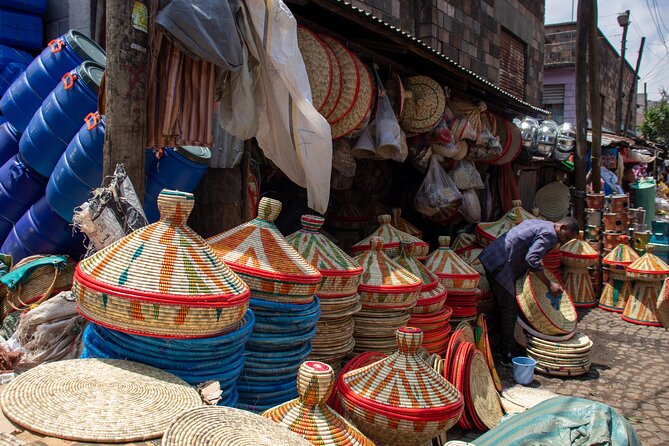
Mercato receives about an hour, with no admission charge. It is described as the largest open-air market in Africa, covering several square miles and involving about 13,000 people across roughly 7,100 business entities.
Those numbers help explain why a one-hour visit can only introduce you to the market. Mercato is divided into zones for agricultural products, incense, coffee, spices, jewelry, baskets, pottery, leather goods, and metal goods. Your guide is especially useful here, since the market is large enough to overwhelm a first-time visitor.
This is not a polished shopping center arranged for sightseeing. It is a working market where people buy and sell the goods used in daily life. That makes it one of the best stops for seeing present-day Addis Ababa rather than only its monuments.
Keep your attention on your surroundings and follow your guide’s advice. The narrow streets and dense stalls are part of the experience, but they can also make the visit tiring. An hour is a sensible starting point. You get a strong impression without spending half the day on your feet.
If you want to buy something, ask about prices and suitable shops before making a purchase. The tour information specifically lists coffee, spices, textiles, leather, jewelry, baskets, pottery, and metal goods among the market’s products, so you have plenty of choices.
A few more options to weigh up in Addis Ababa
- Full Day Tour of Addis Ababa with Hotel Pickup and Drop-off
★ 5.0 · 430 reviews - Taste of Ethiopia
★ 5.0 · 406 reviews - Day Trip From Addis Ababa See Historical Monastery,Stunning Nature,Animals,Birds
★ 5.0 · 303 reviews - Addis Ababa: Debre Libanos, Blue Nile Gorge, and Cave Tour
★ 4.5 · 256 reviews
Lunch at Taitu Hotel
The planned lunch stop is Taitu Hotel in Piazza. Built in 1905, the hotel was commissioned by Empress Taytu Betul, the wife of Emperor Menelik II, to give foreign visitors a place to rest and dine.
That makes lunch part of the historical route rather than a random break between sights. You are eating in a building tied to Addis Ababa’s early development as a modern capital. The stop lasts about 45 minutes, and lunch is not included in the $75 price.
The schedule allows alternative lunch locations, which is useful if Taitu Hotel does not suit your taste, timing, or budget. Some previous experiences included a coffee ceremony, honey wine, or a restaurant owner explaining how honey wine is made. Those extras are not guaranteed, but they show that the private format may allow room for a personal interest when time permits.
Plan for lunch to take longer than 45 minutes if you want a relaxed meal. With eight stops on the schedule, a long restaurant visit could mean less time elsewhere. Ask your guide early in the day if you have a strong preference.
Meeting Lucy at the National Museum

The National Museum of Ethiopia is one of the day’s essential stops. About 40 minutes are planned, and admission is included.
The museum has three main sections. In the basement, the paleontological collection includes fossilized remains of early hominids, most famously Lucy. The ground floor covers Aksumite, pre-Aksumite, Solomonic, and Gondarian periods. The first floor presents Ethiopian art, including parchment works from the 14th century and later oil paintings.
Lucy is the headline attraction for many people, but the museum is valuable because it places human origins beside Ethiopia’s archaeological, religious, royal, and artistic past. I would not rush straight to the famous fossil and leave. Use the guide to understand how the different sections relate to one another.
Forty minutes is enough for an introduction, not a full museum study. If early human history is your main reason for visiting Addis Ababa, you may want to return independently. On this tour, the museum works best as one part of a wider day.
The guides are often praised for pointing out important information and good photo opportunities without letting the schedule become dull. That is helpful here, where a short visit can otherwise turn into a quick look at Lucy and a hurried exit.
Haile Selassie’s former palace at the Ethnological Museum
The Ethnological Museum occupies Haile Selassie’s former palace on the university’s main campus. The stop lasts around 40 minutes, with admission included.
This visit shifts the focus from famous individuals and ancient fossils to Ethiopian cultural life. The museum houses anthropological, musicological, and cultural objects, and the former palace rooms give the visit a strong sense of place. You are not only looking at objects behind glass. You are also walking through a building connected to the country’s imperial period.
The palace setting is one of the stop’s special features. Gardens and fountains surround the museum, offering a quieter break after Mercato and the city’s central roads. The tour description specifically includes a look at Haile Selassie’s former bedroom, which adds a personal detail to the larger story of the emperor.
Again, 40 minutes is an overview. If you enjoy museums, you could easily want more time. I would ask the guide to focus on the parts that interest you most, whether that is music, household life, religious culture, or the palace itself.
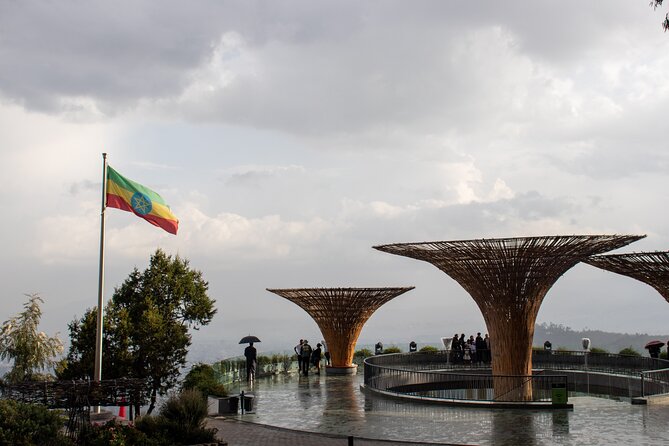
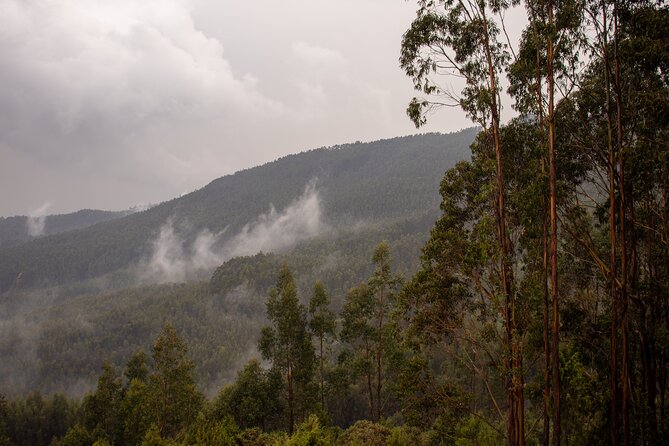
Entoto Natural Park at 2,600 meters
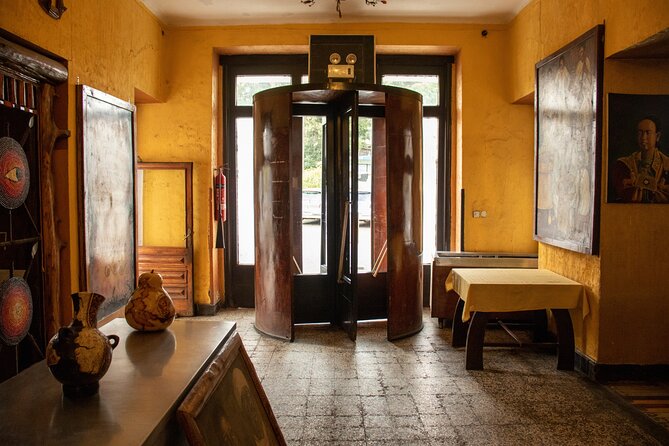
Entoto Natural Park provides the day’s change of pace. The site is about 2,600 meters above sea level, and the visit lasts roughly 40 minutes.
The mountain was associated with Emperor Menelik II’s permanent camp and palace. It is also covered with eucalyptus trees imported from Australia during Menelik II’s reign and planted widely during Haile Selassie’s rule. For this reason, Entoto is sometimes called the lungs of Addis Ababa.
The main reward is the broad view over the capital and the surrounding countryside. After museums and markets, the open scenery helps you understand the city’s highland setting. The eucalyptus forest gives the stop a cooler, more spacious feel.
The altitude is an important practical point. You may notice the thinner air, especially if you have just arrived in Ethiopia or are not used to high elevations. The visit is described as a hike, but the planned time is only 40 minutes, so this is not a long mountain walk. Comfortable shoes and a light layer make sense, though the tour information does not specify a required dress code or hiking distance.
Weather can affect this part of the day. The experience requires good weather, and poor conditions may lead to a different date or a full refund. If the view is your main reason for booking, keep that weather condition in mind.
Shiro Meda and Ethiopian textiles
The final listed stop is Shiro Meda Market, also spelled Chiromeda. Allow about 40 minutes.
This market specializes in Ethiopian textiles, including wedding dresses, clothing, linens, and fabrics. It is a more focused shopping stop than Mercato, where the goods are spread across many categories.
I like the contrast between the two markets. Mercato shows the scale and practical energy of city commerce. Shiro Meda gives you time to look at a specific part of Ethiopian material culture. Textiles can also make more meaningful souvenirs than generic airport purchases, especially if you take time to learn what you are buying.
Forty minutes is enough to browse, ask questions, and consider a purchase. If you are not shopping, the stop may feel less essential than the museums or Entoto. Tell your guide if textiles are a priority, since the private setup may make it easier to use the available time well.
Guides, drivers, and the private format
The strongest part of this experience is the human service. Alex is described as punctual, easygoing, funny, and good at explaining history, culture, and rituals. Mulu is praised for making contact soon after booking, keeping communication clear, and responding to a visitor’s interest in honey wine. Acham is noted for timely pickup and for combining sightseeing with a coffee ceremony and lunch.
These names matter because guide quality can make or break a city tour. A list of sights is easy to print. Explaining why those sights matter, answering questions clearly, and noticing when you need a pause takes more care.
The driver also matters in Addis Ababa. You are crossing a large capital with traffic, hills, markets, and several separate districts. Private transportation saves you from arranging taxis between every stop and lets the guide keep the day moving.
Only your group participates, which suits families, couples, and small groups who want more control. Group or family discounts may be available, so ask before booking if you are not traveling alone. The tour also includes bottled water, coffee or tea, fuel, all entrance fees, and airport or hotel transfers.
Who should book, and who should choose something slower?
I would recommend this tour to a first-time visitor who wants a broad introduction to Addis Ababa in one day. It suits people interested in history, archaeology, religion, markets, coffee, textiles, and city views. It is also useful for someone with a long airport stopover who wants an organized day rather than a hotel waiting room.
Families may appreciate the private vehicle and the ability to keep the day together. Small groups can also benefit from the possible discount. The tour is listed as suitable for most people and is near public transportation, though the schedule includes walking through markets and a mountain visit.
I would hesitate to recommend it to anyone who prefers slow museum visits. The National Museum and Ethnological Museum each receive about 40 minutes, and Mercato can easily absorb more than an hour. You will see a lot, but you will not study every display or browse every market lane.
The itinerary is also ambitious for a visitor arriving tired. Airport pickup is convenient, but convenience does not remove jet lag. If you arrive in Addis Ababa early that morning, tell the company in advance and ask if the order or number of stops can be adjusted.
Booking value and practical details
At $75 per person, the tour offers solid value for a private full-day outing. Entrance fees are covered, and the cost includes a dedicated vehicle, guide, driver, fuel surcharge, bottled water, coffee or tea, and pickup and drop-off.
Lunch is the main extra cost. Tips are also not included. Since the planned lunch is at Taitu Hotel, ask your guide about the expected menu and budget if you want to keep spending predictable.
The tour is usually booked about 29 days ahead, so popular dates may fill early. Confirmation is provided at booking, and free cancellation is available up to 24 hours before the start time. Cancellations or changes made within 24 hours are not accepted for a refund.
The schedule begins at 8:30 am. Give the operator accurate hotel or airport details, since pickup is one of the tour’s key advantages. Also remember that the day may last six hours or eight hours depending on traffic, meal timing, weather, and how much time you spend at each stop.
Should you book the Addis Ababa Authentic Private City Tour?
Book it if you want one efficient day that explains both historic and modern Addis Ababa. The mix is unusually broad: an imperial cathedral, the oldest coffee shop, Africa’s largest open-air market, an old hotel, Lucy, a former palace, a eucalyptus-covered mountain, and a textile market.
The best reason to choose it is the private guiding. Alex, Mulu, and Acham are each associated with timely service, clear explanations, and a willingness to shape parts of the day around personal interests. The main compromise is pace, since the schedule leaves limited time for lingering.
For most first-time visitors, the value is good and the route gives you a useful first map of the city. If you want an unhurried cultural visit, ask about dropping one or two stops. If you want to see the highlights, understand the context, and get back to your hotel or airport without arranging a dozen rides, this is a sensible choice.
FAQ
How long does the Addis Ababa private city tour last?
The tour lasts approximately six to eight hours.
What time does the tour start?
The scheduled start time is 8:30 am.
Is pickup available from my hotel?
Yes. Hotel pickup and drop-off are included.
Is airport pickup available?
Yes. Airport pickup and airport drop-off are included.
Is this a private tour?
Yes. Only your group participates in the activity.
Are entrance fees included?
Yes. Entrance fees for the included attractions are covered in the tour price.
Is lunch included?
No. Lunch is not included. The planned lunch location is Taitu Hotel, and an alternative restaurant may be possible.
Is transportation included?
Yes. Private transportation, a driver or guide, and the fuel surcharge are included.
Are coffee and water provided?
Yes. Bottled water and coffee or tea are included.
What happens if bad weather cancels the tour?
If poor weather causes cancellation, you will be offered a different date or a full refund.
Just added in Addis Ababa
- Yod Abyssinia Cultural Night: Dinner, Music, and Dance★ 5.0 · 7 reviews
- Addis Ababa City Tours Full-Day Tours★ 5.0 · 5 reviews
- Locally crafted beer and wine tasting and nightlife in Addis tour★ 5.0 · 6 reviews
- Unique Ethiopian Cooking Class and Coffee Ceremony with a Local in Addis Ababa★ 4.5 · 7 reviews
- Stunning Views Wonchi Crater Lake a Private Day Trip★ 5.0 · 3 reviews
- Visiting the wonders of Lalibela in Three (3) days and Two ( 2) nights★ 5.0 · 2 reviews
- .2- Days and 1 Night Tour To Awash National Park water falls★ 5.0 · 1 review
- Two days Lake Wenchi and Menagesha Forest★ 5.0 · 3 reviews
City Tours, compared.
Addis Ababa Guided City Tour With Airport & Hotel Pick Up
Read our review →

Authentic Addis Ababa City Tour with a Local Guide
Read our review →

Addis Ababa City Tours Full Day With Hotel Pickup And Drop Off.
Read our review →
Browse the lists this tour appears in