

Reviewed · OMO VALLEY TRIBAL TOURS
8 Day Omo Valley Tribal Authentic Tour
The Omo Valley rewards curiosity. This eight-day journey links Ethiopia’s southern tribes, highland villages, wildlife, markets, and river communities in one tightly packed route. I like the small maximum group of nine, which should make village visits and long road days easier to manage. I also like the mix of cultural stops and natural sights, from Dorze beehive huts to Lake Chamo’s crocodiles and hippos.
The main drawback is the pace. Roads are long, some days repeat parts of the same route, and lunch and dinner are not included. At $2,445 per person, the tour offers strong logistical value, but you need to be comfortable with basic accommodations, early starts, and changing plans in southern Ethiopia.
In This Review
- Key points to know before you book
- Why this Omo Valley trip is worth considering
- Day 1: Addis Ababa, Entoto Mountain, and the Ethnographic Museum
- Day 2: Highland Dorze villages and false-banana food
- Day 3: Lake Chamo, Gidole, and the road to Konso
- Day 4: Konso culture and an itinerary detail to verify
- Day 5: Dassanech life beside the Omo River
- Day 6: Karo body painting, Turmi market, and Jinka
- Day 7: Mago National Park and the Mursi community
- Day 8: Ari village, farewell dinner, and the flight home
- What the $2,445 price really covers
- The road, the hotels, and the physical demands
- Cultural etiquette that will improve the experience
- Who should book this tour?
- Should you book the 8 Day Omo Valley Tribal Authentic Tour?
- FAQ
- How long is the Omo Valley tour?
- Are domestic flights included?
- What meals are included?
- What is the maximum group size?
- Is airport pickup available?
- Can the itinerary be changed?
Key points to know before you book
- Two domestic flights save valuable road time: Addis Ababa to Arba Minch and Jinka to Addis Ababa make the southern circuit possible in eight days.
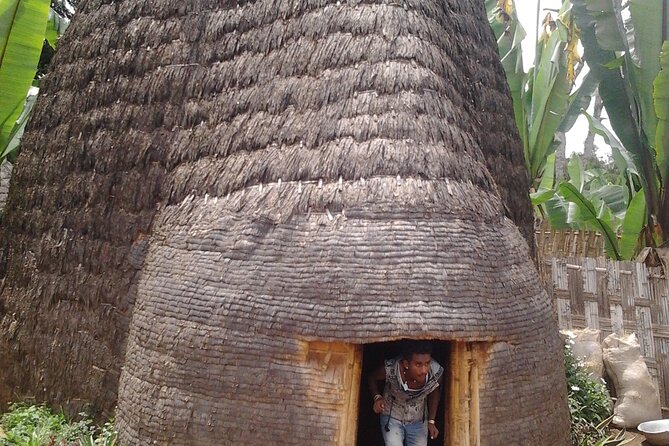
- Dorze village sits high in the Gughe hills: You see beehive-shaped homes, cotton textiles, false-banana food preparation, and broad views toward Lakes Chamo and Abaya.
- Lake Chamo adds wildlife to the cultural route: A boat trip may bring you close to hippos, Nile crocodiles, pelicans, kingfishers, and Nile perch.
- The Omo Valley visits several distinct communities: The route includes Dassanech, Hamar, Karo, Mursi, Ari, Konso, and Dorze cultural experiences.
- The tour is active without being a trek: You need moderate fitness for long drives, village walks, uneven ground, and high-altitude stops such as Dorze.
- Ask about the exact departure plan: The published schedule repeats Lake Chamo and Gidole on Days 3 and 4, and Day 6 is listed as seven minutes despite covering a long road journey.
Why this Omo Valley trip is worth considering
The Omo Valley is not a single attraction. It is a large southern region where communities maintain distinct languages, clothing, foods, music, ceremonies, and building styles. That variety gives this tour its purpose. You are not simply checking off one village after another. You are comparing ways of life across highlands, riverbanks, dry country, and market towns.
The route also gives you a useful introduction to Ethiopia beyond the south. Addis Ababa provides national context, while the Ethnographic Museum introduces the country’s many ethnic groups before you visit several communities in person. That sequence helps you notice differences in architecture, dress, food, and ceremony once you reach the Omo Valley.
I would not book this tour for a slow, polished resort holiday. I would book it for direct contact with rural communities, long scenic drives, local food, traditional dance, and the chance to see places that are difficult to connect independently in a short visit.
More Omo Valley tours:
- 6 Days Omo Valley Tribes Tours From Addis Ababa
★ 5.0 · 33 reviews - 3 Days Omo Valley Tour
★ 5.0 · 24 reviews - 5 Days Omo Valley Tours
★ 5.0 · 15 reviews
Day 1: Addis Ababa, Entoto Mountain, and the Ethnographic Museum
Your guide meets you at Bole International Airport and takes you to your hotel. The amount of sightseeing depends on your arrival time, so Day 1 may be a full city day or only a half day.
The first major stop is Entoto Mountain, about 3,300 meters above sea level. From here, you get a broad view over Addis Ababa. The altitude can make the air feel cool, so bring a light layer even if the city below feels warm.
The Entoto Museum presents historical and royal exhibits, followed by a visit to St. Mary’s Church. You then return to the city for the Ethnographic Museum, located in the former palace of Emperor Haile Selassie. Its displays cover anthropology, music, and cultural objects from Ethiopia’s many ethnic groups.
This is a smart opening day because it gives you a frame for the rest of the trip. The city visit itself is not the main reason to choose this tour, but it prevents the Omo Valley from becoming a string of disconnected photo stops.
Day 2: Highland Dorze villages and false-banana food
After breakfast, you fly from Addis Ababa to Arba Minch. From the airport, the road climbs toward Dorze, reaching roughly 2,900 meters in the Gughe hills.
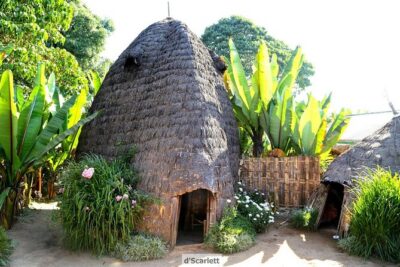
Dorze is one of the most memorable stops on the route. The community is known for colorful cotton textiles and tall, beehive-shaped huts. These homes are built from local materials and have a distinctive tapered form. A walk through the village lets you see the structures at close range rather than from a roadside viewpoint.
Food is part of the visit. You see how false banana, a plant widely used in southern Ethiopia, becomes a staple food. The tour also includes an evening of traditional dance, adding music and movement to the cultural experience.
The high position brings fine views toward Lake Chamo, Lake Abaya, and the Great Rift Valley. The tradeoff is the altitude and the climb. You do not need expedition-level fitness, but you should be ready for walking at elevation and for roads that wind upward through the hills.
Day 3: Lake Chamo, Gidole, and the road to Konso
Day 3 begins with a drive down toward Arba Minch for a boat safari on Lake Chamo. The lake sits about 1,110 meters above sea level in the Ethiopian Rift Valley. The main draw is wildlife on and around the water.
The boat trip may show you hippos, large Nile crocodiles, Nile perch, pelicans, African kingfishers, and other bird species. Crocodiles basking along the shore are a particular highlight. This is a welcome change from village visits, and it gives the tour a broader sense of southern Ethiopia.
Later, the route continues to Gidole at about 2,050 meters. Here you experience Filla, a local wind-instrument dance, sample Kurkufa made with moringa and grain, and drink Arabica coffee. The Gidole market adds color and human activity, with several different communities represented.
The day ends with a scenic drive toward Konso. Expect a full day of movement. Lake Chamo, Gidole, and Konso are not close together, so this is a day for accepting the road as part of the experience rather than treating it as wasted time.
A few more options to weigh up in Addis Ababa
- Full Day Tour of Addis Ababa with Hotel Pickup and Drop-off
★ 5.0 · 430 reviews - Taste of Ethiopia
★ 5.0 · 406 reviews - Day Trip From Addis Ababa See Historical Monastery,Stunning Nature,Animals,Birds
★ 5.0 · 303 reviews - Addis Ababa: Debre Libanos, Blue Nile Gorge, and Cave Tour
★ 4.5 · 256 reviews
Day 4: Konso culture and an itinerary detail to verify
The schedule gives Konso its own cultural stop, including the Konso Cultural Centre. Konso is known for its organized villages, stonework, farming traditions, carved wooden memorial figures, and terraced hillsides. The supplied plan also repeats Lake Chamo and Gidole activities from the previous day.
That duplication may reflect a flexible route rather than two completely separate visits. Since the tour allows amendments on request, ask the operator to confirm exactly how Days 3 and 4 will run before you pay. You want to know if Day 4 is primarily Konso, or if the Lake Chamo and Gidole visits have been shifted.
This is one of the tour’s practical weak spots, but it is easy to address. A clear day-by-day plan matters here because southern Ethiopia involves long drives, and a repeated boat trip would use time better spent in Konso or on the road south.
Day 5: Dassanech life beside the Omo River

The road now leads to Omorate, on the Omo River. From here, you visit the Dassanech people, who live on the western bank.
This stop gives you a different setting from Dorze and Konso. The river is central to the region, and the community’s life is shaped by a much drier environment. You should approach this visit with respect and patience. Cultural encounters are not stage shows, and photography is listed as an extra cost, so ask permission before taking pictures.
You return to Turmi in the afternoon. The plan includes a Hamar night dance called Evangadi, traditionally connected with harvest, the full moon, peace, and stability. The operator will also check for a bull-jumping ceremony nearby.
A bull-jumping ceremony is a rite of passage for young Hamar men. It does not happen on demand, so treat it as a possible addition, not a guaranteed event. That distinction matters. The Evangadi dance is part of the planned cultural experience, while a ceremony depends on local timing and community decisions.
Day 6: Karo body painting, Turmi market, and Jinka
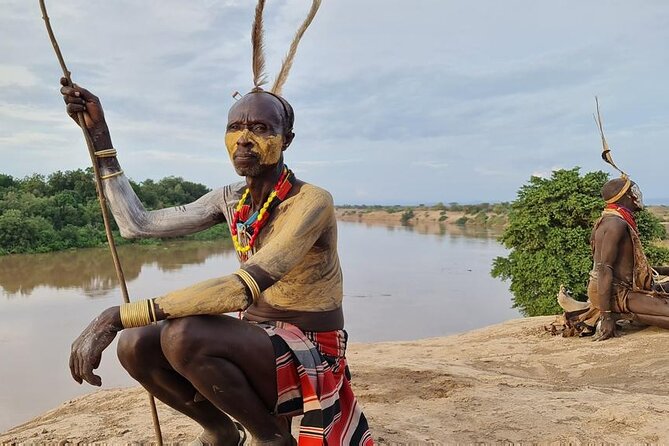
After breakfast, you drive to visit the Karo people along the Omo River. Karo body painting is especially distinctive, with designs that can imitate the markings of guinea fowl. This is a powerful visual tradition, but the experience should not be reduced to photographs. Listen to your guide about proper conduct and pay attention to the people behind the designs.
The route continues toward Jinka. If your schedule falls on a Saturday, you may visit the Turmi market, which brings together local commerce and several communities. Markets are often more revealing than formal presentations because you see food, clothing, household goods, and ordinary trade in one place.
Before checking into your hotel in Jinka, you visit the Jinka Museum. This provides useful background before the next day’s visit to Mago National Park and the Mursi community.
One odd detail deserves attention: the schedule lists this day as seven minutes. That cannot represent the full Omorate to Karo to Jinka journey described in the plan. Confirm the actual timing with Hoya Tour Ethiopia and expect a substantial driving day.
Day 7: Mago National Park and the Mursi community
Day 7 takes you from Jinka toward Mago National Park and the Mursi community. The park lies between the Omo and Mago Rivers and offers the possibility of seeing wildlife such as defassa waterbuck, gerenuk, bushbuck, Jackson’s hartebeest, lesser kudu, and guereza monkeys.
Camping in the park is listed as an option. If you choose it, ask in advance about the equipment, food, bathroom arrangements, and whether the camp changes the hotel schedule. The information provided does not spell out those details, so do not assume a fully equipped camp.
The Mursi are widely known for lip and ear plates worn by some women, along with elaborate hairstyles and ornaments. Some men use white chalk to create striking body designs. These customs have meaning within the community, and your guide’s role is especially important here.
This can be one of the most visually intense days, but it also requires the most cultural care. Do not treat traditional body adornment as a costume display. Ask before photographing anyone, follow local instructions, and remember that a short visit gives you only a glimpse of a much larger society.
The listed duration is about eight hours. That includes the road journey and the visit, so you should expect an early start and limited downtime.
Day 8: Ari village, farewell dinner, and the flight home
The final morning includes a cultural excursion to an Ari village before your transfer to Jinka Airport. The Ari are another major community in the region, and this closing visit gives you one more point of comparison after seeing the Mursi, Karo, Hamar, and Dassanech.
You then fly from Jinka back to Addis Ababa. In the afternoon or evening, the tour includes a farewell party with a complimentary cultural dinner and traditional music. This meal is a useful final taste of Ethiopian food, especially since ordinary lunches and dinners are not included during the trip.
After the farewell, you return to Bole International Airport for your international departure. Build some flexibility into your international flight planning because the domestic connection and farewell timing can affect the final day.
What the $2,445 price really covers
The price is high compared with a city tour, but the Omo Valley is costly and difficult to arrange alone. The fee includes private transportation, fuel, the driver’s allowance, two domestic flights, accommodations, admission fees, the tour leader, local guides, and breakfast.
The maximum group size is nine. That is a meaningful advantage on narrow roads, boat trips, village walks, and cultural visits. A smaller group also makes it easier to ask questions and coordinate changes.
You still need to budget for international flights, lunch, dinner except for the farewell meal, alcohol, insurance, photography, and personal expenses. The phrase breakfast included appears in the inclusions, so confirm the exact breakfast arrangement for each hotel when booking.
Value depends on how much you value saved planning time. If you arrange the same route yourself, you would still need domestic flights, vehicles, hotels, local guides, park access, and village coordination. The package is most attractive if you want those pieces handled together.
The road, the hotels, and the physical demands
This is a private road trip with two domestic flights, not a luxury lodge circuit. You stay in accommodations in Addis Ababa, Arba Minch, Konso, Turmi, and Jinka, but the supplied information does not give hotel names or standards.
Ask for the hotel list before departure. That lets you check room arrangements, bathroom facilities, and meal options without guessing. Roads and driving times can be long, especially between the Omo River communities and Jinka.
The tour calls for moderate physical fitness. In practical terms, you should be comfortable with village walks, uneven surfaces, boat boarding, early mornings, and long periods in a vehicle. Dorze’s elevation and the optional Mago camping add extra demands.
The listed meeting point is Best Western Plus Addis Ababa on Cameroon Street. Airport pickup is offered, and the tour ends back at the Addis Ababa meeting point or airport transfer. Service animals are allowed, and the starting point is near public transportation, though most of the southern route depends on private transport.
Cultural etiquette that will improve the experience
Your behavior matters more here than your camera. Ask permission before taking photographs, especially at markets, ceremonies, and visits involving personal adornment. Photography is not included in the price, so clarify local charges and expectations with your guide.
Do not assume a bull-jumping ceremony will take place simply because it is listed as a possibility. Ceremonies follow community timing. The same applies to dances and market activity, which can change with local conditions.
A good guide should explain what you are seeing without turning people into scenery. The available account specifically praises Assefa for careful organization and thoughtfulness. If Assefa is assigned to your departure, that is an encouraging sign, but confirm your guide’s name and role before booking.
Who should book this tour?
I would recommend it to someone who wants a concentrated introduction to southern Ethiopia and prefers a private operator to independent arrangements. It suits people who enjoy cultural learning, rural roads, local food, photography with permission, and a schedule that keeps moving.
It is less suitable if you need guaranteed ceremony dates, high-end hotels, generous free time, or included meals every day. It is also not ideal if you dislike long drives or want a wildlife safari as the main focus. Mago National Park and Lake Chamo add wildlife, but the central purpose is cultural contact.
The cancellation terms are worth reading before payment. A full refund is available if you cancel at least six full days before the start time. Cancellations two to six days ahead receive a 50 percent refund, while cancellations less than two days ahead are not refunded.
Should you book the 8 Day Omo Valley Tribal Authentic Tour?
Book it if the chance to visit Dorze, Konso, Dassanech, Hamar, Karo, Mursi, and Ari communities in one organized trip matters more to you than comfort and spare time. The combination of two flights, a small group, local guides, Lake Chamo, and private transport gives the $2,445 price a reasonable base.
Before booking, ask for a corrected daily schedule, the accommodation list, the exact meal plan, and details about the optional Mago camping. If those answers suit you, this is a strong way to reach a difficult region without handling every road transfer yourself. Go with patience, cultural respect, and a willingness to spend much of your day getting from one remarkable place to the next.
FAQ
How long is the Omo Valley tour?
The tour lasts approximately eight days, beginning in Addis Ababa and ending after the return to Addis Ababa and transfer to Bole International Airport.
Are domestic flights included?
Yes. The price includes two domestic flights: Addis Ababa to Arba Minch and Jinka to Addis Ababa.
What meals are included?
Breakfast is included. Lunch and dinner are not included, except for the complimentary cultural dinner at the farewell party. Alcoholic drinks are also excluded.
What is the maximum group size?
The tour has a maximum of nine travelers.
Is airport pickup available?
Yes. Pickup is offered, and the guide meets you at Bole International Airport on arrival.
Can the itinerary be changed?
Yes. The itinerary can be amended upon request. Since the schedule repeats Lake Chamo and Gidole on Days 3 and 4, and lists Day 6 as seven minutes, confirm the final route and timing before departure.
Just added in Addis Ababa
- Yod Abyssinia Cultural Night: Dinner, Music, and Dance★ 5.0 · 7 reviews
- Addis Ababa City Tours Full-Day Tours★ 5.0 · 5 reviews
- Locally crafted beer and wine tasting and nightlife in Addis tour★ 5.0 · 6 reviews
- Unique Ethiopian Cooking Class and Coffee Ceremony with a Local in Addis Ababa★ 4.5 · 7 reviews
- Stunning Views Wonchi Crater Lake a Private Day Trip★ 5.0 · 3 reviews
- .2- Days and 1 Night Tour To Awash National Park water falls★ 5.0 · 1 review
- Visiting the wonders of Lalibela in Three (3) days and Two ( 2) nights★ 5.0 · 2 reviews
- Two days Lake Wenchi and Menagesha Forest★ 5.0 · 1 review
Omo Valley Tribal Tours, compared.
6 Days Omo Valley Tribes Tours From Addis Ababa
Read our review →
Lalibela, Axum, Danakil and Omo Valley 8 DAYS
Read our review →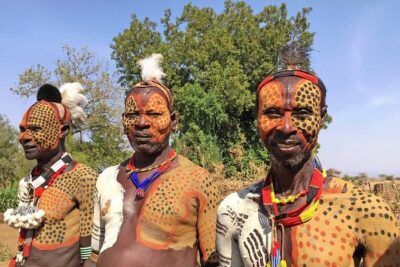



9 Days Tours To Danakil Depression, Simen MNP, Lalibela With Omo Valley Tribes
Read our review →
5 Day Private tour to the Omo Valley Tribes and Adventure Tour
Read our review →Browse the lists this tour appears in