

Reviewed · OMO VALLEY TRIBAL TOURS
7 Days Private Tour to Omo Valley Cultural and Addis Ababa
The Omo Valley rewards patient eyes. This seven-day private tour links Addis Ababa’s major sights with remote southern communities, Lake Chamo wildlife country, UNESCO-listed Konso, and villages among the Mursi, Hamer, Dassanech, Karo, Dorze, and Ari peoples.
I like the one-to-one format, with your own vehicle, local guide, six nights of lodging, and complimentary meals included. I also like the range of places covered, from Lucy at the National Museum to a traditional coffee ceremony in the capital. The main caution is the pace: this is a road-heavy trip with long journeys and early starts, not a slow holiday.
In This Review
- Five details that define this Omo Valley journey
- Starting with Lucy, Entoto, and Addis Ababa
- Dorze homes and the green hills near Arba Minch
- Konso terraces and the road to Turmi
- Dassanech life and Dimeka market day
- Karo art along the Lower Omo River
- Mago National Park and the Mursi settlement
- Ending in Addis with food, music, and coffee
- What the $1,899 price means
- Who will enjoy this tour most
- Should you book the Omo Valley route?
- FAQ
- How long is the tour?
- What time does the tour begin?
- Is hotel pickup available?
- Is this a private tour?
- What level of fitness is required?
- What is included in the tour price?
- Can I cancel for a full refund?
Five details that define this Omo Valley journey

- Private transport keeps the schedule flexible: Only your group takes part, with hotel pickup and comfortable vehicles included.
- The cultural range is unusually broad: You visit Dorze, Konso, Hamer, Dassanech, Karo, Mursi, and Ari communities.
- Addis Ababa provides a useful beginning and ending: The tour starts with museums, churches, markets, and mountain views, then closes with Ethiopian food, dance, and coffee.
- Konso adds more than village scenery: Its stone walls and carefully built terrace system form a UNESCO-recognized cultural site.
- The trip includes real practical value: Six nights of accommodation, complimentary meals, an educational local guide, and airport transfers are part of the arrangement.
Starting with Lucy, Entoto, and Addis Ababa

Your first day begins at 8:00 a.m. with hotel pickup in Addis Ababa. The capital is not treated as a mere overnight stop. You get a useful introduction to Ethiopia before heading south, which helps place the Omo Valley visits in a wider national setting.
At the National Museum of Ethiopia, allow about two hours. The key attraction is Lucy, the partial fossil skeleton of Australopithecus afarensis. The museum also holds Ethiopian archaeological and artistic treasures, so this stop gives you more than a quick photograph with a famous fossil.
Next comes Mount Entoto, the high point above Addis Ababa. The reward is the broad view over the capital, and the mountain carries an important place in the city’s story. Local tradition says Emperor Menelik II and Empress Taitu first saw the area from here and chose it as their capital.
St. George’s Cathedral takes about 45 minutes. Its unusual octagonal shape makes it easy to recognize, while its connection to the 1896 Battle of Adwa gives the building particular national meaning. Italian prisoners of war helped construct it, and the cathedral was later destroyed in 1937 before being rebuilt after the end of Italian rule.
The final stop is Mercato, one of Africa’s largest open-air markets. You can find coffee, clothing, vegetables, spices, building materials, and locally grown farm products spread across a huge commercial district. There is also a recycling market, best approached on foot with your guide.
Mercato is not a polished sightseeing zone. That is part of its value, but it also means you should stay close to your guide and expect a busy, crowded setting. Two hours gives you enough time to see the character of the market without making it the whole day.
More Omo Valley tours:
- 6 Days Omo Valley Tribes Tours From Addis Ababa
★ 5.0 · 33 reviews - 3 Days Omo Valley Tour
★ 5.0 · 24 reviews - 5 Days Omo Valley Tours
★ 5.0 · 15 reviews
Dorze homes and the green hills near Arba Minch
Day two moves south to Arba Minch, where a one-hour visit to the 40 Springs offers a change of pace. From the viewpoint, you can look over the green surroundings and bright waters before walking along shaded paths. The guide explains the importance of the springs and local stories connected with them.
The stop is brief, but it breaks up the driving and gives you time outside the vehicle. You may also notice unusual plant and animal life around the springs, although the main appeal here is the setting and the cool, leafy paths.
From Arba Minch, the road climbs for about an hour to Chencha and Dorze country. The Dorze are part of the wider Omotic language group. Once known as warriors, they now support themselves through farming and weaving, with Dorze cotton cloth especially well regarded.
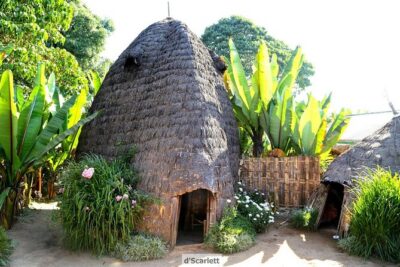
The houses are the memorable feature. Tall bamboo structures rise in a beehive shape, sometimes reaching 12 meters, with a distinctive upper form described as an aristocratic nose. Around each home are small gardens with enset, spices, cabbage, and tobacco.
A three-hour visit allows time to understand how the homes and gardens work together. Enset, sometimes called false banana, is central to life in this part of Ethiopia. You are not simply looking at an unusual building. You are seeing a home shaped by local materials, farming needs, and climate.
The hill country also creates a strong contrast with the drier Omo Valley farther south. If you prefer cultural visits that include architecture, agriculture, and craft, Dorze is one of the most satisfying stops on the trip.
Konso terraces and the road to Turmi
Day three brings one of Ethiopia’s most important cultural sites: Konso. The area is known for stone-walled villages and a terrace system built through communal labor. UNESCO recognition reflects the value of this carefully maintained cultural setting.
Plan for about three hours here. The terraces are not just attractive from a distance. They show how people have worked with difficult ground over time, building practical systems for farming and settlement.
After Konso, the route continues toward Turmi, home of the Hamer people. The drive takes about four hours, so this is one of the days when the private vehicle matters. You can travel with your own group instead of adjusting to strangers, and your guide can help explain the places passed along the way.
The Hamer are known for striking women’s hairstyles and for their welcoming manner. The visit focuses on daily life and local customs rather than a short staged performance. Still, it is important to remember that village visits involve real people in their homes and communities. Listen to your guide about respectful behavior and ask before taking photographs.
Turmi is also the base for several later excursions. That makes it a useful point in the itinerary, though the overall route remains busy. You spend much of the day moving between destinations, so pack lightly and keep essentials close at hand.
Dassanech life and Dimeka market day

Day four reaches the Dassanech, also called Dasenech or Geleb. This Cushitic-speaking people live in the southern Omo Valley, especially around the Omorate District near the Ethiopian-Kenyan border.
The visit lasts about four hours. You learn about a community whose home region crosses a border area and whose identity is tied closely to the southern Omo. The setting and cultural context make this more than another village stop, since it shows how different groups have adapted to life along the river region.
Later, you visit one of the Turmi-area villages. The focus is on housing, music, coffee, and everyday customs. If the timing is Saturday, the plan includes Dimeka market, adding a public trading day to the village experience.
The market option is worth noting because it depends on the day of the week. Do not book this trip expecting Dimeka every day. On Saturday, it can add a lively local scene and a chance to see goods and social activity gathered in one place.
Coffee also receives attention throughout the trip. Ethiopia’s coffee traditions are important enough that the final evening includes a formal coffee ceremony, while the southern visits help you see how coffee fits into local life and hospitality.
A few more options to weigh up in Addis Ababa
- Full Day Tour of Addis Ababa with Hotel Pickup and Drop-off
★ 5.0 · 430 reviews - Taste of Ethiopia
★ 5.0 · 406 reviews - Day Trip From Addis Ababa See Historical Monastery,Stunning Nature,Animals,Birds
★ 5.0 · 303 reviews - Addis Ababa: Debre Libanos, Blue Nile Gorge, and Cave Tour
★ 4.5 · 256 reviews
Karo art along the Lower Omo River

Day five is devoted to the Karo, a small agriculturalist community in the Lower Omo region. The visit can take about six hours, making it the longest single cultural stop in the schedule.
Karo artistic expression is especially striking. Elaborate headdresses, body painting, and scarification carry cultural meaning and appear in ceremonial settings. These details are not simply decoration. They communicate identity, status, and ideas valued by the community.
Because the Karo population is described as fewer than 1,000 people, the visit also places you in contact with a particularly small cultural group. That makes respectful conduct essential. Follow your guide’s instructions, avoid treating people as scenery, and remember that a village visit should be based on exchange rather than hurried observation.
The long duration gives the day more room than a quick roadside stop. At the same time, the cultural focus may feel intense if you prefer a trip centered on wildlife or scenery. This tour is strongest when you want human culture to be the main subject.
Mago National Park and the Mursi settlement
Day six takes you to Mago National Park for a visit to a Mursi settlement. The park adds a natural setting to a trip otherwise focused heavily on villages and cultural traditions.
The Mursi are known for low homes made from straw and leaves. Women’s expanded lower lips and decorated earlobes are among the customs most often associated with the group. These practices can attract attention, but your guide’s role is important here. The visit should help you understand the community rather than reduce it to a single visual detail.
The Mursi stop takes about four hours. It is a substantial visit, but you should not expect a wildlife safari with guaranteed animal sightings. The itinerary identifies Mago National Park as a destination for the settlement, while the broader tour description mentions Lake Chamo wildlife. The main certainty is the cultural encounter, not a particular animal sighting.
The day continues to Jinka, where you learn about the Ari, the largest ethnic group in the middle Omo Valley. Ari women are associated with skirts made from enset, and pottery is an important skill among the community.
Jinka helps connect the remote visits with a larger regional center. It also serves as the departure point for the flight back to Addis Ababa on day seven.
Ending in Addis with food, music, and coffee
On the final day, you are taken to Jinka Airport for the flight to Addis Ababa. The airport transfer is useful after several days on the road, though the schedule allows up to eight hours for the day, so you should keep your final plans flexible.
The closing event is a folkloric supper. You can watch dances from several Ethiopian ethnic groups while sampling traditional dishes. It is a lively finish after the quieter village visits, and it gives you one last chance to see the country’s cultural variety gathered in one place.
The evening also includes a customary Ethiopian coffee ceremony. Since coffee appears in several parts of the tour, this final ritual provides a fitting conclusion rather than a random add-on.
Afterward, you are taken to the airport for departure. The trip is arranged as a complete route, beginning with hotel pickup and ending with airport transport, which reduces the need to organize separate transfers at each end.
What the $1,899 price means

At $1,899 per person, this is not a budget trip. Its value depends on how much you want handled for you in a difficult-to-plan region.
The price includes six nights of lodging, complimentary meals, comfortable vehicles, an educational local guide, hotel pickup, and the private nature of the tour. It also covers access to several included attractions, including the National Museum, St. George’s Cathedral, the Dorze visit, the Dassanech visit, and Mago National Park.
A private seven-day route through Addis Ababa, the southern highlands, Konso, Turmi, Jinka, and the Lower Omo would be complicated to arrange independently. The cost makes more sense if you value a single operator, local support, and a vehicle dedicated to your group.
The tradeoff is that the schedule is ambitious. You cover a large area and spend many hours driving between cultural sites. I would choose this package for access and organization, not for luxury or long stretches of free time.
The two available ratings are five stars, with special praise directed to the support provided by Tarik and Adamu. The trip was also described as a memorable 4×4 journey because of its scenery, wildlife, traditional cultures, coffee, wines, and regional food. Those details suggest that the human support and the breadth of the route are central strengths.
Who will enjoy this tour most
I would recommend this trip if you want a strong first introduction to southern Ethiopia and prefer a private arrangement. It suits people who enjoy cultural learning, long road journeys, unusual architecture, local food, markets, and conversations guided by someone from the region.
It is also a good fit for small groups that want to set their own rhythm within a fixed seven-day route. The private format means only your group participates, and pickup is offered.
I would think twice if you want a relaxed itinerary, resort-style lodging, or a trip built mainly around wildlife. The plan is full, the drives are substantial, and cultural visits require attention and respect.
You should also have a moderate level of physical fitness. The information provided does not promise specific accessibility arrangements, so ask the operator about your own mobility needs before booking.
Cancellation is free up to 24 hours before the local start time for a full refund. Weather or minimum-participant issues can lead to a changed date or a full refund, according to the stated terms.
Should you book the Omo Valley route?
Book it if you want the Omo Valley’s people and traditions to be the center of your Ethiopian trip. The combination of Dorze homes, Konso terraces, Hamer and Dassanech villages, Karo art, Mursi culture, Ari pottery, Addis sights, and a final coffee ceremony gives you a broad cultural picture in only seven days.
The key question is pace. If you can handle long drives and a tightly planned schedule, the private transport, local guide, meals, lodging, and airport support make $1,899 a reasonable price for this route. If you want more time in each place, ask for a slower custom itinerary before paying.
FAQ
How long is the tour?
The tour lasts approximately seven days.
What time does the tour begin?
The listed start time is 8:00 a.m.
Is hotel pickup available?
Yes. Hotel pickup is offered.
Is this a private tour?
Yes. Only your group participates in the private activity.
What level of fitness is required?
A moderate level of physical fitness is recommended.
What is included in the tour price?
The package includes six nights of lodging, complimentary meals, an educational local guide, comfortable vehicles, and the scheduled tour activities. Pickup is also offered.
Can I cancel for a full refund?
Yes. You can receive a full refund if you cancel at least 24 hours before the experience start time. Changes or cancellations made less than 24 hours beforehand are not accepted for a refund.
Just added in Addis Ababa
- Yod Abyssinia Cultural Night: Dinner, Music, and Dance★ 5.0 · 7 reviews
- Addis Ababa City Tours Full-Day Tours★ 5.0 · 5 reviews
- Locally crafted beer and wine tasting and nightlife in Addis tour★ 5.0 · 6 reviews
- Unique Ethiopian Cooking Class and Coffee Ceremony with a Local in Addis Ababa★ 4.5 · 7 reviews
- Stunning Views Wonchi Crater Lake a Private Day Trip★ 5.0 · 3 reviews
- Visiting the wonders of Lalibela in Three (3) days and Two ( 2) nights★ 5.0 · 2 reviews
- .2- Days and 1 Night Tour To Awash National Park water falls★ 5.0 · 1 review
- Two days Lake Wenchi and Menagesha Forest★ 5.0 · 3 reviews
Omo Valley Tribal Tours, compared.
6 Days Omo Valley Tribes Tours From Addis Ababa
Read our review →
Lalibela, Axum, Danakil and Omo Valley 8 DAYS
Read our review →



9 Days Tours To Danakil Depression, Simen MNP, Lalibela With Omo Valley Tribes
Read our review →
5 Day Private tour to the Omo Valley Tribes and Adventure Tour
Read our review →Browse the lists this tour appears in