
Reviewed · OMO VALLEY TRIBAL TOURS
6 day Omo ValleyTours
The Omo Valley changes how you see Ethiopia. This six-day trip links remote villages, local markets, tribal ceremonies, mountain communities, and Lake Chamo into one demanding but memorable route. I especially like the chance to meet the Hamar, Karo, Dassanech, and Mursi communities in their own regions, and I like that the tour includes local food, handicrafts, river crossings, and village visits rather than only roadside photo stops. The main drawback is the pace: long drives, rough regional roads, early starts, and a confusing flight schedule may test your patience.
Communication is one of this company’s strongest points. Mickey is praised for prompt replies, strong English, flexible planning, and friendly driving, while Abey is identified as a professional guide who helped keep guests comfortable. At $899 per person, accommodation, meals, guides, transport, and entrance fees make the price reasonable, but domestic flights are extra and the final schedule should be confirmed before you pay.
In This Review
- Key points to know before booking
- Why the Omo Valley is worth the effort
- Day 1: Turmi, Hamar villages, and the first market stop
- Day 2: Karo painting beside the Omo River
- Day 3: The Dassanech and a canoe across the Omo
- Day 4: Mursi communities, Mago National Park, and Konso
- Day 5: Dorze food traditions and the Arba Minch flight issue
- Day 6: Lake Chamo, Arba Minch, and return to Addis
- What the $899 price covers
- Group size, comfort, and the right kind of pace
- Who should book this Omo Valley route?
- FAQ
- Where does the tour start?
- Where does the tour end?
- Are domestic flights included in the price?
- How many people can join the tour?
- Which meals are included?
- Which communities are included in the itinerary?
- Can I visit a local market?
- Are Hamar ceremonies guaranteed?
Key points to know before booking
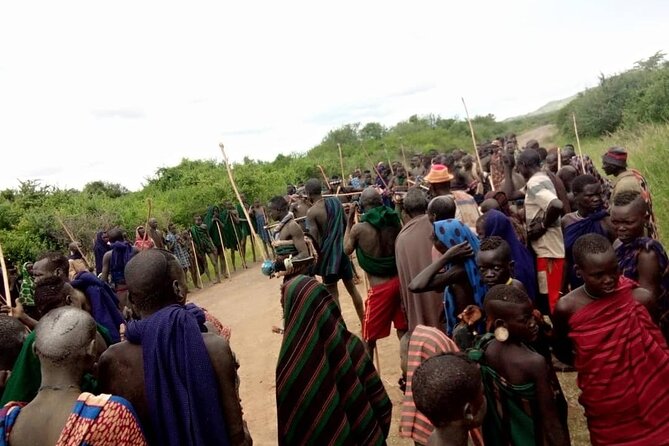
- Four distinct cultural areas in one route: You visit the Hamar, Karo, Dassanech, Mursi, Konso, and Dorze communities.
- Market days matter: Local markets may be visited on Monday, Tuesday, Thursday, or Saturday, depending on the route and timing.
- The road days are long: Drives range from about 50 to 150 kilometers, with several full-day outings.
- A dugout canoe crossing is included: You cross the Omo River to reach a Dassanech village near the Kenyan border.
- Optional ceremonies are not guaranteed: Hamar bull jumping and Evangadi dancing may be available, depending on local arrangements.
- Domestic flights cost extra: The listed price includes many meals and five nights of dinner and breakfast, but not the internal airfare.
Why the Omo Valley is worth the effort
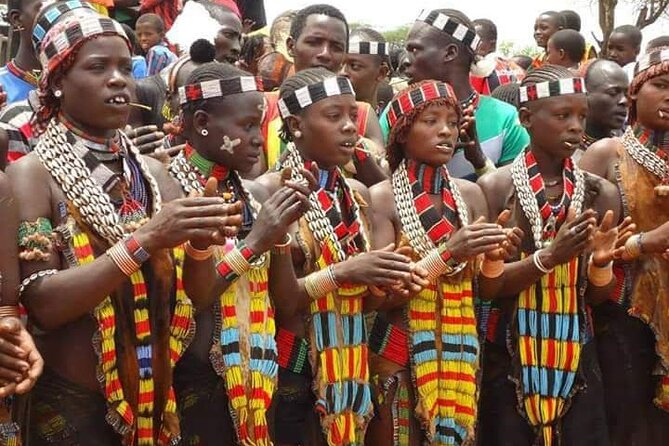
Southern Ethiopia is not a quick side trip from Addis Ababa. The Omo River Valley contains at least 30 ethno-linguistic groups within a relatively small area. Their clothing, body decoration, farming traditions, ceremonies, and village life differ from one community to the next.
That variety gives this tour its appeal. In six days, you move from the Hamar area around Turmi to the Omo River, the Kenyan border, Mago National Park, the Konso highlands, and the Dorze communities near Arba Minch. You are not simply collecting photographs. You are seeing how people in different parts of the region have adapted to their surroundings.
I also appreciate that the trip includes more than one type of cultural encounter. You visit markets, villages, homes, craft areas, and food-preparation settings. The result is a wider picture of daily life, even though the short schedule means no single community receives more than limited time.
Photography deserves care here. Body painting, scarification, clay lip plates, feathers, and elaborate headdresses are visually striking, but they are part of living cultures, not costumes arranged for an audience. Ask your guide how to approach people and when photography is appropriate. A respectful visit will be more rewarding than rushing from one portrait to the next.
More Omo Valley tours:
- 6 Days Omo Valley Tribes Tours From Addis Ababa
★ 5.0 · 33 reviews - 3 Days Omo Valley Tour
★ 5.0 · 24 reviews - 6 Days Lalibela, Omo Valley and Harar
★ 5.0 · 15 reviews
Day 1: Turmi, Hamar villages, and the first market stop
Your guide meets you at Jinka, also called Baco, Airport, then drives about 130 kilometers to Turmi. The listed drive time is roughly two hours, though road conditions and stops can affect the day.
If timing matches a market day, you may visit a market in Jinka, Kako, Keyafer, Alduba, or Turmi. The possible market days are Monday, Tuesday, Thursday, and Saturday. This detail matters, because a market adds movement and practical context to the trip. You may see local trade and everyday goods rather than only a formal village visit.
Late afternoon is set aside for a Hamar village. The Hamar are known for body decoration, distinctive clothing, and ceremonies connected with community life. The optional Hamar bull jumping ceremony may be available, as may Evangadi dancing. Neither should be treated as a guaranteed show. These events depend on local arrangements and timing.
You spend the night at Paradise Lodge Turmi. The first day is a good introduction, but it is also a long one after arriving by air. I would keep your first evening flexible and avoid planning anything that requires a precise arrival time.
Day 2: Karo painting beside the Omo River
Day two takes you about 65 kilometers west of Turmi, with a stated driving time of roughly one hour, to meet the Karo people near the Omo River. The Karo are one of the smallest ethnic groups in the valley and are especially associated with detailed face and body painting.
The visit offers the chance to have your face or body painted in a Karo style. This can be an enjoyable cultural exchange, but I would ask questions first. Find out what the design means, who is doing the painting, and what payment or photography arrangements apply. A few extra minutes of conversation can make the encounter feel more respectful and less like a staged transaction.
You return to Turmi for lunch, then may have another chance to visit a market or attend an optional Hamar ceremony if the date and local schedule work. That flexibility is useful, though it also means your exact day may not match a fixed timetable.
The drive is not extreme by distance, but regional roads can make short distances take time. Keep water, sun protection, and any needed medication within reach in the air-conditioned vehicle. Paradise Lodge Turmi is again your base.
Day 3: The Dassanech and a canoe across the Omo

Day three is one of the most distinctive parts of the route. You leave after breakfast, around 8:30 a.m., and drive about 72 kilometers to Omo Rate, the last town near the Kenyan border. The drive is listed at roughly one hour.
At Omo Rate, you go to the immigration post before heading toward a Dassanech village. You then cross the Omo River in a dugout canoe and walk for about ten minutes to reach the village. That crossing gives the visit a real sense of place. You are not simply stopping at a roadside cultural center. The river is part of the route and part of local geography.
The Dassanech visit focuses on culture and daily life. The itinerary does not promise a particular ceremony or performance, so expect conversation, observation, and a village visit rather than a scheduled spectacle. Afterward, you return to Turmi for lunch and may have another market or Hamar ceremony opportunity.
The day finishes with a drive to Jinka and an overnight stay at Eco-Omo Lodge, in the new building rooms. This is a full day, and the combination of road travel, border-area formalities, canoe transport, walking, and village time makes comfortable shoes especially useful.
A few more options to weigh up in Addis Ababa
- Full Day Tour of Addis Ababa with Hotel Pickup and Drop-off
★ 5.0 · 430 reviews - Taste of Ethiopia
★ 5.0 · 406 reviews - Day Trip From Addis Ababa See Historical Monastery,Stunning Nature,Animals,Birds
★ 5.0 · 303 reviews - Addis Ababa: Debre Libanos, Blue Nile Gorge, and Cave Tour
★ 4.5 · 256 reviews
Day 4: Mursi communities, Mago National Park, and Konso
Day four brings the most demanding road section. You drive about 50 kilometers through Mago National Park to visit the Mursi people, whose women are known for wearing lip plates. The visit offers a chance to learn about a cultural practice that is often reduced to a single photograph.
The Mursi encounter requires sensitivity. Listen to your guide about introductions, photography, and any local fees before taking pictures. Your time with the community may be brief, so focus on being present rather than trying to document every detail.
After returning to Jinka, you continue about 150 kilometers to Konso. This is one of the longest drives of the trip, and the day is listed at about eight hours. The contrast is worthwhile: you move from the Mursi area and Mago National Park to the Konso village and highland setting.
You spend the night at Kanta Lodge Konso. This day is best for people who accept that the road is part of the experience. If you need frequent breaks or dislike long vehicle days, the route may feel rushed.
Day 5: Dorze food traditions and the Arba Minch flight issue
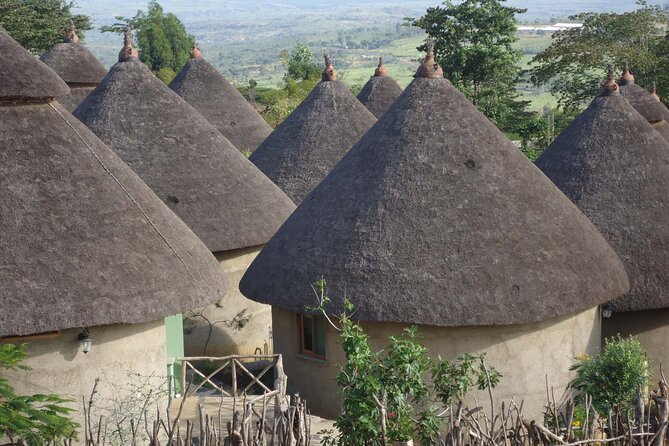
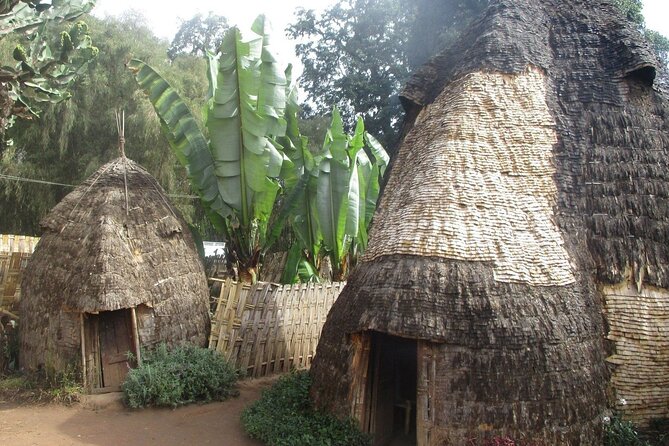
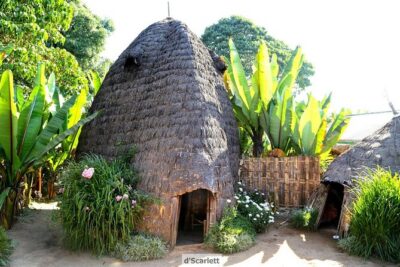
From Konso, the route continues about 130 kilometers toward the Dorze communities on Guge Mountain. The Dorze live at an altitude of about 2,400 meters and are known for weaving, pottery, and other handicrafts.
A useful part of this visit is the preparation of kocho, a local food made from the false banana plant, also called enset. Food preparation gives you a practical look at local life. It helps explain how a regional staple becomes part of an everyday meal, rather than presenting culture only through clothing or ceremony.
After lunch, the schedule says you go to Arba Minch Airport for an afternoon flight to Addis Ababa. This creates a problem because the next day also begins in Arba Minch and includes another flight to Addis Ababa. I would ask the operator to explain exactly where you sleep on night five, which flight is included in the plan, and whether day six replaces or follows day five.
This is not a minor detail. The $899 price excludes domestic flights, so you need the correct flight date and time before making arrangements. The company has a reputation for adjusting itineraries, and Mickey is specifically praised for helping with short-notice and customized plans. Still, get the final version in writing.
Day 6: Lake Chamo, Arba Minch, and return to Addis
The final day begins with an 8 a.m. pickup from your hotel in Arba Minch. You go to Lake Chamo for a boat outing lasting several hours, with the chance to see crocodiles, a fish market, and the lake itself.
This is a welcome change after several days of village visits and road travel. The boat gives you time to sit back and take in the setting, while the fish market adds a working local scene to the morning. The itinerary specifically includes crocodile viewing, but it does not promise a fixed number of animals or a particular viewing distance.
After the lake visit, you return to Arba Minch for a city walk. Lunch is followed by a transfer to the airport at about 1:30 p.m. for the flight to Addis Ababa.
Because day five also mentions an afternoon Addis flight, confirm this sequence carefully. The tour may be customized around your air tickets, but the published details present two different departure plans.
What the $899 price covers
The listed price is $899 per person. It includes an air-conditioned vehicle, local guide, accommodation, entrance fees listed in the program, government taxes, airport or departure tax, and meals.
The meal plan is substantial for a six-day trip:
- Six lunches
- Five breakfasts
- Five dinners
Drinks are not included. Domestic flights are also not included, which can change the total cost considerably. Ask for current flight pricing before you compare this tour with another package.
The value is strongest if you want one company to arrange the long-distance vehicle travel, lodges, guides, village visits, and park access. Organizing these elements separately would require more time and local coordination.
The accommodation listed includes Paradise Lodge Turmi for two nights, Eco-Omo Lodge in Jinka, specifically rooms in the new building, and Kanta Lodge Konso. Arba Minch accommodation is not clearly stated in the supplied schedule, another point worth confirming.
Group size, comfort, and the right kind of pace
The maximum group size is 15 people. That is small enough to make guide communication manageable, but it is not a private trip. At village visits, a group of 15 can feel large, especially when photography and introductions are involved.
Pickup is offered, and the meeting point is listed as Bole Addis Ababa International Airport. The itinerary itself begins with a pickup at Jinka Airport, so confirm where your actual trip starts. The stated start time is 9 a.m.
Most people can participate, but the route includes long drives, a short walk after the canoe crossing, village walking, and several early or full days. The air-conditioned vehicle is a useful comfort feature. Even so, air conditioning does not shorten the roads, so pack lightly and keep personal supplies close at hand.
The strongest practical quality is the company’s communication. Mickey is described as easy to reach, good at English, and willing to shape the trip around time and budget. Abey is also named as a professional guide. Those details matter in southern Ethiopia, where weather, road conditions, local events, and flight schedules can affect the plan.
Free cancellation is available if you cancel at least 24 hours before the start time. Changes or cancellations inside that window are not accepted for a refund.
Who should book this Omo Valley route?
I would recommend this tour to you if you want a broad first look at southern Ethiopia and prefer having transport, accommodation, meals, and local guiding arranged together. It suits curious visitors who accept long road days in exchange for access to remote communities and varied cultural experiences.
It is also a good fit if you value flexible planning. The company has helped arrange customized trips on short notice, and Mickey’s role in communication appears to be a major strength.
I would hesitate if you want a slow, luxury-focused holiday, a fixed timetable with no changes, or a trip built mainly around wildlife. Lake Chamo includes crocodiles, and Mago National Park forms part of the route, but the main focus is culture and village life.
Before booking, ask for four confirmations: the exact start airport, the night five accommodation, the domestic flight dates, and the total flight cost. If those points are clear, the package offers a practical way to cover a huge amount of southern Ethiopia in six days.
FAQ
Where does the tour start?
The meeting point is listed as Bole Addis Ababa International Airport in Addis Ababa, with a stated start time of 9 a.m. The first itinerary pickup is described as taking place at Jinka, or Baco, Airport, so confirm the actual starting point with the operator.
Where does the tour end?
The activity ends back at the meeting point. The schedule also describes a return flight to Addis Ababa from Arba Minch.
Are domestic flights included in the price?
No. Domestic flights are listed under exclusions, so you must budget for them separately.
How many people can join the tour?
The maximum group size is 15 people.
Which meals are included?
The package includes six lunches, five breakfasts, and five dinners. Drinks are not included.
Which communities are included in the itinerary?
The route includes visits connected with the Hamar, Karo, Dassanech, Mursi, Konso, and Dorze communities.
Can I visit a local market?
You may visit a market if the timing matches Monday, Tuesday, Thursday, or Saturday. Possible market locations include Jinka, Kako, Keyafer, Alduba, and Turmi.
Are Hamar ceremonies guaranteed?
No. Hamar bull jumping and Evangadi dancing are listed as optional activities. Availability depends on local timing and arrangements.
Just added in Addis Ababa
- Yod Abyssinia Cultural Night: Dinner, Music, and Dance★ 5.0 · 7 reviews
- Addis Ababa City Tours Full-Day Tours★ 5.0 · 5 reviews
- Locally crafted beer and wine tasting and nightlife in Addis tour★ 5.0 · 6 reviews
- Unique Ethiopian Cooking Class and Coffee Ceremony with a Local in Addis Ababa★ 4.5 · 7 reviews
- Stunning Views Wonchi Crater Lake a Private Day Trip★ 5.0 · 3 reviews
- Visiting the wonders of Lalibela in Three (3) days and Two ( 2) nights★ 5.0 · 2 reviews
- .2- Days and 1 Night Tour To Awash National Park water falls★ 5.0 · 1 review
- Two days Lake Wenchi and Menagesha Forest★ 5.0 · 1 review
Omo Valley Tribal Tours, compared.
6 Days Omo Valley Tribes Tours From Addis Ababa
Read our review →
Lalibela, Axum, Danakil and Omo Valley 8 DAYS
Read our review →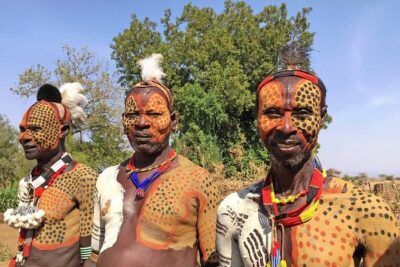



9 Days Tours To Danakil Depression, Simen MNP, Lalibela With Omo Valley Tribes
Read our review →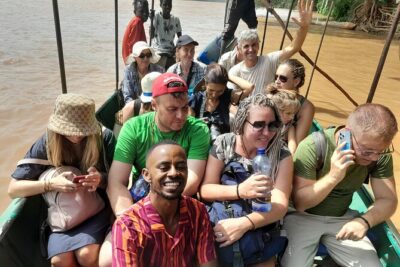
5 Day Private tour to the Omo Valley Tribes and Adventure Tour
Read our review →Browse the lists this tour appears in