
Reviewed · HISTORICAL TOURS
12- Day Historical Route of Ethiopia
Ethiopia rewards the curious. This 12-day private journey links ancient capitals, highland churches, mountain scenery, and Lake Tana in one demanding but memorable circuit. I especially like the mix of major sites and less-visited places, including Yeha, the Tigray churches, and the Simien Mountains. I also like that domestic flights reduce some long road transfers. The main drawback is the pace: several days involve six to eight hours on the road, and the altitude and basic camping night require a reasonable level of fitness.
The tour costs $2,597 per person and includes private transport, domestic flights, accommodation, breakfast, most lunches, two dinners, entrance fees, and an English-speaking guide, with Spanish, French, German, and Italian guides also available. The small advertised group size, a maximum of four people, should make sightseeing and road days easier to manage. Past trips organized by Ashu and the Enat Ethiopia Tours team were praised for careful planning, flexibility, and warm airport assistance.
In This Review
- Key points before you book
- What the $2,597 price really covers
- Day 1: Addis Ababa and the story of Lucy
- Day 2: Lake Tana monasteries and Tisissat Falls
- Day 3: Gondar’s royal compounds
- Day 4: High views in the Simien Mountains
- Day 5: A long road to Axum
- Day 6: Axum, stelae, and sacred tradition
- Day 7: Yeha, Adwa, and the Gheralta region
- Day 8: Tigray’s rock-cut churches
- Day 9: The road to Lalibela
- Day 10: Lalibela’s first church cluster
- Day 11: Yemrehana Krestos and the remaining churches
- Day 12: Entoto Mountain and a farewell in Addis Ababa
- How the guiding and group size affect the trip
- Who should book this Ethiopia route?
- Should you book it?
- FAQ
- How long does the Ethiopia historical route last?
- Where does the tour start?
- Where does the tour end?
- Is airport pickup available?
- Are domestic flights included?
- What meals are included?
- What type of transport is provided?
- How large is the group?
- What language can the guide speak?
- Is the tour suitable for someone with moderate fitness?
Key points before you book
- Three UNESCO World Heritage sites: See Gondar, Axum, and Lalibela, plus the Simien Mountains National Park.
- A strong church-and-kingdom route: The program connects Lake Tana monasteries, Axumite ruins, Tigray rock churches, and Lalibela’s carved sanctuaries.
- Two domestic flights: Flying between Addis Ababa, Bahir Dar, and Addis Ababa helps limit some very long road journeys.
- A true mountain experience: The Simien Mountains reach about 3,250 meters, with an optional 1.5-hour walk and hopes of spotting endemic gelada baboons.
- Long driving days remain: The route from Simien to Axum and the drive from Mekele to Lalibela can be tiring.
- A thoughtful final day: Entoto Mountain, Shiro Meda market, and a traditional farewell dinner provide a gentle close to the journey.
What the $2,597 price really covers
At first glance, $2,597 is a serious sum. But this is not simply a hotel-and-sightseeing package. You are paying for a private vehicle, domestic flights, a professional guide, accommodation, entrance fees, and a multi-region route that would be difficult to arrange independently.
The price includes breakfast throughout the included hotel stays, ten lunches, and two dinners. Dinner on most other nights is your responsibility, along with personal purchases and gratuities. That arrangement gives you some freedom, but you should budget for evening meals and tips before setting off.
The domestic flights are important to the value of the trip. Ethiopia is a large country, and the northern circuit covers substantial distances. Flying to Bahir Dar and back to Addis Ababa from Lalibela helps keep this route within twelve days. The tradeoff is that several road days are still long, especially the full-day journey from the Simien area to Axum and the drive from Mekele to Lalibela.
I would see this as a good-value option for someone who wants a private, structured introduction to northern Ethiopia. It is less attractive if you prefer slow travel, long stays in each town, or a holiday built around rest. The advertised maximum of four people is another benefit, since smaller groups make it easier to adjust stops and ask questions.
More history tours in Addis Ababa:
- Day Trip From Addis Ababa See Historical Monastery,Stunning Nature,Animals,Birds
★ 5.0 · 303 reviews - Hidden Treasures of Addis Ababa – Food, Culture and History Tour
★ 5.0 · 57 reviews - Northern Ethiopia Historic Route
★ 5.0 · 12 reviews
Day 1: Addis Ababa and the story of Lucy
Your arrival begins with airport pickup and a transfer to the hotel. Addis Ababa sits at about 2,438 meters, so even a city day can feel different from a low-altitude arrival. The tour describes the city as having a mild climate, with an average temperature of about 25 degrees Celsius.
The first major stop is the National Museum. Its most famous resident is Lucy, the approximately 3.5-million-year-old early hominid remains discovered in Ethiopia. The museum also holds other fossils and historic objects, giving you useful background before you head north into the country’s ancient religious centers.
I like starting here because it puts Ethiopia’s story into a wider frame. This is not only a trip through medieval churches. It also connects with the very early human past.
The day is scheduled for about eight hours, though the actual sightseeing time depends on your arrival. Since the meeting point is listed at Skylight Hotel parking on Africa Avenue, confirm the pickup details and your arrival time in advance. The stated start time is midnight, which appears to be a booking-system setting rather than a normal sightseeing departure time.
Day 2: Lake Tana monasteries and Tisissat Falls
A domestic flight takes you to Bahir Dar, on the shore of Lake Tana, Ethiopia’s largest lake. The town is described as one of the country’s best-planned cities, but the lake is the real reason to come.
A boat trip takes you toward the monasteries and churches around the lake. The program includes Ura Kidane Mihret Church on the Zeghie Peninsula. Inside, you can expect colorful religious paintings and illuminated Bibles written in Ge’ez, the old religious language connected with Amharic.
This is one of the trip’s most valuable cultural stops. The lake journey changes the pace after Addis Ababa, and the church art offers a close look at Ethiopian Orthodox traditions. The experience is not just about seeing an old building. It is about understanding how faith, language, art, and isolation developed together around Lake Tana.
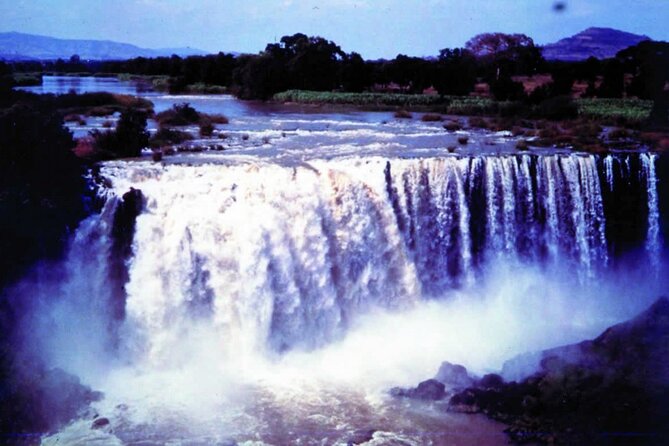
The afternoon includes Tisissat Falls, whose name means water that smokes in Amharic. The supplied plan cuts off before giving the full description, so the exact timing and viewing conditions are not clear. Still, the combination of boat trip, island churches, and waterfall makes Bahir Dar an appealing early highlight.
Day 3: Gondar’s royal compounds
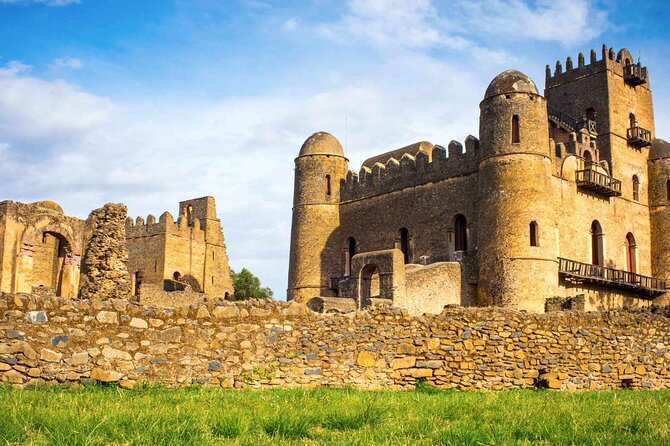
The drive from Bahir Dar to Gondar takes about three to three and a half hours over roughly 185 kilometers. Gondar was once the capital of Ethiopia and is now known for its Royal Enclosure, a walled area filled with well-preserved seventeenth-century buildings.
The most famous structure is the castle of King Fasilides. Its stone walls, round turrets, and wooden balconies give the compound a distinctly royal appearance, though the setting is more restrained than the grand palaces of Europe. The tour also includes the Bath of Fasil, about a mile outside town.
The bath is especially important during Timkat, Ethiopia’s January celebration of Epiphany, when thousands gather there. If your dates do not coincide with Timkat, you will still see an important ceremonial site, but not the full festival atmosphere.
Gondar works well in this route because it marks a change from lake monasteries to imperial architecture. You get a clearer sense of how Ethiopia’s rulers governed, worshipped, and presented power.
A few more options to weigh up in Addis Ababa
- Full Day Tour of Addis Ababa with Hotel Pickup and Drop-off
★ 5.0 · 430 reviews - Taste of Ethiopia
★ 5.0 · 406 reviews - Addis Ababa: Debre Libanos, Blue Nile Gorge, and Cave Tour
★ 4.5 · 256 reviews - Addis Ababa Guided City Tour With Airport & Hotel Pick Up
★ 5.0 · 237 reviews
Day 4: High views in the Simien Mountains
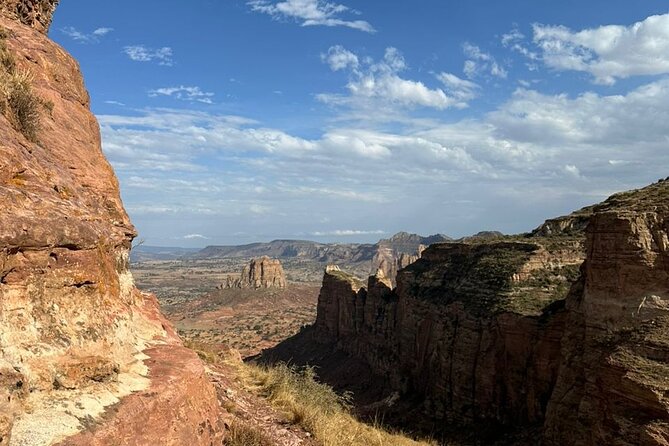
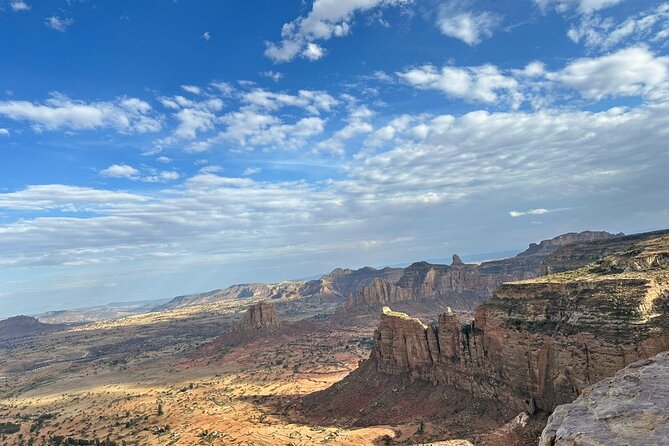
After breakfast, you drive to Debark and then into Simien Mountains National Park. The plan reaches about 3,250 meters and includes time around the Sankaber area.
An optional walk lasts about 1.5 hours and is described as mostly flat or downhill. That sounds manageable, but the altitude matters. A short mountain walk at 3,250 meters can feel more strenuous than the distance suggests, especially if you have only recently arrived in Ethiopia.
The wildlife possibilities add interest. You may see gelada baboons, klipspringers, lammergeyer vultures, and bushbuck. The geladas are endemic to Ethiopia and are one of the most distinctive animals associated with the highlands.
Overnight camping is included in the Simien Mountains. This is a genuine change from hotel-based touring, with colder conditions and fewer comforts. The plan does not specify the camping equipment or facilities, so ask Enat Ethiopia Tours exactly what is provided and what you need to bring.
For me, this is the trip’s clearest nature day. The broad mountain views and unusual wildlife break up the church-and-ruin schedule. The drawback is that you need to be comfortable with altitude, uneven ground, and a night of camping.
Day 5: A long road to Axum
This is one of the hardest days physically. You leave the Simien area after breakfast and drive for a full day toward Axum, passing through the lower parts of the mountains and the Tekeze River gorge.
The journey is long, but the route provides dramatic scenery and many photo opportunities. The road itself is part of the experience, showing how sharply Ethiopia’s terrain changes between high plateaus, gorges, and lower country.
Still, you should not underestimate this transfer. An air-conditioned private vehicle makes a difference, and a group of no more than four should allow for sensible breaks, but you will spend much of the day seated. Arriving in Axum in the late afternoon gives you time to check in and rest rather than rush into another major visit.
Day 6: Axum, stelae, and sacred tradition
Axum was the center of the ancient Kingdom of Axum, a major power connected to trade routes between the Mediterranean and India. Its influence extended toward the Red Sea, and the city became one of the central places in Ethiopia’s Christian story.
The tour presents Axum as the origin of Christianity in Ethiopia and links it with the tradition that the Ark of the Covenant is kept there. The old Church of St. Mary of Zion is described as the first church built in sub-Saharan Africa, dating to around 330 AD. Its ruins and religious precinct form a key part of the visit.
This is a stop where your guide matters. The monuments can look simple at first, but their meaning depends on the political, commercial, and religious connections behind them. Ask questions about the Axumite kingdom, its Red Sea links, and the transition from earlier beliefs to Christianity.
Axum is also a useful rest point after the previous day’s drive. The program gives you a full sightseeing day rather than trying to squeeze the city into a rushed afternoon.
Day 7: Yeha, Adwa, and the Gheralta region
The route continues east toward Yeha, regarded as one of Ethiopia’s oldest settlements, with origins reaching back nearly 3,000 years. Its large temple was dedicated to the moon god Ilmuqah and reflects early connections across the Red Sea with Yemen.
The building was later converted into a church in the sixth century. Its ibex friezes remain a memorable detail, linking the site’s older religious purpose with the later Christian use of the structure.
You also visit Adwa, surrounded by rugged mountains and known for Ethiopia’s victory over a colonial power. The battle became a major symbol of African independence and Ethiopian sovereignty. Even if military history is not your main interest, the location gives political meaning to the scenery.
The day continues to Gheralta, an area known for rock-cut churches. This is where the tour begins to feel less like a standard historical circuit and more like a specialized cultural journey.
Day 8: Tigray’s rock-cut churches
The Tigray region contains about 150 known rock-cut churches, most still used by the Ethiopian Orthodox community. The program includes Abreha We Atsbeha, Degum Selassie, and Chirkos at Wukro, as well as a visit connected with Abune Yemata Guh Church.
These churches were created before the sixteenth century and became widely known outside Ethiopia only in the 1960s. Their importance is not only their age. They remain places of worship, which makes the visit feel connected to living faith rather than frozen archaeology.
The details listed for Chirkos are particularly striking: cruciform pillars and a barrel-vaulted ceiling. At Abreha We Atsbeha and Degum Selassie, the appeal comes from the combination of carved architecture and the dry, open Tigray setting.
The tour does not provide exact walking times or difficulty levels for each church. That matters because some Tigray churches may involve uneven approaches or climbs, and you should ask for precise conditions before booking if you have mobility concerns. The general requirement is moderate physical fitness.
You end the day in Mekele. After several sites and a full schedule, the city provides a practical overnight stop before the long drive south.
Day 9: The road to Lalibela
The drive from Mekele to Lalibela takes a full day. The route passes between mountains to the west and the beginning of the Danakil Depression to the east, with changing scenery throughout the journey.
There is no major site listed for this day, and that is worth recognizing. You are using the day to cross a large part of northern Ethiopia. If you prefer constant sightseeing, this may feel slow. If you appreciate seeing rural scenery from the road, it gives you a better sense of the country’s scale.
You arrive in Lalibela in the evening and prepare for the following day’s main visit. The town is the tour’s biggest historical payoff, but you will enjoy it more if you treat this transfer as a necessary part of the route rather than an attraction-packed day.
Day 10: Lalibela’s first church cluster
Lalibela is known as the New Jerusalem, with its churches traditionally linked to King Lalibela about 800 years ago. The churches were cut directly from solid rock. Builders carved around a block of stone, isolated it, and then shaped the exterior and interior into a complete church.
That method gives the buildings their unusual appearance. Instead of walls assembled from separate blocks, you see structures carved downward into the ground, with courtyards and passages around them.
The first church cluster occupies the morning and much of the day. The schedule allows about seven hours, which is useful because the site is too important to rush. The churches are not all alike, and the carved details reward a slower look.
Lalibela is a religious site, not only an archaeological monument. You may see worshippers and clergy using the churches, so modest clothing and respectful behavior are essential. The program includes admission, but it does not specify every internal rule or photography condition, so your guide should direct you.
Day 11: Yemrehana Krestos and the remaining churches
The morning visit to Yemrehana Krestos Church adds a different architectural style. It is described as a fine example of Axumite wood-and-stone construction, with a decorated wooden coffer ceiling containing hexagons, medallions, figurative details, and geometric designs.
You then return to Lalibela for the remaining church group. These include Bete Gabriel and Rafael, Merkorous, Emanuel, and Abba Libanos.
Bete Emanuel receives special attention for its careful carving and Axumite features. The details include wall indentations, false windows, and symbols based on the multi-story stelae of Axum, along with carved monkey heads.
This second Lalibela day is important because one visit cannot do justice to the full site. It also gives you a chance to compare different forms of Ethiopian church building, from Yemrehana Krestos’s wood-and-stone design to the fully rock-cut churches.
The day is shorter, at about six hours, but it still includes a drive and several major buildings. Comfortable shoes and patience are useful here. The schedule is full, but the sites are the reason to make the effort.
Day 12: Entoto Mountain and a farewell in Addis Ababa
A domestic flight returns you to Addis Ababa. The final sightseeing begins on Entoto Mountain, the former capital before Addis Ababa, where eucalyptus forests provide cooler air and broad views over the city.
You then descend through Shiro Meda, known as Addis Ababa’s largest market for traditional clothing. This is a practical place to see local textiles and consider souvenirs without adding a separate shopping day.
The tour ends with a farewell dinner at a traditional restaurant, including cultural songs, dances, food, and drinks, followed by airport transfer. Dinner is one of the two evening meals included in the package.
This is a well-planned ending. After churches, ruins, mountains, and long road transfers, the final day gives you city views, shopping, food, and music before departure. Additional hotel nights and programs in Addis Ababa can be arranged on request, which is useful if your flight leaves the following day.
How the guiding and group size affect the trip
Enat Ethiopia Tours lists professional guides in English, Spanish, French, German, and Italian. The tour is also designed for private transport and a maximum of four people, which is a major advantage on long drives and in places where timing can change.
Ashu is specifically praised for airport assistance, planning, support, and flexibility. One family trip arranged by the company involved ten people, so the team has experience with larger groups too, but the advertised maximum for this experience is four. Confirm your actual group size when booking.
A good guide is particularly useful in Axum, Yeha, Gondar, and Lalibela, where the meaning of a monument is not always obvious from the stonework alone. In Tigray, clear advice about church approaches and local customs is equally important.
Who should book this Ethiopia route?
I would recommend it to you if you want a concentrated introduction to Ethiopia’s northern heritage and prefer having transport, hotels, flights, and a guide organized in advance.
It suits people who enjoy:
- Ancient sites and religious architecture
- Long scenic road journeys
- Mountain views and wildlife
- Small private groups
- A full sightseeing schedule
- A balance of major landmarks and less-visited sites
I would hesitate to recommend it if you dislike long drives, camping, altitude, or frequent hotel changes. The program moves quickly and does not leave much spare time in Gondar, Axum, Tigray, or Lalibela.
The physical rating is moderate, but that label should not be read as effortless. The Simien Mountains reach 3,250 meters, several days last around eight hours, and the church visits may involve uneven ground. Ask Enat Ethiopia Tours for current details about walking conditions, camping arrangements, and hotel locations before you pay.
Should you book it?
Book this tour if you want the hard work of planning taken care of and your priority is seeing northern Ethiopia’s biggest historical sites in one trip. The combination of Gondar’s castles, Axum’s ancient kingdom, Tigray’s active rock churches, and Lalibela’s carved sanctuaries is unusually strong.
Skip it if you want a relaxed holiday or prefer to explore one region slowly. For the right person, the price offers solid value because it combines private transport, domestic flights, meals, accommodation, entrance fees, and multilingual guiding. The best reason to choose it is the range: this is not only a Lalibela trip, and not only a church tour. It gives you a connected view of Ethiopia’s history, faith, mountains, and modern capital.
Free cancellation is available up to 24 hours before the local start time. Since the experience requires a minimum number of participants, confirm the departure status and final arrangements with Enat Ethiopia Tours before making nonrefundable travel plans.
FAQ
How long does the Ethiopia historical route last?
The tour lasts approximately 12 days, ending with airport transfer from Addis Ababa.
Where does the tour start?
The listed meeting point is the Skylight Hotel parking area on Africa Avenue in Addis Ababa.
Where does the tour end?
The tour ends back at the meeting point after sightseeing and transfer to Bole International Airport.
Is airport pickup available?
Yes. Pickup is offered, and the tour includes meeting you at Addis Ababa airport on arrival.
Are domestic flights included?
Yes. The package includes all domestic flights listed for the route, including the flight to Bahir Dar and the flight back to Addis Ababa from Lalibela.
What meals are included?
The package includes breakfast, ten lunches, and two dinners. Other dinners, personal needs, and gratuities are not included.
What type of transport is provided?
Private transportation in an air-conditioned vehicle is included.
How large is the group?
The advertised maximum is four people.
What language can the guide speak?
Professional guiding is available in English, Spanish, French, German, and Italian.
Is the tour suitable for someone with moderate fitness?
The tour requires a moderate level of physical fitness. It includes mountain travel up to about 3,250 meters, an optional 1.5-hour walk in the Simien Mountains, and several long driving and sightseeing days.
Just added in Addis Ababa
- Yod Abyssinia Cultural Night: Dinner, Music, and Dance★ 5.0 · 7 reviews
- Addis Ababa City Tours Full-Day Tours★ 5.0 · 5 reviews
- Locally crafted beer and wine tasting and nightlife in Addis tour★ 5.0 · 6 reviews
- Stunning Views Wonchi Crater Lake a Private Day Trip★ 5.0 · 3 reviews
- Unique Ethiopian Cooking Class and Coffee Ceremony with a Local in Addis Ababa★ 4.5 · 7 reviews
- Visiting the wonders of Lalibela in Three (3) days and Two ( 2) nights★ 5.0 · 2 reviews
- .2- Days and 1 Night Tour To Awash National Park water falls★ 5.0 · 1 review
- Two days Lake Wenchi and Menagesha Forest★ 5.0 · 1 review
Historical Tours, compared.
Day Trip From Addis Ababa See Historical Monastery,Stunning Nature,Animals,Birds
Read our review →
Hidden Treasures of Addis Ababa – Food, Culture and History Tour
Read our review →
5 Days Tour to World Heritage–listed Harrar, Dire Dawa and Awash NATIONAL PARK
Read our review →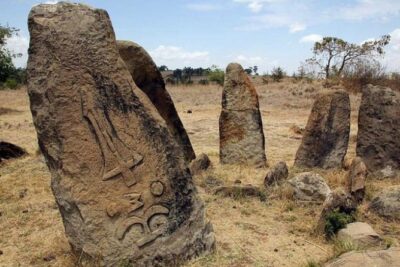
DAY TRIP TO THE UNESCO HERITAGE SITE TIYA & Melka Kunture
Read our review →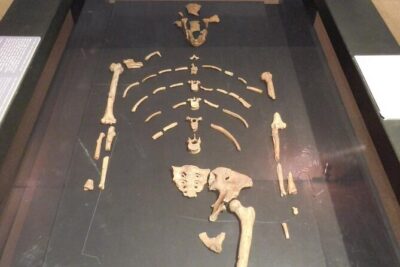
Experience a Cultural and Historical Journey through Addis Ababa
Read our review →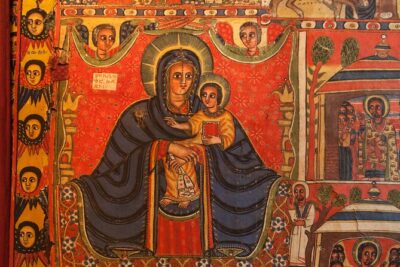
Historical tours – in five days, Addis Ababa, Axum, Laliebla and Gonder
Read our review →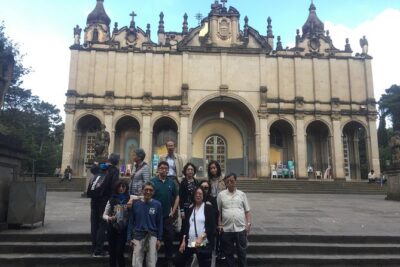
city tour of Addis Ababa ( history ,culture , food and more)
Read our review →Browse the lists this tour appears in