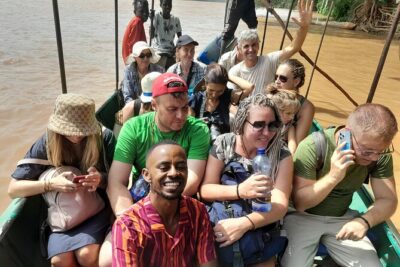
Reviewed · PRIVATE
Private Ethiopian Combined Tours 15 Days
Ethiopia packs several worlds into one trip. This 15-day private route links ancient churches, mountain parks, volcanic-looking terrain, lakes, markets, and Omo Valley communities in one ambitious journey. You move from Addis Ababa and the Blue Nile to Gondar, Aksum, Lalibela, Langano, Arba Minch, and the far south.
I like the rare combination of northern heritage and southern culture, especially the chance to see Lalibela, Aksum, the Simien Mountains, and Omo Valley communities on the same trip. I also like the private format, which gives your own group a better chance to adjust the pace. The main drawback is the amount of time spent on the road. Several days run seven to nine hours, and the schedule contains a few flight and day-number details that you should confirm before paying.
This is not a gentle holiday with long afternoons beside a pool. It is a broad Ethiopian survey, with early starts, rougher roads in the south, basic hotel choices in some areas, and a steady stream of major sights. If you want variety and have limited time, the itinerary offers remarkable value at $2,467 per person, provided the flight arrangements are clearly explained.
In This Review
- What makes this Ethiopian journey distinctive
- Addis Ababa begins with Lucy and coffee
- The long road to Bahir Dar and Debre Libanos
- Lake Tana monasteries and the Blue Nile Falls
- Gondar’s castles and painted churches
- Simien Mountains bring a natural change
- Aksum and the mystery of the stelae
- Tigray’s temples and rock-cut churches
- Reaching Lalibela by road and air
- Returning to Addis, then south to Langano
- Dorze weaving and the road to Arba Minch
- Lake Chamo and the communities of the lower Omo
- Mursi, Hamer, Karo, and Nyangatom country
- Konso terracing and the final return
- What the $2,467 price delivers
- Who should book this tour?
- Should you book Private Ethiopian Combined Tours 15 Days?
- FAQ
- Where does the tour begin?
- How long does the tour last?
- Is this a private tour?
- What destinations are included?
- Are meals included?
- Are domestic flights included in the price?
- Is transportation provided?
- Can vegetarian or vegan meals be arranged?
- What happens if the Blue Nile Falls has little water?
- Can I cancel for a full refund?
What makes this Ethiopian journey distinctive
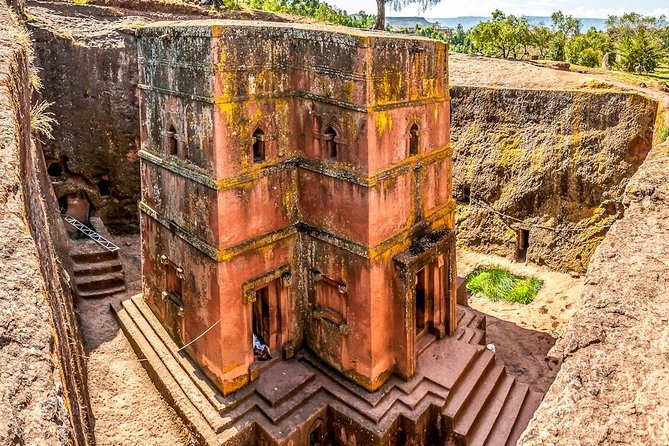
- Ancient Ethiopia in one route: See Aksum’s stelae, Gondar’s royal compounds, Tigray’s rock churches, and Lalibela’s carved churches.
- A private vehicle and private group: Only your party participates, with an air-conditioned vehicle and pickup from Bole International Airport.
- Lake experiences with a purpose: Cruise Lake Tana to Ura Kidane Mihret and Lake Chamo, where crocodiles, hippos, and birds may appear.
- Mountain scenery without a separate expedition: Reach the Simien Mountains National Park by road from Gondar.
- Omo Valley encounters: Visit Bana, Ari, Mursi, Hamer, Karo, and Nyangatom areas with local cultural context.
- Meals and taxes are covered: Breakfast, lunch, vehicle transport, and listed fees are included, while personal expenses are not.
Addis Ababa begins with Lucy and coffee

Your arrival day starts at Bole International Airport, where the tour team meets you and transfers you to the Grand Palace Hotel and Spa. The city visit then introduces Ethiopia through several different doors: the National Museum, Mercato, a traditional coffee ceremony, and Holy Trinity Cathedral.
The National Museum is the essential first stop. Lucy, the 3.2-million-year-old fossil skeleton, gives the trip a strong sense of place. You are not simply touring an old country with famous churches. You are visiting a land central to the story of human origins.
Mercato offers a sharper change of pace. It is described as Africa’s largest open-air market, and you should expect a crowded, energetic setting rather than a tidy shopping street. The coffee ceremony is a useful cultural introduction, since coffee is woven into daily Ethiopian life.
Holy Trinity Cathedral adds a religious and political layer. The copper-domed building connects with the era of Haile Selassie and the work of Sylvia Pankhurst. Five hours is enough for a first look, though the day may feel full after an international flight.
A few more options to weigh up in Addis Ababa
- Full Day Tour of Addis Ababa with Hotel Pickup and Drop-off
★ 5.0 · 430 reviews - Taste of Ethiopia
★ 5.0 · 406 reviews - Day Trip From Addis Ababa See Historical Monastery,Stunning Nature,Animals,Birds
★ 5.0 · 303 reviews
The long road to Bahir Dar and Debre Libanos
Day two is a major road day, listed at about nine hours. You pass Mount Entoto, forested mountain country, Debre Libanos, the Blue Nile Gorge, Debre Markos, and Lake Zengena before reaching Bahir Dar.
Debre Libanos was founded in the 13th century by Saint Tekle Haymanot. The monastery museum contains old Bible books and religious crosses, and the church visit offers a first close look at Ethiopia’s Christian tradition. If church art and manuscripts matter to you, this stop gives the drive a clear purpose.
The Blue Nile Gorge provides the visual reward. The road journey is long, and the schedule leaves little room for lingering at every stop. Still, the changing scenery helps break up the transfer. You spend the night at Naky Hotel or a similar property in Bahir Dar.
You should treat this day as transportation with sightseeing attached, not as a relaxed touring day. An air-conditioned vehicle helps, but nine hours remains nine hours. Families and older visitors may want to ask about break frequency before departure.
Lake Tana monasteries and the Blue Nile Falls
Bahir Dar is one of the more restful bases on the route. From here, you take a boat on Lake Tana to the 14th-century monastery of Ura Kidane Mihret on the Zege Peninsula.
The boat ride changes the rhythm of the trip. Instead of sitting in a vehicle, you travel across Ethiopia’s largest lake toward a monastery known for its importance among the Zege peninsula churches. The setting gives you water, open views, and religious art in one half-day outing.
The afternoon visit to Tis Isat brings you to the Blue Nile Falls. The supplied plan sensibly warns that the falls may have little water because of construction of a new dam. That note matters. Do not book this day expecting a guaranteed wall of falling water.
The listed duration is six hours, leaving some breathing room compared with the road days. Bahir Dar also works well as a pause before the journey to Gondar.
Gondar’s castles and painted churches
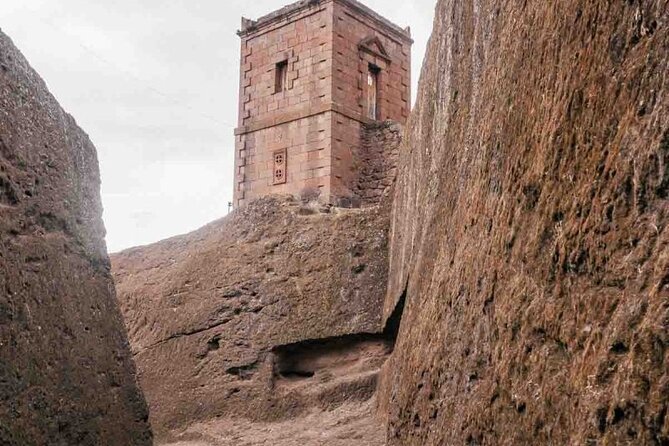
The drive from Bahir Dar to Gondar takes about eight hours. Gondar was founded in 1636 by Emperor Fasiladas and served as the royal capital of Ethiopia. The city’s royal compound gives the day its focus.
The castles and churches built by Fasiladas and later rulers create one of the trip’s most memorable contrasts. You see stone royal architecture, then move into an active religious setting at Debre Birhan Selassie, also called the Enlightening of Trinity.
The church is especially known for its murals. Qusquam Church adds another religious site to the afternoon. This is a sightseeing day where a local guide can make a real difference, since the value lies not only in seeing walls and paintings but in understanding who built them and why.
You spend the night at Goha Hotel or a similar property. The combination of royal buildings and church art makes Gondar one of the strongest stops for anyone interested in Ethiopian history.
A completely different kind of day:
- Addis Ababa: Debre Libanos, Blue Nile Gorge, and Cave Tour
★ 4.5 · 256 reviews - Addis Ababa Guided City Tour With Airport & Hotel Pick Up
★ 5.0 · 237 reviews - Breathtaking Nature, Wildlife and Cave Church Tour – Free Pickups
★ 5.0 · 225 reviews - Full-Day Private City Tour of Addis Ababa
★ 5.0 · 147 reviews
Simien Mountains bring a natural change
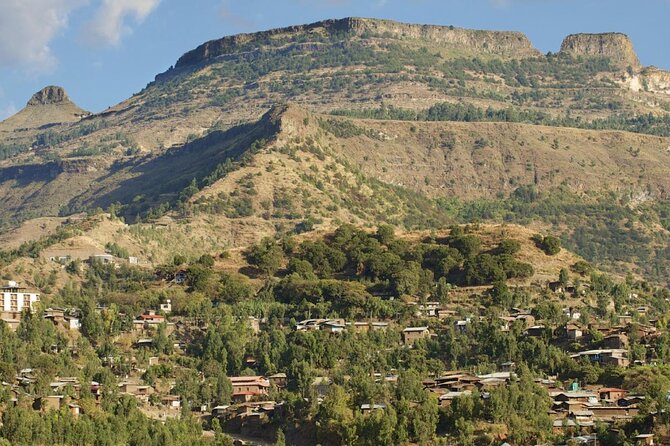
Day five heads toward Buyit Ras in the Simien Mountains National Park. The drive from Gondar covers about 122 kilometers and takes four to five hours, with the full day listed at roughly seven hours.
The Simien Mountains are described as one of Ethiopia’s wildest and most striking areas, and the park is noted as Ethiopia’s UNESCO-listed natural site. The appeal here is not a long trek outlined in the schedule. It is the mountain scenery, cliffs, peaks, and broad views.
That distinction is important. If you expect a serious hiking program, ask for more detail. The itinerary gives no trail lengths, walking times, or hiking equipment list. You should bring suitable clothing and shoes, since the tour operates in all weather.
The overnight stay is at Simen Park Hotel or a similar property in the park area. This is a welcome break from churches and monuments, and it gives the trip a stronger mix of nature and culture.
Aksum and the mystery of the stelae
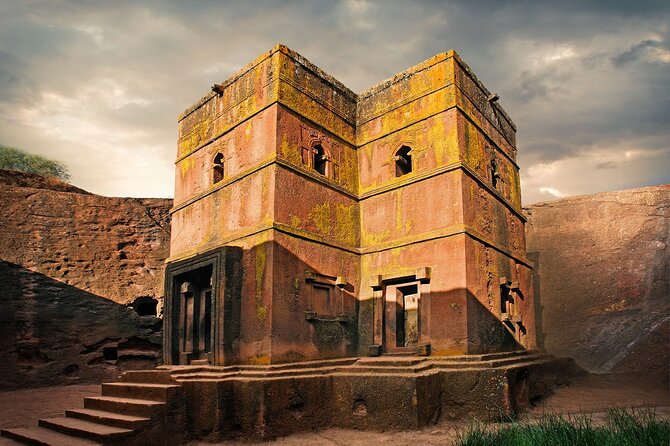
The road from Debark to Aksum takes about eight hours. Aksum has more than 2,500 years of history and was once the center of a major empire. Its attractions make this one of the most important days in northern Ethiopia.
The city tour includes St. Mary’s Church, the chapel associated with the Ark of the Covenant, the coronation yard, Stelae Park, the tombs of King Kaleb and his son Gebre Meskel, Ezana’s inscriptions, the Queen of Sheba’s Bath, palace ruins linked with the Queen of Sheba, and the Aksum Museum.
That is a lot for one day. The stelae are the visual highlight, but the inscriptions and tombs add depth. The Ark chapel is a place where religious belief and historical debate meet. The itinerary presents it as the repository of the original Ark, while you should approach the site respectfully as a sacred place.
The overnight stay is at Sabian Hotel or a similar property. Aksum rewards travelers who enjoy old stones, royal stories, and religious tradition more than those seeking a fast-moving entertainment stop.
Tigray’s temples and rock-cut churches
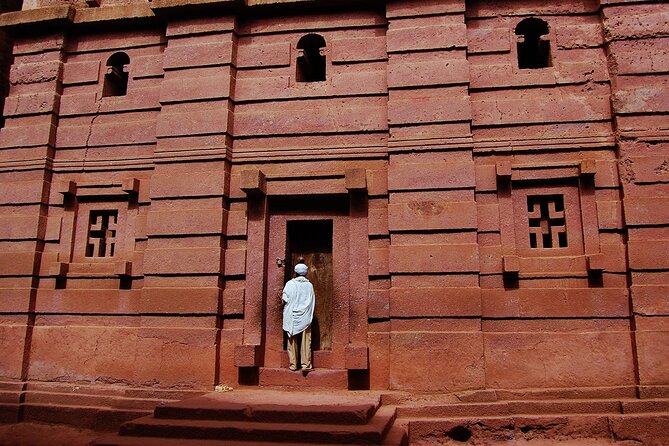
Day seven runs from Aksum to Mekelle, with stops at Yeha and several Tigray churches: Adikisho Medhanyalem, Wukro Cherkos, and Abrha Wasba. The day is listed at about eight hours.
Yeha is a useful addition because it broadens the story beyond medieval Christian churches. The rock churches require more attention and often a willingness to deal with uneven access, although the precise walking conditions are not provided.
Tigray is one of the places where a good guide matters most. The buildings may look modest from the outside, but their age, setting, and religious artwork make them powerful stops. Ask in advance which churches are open on your travel dates and how much walking each visit involves.
Mekelle’s Axum Hotel or a similar property provides the overnight base. This day is another long transfer, but it connects two very different chapters of northern Ethiopian culture.
Reaching Lalibela by road and air
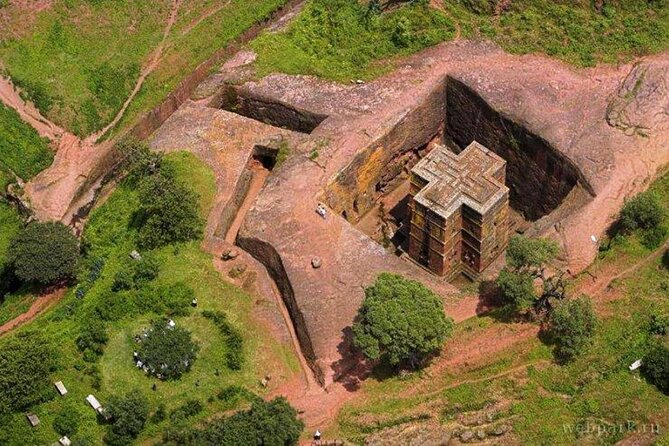
Day eight takes you from Mekelle through Alamata and Woldiya toward Lalibela. The drive is listed at about eight hours, with stops for markets and lunch. You see parts of Tigray and Wello, then arrive in Lalibela.
The following day describes an airport transfer and a flight to Lalibela, followed by an afternoon visit. This creates an important planning question: the schedule appears to include both a road arrival and a flight arrival. Ask the operator to confirm the exact transport plan, since the choice affects both time and cost.
Lalibela is the headline stop for many people. Its churches were carved down into the rock, creating underground and rock-hewn sanctuaries that are unlike ordinary freestanding buildings. The afternoon visit is only an introduction, but it lets you see the main attractions without spending the entire day on foot.
You stay at Cliff Edge Hotel or a similar property. Wear practical clothing for church visits and expect a religious setting rather than a museum environment. The listed dress code is formal, and modest clothing is the sensible choice.
Returning to Addis, then south to Langano
Day ten includes a flight back to Addis Ababa, followed by a four to five-hour drive south to Lake Langano. En route, you visit Lake Ziway, the largest of the upper Rift Valley lakes, with an area of about 400 square kilometers.
Lake Ziway is known here for water lilies and bird breeding areas. It gives you a calmer nature stop after the concentrated heritage sites of the north. The route continues to Lake Langano, where water activities are available.
This is another day with a lot of movement. If the flight is early, the road transfer may feel tiring. The reward is a change in scenery and a more relaxed lakeside setting at Africa Vacations in Langano.
The southern section feels less monumental and more connected to daily life, landscapes, wildlife, and local communities. That shift is one of the tour’s strengths.
Dorze weaving and the road to Arba Minch
The route from Langano to Arba Minch passes through Chencha and the Dorze village. The day is listed at about seven hours.
The Dorze are known for weaving, including the production of traditional shammas. Their distinctive houses are described as elephant-shaped, a design connected with memories of elephants once living in the area. You also learn about enset, sometimes called false banana, which is a staple food for local people.
This is exactly the sort of stop that gives the tour more substance than a sequence of monuments. You see how food, architecture, and craft fit together. It also offers a more direct cultural encounter than simply looking at old buildings.
The overnight stay is at Paradise Lodge in Arba Minch. The town becomes your base for the next phase, which includes Lake Chamo and the Omo Valley.
Lake Chamo and the communities of the lower Omo
The itinerary then heads from Arba Minch through Konso toward Jinka. Before continuing, you take a boat cruise on Lake Chamo, described as Ethiopia’s third-largest lake.
On the water, you may see Nile crocodiles, hippos, and different bird species. Wildlife sightings are never guaranteed, but the boat gives you a different kind of Ethiopian experience and breaks up the long road journey.
The cultural visits include Bana and Ari communities. The Bana are described as pastoral and semi-nomadic people living in the lower Omo Valley. The Ari are the largest population in that area, with women known here for pottery and skirts made from enset fiber.
The schedule lists about eight hours and an overnight at Nassa in Jinka. This is a demanding day, and the road conditions in the south may be less comfortable than those in the north. You should keep an open mind and follow your guide’s advice about respectful photography and personal space.
Mursi, Hamer, Karo, and Nyangatom country
Day thirteen uses Jinka as a base for an excursion to Mago National Park and a Mursi village, followed by a drive to Turmi. The Mursi are known for homes made from straw and leaves, as well as traditional lip and ear ornamentation.
This is a sensitive part of the trip. Cultural visits should not feel like a human zoo. Ask your guide about photography rules, fees, and how to behave before you enter a village. The supplied plan provides a basic description, but it does not explain the visitor protocol, so clear instructions are worth requesting.
The next day reaches Murulle and the Karo people, known for body and face decoration using white chalk. The route also includes the Nyangatom people, about 17 kilometers from Murulle. Their clothing and jewelry reflect local customs and materials.
The Hamer people are based around Turmi, where you stay at Turmi Lodge. The schedule says day fourteen includes Konso but still lists an overnight in Turmi, so confirm the actual routing. The south is compelling, but the itinerary needs careful clarification here.
Konso terracing and the final return
The final day passes through Konso, Arba Minch, and back to Addis Ababa for your departure. Konso is a UNESCO site known for its terracing and is also associated with one of Ethiopia’s notable coffee-growing areas.
The plan lists about eight hours, followed by an airport transfer. Do not schedule a tight international connection without confirming the expected arrival time in Addis Ababa. Long road transfers can be affected by weather, road conditions, and stops.
Konso is a fitting final cultural stop. After seeing royal compounds, ancient churches, lakes, and Omo Valley communities, the terraces show another way people have shaped difficult terrain for farming and settlement.
What the $2,467 price delivers
At $2,467 per person, this is not a budget day tour, but the price covers a great deal: private transport, airport pickup, breakfast, lunch, all fees and taxes, and a 15-day route across much of Ethiopia.
The private arrangement is the main value. You are not tied to a large coach group, and the operator offers group discounts. The vehicle is air-conditioned, which matters during long road days.
The listed inclusions do not clearly state that domestic flights are included. Flights appear in the day-by-day plan, especially for Lalibela and the return to Addis Ababa, but you should ask if airfare is part of the quoted price or an extra charge. Personal expenses are excluded, and there is no restroom on board.
The company has earned praise for careful drivers, prompt communication, and flexibility with changes. Staff names associated with past arrangements include Amanuel, Amman, Joseph, Noah, Shasha, and Siss. You should confirm your actual guide and driver before departure, but the strongest service signal is the repeated emphasis on organization, safety, friendly support, and quick responses.
Who should book this tour?
I would recommend this trip to someone visiting Ethiopia for the first time who wants both the famous northern sites and the Omo Valley. It suits curious people who prefer cultural variety to a slow resort schedule.
You should be comfortable with:
- Seven to nine-hour road days
- Several early starts
- Changing hotel standards
- Uncertain water volume at the Blue Nile Falls
- Long transfers in southern Ethiopia
- Sacred sites requiring modest, formal clothing
- Cultural encounters that call for patience and respect
The tour offers vegan and vegetarian food options. Most people can participate, and service animals are allowed. Children receive a child rate only when sharing with two paying adults.
Cancellation is free up to 24 hours before the start time for a full refund. Changes made inside that 24-hour period are not accepted, so confirm your flights and route details early.
Should you book Private Ethiopian Combined Tours 15 Days?
Book it if you want Ethiopia’s greatest hits plus a serious look at the south, and if you value having your own vehicle and support team. The combination of Lalibela, Aksum, Gondar, Lake Tana, Simien, and the Omo Valley is unusually broad for 15 days.
Pause before booking if you dislike long drives, need polished hotel facilities throughout, or want a fully fixed itinerary with no unclear flight or routing details. Before paying, confirm the domestic airfare, the Day 8 and Day 9 Lalibela plan, the Day 14 and Day 15 routing, and the exact departure timing from Addis Ababa.
With those points settled, this is a strong choice for an ambitious first visit. It asks for stamina, but it gives you a vivid cross-section of Ethiopia in return.
FAQ
Where does the tour begin?
The tour begins with pickup at Bole International Airport in Addis Ababa.
How long does the tour last?
The experience lasts approximately 15 days.
Is this a private tour?
Yes. Only your group participates in the activity.
What destinations are included?
The route includes Addis Ababa, Bahir Dar, Gondar, the Simien Mountains, Aksum, Mekelle, Lalibela, Langano, Arba Minch, Jinka, Mago National Park, Turmi, and Konso.
Are meals included?
Breakfast and lunch are listed as included for 15 days.
Are domestic flights included in the price?
The itinerary includes airport transfers and flights to Lalibela and Addis Ababa, but the included-services list does not clearly say that airfare is included. Confirm this before booking.
Is transportation provided?
Yes. An air-conditioned vehicle is included, along with airport transfers.
Can vegetarian or vegan meals be arranged?
Yes. Vegan and vegetarian food options are available.
What happens if the Blue Nile Falls has little water?
The itinerary warns that the falls may have minimal water because of construction of a new dam.
Can I cancel for a full refund?
Yes, if you cancel at least 24 hours before the experience start time. Cancellations made less than 24 hours before the start time are not refunded.
Just added in Addis Ababa
- Yod Abyssinia Cultural Night: Dinner, Music, and Dance★ 5.0 · 7 reviews
- Addis Ababa City Tours Full-Day Tours★ 5.0 · 5 reviews
- Locally crafted beer and wine tasting and nightlife in Addis tour★ 5.0 · 6 reviews
- Unique Ethiopian Cooking Class and Coffee Ceremony with a Local in Addis Ababa★ 4.5 · 7 reviews
- Stunning Views Wonchi Crater Lake a Private Day Trip★ 5.0 · 3 reviews
- Visiting the wonders of Lalibela in Three (3) days and Two ( 2) nights★ 5.0 · 2 reviews
- .2- Days and 1 Night Tour To Awash National Park water falls★ 5.0 · 1 review
- Two days Lake Wenchi and Menagesha Forest★ 5.0 · 1 review
Private, compared.

Private Half Day Guided tour in Addis Ababa New Flower
Read our review →
Private 3 Days Adventure Tour Through Arba Minch
Read our review →