
Reviewed · ETHIOPIAN MONASTERIES
Discover Debre Libanos Monastery, Portuguese Bridge and Jimma Valley
Water, cliffs, and sacred ground. This private day trip links Debre Libanos Monastery with the Portuguese Bridge and the Blue Nile gorge, giving you a rare mix of Ethiopian religious history, mountain scenery, wildlife, and difficult modern history in one outing. I especially like the private transport and the chance to see Gelada baboons and endemic birds away from Addis Ababa. The main drawback is the long day and the moderate physical effort required around the bridge and gorge.
I also like that lunch and admission are included, so the $158.65 price covers the main costs rather than leaving you to sort them out on the road. Guide Biruk has been praised for his warmth, patience, punctuality, and strong grasp of Ethiopian history. At the monastery, women should bring a skirt or another conservative covering, since entry rules are traditional.
In This Review
- Key points to know before booking
- Why this day trip is worth your time
- Debre Libanos Monastery and the story beneath the calm
- The Portuguese Bridge and Gur River waterfall
- Gelada baboons and highland birds
- The Blue Nile gorge and the big-scale scenery
- What the private format adds
- Lunch, timing, and what to bring
- Who should book this experience
- Should you book the Debre Libanos and Portuguese Bridge tour?
- FAQ
- How long is the tour?
- Where does the tour start?
- Is transportation included?
- Is lunch included?
- How much time is spent at Debre Libanos Orthodox Church?
- How much time is spent at the Portuguese Bridge?
- What should women wear to the monastery?
- Can I cancel for a refund?
Key points to know before booking
- A private 10-hour outing from Addis Ababa: Your group travels together rather than joining a larger shared departure.
- Three hours at Debre Libanos: The monastery is both a pilgrimage site and a place tied to one of the worst killings of the Italian occupation.
- The Portuguese Bridge has a disputed story: Some accounts credit 16th-century Portuguese builders, while others connect it to Ras Darge in the 19th century.
- A 600-meter waterfall awaits beyond the bridge: The Gur River is most dramatic during the July to September rainy season.
- Wildlife and birdlife add depth: You might see Gelada baboons, banded barbets, Abyssinian woodpeckers, Ruppell’s black chats, and white-winged cliff chats.
- Dress and fitness matter: The monastery has conservative entry rules, and the gorge portion calls for a moderate level of fitness.
Why this day trip is worth your time
Addis Ababa can occupy days with museums, churches, markets, and cafes, but Ethiopia’s best scenery lies beyond the capital. This excursion gives you a practical way to reach the northern highlands without arranging separate transport, permits, admissions, and meals.
The appeal is the variety. In the morning, you are in a quiet religious setting among woodland and streams. Later, you are standing above a deep gorge with a waterfall dropping hundreds of meters below. The two main stops feel very different, which keeps the day from becoming a repeat of the same view or monument.
You also get more than sightseeing. Debre Libanos opens a door into the Ethiopian Orthodox Church, while the bridge and gorge show the scale of the country’s highland terrain. If you want a day that combines culture, natural scenery, and a little wildlife, this is a strong choice.
The schedule is listed as about 10 hours, starting at 8:00 a.m. and ending back at the meeting point in Addis Ababa. Three hours are allocated to the monastery and three hours to the Portuguese Bridge area, with the remaining time used for the road, lunch, and transitions.
More monastery visits in Addis Ababa:
- Day Trip From Addis Ababa See Historical Monastery,Stunning Nature,Animals,Birds
★ 5.0 · 303 reviews - Debre Libanos Monastery and Jemma River Gorge – Day Tour from Addis Ababa
★ 5.0 · 20 reviews - DAY TRIP TO Debre Libanos Monastery Cave Church Nature and Wildlife
★ 4.5 · 12 reviews
Debre Libanos Monastery and the story beneath the calm
Debre Libanos was founded in 1284 by Abuna Tekle Haymanot. For almost 500 years, it served as a major center of the Ethiopian Church. That gives the site a weight that goes well beyond its present-day appearance.
Today, the setting is peaceful, with woodland and streams around the church grounds. That calm can make the site seem simple at first, but the history here is anything but simple. In 1937, during the Italian occupation, Fascist troops attacked the monastery and killed 297 monks, more than 100 deacons, and at least 400 lay people.
A new church was built in the 1950s, but Debre Libanos did not return to its earlier role as a center of religious learning. It remains an important pilgrimage site, though, and people come to honor the bones of the monks killed in the massacre.
I would give this stop your full attention rather than treating it as a quick photo break. The site asks you to move at a slower pace and listen carefully to the guide. Biruk’s patient and warm approach is especially useful here, since the meaning of the monastery is tied to faith, violence, memory, and national history.
The church has conservative entry rules. Women should bring a skirt or another garment that provides suitable coverage. This is a small thing to plan for, but it can make the difference between entering comfortably and having to improvise at the gate.
The three-hour visit should give you enough time to take in the church, hear the history, and appreciate the setting without rushing. Since admission is included, you do not need to budget separately for the main site.
The Portuguese Bridge and Gur River waterfall
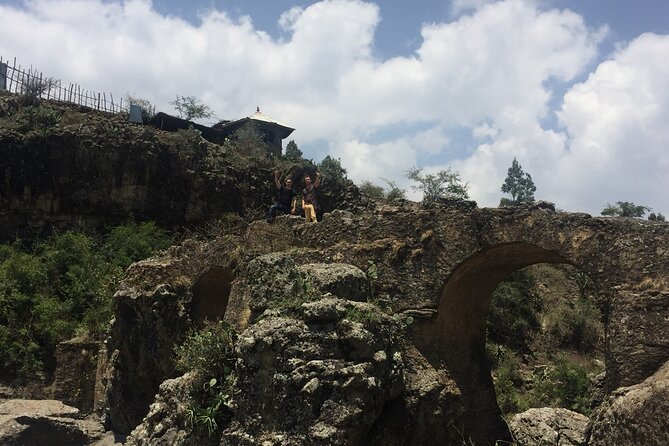
The second major stop changes the mood completely. The Portuguese Bridge crosses the Gur River, and its name comes with an unresolved historical question.
One explanation says Portuguese builders constructed it in the 16th century. Another credits Ras Darge, the uncle of Emperor Menelik II, with building it in the 19th century. The disagreement is part of the bridge’s interest. You are not simply looking at an old crossing with one tidy story attached to it.
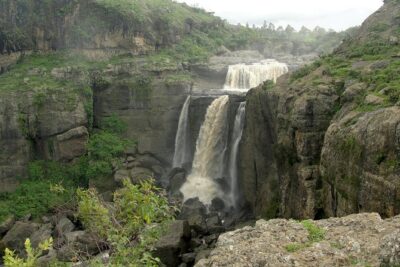
After crossing the bridge, you walk a short distance beside the river to a large rock. From there, you can see a waterfall plunging roughly 600 meters. The height is the main event, but the setting also gives you a clear sense of how sharply the river cuts through the highlands.
The waterfall is most impressive from July through September, during the rainy season. Outside those months, the view can still be worthwhile, but you should not expect the same volume of water. If the falls are a major reason for booking, timing your visit in the rainy season gives you the best chance of seeing them at full force.
This section requires more physical effort than simply stepping off a vehicle and taking a picture. You cross the bridge and walk along the river to the viewing point, so sturdy footwear and a moderate level of fitness are sensible. The information provided does not give an exact walking distance or describe the path in detail, so anyone with mobility concerns should ask the operator before booking.
The three-hour allocation is generous enough to allow time for the bridge, the walk, the waterfall view, and wildlife spotting. It also means you do not have to race through the area to keep up with a large group.
Gelada baboons and highland birds
The Portuguese Bridge area adds a natural-history element that many cultural day trips lack. A cave nearby is used by Gelada baboons as a place to sleep at night, and you may see them in the area.
Geladas are endemic to the Ethiopian highlands, making them more than a pleasant surprise beside the road. Their presence connects the scenery to the particular ecology of the region. Sightings are never guaranteed, so you should treat them as a bonus rather than the central promise of the tour.
Birdwatching can also add interest to the stop. The species named for the area include:
- Banded barbet
- Abyssinian woodpecker
- Ruppell’s black chat
- White-winged cliff chat
You do not need to be a serious birder to appreciate this part of the outing. Bring patience, and if you have binoculars, pack them. The tour gives you time in the right kind of habitat, but no wildlife sighting can be promised.
This is one reason I prefer the private format. Your guide can spend more or less time looking for birds or baboons depending on your interests, rather than following a fixed pace set by a busload of people. The private arrangement means only your group participates, which also makes questions and photo stops easier.
More trips to Debre Libanos:
- Addis Ababa: Debre Libanos, Blue Nile Gorge, and Cave Tour
★ 4.5 · 256 reviews - Day Trip From Addis Ababa To Debre Libanos & Portuguese Bridge
★ 4.5 · 64 reviews - Day trip Debre Libanos, Bule nile George &Portugal Bridge
★ 4.4 · 25 reviews - Escape From Addis – Day Trip To Debre Libanos And The Portuguese Bridge
★ 5.0 · 16 reviews
The Blue Nile gorge and the big-scale scenery
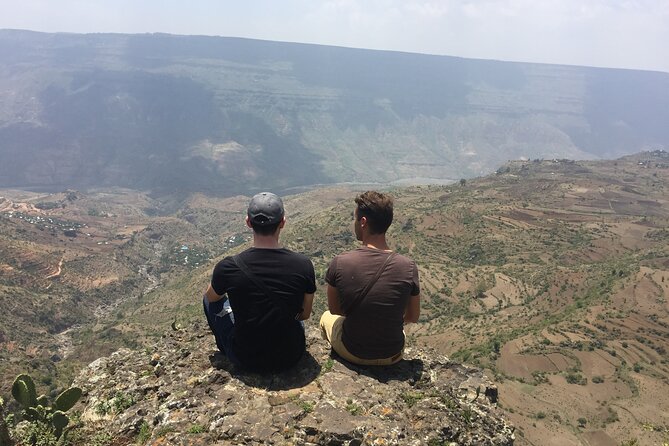
The route also takes you toward the Blue Nile gorge, a huge cut through the Ethiopian highlands often compared with the Grand Canyon. That comparison gives you a rough idea of the scale, though the experience here is distinctly Ethiopian, shaped by the region’s rivers, cliffs, religious sites, and highland wildlife.
The gorge is not simply another scenic stop. It helps explain why the journey from Addis Ababa takes much of the day. You are going out to a broad, dramatic part of the country rather than visiting a site just outside the capital.
The supplied details do not specify a separate stop length at the gorge, so you should think of it as part of the wider route around the bridge and waterfall. Your guide can provide the local context as you move through the area, while the main viewing time centers on the Gur River and the waterfall.
Expect a day that is visually rewarding but not effortless. Roads and walking time are part of the experience, and the return to Addis Ababa will likely feel long after an early start. That is the tradeoff for reaching this section of the highlands in a single day.
What the private format adds
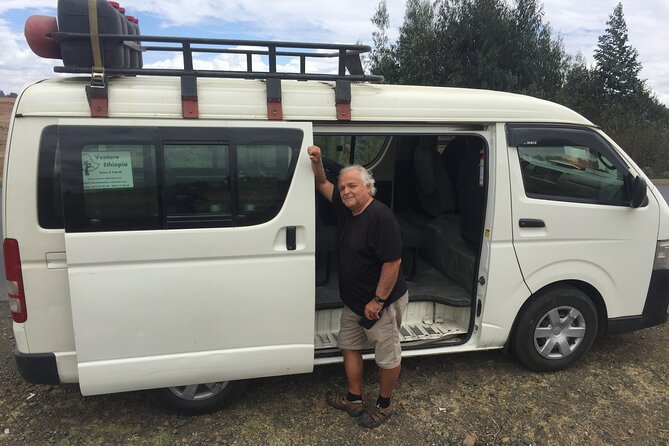
Private transportation is one of the strongest practical features. You avoid organizing a vehicle on your own, and your group can travel together from the stated meeting point at Venture Ethiopia in Addis Ababa.
The tour is not described as a hotel pickup service. Pickup is offered, but the listed starting point is Venture Ethiopia, so confirm the exact pickup arrangement when you book. The start time is 8:00 a.m., and the tour returns to the meeting point at the end.
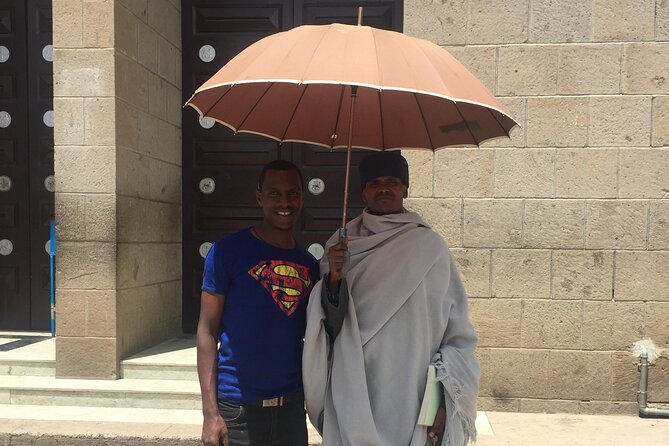
A private tour also changes the feel of the day. You can ask for more explanation at Debre Libanos, pause longer at the waterfall, or focus on birds and baboons without waiting for a large group. The guide is a major part of the experience, and Biruk has earned especially warm praise for being on time, professional, patient, and kind.
The tradeoff is price. At $158.65 per person, this is not the cheapest way to spend a day outside Addis Ababa. But the cost includes private transport, lunch, and admission, and you receive a full 10-hour outing rather than a short transfer to one attraction.
For two or more people, group discounts may improve the value. Solo visitors should compare the convenience of private transport and a dedicated guide with the cost of arranging a similar trip independently. Since the tour requires a minimum number of travelers, confirmation is subject to availability.
Lunch, timing, and what to bring
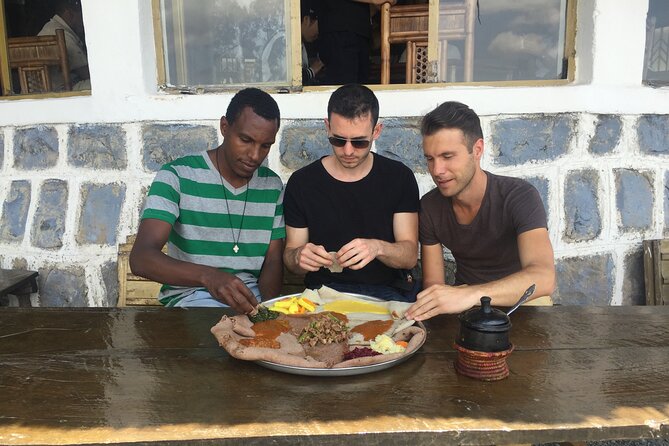
Lunch is included, while alcoholic drinks are not. The information does not specify the menu, so you should not book this expecting a particular meal or dietary arrangement unless you confirm it with Venture Ethiopia.
The early start is useful. You have time to visit both main sites and still return to Addis Ababa the same day. The schedule is full, though, so this is not the right outing if you want a slow morning or a flexible afternoon in the capital.
I would bring:
- A conservative skirt or covering for women entering the monastery
- Comfortable walking shoes
- Water and sun protection
- Binoculars or a camera with a useful zoom
- A light layer for changing highland conditions
These suggestions stay within the practical demands described for the tour. You will be outdoors around woodland, streams, a river, a waterfall, and a gorge, and you will walk after crossing the bridge.
Free cancellation is available if you cancel at least 24 hours before the local start time. Cancellations made less than 24 hours in advance are not refunded, and late changes are not accepted. If the minimum number is not met and the operator cancels, you will be offered another date or experience, or receive a full refund.
Who should book this experience
I would recommend this tour to you if you want one substantial day beyond Addis Ababa and prefer cultural history to be part of the scenery. It suits people who enjoy churches, religious traditions, dramatic viewpoints, and wildlife sightings without needing a highly specialized expedition.
It is also a good match if you value a private guide. Biruk’s reported strengths, especially his punctuality, patience, and personal manner, matter on a day with a lot of driving and several layers of history to explain.
You should think twice if you have limited mobility or strongly dislike uneven walking. The tour requires a moderate level of fitness, and the bridge area includes a walk beside the river to the waterfall viewpoint. You should also consider the season. July through September offers the best chance of seeing the waterfall at its strongest, but conditions may be less predictable during the rains.
Should you book the Debre Libanos and Portuguese Bridge tour?
Book it if you want a private, full-day introduction to Ethiopia’s northern highlands and appreciate a tour that joins sacred history with big natural scenery. The included lunch, admissions, and transportation make the price easier to justify, especially for a small group using the discount.
Skip it if you want a short, easy outing close to Addis Ababa, or if the waterfall is your only priority and you are visiting outside July through September. For the right visitor, though, the combination of Debre Libanos, the disputed Portuguese Bridge, the Gur River waterfall, Gelada baboons, endemic birds, and the Blue Nile gorge gives you a far fuller day than a single monument visit.
FAQ
How long is the tour?
The experience lasts about 10 hours. It starts at 8:00 a.m. and ends back at the meeting point in Addis Ababa.
Where does the tour start?
The listed starting point is Venture Ethiopia, 2QJ3+3J6, Addis Ababa, Ethiopia. Pickup is offered, so confirm the exact arrangement when booking.
Is transportation included?
Yes. Private transportation is included, and only your group participates in the activity.
Is lunch included?
Yes. Lunch is included. Alcoholic beverages are not included.
How much time is spent at Debre Libanos Orthodox Church?
The planned time at Debre Libanos is three hours, including the church visit and time to learn about the monastery and its history.
How much time is spent at the Portuguese Bridge?
The planned time at the Portuguese Bridge is three hours. This includes crossing the bridge, walking beside the river, and reaching the viewpoint for the waterfall.
What should women wear to the monastery?
Women should bring a skirt or another conservative covering because the entry rules at the monastery are traditional.
Can I cancel for a refund?
Yes. You can cancel at least 24 hours before the experience starts for a full refund. Cancellations or changes made less than 24 hours before the start time are not accepted for a refund.
Just added in Addis Ababa
- Yod Abyssinia Cultural Night: Dinner, Music, and Dance★ 5.0 · 7 reviews
- Addis Ababa City Tours Full-Day Tours★ 5.0 · 5 reviews
- Locally crafted beer and wine tasting and nightlife in Addis tour★ 5.0 · 6 reviews
- Unique Ethiopian Cooking Class and Coffee Ceremony with a Local in Addis Ababa★ 4.5 · 7 reviews
- Stunning Views Wonchi Crater Lake a Private Day Trip★ 5.0 · 3 reviews
- Visiting the wonders of Lalibela in Three (3) days and Two ( 2) nights★ 5.0 · 2 reviews
- .2- Days and 1 Night Tour To Awash National Park water falls★ 5.0 · 1 review
- Two days Lake Wenchi and Menagesha Forest★ 5.0 · 1 review
Ethiopian Monasteries, compared.
Day Trip From Addis Ababa See Historical Monastery,Stunning Nature,Animals,Birds
Read our review →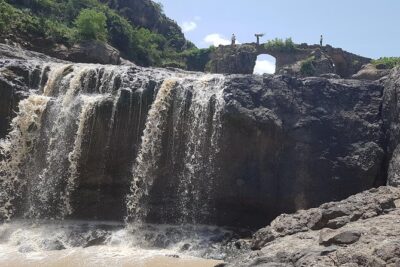
Debre Libanos Monastery and Jemma River Gorge – Day Tour from Addis Ababa
Read our review →
Day trip on Bahir dar. To visit lake tana monasteries and Blue Nile Falls.
Read our review →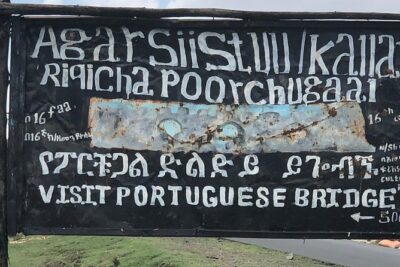
DAY TRIP TO Debre Libanos Monastery Cave Church Nature and Wildlife
Read our review →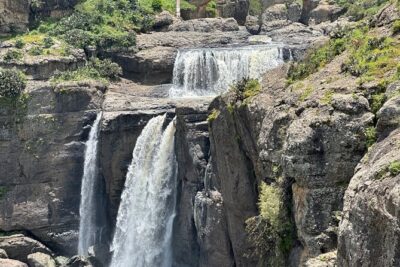
1-Day Tour Old bridge, Monastery,water falls Wildlife,Birds,
Read our review →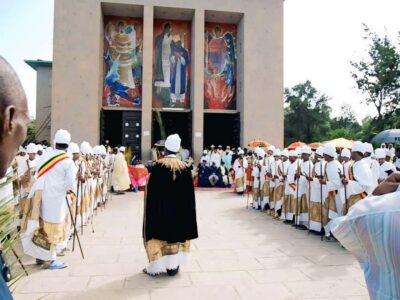
Debre Libanos Monastery & Scenic Portuguese Bridge Tour
Read our review →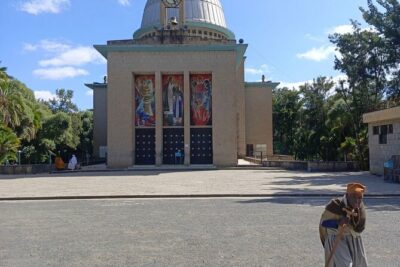
Monastic Marvels Exploring the beauty of Debre Libanos Monastery
Read our review →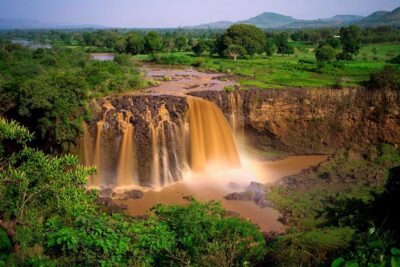
Private Guided Tours To Bahir Dar Lake Tana Monastery & Blue Nile Waterfalls
Read our review →Browse the lists this tour appears in