
Reviewed · 2-DAY EXPERIENCES
2 Days Harar Tours
Harar is Ethiopia’s most surprising city. This two-day trip from Dire Dawa combines Harar’s walled old town with museums, colorful homes, local markets, and the famous evening hyena feeding. I like the compact plan, which gives you a useful first look at Harar without forcing you to arrange every transfer yourself. I also like the chance to pair the city with Babile Camel Market and the Valley of Marvels, two very different stops outside town. The main drawback is that the domestic flight from Addis Ababa is not included, so your final cost will be higher than the advertised $300 per person.
The tour is best for you if you want history, local culture, photography, and a little strange wildlife theater in one short trip. It is not a slow, deeply detailed stay in Harar, but it covers the main sights efficiently and includes meals, transport, museum entries, and the hyena feeding fee.
In This Review
- Key points before you book
- Why Harar makes such a strong short trip
- From Dire Dawa Airport to Harar
- Walking through the Jegol wall
- Museums that add meaning to the streets
- The evening hyena feeding
- Babile on Monday or Thursday
- Balancing rocks in the Valley of Marvels
- Harar as a photographer’s city
- Meals, hotel, and what the price covers
- Who should choose this two-day plan?
- Practical details before departure
- Should you book 2 Days Harar Tours?
- FAQ
- Where does the tour begin?
- Where does the tour end?
- Is the domestic flight from Addis Ababa included?
- What meals are included?
- When does the Babile Camel Market take place?
- Is the hyena feeding included?
- How large can the group be?
Key points before you book
- Harar’s old city is enclosed by the Jegol wall, built in the 1560s under Emir Nur and entered through five gates.
- The hyena feeding happens daily, just outside the city walls, with local feeders offering meat to wild hyenas.
- Babile Camel Market operates on Mondays and Thursdays, so your departure day matters.
- The Valley of Marvels features balancing rock formations, making it a useful countryside addition to the city visit.
- The tour begins at Dire Dawa International Airport at 9:00 a.m. with pickup and a name sign.
- Groups can reach 15 people, while the package includes an air-conditioned vehicle, meals, entry fees, and hotel arrangements.
Why Harar makes such a strong short trip
Harar is not simply another old Ethiopian town. It has a tightly packed historic center, a distinct Harari culture, narrow lanes, colorful houses, mosques, shrines, and a defensive wall that still shapes the city.
Thousands of people live within roughly one square kilometer of the old city. That density gives Harar its particular feel. You are not walking through an empty monument zone. Homes, shops, markets, religious sites, and daily life all occupy the same small space.
Harar became an important trade center, and its location helped bring different communities into contact. The tour introduces you to that mix through the streets rather than through a long lecture. You will see how the old wall, gates, homes, and markets fit together as a living city.
I appreciate that the schedule begins with a walking tour after your drive from Dire Dawa. A vehicle can get you to Harar, but walking is the right way to understand the old center. The lanes are narrow, and the details are close: painted walls, doorways, market stalls, and people moving through the gates.
Other trips worth a look in Ethiopia:
- Full Day Tour of Addis Ababa with Hotel Pickup and Drop-off
★ 5.0 · 430 reviews - Taste of Ethiopia
★ 5.0 · 406 reviews - Day Trip From Addis Ababa See Historical Monastery,Stunning Nature,Animals,Birds
★ 5.0 · 303 reviews
From Dire Dawa Airport to Harar
Your meeting point is Dire Dawa International Airport, where the local representative waits at 9:00 a.m. with a sign showing your name. Pickup and drop-off are included, which removes one of the more annoying parts of a short Ethiopian trip: finding your driver after arrival and working out the road transfer.
The drive from Dire Dawa takes you to Harar, where you check into your hotel before heading out again. The schedule allows time to rest, a useful touch after a flight or an early start.
The air-conditioned vehicle is included, as are the road transfers during the tour. Since the group may contain up to 15 people, ask at booking if you want to know whether your departure will be private or shared. A group of 15 can make the city walk feel less nimble in tight lanes, though it can also keep the price manageable.
The advertised price is $300 per person. That is a reasonable package price if you value having the hotel, vehicle, guide, meals, entrances, and airport transfer organized together. It is not the complete cost of the trip from Addis Ababa because the domestic flight is extra. Budget for that separately before comparing this tour with a do-it-yourself visit.
Walking through the Jegol wall
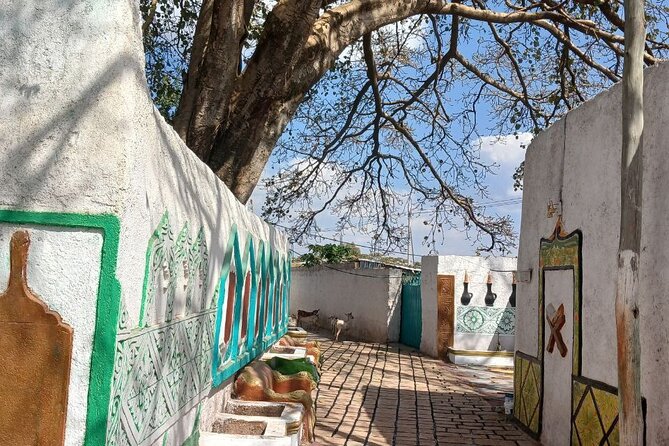
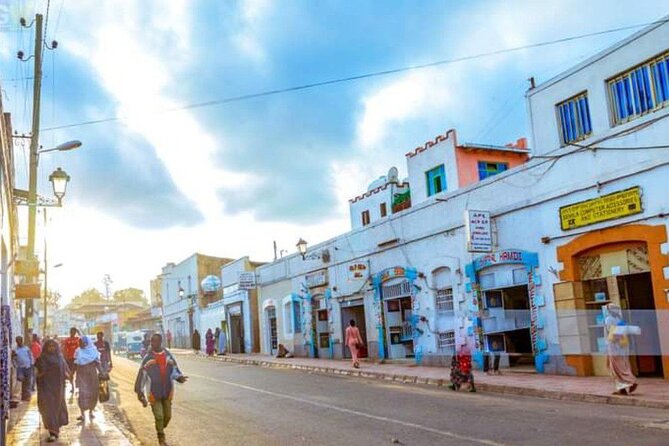
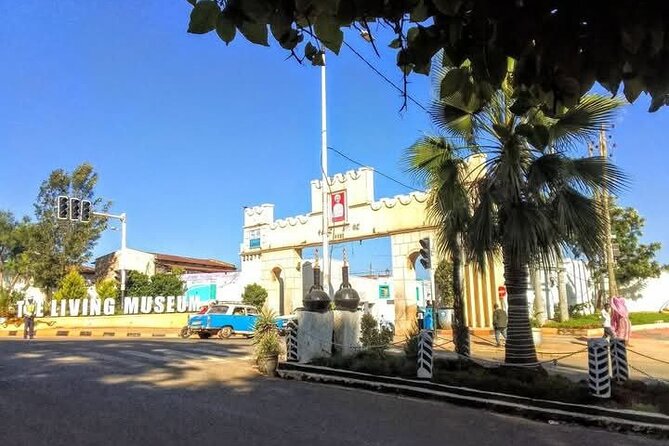
The first Harar city tour takes you through the old center and its narrow alleyways. The old city remains surrounded by the Jegol wall, built in the 1560s by Emir Nur to defend Harar from attacks by neighboring groups and rulers.
Five gates lead into the old city. These entrances are more than photo stops. They help you understand how a compact fortified city controlled movement and protected its residents. As you pass between the outside streets and the old center, the feeling changes quickly from open city to enclosed maze.
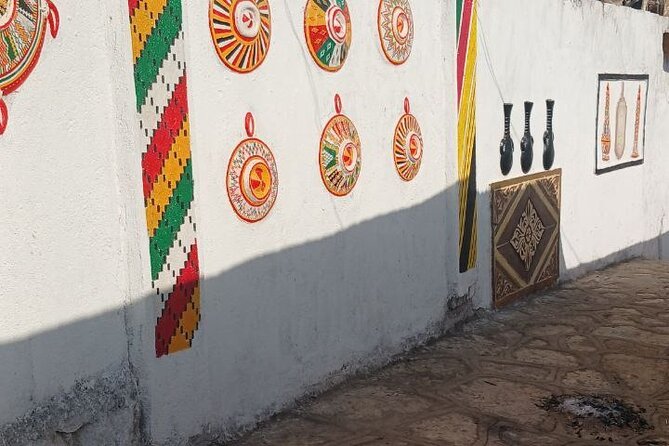
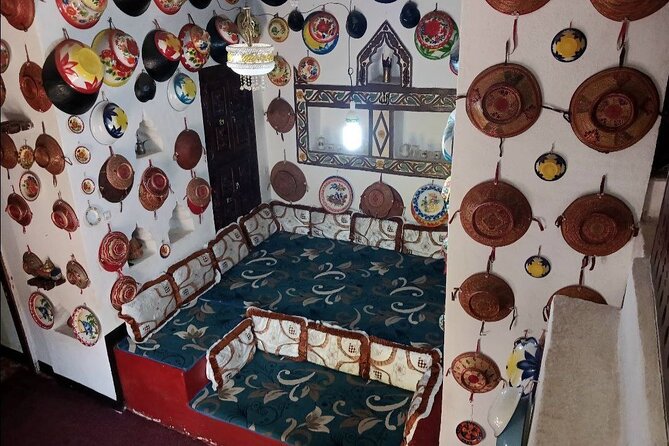
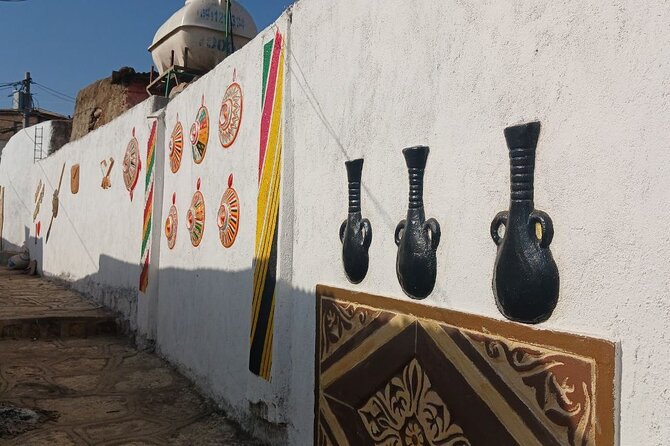
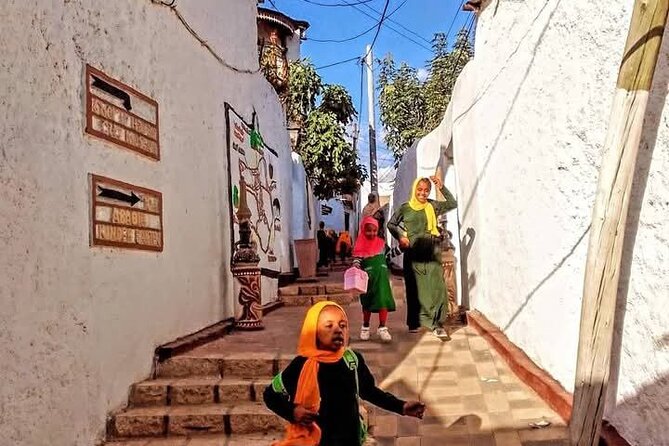
The colorful homes are one of Harar’s strongest visual features. The tour includes a visit to a Harari house, allowing you to look beyond the street fronts and see local domestic design. The details of the house are important because Harar’s identity is not limited to its walls or monuments. It is also expressed in the way homes are built and decorated.
The city is especially good for photography. Colorful alleys, old Peugeot cars, market goods, people at the gates, and the contrast between stone walls and painted houses give you plenty to work with. If you use a camera, bring extra battery power and make time for ordinary street scenes, not just formal stops.
You should still remember that this is an active residential area. Ask before photographing people, especially inside homes, markets, and religious places. The schedule provides a broad look at Harar, but it may not give you unlimited time at each location.
Museums that add meaning to the streets
The tour visits three important cultural stops: the Sheriff Museum, Rimbaud House, and the Harari National Cultural Center.
The Sheriff Museum is located in the former Ras Teferi honeymoon house. That detail gives the building an unusual connection to Ethiopia’s modern royal and political past. It also offers a change of pace from the street walk, with a more focused look at objects and local history.
Rimbaud House adds another layer to Harar’s international connections. The name points to the French poet Arthur Rimbaud, whose association with Ethiopia is part of the city’s wider story as a trading and cultural crossroads.
The Harari National Cultural Center is useful for understanding local customs and design. Combined with the house visit, it helps connect what you see in the exhibits with what you see in the lanes.
Museum entries and the Harar wall entrance are included. That matters on a short trip because small entry charges can otherwise slow down the day, especially when you are visiting several sites. The quality of explanation will depend on your assigned guide. Names connected with past bookings include Alex, Mickey, and Tilahun, though the guide for your date may be different.
A completely different kind of day:
- Addis Ababa: Debre Libanos, Blue Nile Gorge, and Cave Tour
★ 4.5 · 256 reviews - Addis Ababa Guided City Tour With Airport & Hotel Pick Up
★ 5.0 · 237 reviews - Breathtaking Nature, Wildlife and Cave Church Tour – Free Pickups
★ 5.0 · 225 reviews - Full-Day Private City Tour of Addis Ababa
★ 5.0 · 147 reviews
The evening hyena feeding
The hyena feeding is the most unusual part of the tour. Each day, local men known as hyena feeders gather just outside the city walls with meat. Wild hyenas approach, and the feeders offer food to them in a ritual that has become closely linked with Harar.
Hyenas are formidable African predators, yet this practice shows a rare form of peaceful contact between people and wild animals. That contrast is what makes the stop memorable. You are not visiting an enclosure or a standard wildlife park. The animals come to a known feeding place near the city, and the ritual depends on the relationship built over time between the feeders and the hyenas.
The feeding lasts about one hour and includes the entrance fee. It usually follows the first city tour, so the order makes sense: see Harar’s streets and walls by day, then watch this distinctive local tradition later.
Keep your expectations sensible. The hyena feeding is a cultural encounter involving wild animals, not a full safari. You may find the event fascinating, unsettling, or both. The tour description does not promise a fixed number of hyenas or a particular viewing distance, so the experience can vary.
Babile on Monday or Thursday
Day two begins with a morning drive from Harar toward Babile Camel Market and the Valley of Marvels. Babile is described as the largest camel market in the region, but the timing is crucial: the market takes place on Mondays and Thursdays.
On market days, Somali and Oromo farmers come to Babile to sell camels, goats, and cattle. This is a working market, not a performance arranged for visitors. That gives the stop more value than a simple photo break. You get a look at how animals move through a regional trading system and how nearby communities meet to buy and sell livestock.
If your second day does not fall on Monday or Thursday, Babile may not be worth the detour. The schedule then offers Koremi as an alternative on the way back to Dire Dawa. Koremi is described as older than Harar, with very old stone-built houses.
This is one point I would settle before booking. Ask the operator which day your Babile visit falls on and what will replace it if the market is closed. The tour is strongest when the market lines up with your dates. If it does not, the countryside route can still be worthwhile, but it will not provide the same market activity.
Balancing rocks in the Valley of Marvels
The Valley of Marvels adds open scenery after the enclosed lanes of Harar. Its main attraction is a group of unusual rock formations, including large stones that appear to balance on the tip of a single smaller stone.
The stop lasts about six minutes according to the schedule, so do not expect a long walk or a full geological visit. It is a brief roadside-style attraction within the morning drive. The value comes from the contrast: Harar gives you walls, houses, gates, and people, while the Valley of Marvels gives you striking natural shapes.
Because the stop is short, keep your camera ready and listen carefully to the meeting instructions. The tour does not provide detailed information about walking conditions, shade, or facilities, so you should treat it as a quick scenic pause rather than a developed visitor site.
The road route also gives you a chance to see more of the region outside Harar. The supplied information calls the formations famous for their balancing shapes, but it does not promise a long exploration. That is fine if you prefer a compact itinerary. It may feel rushed if you want geology, hiking, or extended time in the countryside.
Harar as a photographer’s city
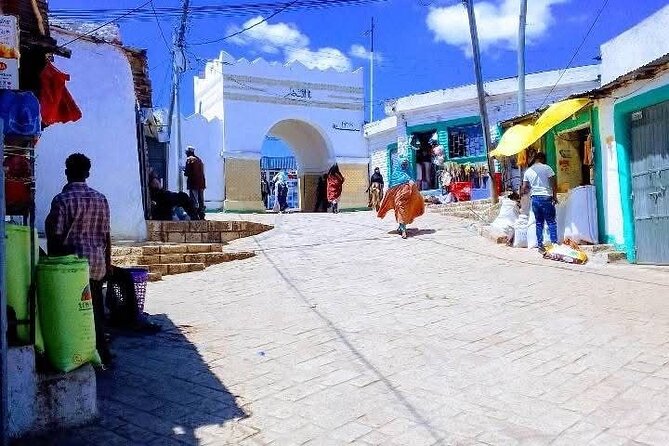
Harar may be the strongest photography stop in this two-day plan. The city packs color and movement into a small area, making it possible to gather many different subjects without long transfers between them.
Start with the painted homes and narrow lanes. Then look for the old Peugeot cars, market stalls, produce, household goods, and the activity around the gates. The best images may come between formal stops, when the city is simply going about its day.
The compact setting works well for you if you enjoy street photography. You can walk from one subject to the next and keep changing your angle. The wall and gates also provide natural points of orientation, which helps when the alleys begin to look alike.
Photography requires courtesy. Ask permission when a person is the main subject, and follow your guide’s advice around homes, markets, museums, and shrines. A good guide can also help you avoid treating local life as a backdrop and instead explain what you are seeing.
Meals, hotel, and what the price covers
The package includes dinner, breakfast, and two lunches, along with the vehicle, pickup and drop-off, government tax, the hyena feeding entry, museum entrances, and the Harar wall fee.
That list makes the $300 price easier to judge. You are paying for a short, organized trip rather than just a guide for a city walk. The included road transport is particularly useful because day two covers Harar, Babile or Koremi, the Valley of Marvels, and the return toward Dire Dawa.
The hotel is part of the arrangement, but the property name and room standard are not specified. If accommodation quality matters to you, ask for the hotel name before paying. The same applies to lunch timing, especially on the market day, when the morning route may be busy.
The domestic flight from Addis Ababa is not included. The tour starts in Dire Dawa, so you need to arrange your own flight to that meeting point. This is the main cost detail that can be missed when looking only at the $300 headline price.
Who should choose this two-day plan?
I would recommend it to you if you have limited time in eastern Ethiopia and want a guided introduction to Harar. It suits people who enjoy old city walks, local culture, photography, markets, and unusual wildlife traditions.
It also works for mixed-age groups. One past booking included a three-year-old child and two adults aged 78, with the practical qualification that you should be able to walk. The old city tour uses narrow paths, and the schedule does not describe a seated sightseeing format.
The tour can also suit families and first-time visitors who want a simple structure. Past arrangements included a coffee tour and ceremony, but that is not listed as part of this package, so do not assume it is included. Ask if you want to add it.
You may want a different plan if you prefer slow travel, long museum visits, private guiding, or a detailed wildlife experience. Two days gives you a good introduction, but it leaves little room for delays or major changes.
Practical details before departure
Confirmation is provided at booking, and the tour accepts mobile tickets. The experience is near public transportation, though the scheduled meeting point is Dire Dawa International Airport.
Most people can participate, but the information does not give detailed mobility guidance for the narrow old-city paths. If you have limited walking ability, ask the operator for a clearer description before booking.
The maximum group size is 15. Pickup and drop-off are included, and the tour ends back at the meeting point. Free cancellation is available up to 24 hours before the 9:00 a.m. start time. Changes or cancellations inside that 24-hour window are not accepted for a refund, and a minimum number of participants is required for the tour to operate.
Should you book 2 Days Harar Tours?
Book this tour if you want the main Harar experience arranged in a tight, practical package. The strongest combination is the walled old city, the Harari homes and museums, the evening hyena feeding, and a Babile visit scheduled on Monday or Thursday.
Before booking, confirm three things: the domestic flight cost from Addis Ababa, the hotel name, and whether your second day is a Babile market day. If those details work for you, $300 per person offers solid value for the included meals, transport, entrances, and guide service.
I would not choose it if you want a long, unhurried stay in Harar or a dedicated wildlife trip. For a first visit with limited time, though, this plan gives you a memorable look at one of Ethiopia’s most distinctive cities.
FAQ
Where does the tour begin?
The tour begins at Dire Dawa International Airport in Ethiopia. Pickup is scheduled for 9:00 a.m., and a representative waits with a sign showing your name.
Where does the tour end?
The experience ends back at the meeting point at Dire Dawa International Airport.
Is the domestic flight from Addis Ababa included?
No. The domestic flight is not included in the $300 per person tour price.
What meals are included?
The package includes dinner, breakfast, and two lunches.
When does the Babile Camel Market take place?
Babile Camel Market takes place every Monday and Thursday.
Is the hyena feeding included?
Yes. The entrance fee for the hyena feeding is included, and the feeding takes place daily just outside Harar’s city walls.
How large can the group be?
The tour can have a maximum of 15 participants.
Just added in Ethiopia
- Yod Abyssinia Cultural Night: Dinner, Music, and Dance★ 5.0 · 7 reviews
- Mekele City Tour★ 5.0 · 2 reviews
- Day trip to Tigray Churches★ 5.0 · 2 reviews
- Tigray Mountain Church’s Day Trip from Mekele★ 5.0 · 2 reviews
- 3 Day Tour of Geralta Churches Tigray Church’s★ 5.0 · 2 reviews
- 3 days tour Danakil Depression (Dallol & Erta Ale)★ 4.0 · 5 reviews
- 2 Days Dallol Trip★ 5.0 · 4 reviews
- Lalibela Backpacker tours★ 5.0 · 6 reviews
2-Day Experiences, compared.

2 Days 1 night tour to Lalibela Rock-hewn churches
Read our review →
Browse the lists this tour appears in