Reviewed · TOURS
12 Days Ethiopia Tour
Ethiopia packs astonishing variety into twelve demanding days. This Adefa Tours journey links the sulfur-colored ground of Dallol, the lava lake at Erta Ale, Lalibela’s rock churches, the Simien escarpment, and several Omo Valley communities. I especially like the route’s rare combination of major sights and the chance to see Ethiopia beyond Addis Ababa. I also like that meals, entrance fees, village fees in the Omo Valley, a vehicle, and a driver are included.
The main concern is the pace. You cover long distances, take internal flights, sleep in both hotels and camps, and face heat, rough roads, and mountain trekking. The advertised price of $4,830 per person may offer good value for a small group of no more than 10, but you should confirm exactly which flights, hotels, guides, and Danakil support costs are included before paying.
In This Review
- Key points to know before booking
- A demanding route with an extraordinary payoff
- Dallol and the salt country near Semera
- Erta Ale and an overnight beside the lava lake
- The long road to Lalibela
- Lalibela’s churches, carved below the ground
- Gondar’s royal compound and painted angels
- Trekking the Simien escarpment
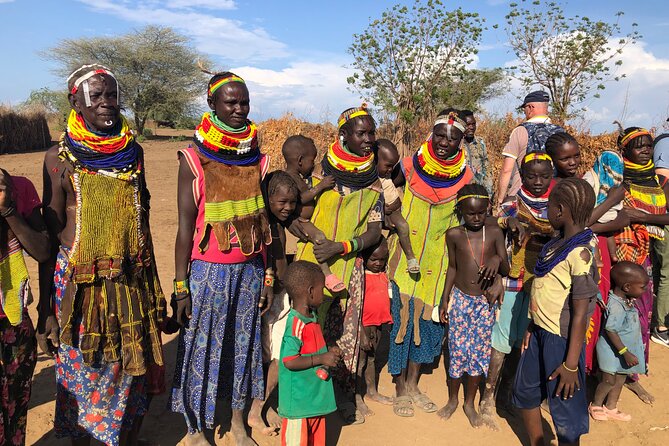
- Meeting the Hamer, Dasennech, Karo, and Mursi
- What the $4,830 price appears to cover
- Who will enjoy this Ethiopia itinerary most?
- Should you book the 12 Days Ethiopia Tour?
- FAQ
- Where does the tour start?
- How long does the tour last?
- What is the maximum group size?
- Are meals included?
- Is transportation provided?
- Which wildlife might I see in the Simien Mountains?
- Does the tour include the Danakil Depression and Erta Ale?
- Can I cancel for a full refund?
Key points to know before booking
- Danakil is the trip’s toughest opening: Expect extreme heat, salt flats, mineral colors, camel caravans, and basic camping conditions.
- Erta Ale means a serious overnight trek: You walk from Dodom to the volcano and spend the night near its active lava lake.
- Lalibela gets a full day: The route covers both church clusters and the famous cross-shaped Church of Saint George.
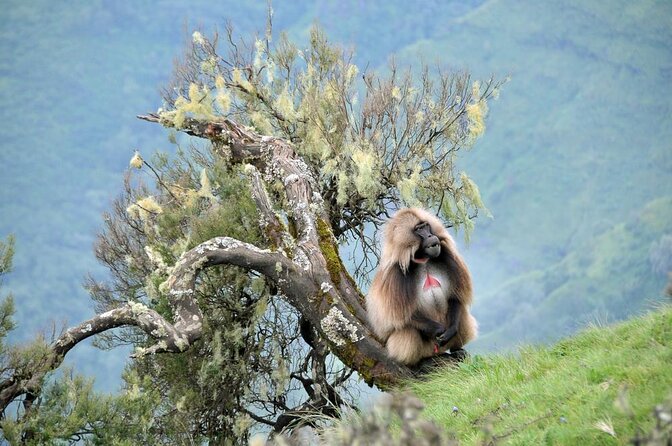
- Simien trekking brings the best mountain views: Jinbar Falls, Imet Gogo, Chenek, Gelada baboons, Walia ibex, and a chance of spotting the Ethiopian wolf are central highlights.
- The Omo Valley visits several distinct communities: The itinerary includes the Hamer, Dasennech, Karo, and Mursi peoples.
- Guide quality matters: Sisay is specifically praised for fluent English, historical and religious knowledge, friendliness, and understanding what guests want to see.
A demanding route with an extraordinary payoff
This is not a gentle introduction to Ethiopia. It is a grand sweep through some of the country’s most unusual places, with several days that begin early, end late, or require long drives.
The route starts with the Danakil Depression, one of the hottest and most inhospitable places on Earth. It then moves to Lalibela’s sacred churches, Gondar’s royal monuments, the Simien Mountains, and the Omo Valley in the south. That variety is the tour’s great strength. In less than two weeks, you see geological wonders, religious architecture, highland wildlife, and living cultural traditions.
You should also understand the tradeoff. This itinerary is designed for maximum coverage, not slow travel. The listed touring days often run about six to eight hours, and the drive from Semera to Lalibela is particularly long. The reward is breadth. The cost is that you have limited time to settle into each place.
The group limit of 10 is useful here. A smaller party can make airport pickups, village visits, camping arrangements, and long road days easier to manage. The vehicle is air-conditioned and WiFi is listed on board, though I would treat WiFi as a convenience rather than something to rely on in remote areas.
A few more options to weigh up in Addis Ababa
- Full Day Tour of Addis Ababa with Hotel Pickup and Drop-off
★ 5.0 · 430 reviews - Taste of Ethiopia
★ 5.0 · 406 reviews - Day Trip From Addis Ababa See Historical Monastery,Stunning Nature,Animals,Birds
★ 5.0 · 303 reviews
Dallol and the salt country near Semera
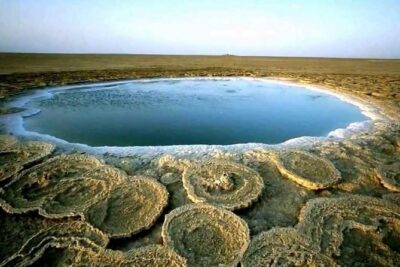
The first day begins with a flight from Addis Ababa to Semera, followed by a journey into the Danakil Depression. Dallol is famous for its striking mineral colors, salt formations, and harsh conditions. The ground can appear almost painted, with bright tones created by minerals and geothermal activity.
You may also see long camel caravans traveling to and from the salt mines. This is one of the most memorable human scenes on the route because it connects the dramatic geology with the work that has long shaped life in this region.
The day includes time at a salt lake and an evening sunset near camp. Those moments provide a welcome pause after the drive. The campsite is basic by nature, and the heat can be severe. Pack light clothing, strong sun protection, plenty of drinking water for personal use, and footwear suitable for uneven ground.
The schedule describes this as an eight-hour day. That figure appears to cover transport and sightseeing rather than eight hours of walking. Still, the combination of heat, dust, driving, and limited comfort makes this a day to approach with patience.
Erta Ale and an overnight beside the lava lake
Day two is the physical and dramatic high point of the Danakil section. After breakfast, you continue through the depression, passing salt mountains, hardened lava, and traditional salt-mining areas. The description rightly emphasizes the difficulty of this work. Seeing it in person gives the region more meaning than simply photographing its colors.
Later, you drive to the base camp at Erta Ale. After an early dinner, you begin the trek from Dodom to the volcano. The route leads to the summit, where Erta Ale has a permanent lava lake. The sight of boiling lava in the darkness is the reason many people accept the uncomfortable conditions below.
This is not a casual walk. The tour calls for trekking after dinner and spending the night on top of the mountain. You should be ready for heat, rough volcanic rock, darkness, and a basic overnight setup. The exact trekking distance and sleeping arrangements are not specified, so ask Adefa Tours for those details before booking.
The next morning begins with a walk down to base camp and breakfast. From there, the group drives to Lake Afdera, where you can swim and rest in the salt lake after the Danakil treks. This recovery stop is well placed. It gives you a physical break before the long transfer to Semera.
The long road to Lalibela
Day four is largely a transfer from Semera to Lalibela. The route is described as less traveled, with countryside settlements and changing scenery. It is also another eight-hour day, so do not expect a full sightseeing schedule.
This road journey helps connect two very different parts of Ethiopia, but it is a clear drawback for anyone who dislikes long drives. The benefit is that you do not simply fly from highlight to highlight. You see more of the country between the main attractions, even if much of the day is spent in the vehicle.
You stay in a Lalibela hotel that night. A good approach is to use the evening for rest rather than trying to add extra activity. The following day is packed with the town’s main churches.
A completely different kind of day:
- Addis Ababa: Debre Libanos, Blue Nile Gorge, and Cave Tour
★ 4.5 · 256 reviews - Addis Ababa Guided City Tour With Airport & Hotel Pick Up
★ 5.0 · 237 reviews - Breathtaking Nature, Wildlife and Cave Church Tour – Free Pickups
★ 5.0 · 225 reviews - Full-Day Private City Tour of Addis Ababa
★ 5.0 · 147 reviews
Lalibela’s churches, carved below the ground
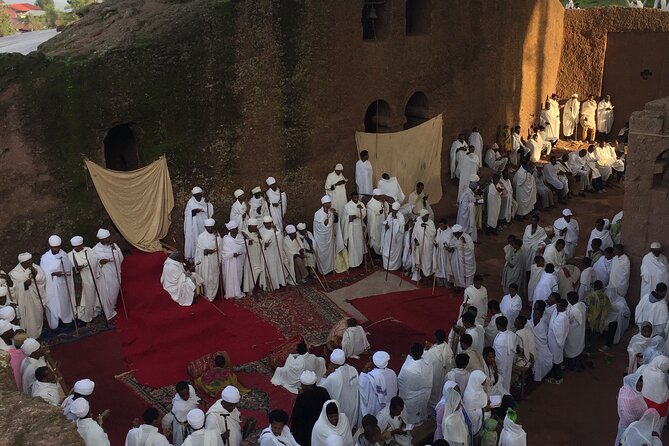
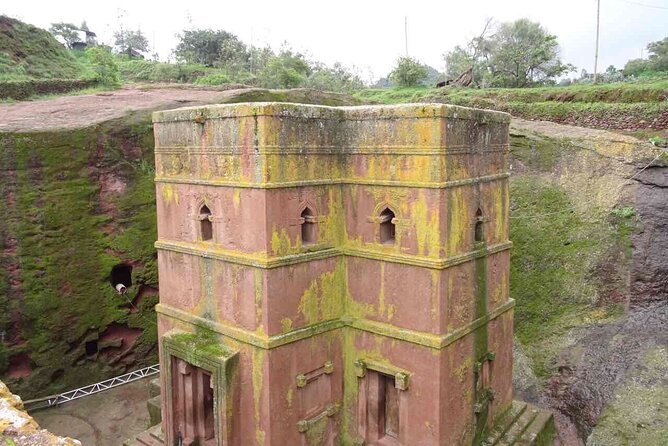
Lalibela is often called the Jerusalem of Africa. Its famous churches were cut from living rock, with courtyards, trenches, tunnels, and passages forming part of the sacred setting. These are not ruins viewed from a distance. You walk among and around structures still connected to religious life.
The morning covers the Northwestern Cluster:
- Bet Medhane Alem
- Bet Maryam
- Bet Meskel
- Bet Danaghel
- Bet Mikael
- Bet Golgotha
After lunch, the route continues through the southeastern group, including Bete Gabriel and Rufael, Bete Merkorios, Bete Emanuel, and Bet Libanos. The day ends at Saint George, the elegant church cut in the shape of a cross.
The full-day schedule is a major advantage. Lalibela deserves more than a quick photo stop, and this plan gives you time to see the churches as a connected complex. The published timing is about seven hours, including the visit and cultural program.
In the evening, you take part in traditional music and try tej, a honey wine. This is a pleasant way to end a day centered on sacred architecture. It also gives the visit a social element rather than making it only an exercise in ticking off monuments.
Gondar’s royal compound and painted angels
The drive from Lalibela to Gondar takes about eight hours. Again, the road itself is part of the journey, but it leaves little spare time for additional stops.
In Gondar, the main visit is the Royal Enclosure, a UNESCO World Heritage site built in the early 17th century. The compound reflects the period when Gondar served as an imperial center, and its stone buildings provide a different architectural experience from Lalibela’s churches.
You also visit Debre Birhan Selassie, known for religious art and a ceiling filled with painted angels. This church is particularly rewarding for visitors who enjoy Ethiopian art, since the ceiling creates an immediate visual impression even if you have limited time.
An overnight hotel stay in Gondar separates the historic center from the next section, the Simien Mountains.
Trekking the Simien escarpment
Day seven moves into Simien Mountains National Park, Ethiopia’s largest national park. At park headquarters, you meet the local crew and organize camping equipment before driving to the Sankaber area.
The trek begins at Jinbar, where Jinbar Falls drops more than 500 meters into the Gich Abyss. This is the kind of viewpoint that makes the mountain section feel different from the rest of the trip. You are not simply visiting a lookout. You are walking along the edge of a huge escarpment, with the falls providing a dramatic first landmark.
The day continues to Gich campsite, where sunset views reward the effort. The listed trekking time is about six hours, followed by a night at camp. You should be comfortable with uneven walking and outdoor sleeping. The itinerary does not give a detailed equipment list, so confirm what camping gear is supplied and what you must bring.
The next day, you trek from Gich to Chenek, passing Imet Gogo, one of the most scenic points on the route. The path follows the escarpment and comes close to sheer drops. That makes the views powerful, but anyone uneasy around heights should take the terrain seriously.
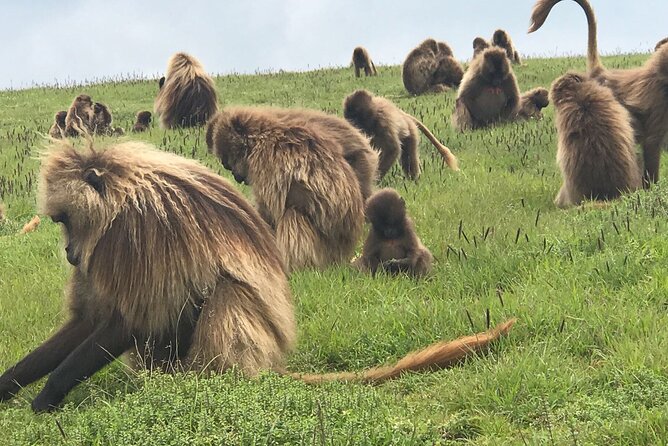
Simien is also the best section for wildlife. You may see Gelada baboons, Walia ibex, and possibly the Ethiopian wolf. The itinerary specifically highlights the rare wolf and elusive Walia ibex, so sightings are not guaranteed. Treat the animals as a bonus rather than a promise.
On day nine, you have time for a morning walk and sunrise before returning by vehicle to Gondar. The return to a hotel is welcome after two nights connected with trekking and camping.
Meeting the Hamer, Dasennech, Karo, and Mursi
The southern section begins with a flight from Gondar to Jinka. A driver meets you at the airport, and you continue to Turmi, home of the Hamer people.
The Hamer are known for traditional evening dancing called Evangadi and for bull-jumping ceremonies connected with marriage. The itinerary says a bull-jumping event may be visited if one is taking place that day. That wording matters. It is an opportunity, not a scheduled performance, so do not book this tour expecting a ceremony on demand.
You spend the night at a lodge in Turmi. The next morning, the group drives to Omorate and crosses the Omo River by local boat to visit the Dasennech, also known as the Galeb. This river crossing adds a strong sense of place to the visit, and the itinerary includes village fees in the Omo Valley.
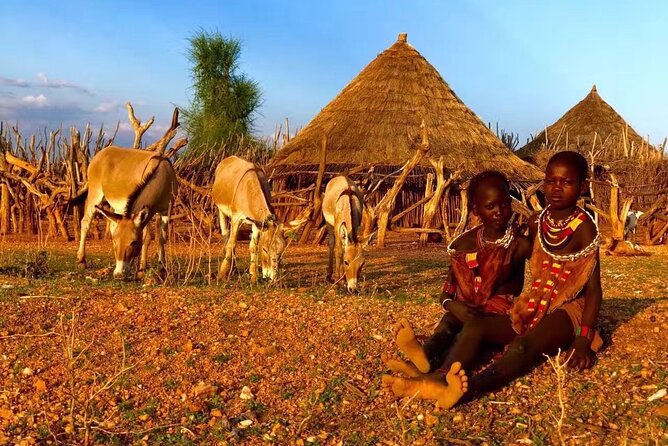
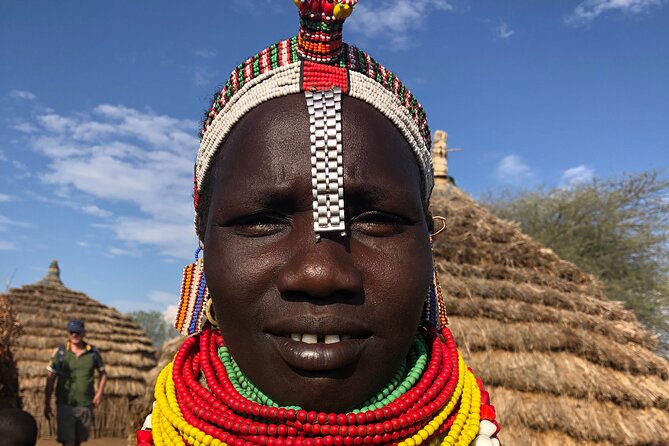
After returning to Turmi for lunch, you continue to the Karo people, described as one of the smallest groups in the Omo Valley. Their body and face painting is a key feature of the visit. You then drive to Jinka for the night.
The final day takes you to Mago National Park to visit the Mursi, known for their lower lip plates. This is an important cultural stop, but it should be approached with respect. These communities are not museum displays. Listen to your guide, follow local instructions, and remember that village visits involve real people going about their lives.
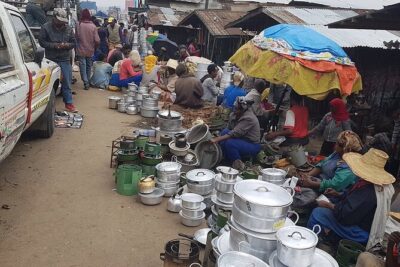
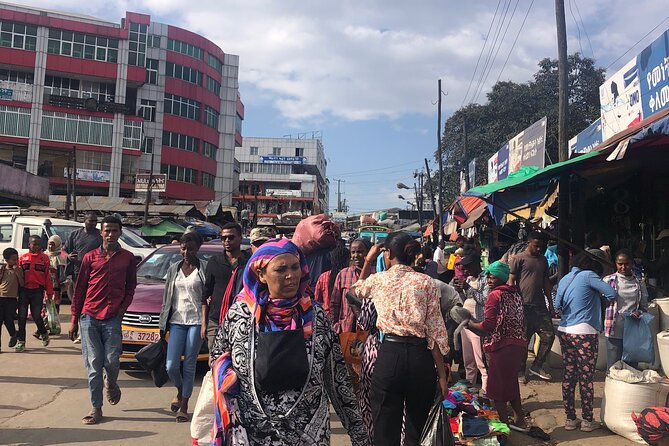
After returning to Jinka, you take the afternoon flight to Addis Ababa. The city finale includes Merkato, described as Africa’s largest market of its kind, followed by Ethiopian coffee at TOMOCA. A farewell gathering with cultural food, drinks, and live traditional music completes the tour.
What the $4,830 price appears to cover
At $4,830 per person, this is a costly trip. Its value depends on what is included beyond the clearly stated items.
The package includes a professional driver, an air-conditioned vehicle, WiFi on board, breakfast, lunch, dinner, entrance fees, and Omo Valley village fees. It also includes the services connected with a small group of up to 10 people. For a journey involving the Danakil, Erta Ale, Simien camping, internal flights, and remote roads, those inclusions can add up.
Still, the information provided does not clearly spell out every hotel, domestic flight cost, guide fee, or special support cost in the price. The itinerary includes flights between Addis Ababa and Semera, Gondar and Jinka, and Jinka and Addis Ababa, but the inclusion section does not explicitly list airfare. Ask for a written cost breakdown.
Alcohol, personal entertainment, souvenirs, service trips, and extra services are excluded. Plan a separate budget for those items. Free cancellation is available if you cancel at least 24 hours before the start time, while later cancellations are not refundable.
Who will enjoy this Ethiopia itinerary most?
I would recommend this trip to an active first-time visitor who wants Ethiopia’s major sights in one organized route. It suits you if you can handle long drives, hot lowland conditions, mountain walking, camping, and a full schedule.
It is especially useful for someone who wants help with remote transport and local arrangements. The driver, vehicle, entrance fees, meals, and village fees remove many practical tasks from your hands.
I would hesitate to recommend it to you if you want relaxed mornings, long stays in each town, or carefully scheduled cultural performances. The Danakil and Simien sections demand physical effort, while the transfers leave little free time.
Guide quality is central. Sisay is praised for fluent English, a friendly manner, and clear information about Ethiopian history, religion, and culture. He is also credited with understanding what guests wanted to see. Request Sisay if possible, but confirm whether he will lead your entire route.
Should you book the 12 Days Ethiopia Tour?
Book it if your priority is variety. Few twelve-day routes combine a permanent lava lake, salt formations, rock-cut churches, imperial Gondar, high mountain wildlife, and Omo Valley communities.
Before booking, get firm answers about domestic flights, hotel names, camping equipment, trekking distances, and the exact guide assigned to your group. If those details are satisfactory, the price can make sense for a complex route that would be difficult to arrange alone.
If you prefer a slower trip, consider choosing only two or three regions instead. This tour gives you a remarkable overview, but it asks you to keep moving.
FAQ
Where does the tour start?
The stated starting point is Bole in Addis Ababa, Ethiopia, with a start time of 9:00 pm.
How long does the tour last?
The tour lasts approximately 12 days.
What is the maximum group size?
The group can have a maximum of 10 participants.
Are meals included?
Yes. Breakfast, lunch, and dinner are listed as included for the tour.
Is transportation provided?
Yes. The package includes a professional driver and a comfortable vehicle with air conditioning. WiFi on board is also listed.
Which wildlife might I see in the Simien Mountains?
The itinerary highlights Walia ibex, Gelada baboons, and the Ethiopian wolf. Wildlife sightings are not guaranteed.
Does the tour include the Danakil Depression and Erta Ale?
Yes. The route visits Dallol, the salt areas, and Erta Ale, including an overnight trek to see the active lava lake.
Can I cancel for a full refund?
You can cancel for a full refund if you cancel at least 24 hours before the experience start time. Cancellations made less than 24 hours before the start time are not refundable.
Just added in Addis Ababa
- Yod Abyssinia Cultural Night: Dinner, Music, and Dance★ 5.0 · 7 reviews
- Addis Ababa City Tours Full-Day Tours★ 5.0 · 5 reviews
- Locally crafted beer and wine tasting and nightlife in Addis tour★ 5.0 · 6 reviews
- Unique Ethiopian Cooking Class and Coffee Ceremony with a Local in Addis Ababa★ 4.5 · 7 reviews
- Stunning Views Wonchi Crater Lake a Private Day Trip★ 5.0 · 3 reviews
- Visiting the wonders of Lalibela in Three (3) days and Two ( 2) nights★ 5.0 · 2 reviews
- .2- Days and 1 Night Tour To Awash National Park water falls★ 5.0 · 1 review
- Two days Lake Wenchi and Menagesha Forest★ 5.0 · 3 reviews
Tours, compared.
Full Day Tour of Addis Ababa with Hotel Pickup and Drop-off
Read our review →
Addis Ababa Guided City Tour With Airport & Hotel Pick Up
Read our review →
Breathtaking Nature, Wildlife and Cave Church Tour – Free Pickups
Read our review →