
Reviewed · ETHIOPIAN MONASTERIES
02 Days Addis Ababa & Debre Libanos Monastery, Baboons & Portuguese bridge
History reaches back millions of years here. This two-day trip links Addis Ababa’s key sights with the mountain monastery of Debre Libanos, the Portuguese Bridge, and possible gelada baboon sightings. I especially like the small maximum group of eight, which should make guiding more personal, and the mix of museums, markets, churches, coffee, mountain views, and rural scenery. The main drawback is the pace: day two involves about four hours on the road, and lunch is planned but not clearly listed among the included costs.
The tour costs $220 per person and includes an air-conditioned vehicle, guide, local guide fees, fuel, parking, bottled water, entrance fees other than Entoto Park, and airport pickup. The strongest practical points are punctual hotel pickup, clear program briefings, and safe, considerate driving. You should still budget separately for meals and confirm what snacks are supplied, since the tour description mentions snacks while the formal inclusions list only bottled water.
In This Review
- Key points at a glance
- Why this two-day combination works
- Day one begins with Lucy and Ethiopia’s early story
- The Ethnological Museum occupies a former palace
- Chiromeda Market leads toward Mount Entoto
- Tomoca Coffee and Merkato show everyday Addis
- St. George’s Cathedral closes the city tour
- Day two follows the Gojjam road to Debre Libanos
- The Jemma River gorge gives the day its big view
- The Portuguese Bridge and geladas are the day two payoff
- What the $220 price really covers
- Who should book this Addis Ababa tour?
- FAQ
- How long is the Addis Ababa and Debre Libanos tour?
- What is the maximum group size?
- Is hotel pickup available?
- Is transportation included?
- Are entrance fees included?
- Are meals included?
- Is bottled water provided?
- What is the cancellation policy?
- Should you book it?
Key points at a glance
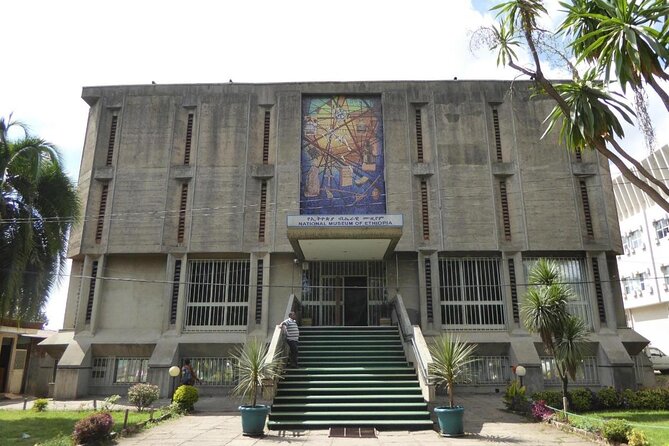
- Lucy at the National Museum: See the famous Australopithecus afarensis fossil and objects from Ethiopia’s early civilizations.
- A full Addis Ababa sampler: The route combines museums, monuments, Mount Entoto, Tomoca Coffee, Merkato, and St. George’s Cathedral.
- A serious day trip north: Debre Libanos lies about 110 kilometers from Addis Ababa, with roughly two hours of driving each way.
- Monastery, gorge, and bridge in one stop: Visit Debre Libanos, the cave linked with Saint Teklehaimanot, the Jemma River gorge, and the Portuguese Bridge.
- A chance to see geladas: The highland gorge is home to Ethiopia’s endemic gelada, also called the bleeding-heart baboon.
- Good fit for a first visit: The trip gives you a broad introduction to Addis Ababa and one of the country’s most important religious sites in only two days.
Why this two-day combination works
Addis Ababa can feel scattered when you first arrive. The city spreads across high ground and busy roads, and its main sights do not sit in one compact historic center. A guided vehicle saves you the trouble of arranging separate rides between museums, monuments, markets, and Mount Entoto.
The second day changes the mood completely. Instead of city traffic and museum rooms, you head north through the countryside toward an important Ethiopian Orthodox monastic center. The contrast is useful. You get both the national story told in Addis Ababa and a closer look at Ethiopia’s religious traditions and mountain country.
The small group limit matters here. With no more than eight people, you have a better chance of hearing explanations, asking questions, and making short stops without the confusion of a large coach. The supplied information also points to punctual hotel pickup, a discussion of the day’s program, useful information during the drive, and careful driving. Those details matter more than fancy extras on a long day outside the city.
More monastery visits in Addis Ababa:
- Day Trip From Addis Ababa See Historical Monastery,Stunning Nature,Animals,Birds
★ 5.0 · 303 reviews - Debre Libanos Monastery and Jemma River Gorge – Day Tour from Addis Ababa
★ 5.0 · 20 reviews - DAY TRIP TO Debre Libanos Monastery Cave Church Nature and Wildlife
★ 4.5 · 12 reviews
Day one begins with Lucy and Ethiopia’s early story

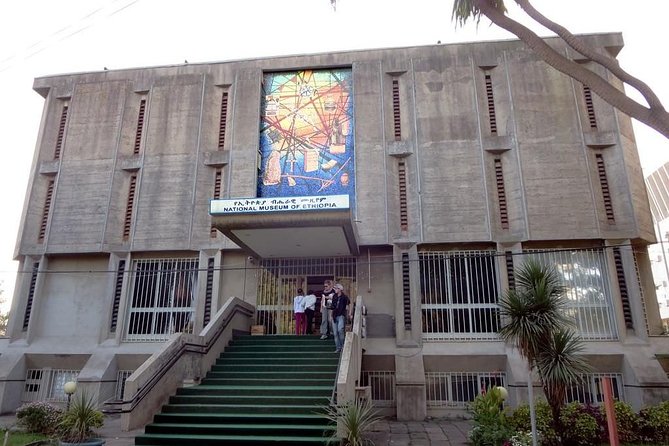
The National Museum of Ethiopia is the right first stop. It gives you a framework for the rest of the trip, especially if Ethiopia is new to you. The central draw is Lucy, the 3.5-million-year-old fossil of an Australopithecus afarensis woman.
Lucy is also known by the Amharic name Dinkinesh, meaning thou art wonderful. Her discovery in 1974 changed ideas about human development because it showed that an early human ancestor walked upright far earlier than many researchers had expected. The museum also holds archaeological material from pre-Aksumite civilization, so the visit is not just about one famous skeleton.
You have about 90 minutes here, with admission included. That is enough time for the main displays, though you should not expect to read every label at length. The museum is praised for the quality and range of its exhibits, making it one of the most worthwhile stops in Addis Ababa.
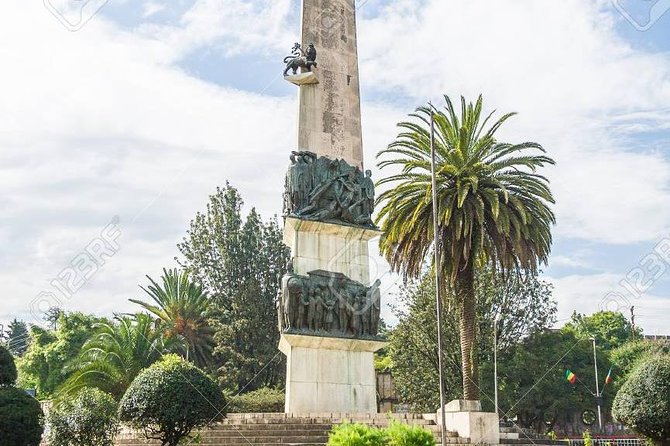
Two monuments add a short dose of modern Ethiopian history. Myazia 27 Square Monument, also called Dillachin or the Victory Monument, uses a Lion of Judah and relief panels to mark Ethiopia’s liberation. Yekatit 12 Martyrs Square, near Addis Ababa University and the Lion Zoo, recalls a painful period in the country’s past. These stops are brief, but they give your guide a chance to connect Ethiopia’s imperial story, resistance, and national memory.
The Ethnological Museum occupies a former palace
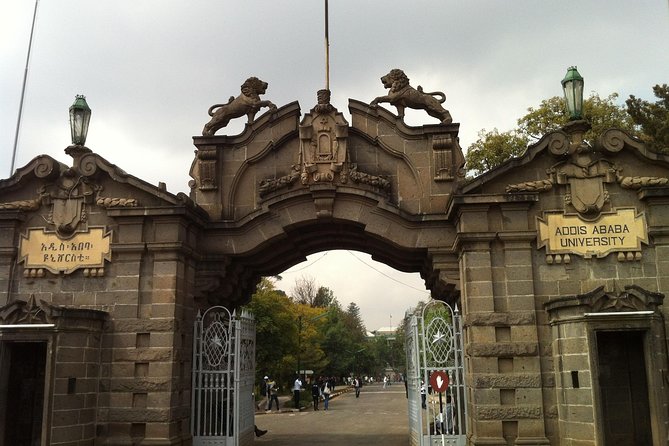
Next comes the Ethnological Museum, located within Addis Ababa University. The building once served as a palace for Emperor Haile Selassie and was known as Genete Leul, or Heaven of the Prince.
This museum differs from the National Museum. Instead of focusing mainly on archaeology and fossils, it presents objects and daily items connected with many of Ethiopia’s ethnic groups. You get a clearer sense of how people lived, worked, dressed, worshipped, and organized household life across the country.
The visit lasts about an hour, and admission is included. I like the pairing of these two museums because they answer different questions. The National Museum asks where the human story began. The Ethnological Museum helps show how Ethiopian communities shaped daily life and cultural practice.
Chiromeda Market leads toward Mount Entoto
Chiromeda Market is an optional 20-minute stop before the climb toward Mount Entoto. It is a practical place to see locally made clothing and textiles, including dresses, shawls, scarves, bed covers, napkins, and men’s shirts.
The stop suits you if you want a quick look at Ethiopian craft and perhaps a purchase to take home. It is less useful if you prefer to keep the day moving, since the mountain and the city’s later sights already fill the schedule. Ask your guide how much time is available before browsing. That will help you avoid turning a short stop into a rushed one.
Mount Entoto rises to about 3,200 meters above sea level, making it the highest point in Addis Ababa. Eucalyptus trees cover much of the hill. They were brought from Australia during the reign of Menelik II, and the forest is sometimes called the lung of Addis Ababa.
The main reward is the broad view over the city. After the museums and busy streets, the cooler mountain air and open outlook give you a different feel for Addis Ababa’s size and setting. The stop lasts about 90 minutes, including time around the mountain and the planned lunch break.
Admission to Entoto Park is not included. That is the one named entrance fee you need to watch for on day one. Lunch is also part of the plan, but the tour’s formal list does not say that a meal is included. Bring enough money for it, and confirm the arrangement before departure.
More trips to Debre Libanos:
- Addis Ababa: Debre Libanos, Blue Nile Gorge, and Cave Tour
★ 4.5 · 256 reviews - Day Trip From Addis Ababa To Debre Libanos & Portuguese Bridge
★ 4.5 · 64 reviews - Day trip Debre Libanos, Bule nile George &Portugal Bridge
★ 4.4 · 25 reviews - Escape From Addis – Day Trip To Debre Libanos And The Portuguese Bridge
★ 5.0 · 16 reviews
Tomoca Coffee and Merkato show everyday Addis
After lunch, the route continues to Tomoca Coffee at the Atlas branch. The visit is planned for about 20 minutes, with coffee included. You can also buy coffee beans or ground coffee to take home.
This is a small stop, but it adds a distinctly local pleasure to a busy sightseeing day. Ethiopia is closely associated with coffee, and a stop at an established coffee house gives the schedule a sensory break between monuments and the market. If you want a practical souvenir, coffee is easier to pack than many handmade textiles.
Merkato is next. It is described as Africa’s largest open-air market, covering several square miles and supporting an estimated 13,000 people across 7,100 business entities. The sheer scale is the point. You are not visiting a polished shopping street designed for sightseeing. You are seeing a working market where local businesses supply daily needs and earn a living.
The planned walk lasts about an hour. Keep your attention on the guide and your belongings in any busy market. The supplied details do not promise a particular shopping list or guided purchasing service, so treat this as a look at local commerce rather than a guaranteed bargain-hunting session.
The day also includes drive-by views of the Lion of Judah monument and Menelik II Square. The Lion of Judah represents the Ethiopian emperors and the country itself. Menelik II’s monument adds another link to the imperial period. These are short viewing stops rather than long visits, but they help tie the city’s public spaces to its political history.
St. George’s Cathedral closes the city tour
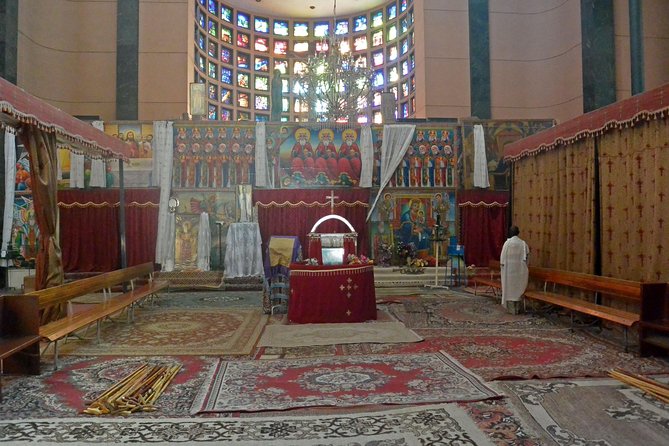
St. George’s Cathedral is the final major stop on day one, with about 30 minutes set aside. Emperor Menelik ordered the church’s construction to commemorate the Battle of Adwa, fought against Italian colonial forces.
The cathedral gives the day a strong finish because it brings together faith, national identity, and resistance. You should expect a focused visit rather than an extended church tour. As with any religious site, follow your guide’s advice on conduct and photography.
Day one covers a lot. You move from human origins to imperial history, cultural traditions, mountain views, commerce, coffee, and Orthodox Christianity. The benefit is range. The cost is limited time at each place, so this suits you if you want orientation and variety more than slow museum study.
Day two follows the Gojjam road to Debre Libanos
Pickup for the second day is at 8:00 a.m. or earlier. The drive north along the Gojjam road to Debre Libanos takes about two hours and covers roughly 110 kilometers from Addis Ababa.
That travel time is a real part of the experience. You are not popping out to a nearby attraction for an hour. You are making a full day trip, with a planned return to Addis Ababa around 5:30 p.m. The air-conditioned vehicle, fuel, parking, bottled water, and driver allowance are included, which makes the long road time easier to manage.
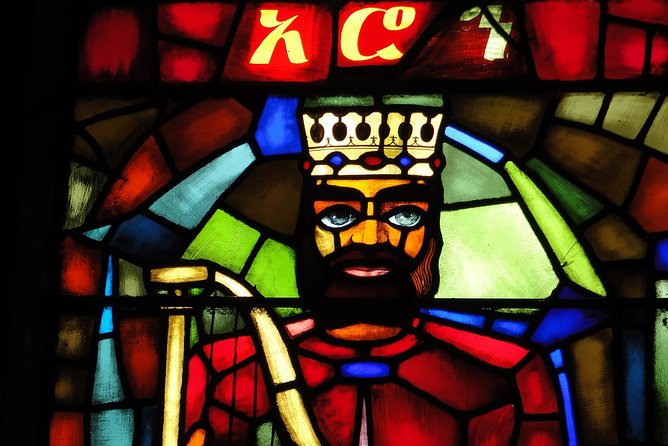
Debre Libanos is an important center of Ethiopian Orthodox Christianity. The monastery was founded by Saint Teklehaimanot, a renowned 13th-century mystic. The visit lasts about an hour and includes admission.
The religious importance gives this stop weight beyond its appearance. You are visiting a living monastic center, not only an old building. Your guide and local guide can help explain the site, its role in Ethiopian Christianity, and the traditions connected with Saint Teklehaimanot.
Near the church is a small cave associated with the saint. You can make the climb to it after visiting the church. The route requires extra effort, and the supplied details do not provide a difficulty rating, so ask your guide about current conditions before setting off.
Near the cave, monks may show you the remains of about 300 monks killed in 1936 by Italian invaders. This is a solemn part of the visit. It connects the monastery to the violence of the Italian occupation and reminds you that religious sites can also be places of painful national memory.
The Jemma River gorge gives the day its big view
Lunch is planned at Ethio-German Park Hotel. The stop lasts about an hour, and the setting lets you see the Jemma River, one of the Nile’s tributaries. The gorge drops nearly 1,000 meters to the valley below.
The view is one of the main reasons to make the drive. It is not simply a meal break. You get a chance to pause, look across the gorge, and understand the steep terrain around Debre Libanos.
Again, lunch should be treated as an extra expense unless the operator confirms otherwise. The tour information includes the stop but does not list meals among the formal inclusions.
About 300 meters from the hotel, you walk to the bridge. That short distance makes the afternoon fairly manageable after the morning drive and monastery visit. Still, wear shoes suitable for an outdoor walk, since the tour includes a gorge and a climb to the cave if you choose to make it.
The Portuguese Bridge and geladas are the day two payoff
The narrow stone bridge is known by tourists as the Portuguese Bridge. Although its shape looks Portuguese, it was built by Ethiopians. The bridge dates to the 16th century and crosses a dramatic setting above the gorge.
In the rainy season, a rushing cascade below the bridge adds extra force to the scene. In drier conditions, the bridge itself and the drop into the gorge remain the main attractions. The tour allows about an hour for this stop.
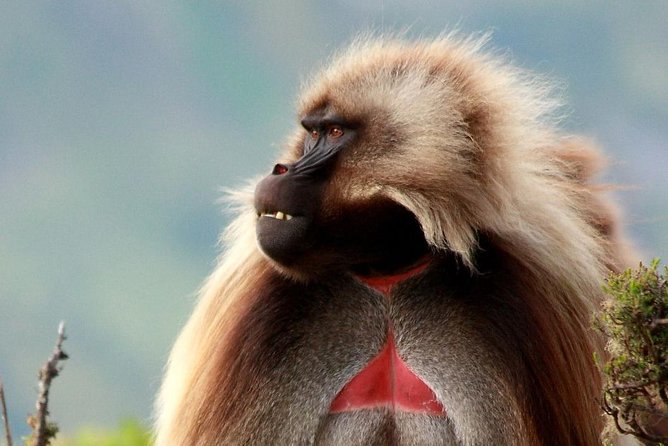
You may also see geladas, Ethiopia’s endemic highland mammal. They are often called bleeding-heart baboons because of the red patch on the chest. Sightings are possible rather than guaranteed, so do not book this as a wildlife tour with fixed animal encounters.
The gorge also supports several kinds of vultures, including Lappet-faced, Rüppell’s, and Lamergeyer’s vultures. Bring your attention, not just your camera. A guide may help identify what you see, but the supplied information does not promise binoculars or dedicated wildlife equipment.
After the bridge and gorge, you drive back to Addis Ababa, arriving at about 5:30 p.m. That makes day two a long but clearly structured outing. You get the monastery, cave, river gorge, bridge, birds, and possible geladas without needing to arrange separate transport.
What the $220 price really covers
At $220 per person, the tour is not a bare transport service. The price covers two days, an air-conditioned vehicle, fuel, parking, guide and local guide fees, driver allowance, bottled water, most entrance fees, and airport pickup. For a small group capped at eight people, that can be a sensible package if you value simple planning and direct transport.
The price is harder to judge if you are traveling alone and want the lowest possible cost. Group discounts are offered, but the amount is not stated. Ask for the current group rate before booking.
Plan for extra spending on lunch, since meals are not listed in the inclusions. Entoto Park admission is also excluded. Snacks are mentioned as a feature, but bottled water is the only refreshment clearly listed in the formal inclusions, so confirm what will be provided.
The best value comes from the range of places covered in a short stay. You see Addis Ababa’s major introductory sights and reach Debre Libanos without arranging a second operator. Airport pickup is also useful if you want the tour to begin soon after arrival, though you should confirm the pickup details with the provider.
Who should book this Addis Ababa tour?
I would choose this tour if you have only two days and want a broad first look at Ethiopia’s capital plus one major excursion outside the city. It suits you if you like museums, religious sites, historic monuments, markets, coffee, scenic drives, and the chance to spot wildlife.
It is also a good choice if you prefer a small guided group and want driving handled for you. The positive practical points are important here: hotel pickup was reported as punctual, the day’s program was explained, information was provided during the drive, and the drivers were described as safe and considerate.
I would hesitate if you dislike long road days or want extensive free time at each museum. Day one is packed, and day two includes about four hours of driving. You should also be comfortable with a possible climb to the cave and an outdoor walk near the bridge.
Free cancellation is available if you cancel at least 24 hours before the experience start time. Changes or cancellations made inside that window are not accepted for a refund. The tour is near public transportation, most people can participate, and confirmation is provided at booking.
FAQ
How long is the Addis Ababa and Debre Libanos tour?
The experience lasts approximately two days. Day two begins at 8:00 a.m. or earlier and is expected to return to Addis Ababa around 5:30 p.m.
What is the maximum group size?
The tour has a maximum of eight travelers, allowing for a small-group experience.
Is hotel pickup available?
Yes. Pickup is offered, and airport pickup is included. The second day’s hotel pickup is scheduled for 8:00 a.m. or earlier.
Is transportation included?
Yes. An air-conditioned vehicle, fuel, parking fees, driver allowance, and guide services are included.
Are entrance fees included?
All entrance fees are included except admission to Entoto Park.
Are meals included?
Meals are not listed among the formal inclusions. Lunch stops are planned on both days, so you should budget for lunch or confirm the meal arrangement before booking.
Is bottled water provided?
Yes. Bottled water is included. Snacks are mentioned as a tour feature, but the formal inclusion list does not provide further details.
What is the cancellation policy?
You can cancel at least 24 hours before the start time for a full refund. Cancellations or changes made less than 24 hours before the start time are not accepted for a refund.
Should you book it?
Book this tour if you want maximum variety in minimum time and prefer a guide, driver, and small group to handle the practical work. Lucy, the Ethnological Museum, Entoto, Merkato, Debre Libanos, the Portuguese Bridge, and possible geladas make a strong two-day introduction.
Skip it if you want a slow city break, dislike long drives, or need meals and every admission cost bundled into one fixed price. For most first-time visitors with only two days in Addis Ababa, the combination offers solid value, provided you confirm the lunch and snack arrangements and allow for the extra Entoto Park fee.
Just added in Addis Ababa
- Yod Abyssinia Cultural Night: Dinner, Music, and Dance★ 5.0 · 7 reviews
- Addis Ababa City Tours Full-Day Tours★ 5.0 · 5 reviews
- Locally crafted beer and wine tasting and nightlife in Addis tour★ 5.0 · 6 reviews
- Unique Ethiopian Cooking Class and Coffee Ceremony with a Local in Addis Ababa★ 4.5 · 7 reviews
- Stunning Views Wonchi Crater Lake a Private Day Trip★ 5.0 · 3 reviews
- .2- Days and 1 Night Tour To Awash National Park water falls★ 5.0 · 1 review
- Visiting the wonders of Lalibela in Three (3) days and Two ( 2) nights★ 5.0 · 2 reviews
- Two days Lake Wenchi and Menagesha Forest★ 5.0 · 1 review
Ethiopian Monasteries, compared.
Day Trip From Addis Ababa See Historical Monastery,Stunning Nature,Animals,Birds
Read our review →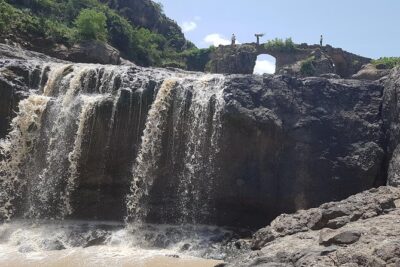
Debre Libanos Monastery and Jemma River Gorge – Day Tour from Addis Ababa
Read our review →
Day trip on Bahir dar. To visit lake tana monasteries and Blue Nile Falls.
Read our review →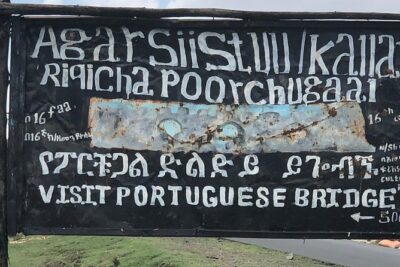
DAY TRIP TO Debre Libanos Monastery Cave Church Nature and Wildlife
Read our review →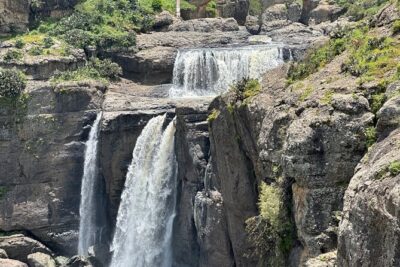
1-Day Tour Old bridge, Monastery,water falls Wildlife,Birds,
Read our review →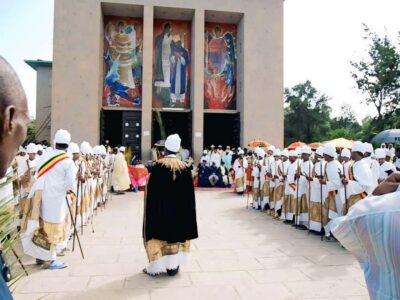
Debre Libanos Monastery & Scenic Portuguese Bridge Tour
Read our review →
Monastic Marvels Exploring the beauty of Debre Libanos Monastery
Read our review →
Private Guided Tours To Bahir Dar Lake Tana Monastery & Blue Nile Waterfalls
Read our review →Browse the lists this tour appears in