
Reviewed · GONDAR TOURS
Gondar sightseeing tours:-full day
History lives in stone here. This one-day Gondar tour brings together the city’s grandest royal buildings, a famous church, a ceremonial bath, and religious sites outside town. I like the strong mix of royal history and living culture, and I also like that transport, entrance fees, meals, bottled water, accommodation, and an English-speaking guide are included. The main point to consider is the busy schedule: several important sites are packed into one day, so your time at each stop may feel limited.
The tour begins and ends at Gondar Airport, which makes it useful if you are flying into the city for a short visit. A single verified five-star rating praised the guide’s explanations of Ethiopian religion and history, though no guide name or group size is provided. You should confirm those details before booking.
In This Review
- Key points to know before booking
- Starting at Gondar Airport
- Fasil Ghebbi and Gondar’s royal center
- Debre Berhan Selassie Church and its painted interior
- Fasilides Bath and the Timkat connection
- Falasha Village and the Beta Israel community
- Empress Mentewab’s Kuskuam Complex
- Qusquam Monastery outside Gondar
- Dinner and Ethiopian food
- Is $120 per person good value?
- Who should book this Gondar tour?
- Should you book it?
- FAQ
- Where does the Gondar sightseeing tour begin?
- Where does the tour end?
- How long does the tour last?
- What language does the guide speak?
- Is transportation included?
- Are entrance fees included?
- Are meals included?
- Is bottled water provided?
- What is not included in the price?
- Can I cancel for a full refund?
Key points to know before booking
- Fasil Ghebbi comes first: Explore Gondar’s UNESCO-listed Royal Enclosure and its impressive castle buildings.
- Religious art is a major part of the day: Debre Berhan Selassie Church and Qusquam Monastery add a spiritual side to the tour.
- Fasilides Bath is still used: The 17th-century bath remains part of Timkat celebrations.
- The Beta Israel community is included: A visit to Falasha Village adds an important cultural stop beyond royal monuments.
- The price covers the basics: At $120 per person, transport, guide services, entrance fees, meals, bottled water, and accommodation are included.
- The guide can shape the experience: One five-star rating specifically praised the explanation of Ethiopian religion and history.
Starting at Gondar Airport
Your meeting point is Gondar Airport, where the tour operator, Discover Simien Tours, says you will be met. The same airport serves as the return point, so the day is arranged as a round trip rather than a simple city-center walking tour.
That setup matters if you are arriving by air or want a planned day without arranging taxis between sites. You do not need to work out separate transport to the Royal Enclosure, church, bath, and sites outside Gondar.
The tour is listed as lasting one day. The schedule begins with arrival and hotel check-in, followed by sightseeing, and ends with dinner at a local restaurant before returning to the airport. Since the information describes both accommodation and a return to the airport on the same tour, I would confirm exactly how the overnight arrangement works before paying. The listed details may reflect a hotel rest period or a broader one-day package.
An English-speaking live guide is included. This is especially useful in Gondar, where the value of a historic site often depends on understanding its religious and political setting. A five-star rating from Karen, dated February 11, 2026, praised the guide for explaining Ethiopian religion and history in an interesting way. No guide name is supplied, so ask who will lead your visit if having a named guide matters to you.
A few more options to weigh up in Gondar
- 6 Days tour Package (Simien Mountains, Lalibela, and Danakil Depression)
★ 5.0 · 32 reviews - Simien Mountains – 4 Days
★ 4.0 · 7 reviews - 4 Days Trekking to Simien Mountain National Park
★ 5.0 · 7 reviews
Fasil Ghebbi and Gondar’s royal center
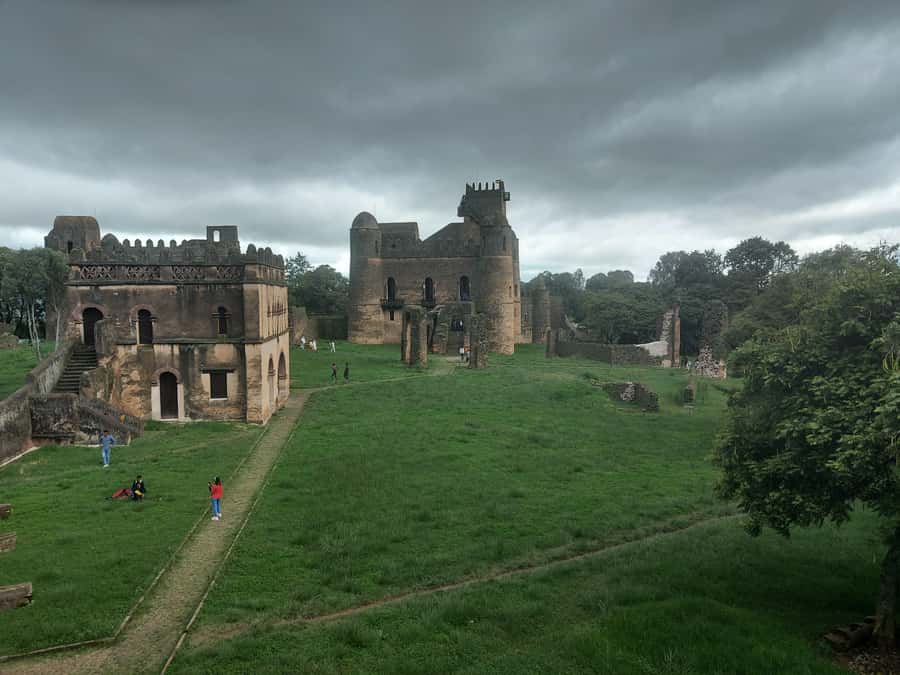
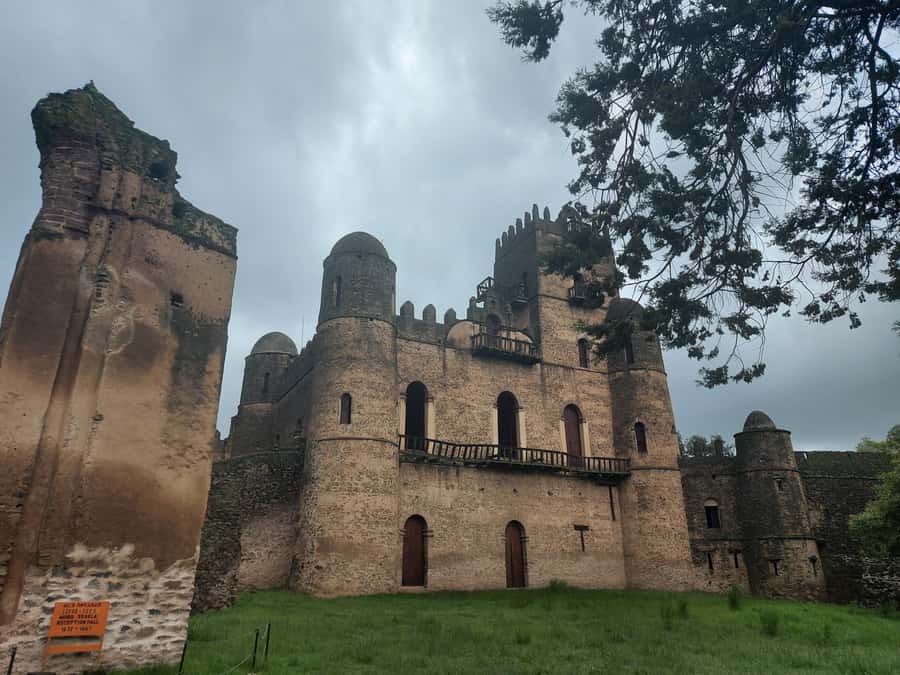
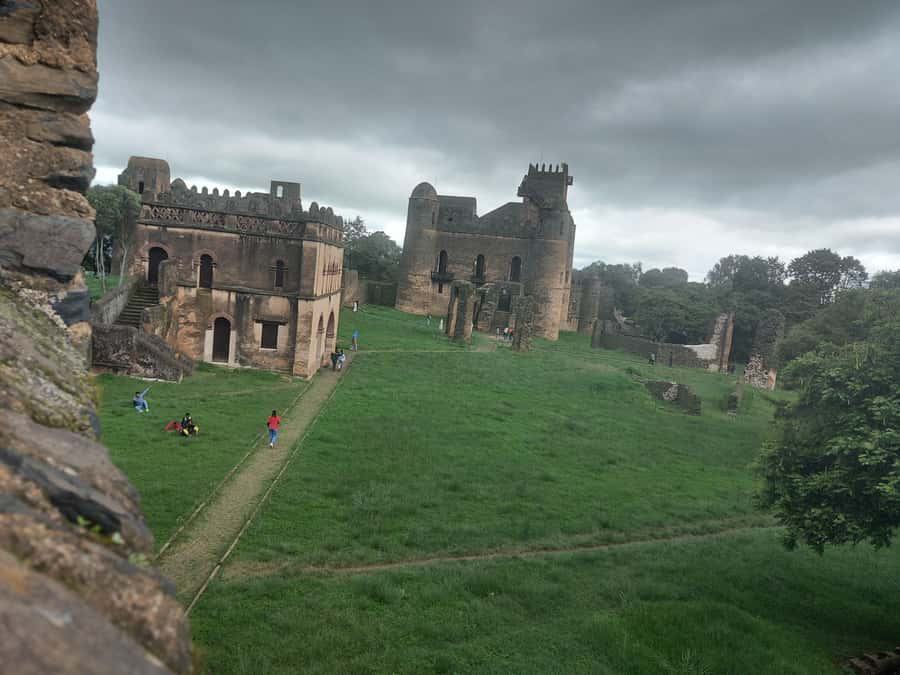
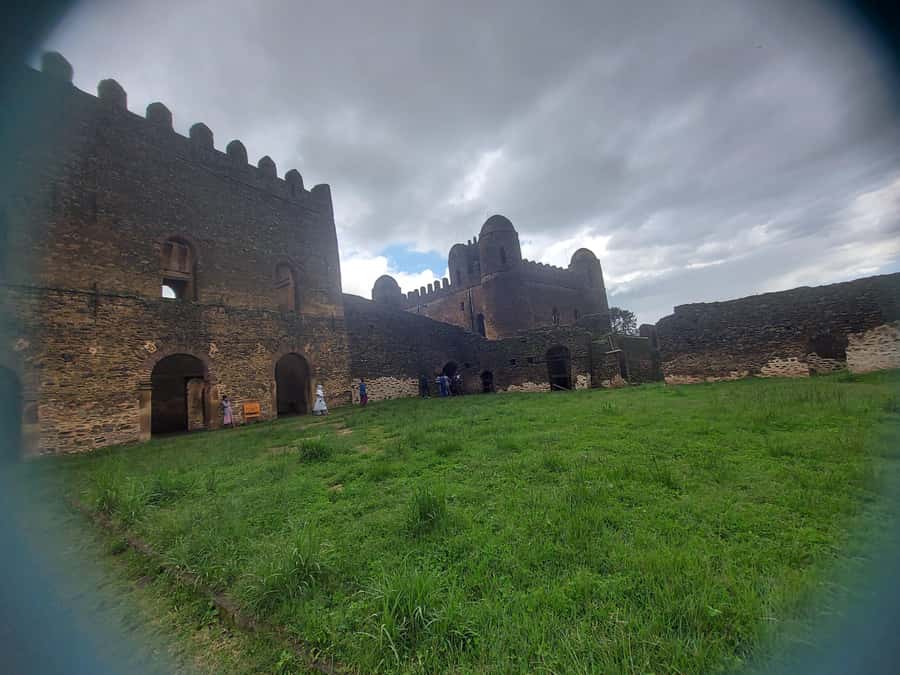
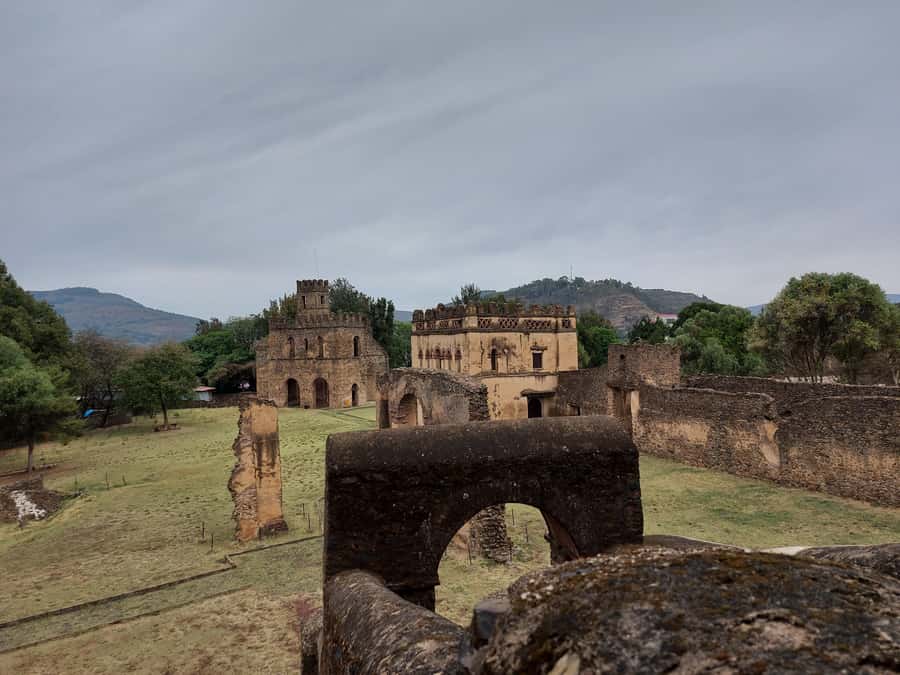
The Royal Enclosure, known as Fasil Ghebbi, is the natural starting point for the day. This UNESCO World Heritage Site contains the castles and buildings associated with Gondar’s royal period.
For me, this is likely to be the tour’s main historical stop. The stone architecture gives you a clear sense of Gondar as a former center of imperial power, while the collection of buildings helps place the city’s rulers within one shared royal compound.
You should allow yourself time to look closely rather than simply taking a few photographs and moving on. The details that make Fasil Ghebbi worthwhile are spread across the site: the castle forms, the old walls, and the feeling of moving through a royal complex rather than viewing one isolated monument.
The guide’s role is important here. A castle can be visually impressive but hard to understand without dates, names, and an explanation of how the buildings were used. The tour promises a live English guide, and the strongest praise attached to the experience concerns explanations of religion and history. That makes Fasil Ghebbi a place where good guiding can add real value.
The practical drawback is time. A full day includes several more stops, including sites outside the city. If you prefer to study every building slowly, this itinerary may feel brisk.
Debre Berhan Selassie Church and its painted interior
The next major stop is Debre Berhan Selassie Church, a 17th-century church known for its colorful paintings. This visit shifts the focus from imperial buildings to Ethiopian Christian art and worship.
You should expect a quieter, more reflective stop than the Royal Enclosure. The appeal is not only the age of the church, but also the chance to see how religious ideas were expressed through painted decoration.
The supplied details do not specify which paintings you will see or how long the visit lasts, so your guide will be the best source for interpretation on the day. Ask about the meaning of the images and the church’s place in Gondar’s religious life. Karen’s praise for the guide’s explanations suggests that these conversations may be one of the most rewarding parts of the experience.
As with any religious site, follow the guide’s instructions about conduct and photography. The tour information does not state specific clothing rules, photography rules, or opening times, so it is sensible to ask before entering.
Fasilides Bath and the Timkat connection
Fasilides Bath is one of the most distinctive stops because it is not merely an old structure preserved for display. It was built by Emperor Fasilides in the 17th century and is still used during Timkat celebrations.
That continued use gives the site a strong connection to present-day Ethiopian religious life. You are not looking only at a former royal amenity. You are seeing a place that remains part of an important annual celebration.
The bath also helps you understand the reach of Gondar’s royal past. Alongside castles and churches, the city preserves ceremonial and public spaces linked to the emperors.
The tour does not promise that you will see Timkat itself. It says the bath is used during Timkat celebrations, so do not book this day expecting a festival unless your travel dates and the operator confirm it. On an ordinary visit, the value comes from hearing how the site functions during the celebration and seeing the historic structure in person.
This is another stop where the guide’s historical and religious knowledge can make a difference. Without context, you might spend only a few minutes at the bath. With a clear explanation, it becomes a link between Gondar’s imperial period and its living religious traditions.
A completely different kind of day:
- 2 Days Simien Mountains Trekking
★ 5.0 · 6 reviews - Simien Mountains National Park – 7 Day Trek
★ 5.0 · 5 reviews - Day trek to Simien Mountain
★ 5.0 · 5 reviews - 2 Nights 3 Days Trek to Semien Mountain
★ 5.0 · 4 reviews
Falasha Village and the Beta Israel community
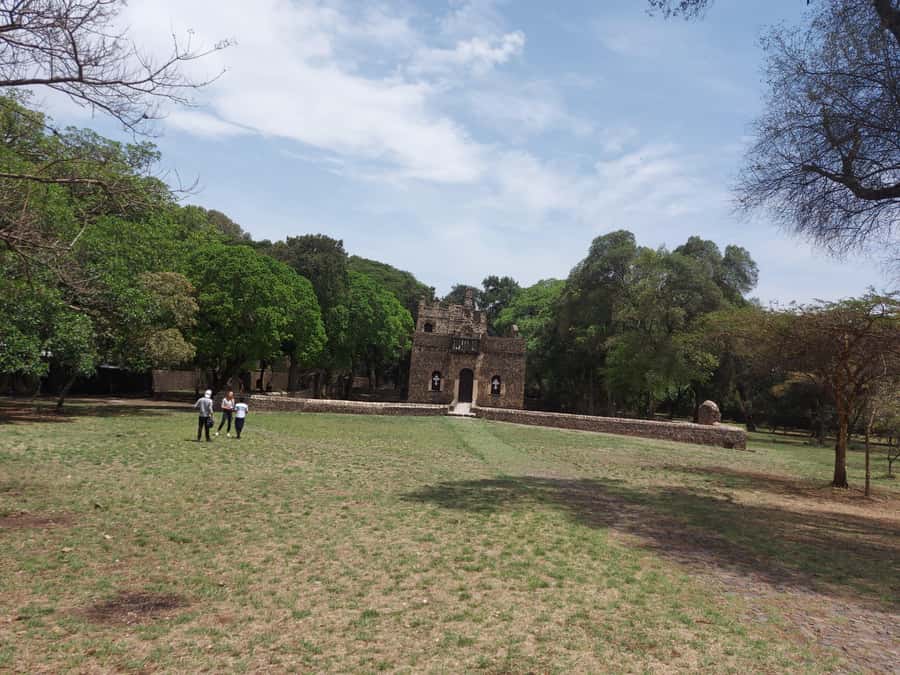
The itinerary also includes Falasha Village, described as a village inhabited by the Beta Israel community. This adds a human and cultural dimension to a day that could otherwise focus almost entirely on royal monuments.
The inclusion of this stop is important because Gondar is not only a collection of castles and churches. A visit to a community connected with Beta Israel can broaden your understanding of the area’s religious and cultural story.
The available information does not state what activities take place in the village, how long you stay, or whether community members provide an explanation. For that reason, keep your expectations open and ask the guide how the visit is organized.
Approach the stop with respect. You are visiting a community, not simply checking off another monument. Listen carefully, avoid assuming that every part of village life is arranged for tourists, and follow local guidance about photography and personal interaction.
This stop may be especially useful for you if you want a city tour that includes people and culture as well as architecture. If your main interest is medieval and imperial buildings, the Royal Enclosure may feel more central to your day.
Empress Mentewab’s Kuskuam Complex
In the afternoon, the tour moves to the ruins of Empress Mentewab’s Kuskuam Complex, also written as Qusquam in the itinerary. The site is outside Gondar and is presented as a place to learn more about local culture and the area’s royal past.
The complex gives the day another royal perspective. Fasil Ghebbi introduces the main imperial center, while Kuskuam connects you with Empress Mentewab and a different part of Gondar’s story.
Ruins reward patience. You may not get the same immediate impact as you do from a large castle, but the remains can help you see how royal power extended beyond one enclosure. The tour description also points to scenic surroundings and religious importance at the nearby monastery.
Because the tour includes multiple stops, your time here may depend on the day’s pace. If you are particularly interested in Empress Mentewab, tell your guide early. That gives the guide a chance to focus the explanation where your interests lie.
Qusquam Monastery outside Gondar
The final major sightseeing stop is Qusquam Monastery, located outside Gondar. It is described as a religiously important site with beautiful views.
This is a fitting end to the sightseeing portion because it combines a setting beyond the city with a spiritual focus. After castles, paintings, and a ceremonial bath, the monastery offers a different mood and a chance to see Gondar’s surroundings from a broader viewpoint.
The tour description does not provide details about the walk from the vehicle, the exact viewpoint, or the monastery’s visiting rules. You should ask the guide about the amount of walking and any requirements before setting off.
Do not treat this as a quick photo stop only. The religious importance is part of the reason to visit, and the guide can explain what makes the monastery significant. The available rating gives special weight to religious interpretation, so this may be one of the places where the guide’s contribution is most useful.
Dinner and Ethiopian food
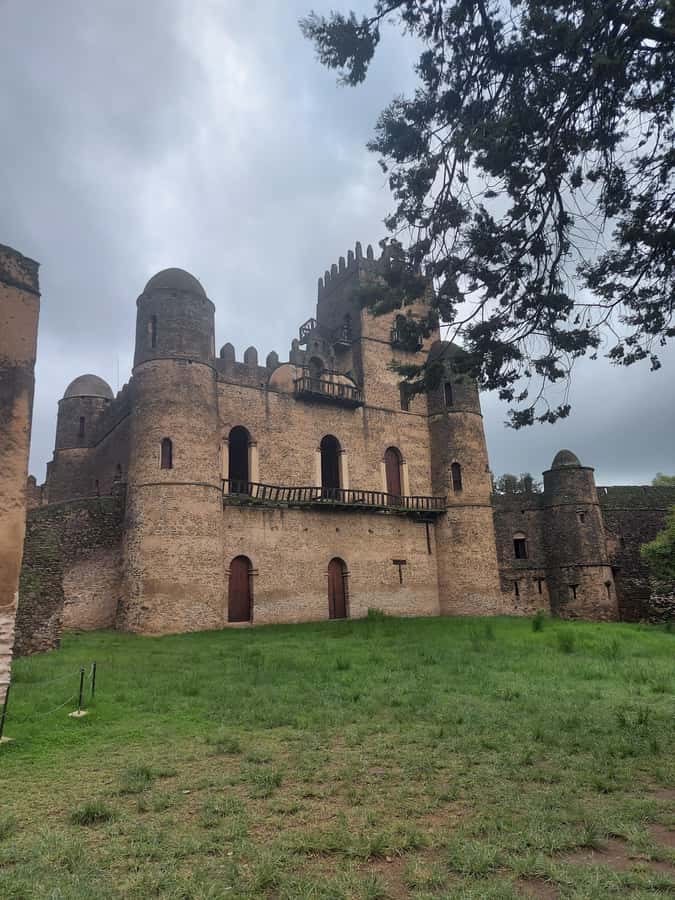
The day ends with dinner at a local restaurant and a chance to taste traditional Ethiopian food. Meals are included, which makes the $120 price easier to assess and removes one common source of uncertainty during a busy sightseeing day.
The information does not specify the restaurant, menu, or dietary options. If you have food restrictions, ask Discover Simien Tours before departure. Do not assume the included meal will match a particular preference unless the operator confirms it.
Still, ending with local food fits the character of the day. Gondar’s story is not confined to monuments. A traditional meal gives you time to reflect on the sites and continue the conversation with your guide.
Bottled water is also included. That is a small but useful detail during a full day of driving and sightseeing.
Is $120 per person good value?
At $120 per person, the tour is not a budget city walk. But the price includes transportation, an English-speaking guide, entrance fees, accommodation, meals, and bottled water.
That package can offer fair value if you want a single organized day with the major costs handled in advance. Entrance fees alone are not the whole issue. The bigger benefit is having transport to sites outside Gondar, an airport pickup and return, and a guide who can explain the religious and historical setting.
The value depends on how the accommodation is handled. Since the activity lasts one day but also lists accommodation, ask whether the room is for a pre-tour arrival, a rest period, or an overnight stay. Clarifying that point will help you compare the price with a private car and guide arranged separately.
Alcoholic drinks, personal expenses, and tips are not included. Plan to pay those separately if needed. The tour also permits free cancellation up to 24 hours in advance for a full refund, and you can reserve now and pay later, which gives you some flexibility while finalizing your trip.
Who should book this Gondar tour?
I would recommend this experience to you if you want to cover Gondar’s key sights in one organized day, especially if you are arriving through Gondar Airport. It suits first-time visitors who want a guide to explain the connection between royal power, Ethiopian Christianity, and local communities.
It is also a good fit if you prefer an all-in-one price. Transport, admission, food, water, and guiding are already included, so you can focus on the sites rather than arranging each part yourself.
You may want a slower or more customized plan if you prefer long visits at one or two monuments. The schedule includes Fasil Ghebbi, Debre Berhan Selassie Church, Fasilides Bath, Falasha Village, Kuskuam, and Qusquam Monastery, so the day is full.
Should you book it?
Book this tour if you have one day in Gondar and want a practical introduction to the city’s royal, religious, and cultural sights. The strongest reason to choose it is the combination of major monuments with an English-speaking guide, particularly if the guide provides the kind of clear religious and historical explanation praised by Karen.
Before booking, confirm the group size, the guide’s name, the exact timetable, and how the listed accommodation fits into a one-day airport-to-airport program. If those details suit your plans, $120 can be reasonable for a fully arranged day. If you want an unhurried visit or already have transport and accommodation, a shorter private arrangement may give you more control.
FAQ
Where does the Gondar sightseeing tour begin?
The tour begins at Gondar Airport, where the operator says you will be met.
Where does the tour end?
The tour returns to Gondar Airport.
How long does the tour last?
The duration is listed as one day.
What language does the guide speak?
The live tour guide speaks English.
Is transportation included?
Yes. Transportation is included in the tour price.
Are entrance fees included?
Yes. Entrance fees are included.
Are meals included?
Yes. Meals are included, and the program includes dinner at a local restaurant.
Is bottled water provided?
Yes. Bottled water is included.
What is not included in the price?
Alcoholic drinks, personal expenses, and tips are not included.
Can I cancel for a full refund?
Yes. You can cancel up to 24 hours in advance for a full refund.
Just added in Gondar
- Day trek to Simeien Mountains★ 5.0 · 3 reviews
- Simien Mountains National Park – 7 Day Trek★ 5.0 · 5 reviews
- 2 Nights 3 Days Trek to Semien Mountain★ 5.0 · 4 reviews
- Day trek to Simien Mountain★ 5.0 · 5 reviews
- Gondar city Tour With Airport & Hotel Pick Up★ 5.0 · 3 reviews
- 3 Days Simien Mountains Trekking★ 5.0 · 3 reviews
- Simien Mountains One Day Trip:Wildlife Spotting,Hiking Tour★ 5.0 · 2 reviews
- From Gondar: 2-Day Simien Mountains Trekking Tour★ 5.0 · 1 review
Gondar Tours, compared.
6 Days tour Package (Simien Mountains, Lalibela, and Danakil Depression)
Read our review →
4 Days Trekking to Simien Mountain National Park
Read our review →


Browse the lists this tour appears in