
Reviewed · AXUM TOURS
Day Trip to Axum, the Heartland of Ethiopian Civilization
Ancient stones tell Axum’s story. This private day trip brings you close to Ethiopia’s most famous obelisks, royal tombs, sacred churches, and legendary sites in about seven hours. I especially like the combination of major monuments and smaller places such as King Ezana’s inscription and Queen of Sheba’s Bath. I also like that pickup, transport, a guide, water, and entrance fees are included.
The main caution is the pace. You visit six important sites in one day, with two hours at both the Northern Stelae Field and the Church of Our Lady Mary of Zion. Food is not included, and the tour begins at 8:30 a.m., so you will want breakfast before setting out.
In This Review
- Key points to know before booking
- Why Axum deserves a full day
- The Northern Stelae Field and Axum’s giant stones
- St. Mary of Zion and the Ark tradition
- King Ezana’s inscription, Axum’s stone record
- The tombs of Kings Kaleb and Gebre Meskel
- Dongur Palace and the Queen of Sheba story
- Queen of Sheba’s Bath, or Mayshum
- Transport, timing, and what the $152.57 covers
- Who will get the most from this Axum tour
- Should you book the Axum day trip?
- FAQ
- What time does the Axum tour begin?
- How long does the experience last?
- Is pickup included?
- Is this a private tour?
- What is included in the price?
- Are food and accommodation included?
- Can I cancel for a full refund?
Key points to know before booking
- The Great Stelae Field: See Axum’s famous carved granite obelisks, including the broken Great Stelae that once reached 33 meters.
- A private seven-hour outing: Only your group participates, with pickup and drop-off within Axum town.
- Sacred St. Mary of Zion: Visit one of Ethiopia’s most important Christian sites, linked by tradition to the Ark of the Covenant.
- Royal tombs and inscriptions: Explore the tombs of Kings Kaleb and Gebre Meskel and see King Ezana’s three-language inscription.
- Legendary Queen of Sheba sites: Visit the ruins called Dongur Palace and the ceremonial pool known as Mayshum.
- Good value at $152.57 per person: The price includes transport, a professional guide, bottled water, and admission, but not meals or accommodation.
Why Axum deserves a full day
Axum is not simply a stop for photographing one famous obelisk. It was the center of an ancient kingdom whose influence reached across the Horn of Africa and into the Red Sea world. The surviving monuments give you a sense of political power, religious change, engineering skill, and long-standing local tradition.
I like this tour because it joins those pieces together. You move from pre-Christian stone monuments to early Christian Ethiopia, then on to royal burial sites and places connected with the Queen of Sheba. The result is more useful than seeing the obelisks alone and leaving with only a few photographs.
The day trip also works well for visitors with limited time in Axum. In roughly seven hours, you see the city’s main historic sights without having to arrange separate taxis, tickets, and local transport. Since the activity is private, your group can experience the route together rather than being placed with strangers.
That convenience comes with a tradeoff. Six stops in one day leave little room for an unplanned pause. If you want long visits at every monument, time for lunch, or a slow look at every inscription, you may find the schedule tight. For a first look at Axum, though, the plan covers a lot of ground.
A few more options to weigh up in Ethiopia
- Day Trip to Gheralta’s Cliffside Churches, “Sacred Heights”
★ 5.0 · 13 reviews - 4-Day Tour: Tigray Churches & Danakil Depression Adventure.
★ 5.0 · 11 reviews - 5-Day Northern Ethiopia Tour : 3D Simien Mountains Trek & Axum.
★ 5.0 · 9 reviews
The Northern Stelae Field and Axum’s giant stones
The tour begins with about two hours at the Northern Stelae Field, the strongest opening to the day. Here, tall granite monuments mark the burial ground of Axum’s ancient rulers and elite. Their carved surfaces and carefully shaped forms show how much skill and labor went into creating them more than 1,700 years ago.
The most dramatic fact is the scale of the Great Stelae. When it was upright, it measured about 33 meters, or 108 feet, and weighed roughly 520 tons. It later fell and broke into six massive pieces. That collapse is part of what makes the site so striking: you are not looking at a perfect monument, but at the remains of an ambitious project that once towered over the city.
Other obelisks remain upright, with details cut into the stone to suggest doors, windows, and upper floors. I find these carvings especially helpful because they make the monuments feel less abstract. They were not plain pillars. They were symbolic stone structures, connected to the burial traditions and power of Axum’s rulers.
The field has UNESCO World Heritage status, which reflects its importance well beyond Ethiopia. Give yourself time to look from several angles. The sheer size is easy to miss in a quick photograph, especially when you are standing close to the stones.
Admission is included, and two hours is a sensible amount of time for this stop. The main limitation is that the visit focuses on the monuments rather than a long museum session. If you want more detail about the objects and archaeology connected with Axum, use your guide’s explanations carefully and ask questions while you are there.
St. Mary of Zion and the Ark tradition
The next major visit lasts about two hours at the Church of Our Lady Mary of Zion. The first church of St. Mary was built in the fourth century under Axum’s early Christian kings, King Ezana and King Syzana. That date places the church at the beginning of Ethiopia’s Christian era, making the site important even before the Ark tradition enters the picture.
Axum is often called a holy city in Ethiopian Christian tradition, sometimes compared with Jerusalem. The reason is not only the age of the church. Tradition holds that the Ark of the Covenant is kept at the chapel connected with St. Mary of Zion.
You should approach this part of the visit with respect and realistic expectations. The tradition is central to the religious importance of Axum, but the tour description does not promise access to the Ark itself. The value lies in seeing the church complex and understanding why this place has such a powerful role in Ethiopian faith.
I like the way this stop changes the mood of the day. The stelae field is about monumental stone and royal power. St. Mary of Zion brings the story into living religious practice. You are not only looking at an old ruin. You are visiting a place that remains sacred.
The two-hour allocation gives you time to take in the setting without rushing straight to the next site. Dress and behave respectfully at a religious place, and listen closely to your guide about what can be visited. Entrance is included, as it is at the other principal stops.
King Ezana’s inscription, Axum’s stone record
The tour highlights King Ezana’s inscription among Axum’s important sights. This stone record is written in three languages and is often described as Ethiopia’s version of the Rosetta Stone.
Its importance is practical as well as historical. A multilingual inscription gives researchers a way to compare texts and understand how Axum’s rulers communicated their authority. It also points to the kingdom’s broad connections and organized political culture.
The itinerary places this part of Axum’s story alongside the stelae field and the church, which helps you connect the city’s different periods. King Ezana is associated with the early Christian era, while the stelae reflect older pre-Christian traditions. The inscription helps show that Axum was not frozen in one age. Its beliefs and public life changed over time.
A guide matters here because a carved stone can be easy to pass without context. Ask for help identifying the three languages and the role of the inscription. The available information does not give a separate time allocation for this stop, so it is best understood as part of the wider Axum visit rather than a long standalone appointment.
A completely different kind of day:
- Full Day Tour of Addis Ababa with Hotel Pickup and Drop-off
★ 5.0 · 430 reviews - Taste of Ethiopia
★ 5.0 · 406 reviews - Day Trip From Addis Ababa See Historical Monastery,Stunning Nature,Animals,Birds
★ 5.0 · 303 reviews - Addis Ababa: Debre Libanos, Blue Nile Gorge, and Cave Tour
★ 4.5 · 256 reviews
The tombs of Kings Kaleb and Gebre Meskel
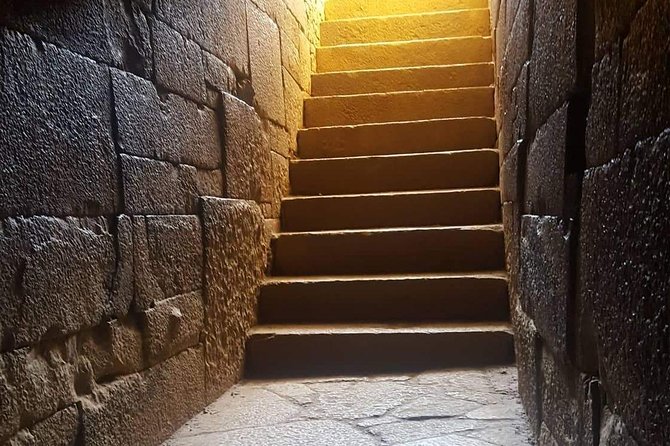
About two kilometers north of the city, you visit the tombs of King Kaleb and his son, King Gebre Meskel. The site dates to the sixth century and was excavated in 1906 by a German archaeologist.
This stop adds a welcome underground element to the day. At the stelae field, royal power is expressed through huge monuments above ground. At the tombs, the story turns inward, toward burial spaces and the practical problems of protecting royal remains.
The tombs were built in a strategic location, according to the tour information. That detail helps you think about Axum as a functioning kingdom, not just a collection of old stones. Its rulers needed places for ceremony, burial, and defense, and the sites around the city reflect those needs.
You have about one hour here. That is enough for a focused visit, though anyone fascinated by archaeology may wish for more time. Access to underground areas can also feel more demanding than walking through an open field, so follow the guide’s directions and take your time.
Dongur Palace and the Queen of Sheba story
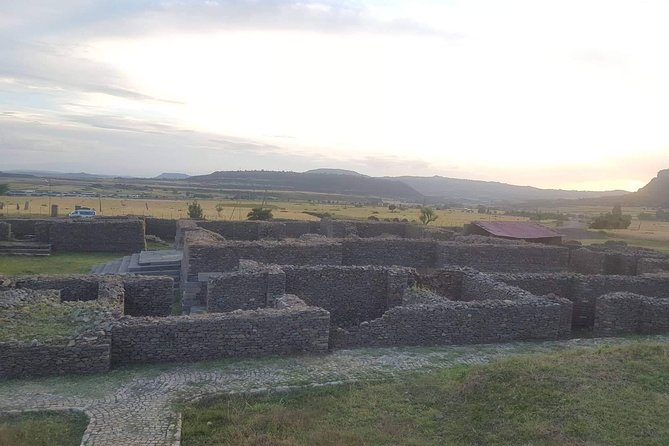
The Queen of Sheba Palace, locally called Dongur Palace, gives the tour one of its most memorable legends. Local tradition connects the site with the Queen of Sheba, who is said to have lived in the tenth century B.C. and to have been the mother of Menelik I.
The story continues with Menelik I traveling to his father, King Solomon, and bringing the Ark of the Covenant to Axum. These traditions help explain why Axum carries such importance in Ethiopian identity and Christian history.
You should separate legend from confirmed archaeology, but that does not make the visit less interesting. Standing among the palace ruins, you can consider how stories of rulers, ancestry, and sacred objects shape a place’s meaning. The site offers a different experience from the stelae field because the remains suggest domestic and royal life rather than a single monumental marker.
The tour allows one hour at Dongur Palace. That is a good amount of time for seeing the ruins and hearing the local story, though the information provided does not promise a reconstructed palace interior. Set your expectations for archaeological remains, not a furnished royal residence.
Queen of Sheba’s Bath, or Mayshum
The final sightseeing stop is Queen of Sheba’s Bath, a large pool locally called Mayshum, meaning the chieftain water. Local tradition says the Queen of Sheba built it for recreation. Today, local people use the pool for swimming, and it is also used during the Epiphany festival.
This is a short 30-minute visit, but it gives you a glimpse of Axum as a living place rather than only an archaeological site. The pool still has a role in local life, and its connection with Epiphany adds religious and cultural meaning.
The name can be slightly confusing. The site is called a bath, but the information describes a pool used by local people and during a festival. I would treat it as a brief cultural stop, not a swimming activity included in the tour.
Its position near the end of the day works well. After stelae, churches, inscriptions, and tombs, the pool gives you a simple reminder that Axum’s old places remain part of the city’s present identity.
Transport, timing, and what the $152.57 covers
Pickup begins at 8:30 a.m. from a designated meeting point or location within Axum town. At the end, you are returned to your preferred location in the city. The tour uses an air-conditioned minivan, which matters in a full day of moving between outdoor monuments and sites around town.
The total duration is about seven hours, including pickup and drop-off time. The listed schedule gives two hours at the stelae field, two hours at St. Mary of Zion, one hour at the royal tombs, one hour at Dongur Palace, and 30 minutes at Mayshum. Allowing for transfers, the timing is full but understandable.
At $152.57 per person, the value depends partly on group size. Since this is a private activity, only your group participates. For a couple or small group that wants a guide, transport, and entry fees handled in one booking, the package is convenient. For a solo visitor, the per-person cost may feel higher than using public transport and arranging visits independently.
The price includes:
- Pickup and drop-off within Axum town
- Air-conditioned minivan transport
- A professional guide
- Bottled drinking water
- Entrance fees
Food and drinks are not included, and neither is accommodation. Alcoholic drinks may be purchased, and souvenir photographs are also extra. I would eat before the 8:30 a.m. start and carry any additional snacks you need, since no meal stop is listed.
Who will get the most from this Axum tour
I would recommend this experience to anyone visiting Axum for the first time, especially if you want the principal historic sites in one organized day. It suits people who care about archaeology, Ethiopian Christianity, royal traditions, and the connection between local history and living belief.
It is also a good choice if you prefer a private outing. The group format means you can ask about the stelae, the inscription, or the Ark tradition without competing with a large coach group. The available responses from the operator use the name Beka, and the comments connected with the tour credit Beka with careful organization. That makes Beka an important name to note when confirming who will lead your visit.
I would be more cautious if you need a leisurely schedule or a fully packaged day with lunch. The itinerary is tightly filled, and there is no accommodation or meal included. The tour is also built around historical and religious sites, so it will mean more to you if you enjoy listening, looking closely, and thinking about local traditions.
Most travelers can participate, and the tour is near public transportation. Still, the information does not give detailed accessibility notes for the underground tombs or each church area. If you have mobility concerns, ask before booking.
Should you book the Axum day trip?
I think you should book it if you have one day in Axum and want a practical route through the city’s major monuments. The combination of the Northern Stelae Field, St. Mary of Zion, King Ezana’s inscription, royal tombs, Dongur Palace, and Mayshum gives you a strong sense of why Axum matters.
The best reasons to choose it are the private format, included admissions, air-conditioned transport, and the range of sites. The main reasons to hesitate are the price for a solo visitor, the lack of included food, and the full seven-hour schedule.
Free cancellation is available if you cancel at least 24 hours before the 8:30 a.m. start time. Within 24 hours, the payment is not refunded, so make your decision early. For a focused first visit to Ethiopia’s ancient capital, this is a well-rounded and worthwhile day.
FAQ
What time does the Axum tour begin?
The tour begins at 8:30 a.m.
How long does the experience last?
The day trip lasts approximately seven hours, including pickup and return within Axum city.
Is pickup included?
Yes. Pickup and drop-off are included from designated meeting points or locations within Axum town.
Is this a private tour?
Yes. Only your group participates in the activity.
What is included in the price?
The price includes transport in an air-conditioned minivan, a professional guide, bottled drinking water, entrance fees, and pickup and drop-off within Axum town.
Are food and accommodation included?
No. Food, drinks, and accommodation are not included. Alcoholic drinks and souvenir photographs are available to purchase separately.
Can I cancel for a full refund?
Yes, if you cancel at least 24 hours before the experience start time. Cancellations made within 24 hours are not refunded, and changes during that period are not accepted.
Just added in Ethiopia
- Yod Abyssinia Cultural Night: Dinner, Music, and Dance★ 5.0 · 7 reviews
- Mekele City Tour★ 5.0 · 2 reviews
- Day trip to Tigray Churches★ 5.0 · 2 reviews
- Tigray Mountain Church’s Day Trip from Mekele★ 5.0 · 2 reviews
- 3 Day Tour of Geralta Churches Tigray Church’s★ 5.0 · 2 reviews
- 3 days tour Danakil Depression (Dallol & Erta Ale)★ 4.0 · 5 reviews
- 2 Days Dallol Trip★ 5.0 · 4 reviews
- Lalibela Backpacker tours★ 5.0 · 6 reviews
Axum Tours, compared.
Day Trip to Gheralta’s Cliffside Churches, “Sacred Heights”
Read our review →
4-Day Tour: Tigray Churches & Danakil Depression Adventure.
Read our review →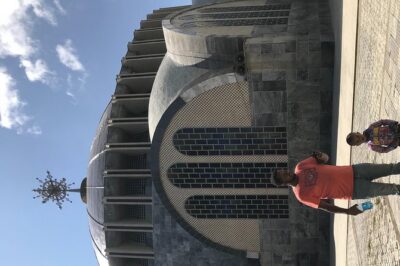
5-Day Northern Ethiopia Tour : 3D Simien Mountains Trek & Axum.
Read our review →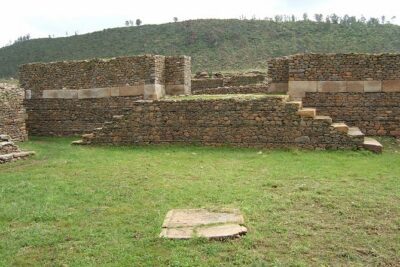
Day Trip to Gheralta’s Cliffside Churches, “Sacred Heights”
Read our review →Browse the lists this tour appears in